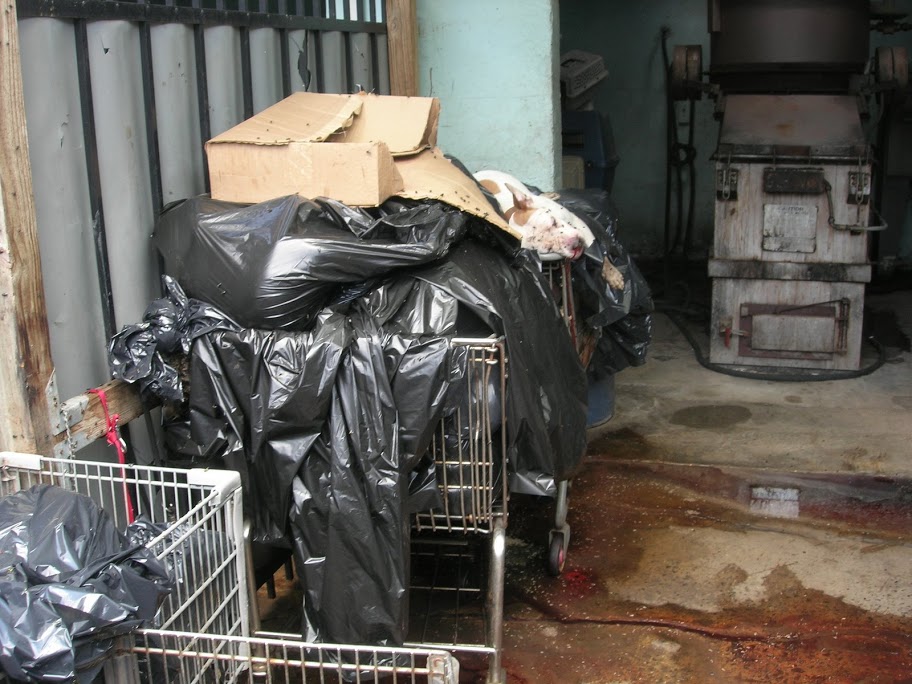
East Orange Animal Shelter’s Horrific Inspection Report Raises Serious Questions


East Orange July Photos

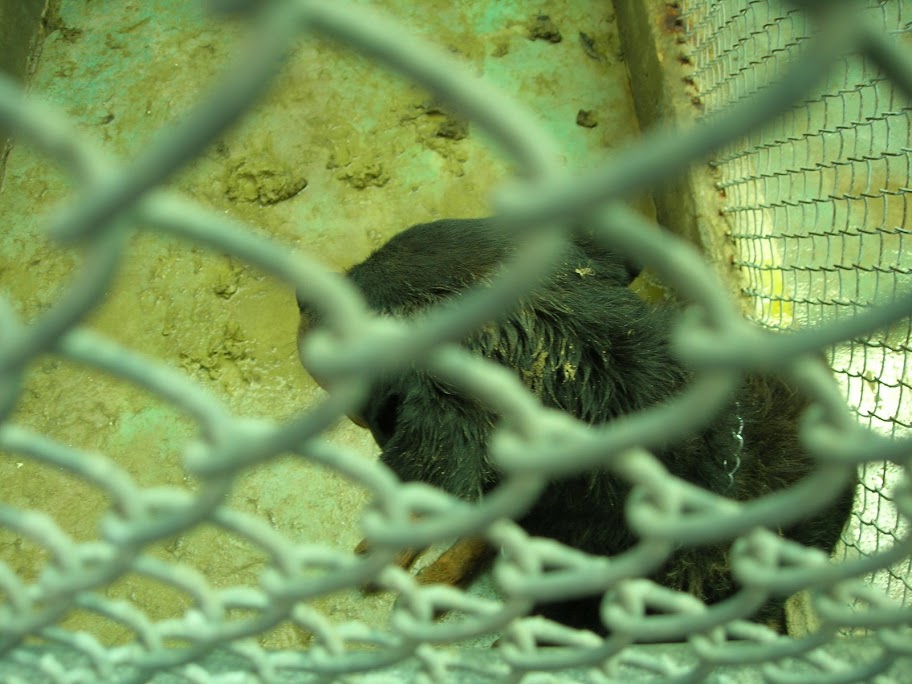
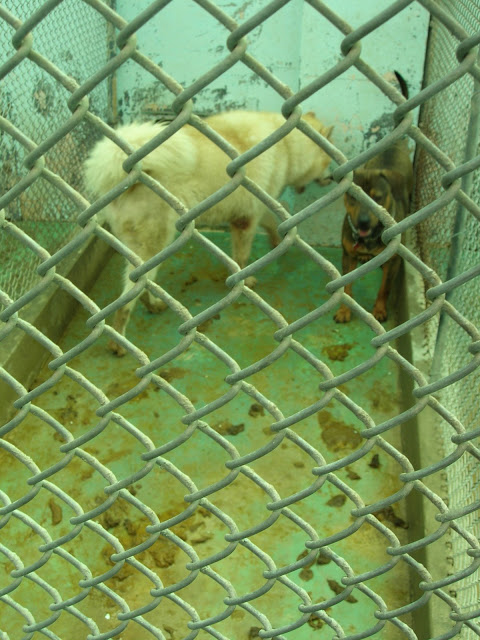
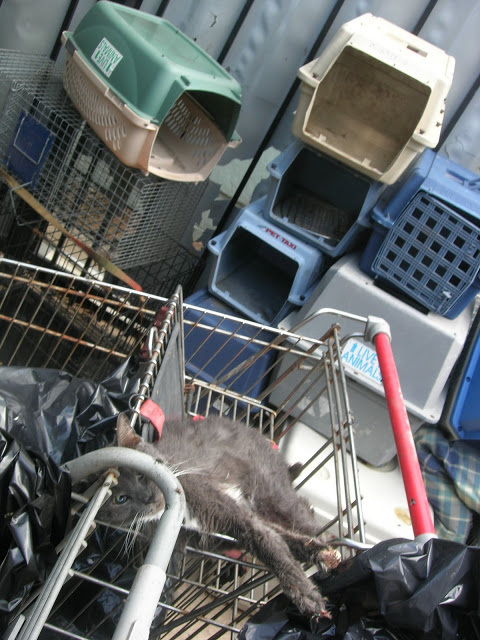
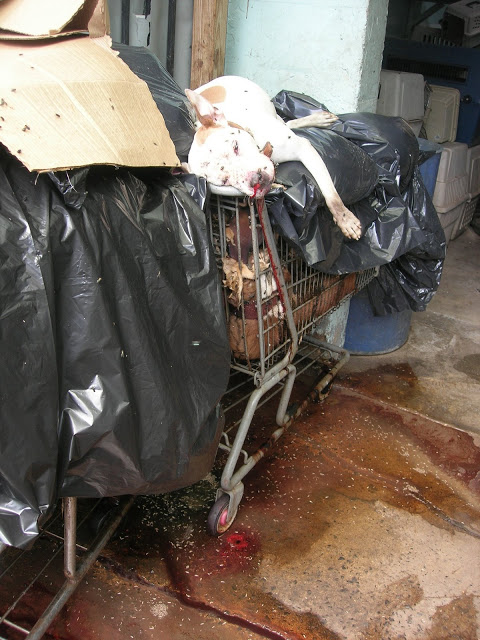
East Orange Animal Shelter’s ongoing problems became well-known in the last year. In 2010, the New Jersey Department of Health uncovered significant issues during an inspection. One year later, the New Jersey Department of Health found the shelter had clogged drains and allowed the facility to fall apart. Furthermore, the shelter did not clean properly and keep required records. In 2014, the New Jersey Department of Health reported animals inundated with a toxic feces and chemical filled soup due to clogged drains, a fly infestation so severe that animals with open wounds and skin lesions were in danger of having maggots grow inside them, cats not provided with enough water and water they did have was contaminated with cat litter, and improper isolation of sick animals. Last June, East Orange Animal Shelter killed a dog recently adopted from Liberty Humane Society and did not appear to make any effort to return the dog to the other shelter. Thus, East Orange has run an outlaw operation for at least half a decade.

July 2015 Inspection Details Horrible Problems

On July 16, 2015, the New Jersey Department of Health inspected the East Orange Animal Shelter and issued a failing grade to the facility. Amazingly, the shelter did not even do the most basic things correctly to the point where it seemed the city made no effort to fix its long-standing problems. Below are some of the key inspection report findings and my comments.

East Orange Animal Shelter’s basic facilities were not only disgusting, but unsafe. The shelter’s ceiling tiles were damaged by water, and most likely harboring dangerous mold, and were literally coming down, including one that was close to falling into one dog enclosure:

EO Falling Tiles

The cat room had a putrid odor and was not properly ventilated:

EO Cat Odor

The guillotine doors to the dog enclosures had cracks that accumulated contaminated materials and therefore shelter personnel could not properly clean these areas:

Dirty Guillotine Doors

The drains surrounding the outdoor dog enclosures were clogged and therefore allowed dirty and toxic liquids to build up:

Drains 1

Drains 2

Dogs had to lie on beds that were falling apart. Cats were held in stacked enclosures that were at risk of falling over.

Cages Falling Over

Kittens, which depend on nourishing food to grow, were fed unknown dry food that may or may not have been suitable for them:

EO Kitten Food

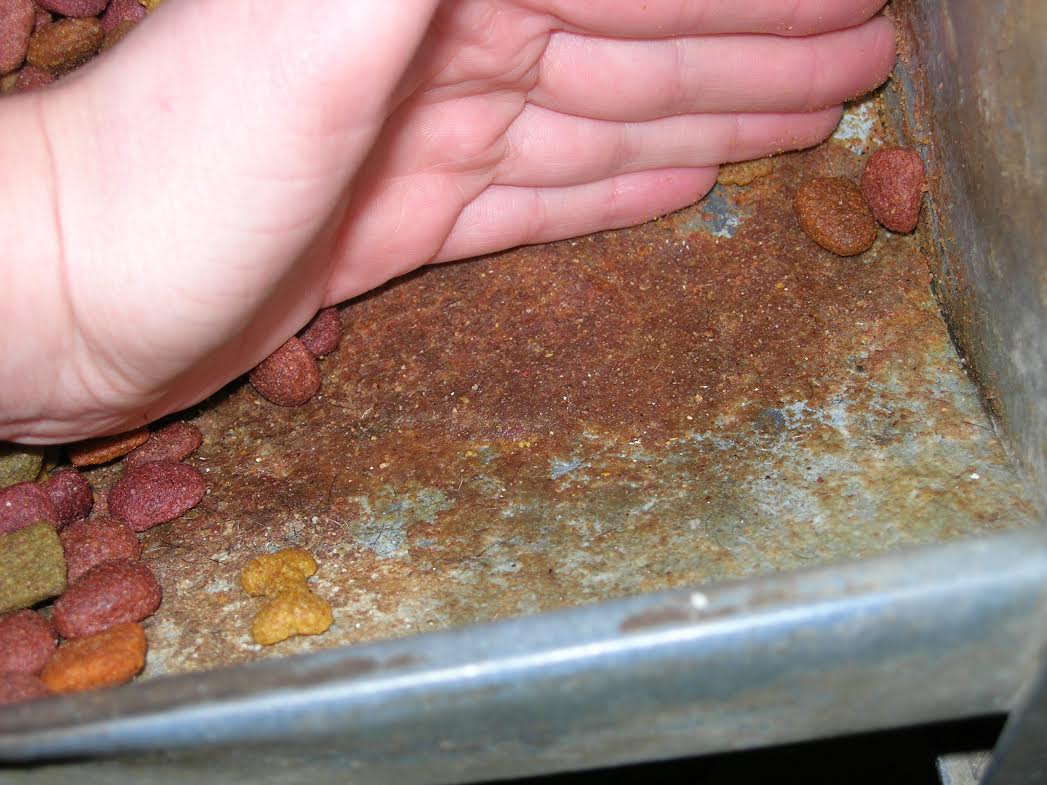
Despite running a filthy facility, shelter staff still failed to disinfect food and water bowls:

EO Food and Water Bowls

The shelter did not provide adequate amounts, and in some cases any, water to animals. The inspector had to request one of East Orange’s ACOs to fill the water bowl not once, but twice, for a mother cat who appeared dehydrated and her kittens. Even worse, the facility had plenty of water bowls and still failed to provide water to the animals as required by state law.

EO Water to Animals

The shelter cleaned cat cages with powerful chemicals while cats were inside these enclosures:

EO Cat Cleaning 1

Cat Cleaning 2

Feces were left uncleaned for so long that it dried and adhered to the floor of one dog enclosure:

Dog Feces Uncleaned

The isolation room had mold covered food and feces that had been there for two weeks:

Isolation Not Cleaned in 2 Weeks

East Orange Animal Shelter failed to adhere to its veterinarian’s disease control program:

Disease Control Program Not Followed

Most disturbingly, the shelter did not provide legally required prompt and basic veterinary care to alleviate pain and suffering. One cat (“C871”) with an injured leg did not move during the entire inspection. Another cat (“C870”) had been at the shelter for 9 days and did not eat or drink during her stay at the facility. The cat’s weight decreased 64% from 11 pounds to 4 pounds during her time at the shelter. The inspector could feel the bones of the cat and noted the cat was dehydrated and making distress calls. Yet, the inspection report stated Dr. Kimani Griffith told a shelter employee on Wednesday July 15 that he would wait 5 more days to examine the animal. Another cat died one day after arriving at the shelter and no documentation existed to show the shelter diagnosed a medical condition or provided any veterinary care.

Apparently, Dr. Kimani Griffith got wind of the New Jersey Department of Health’s arrival and came to the East Orange Animal Shelter during the 5 and half hour inspection. The NJ Department of Health inspector had to show Dr. Kimani Griffith two dogs with medical issues, one with a red irritation on his face and another who was not eating, and three cats needing veterinary attention, C871 and C870 above and a third cat. Shockingly, Dr. Kimani Griffith declined the New Jersey Department of Health inspector’s request to take the two suffering cats, C871 and C870, to his veterinary office for immediate treatment. Finally, Dr. Kimani Griffith examined the two cats at his office the next day and diagnosed C871 with a fractured leg and C870 as severely dehydrated and in chronic renal/kidney failure. Dr. Kimani Griffith put a splint on C871 and euthanized C870.

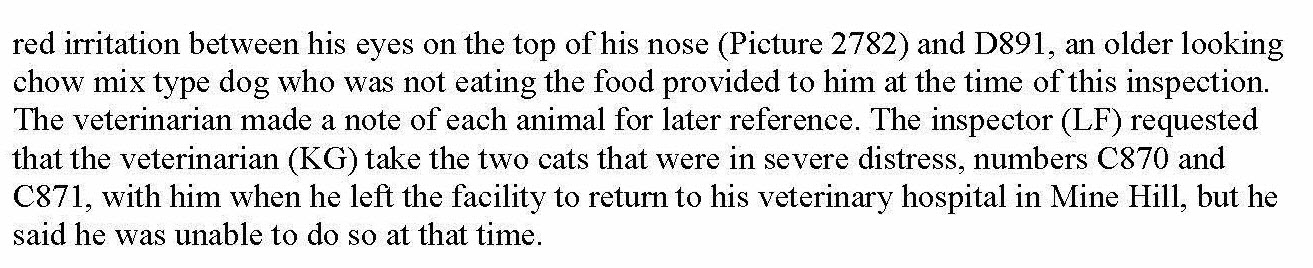
Prompt Vet Care Not Provided 1

Vet Care Not Provided 2

The shelter did not document the veterinary care it was providing to animals. Based on the lack of documentation, once must assume few animals received proper veterinary care.

Vet Care Not Provided 3

The shelter had expired drugs and even gave some to shelter animals. Additionally, needles and syringes were readily accessible as they were left in an unlocked drawer and cabinet at the shelter.

Vet Care Not Provided 4

The shelter failed to properly isolate sick animals from healthy animals. Furthermore, the ventilation system allowed air from the isolation area where sick animals are housed to mix with the general shelter area where healthy animals reside. Thus, disease could easily spread.

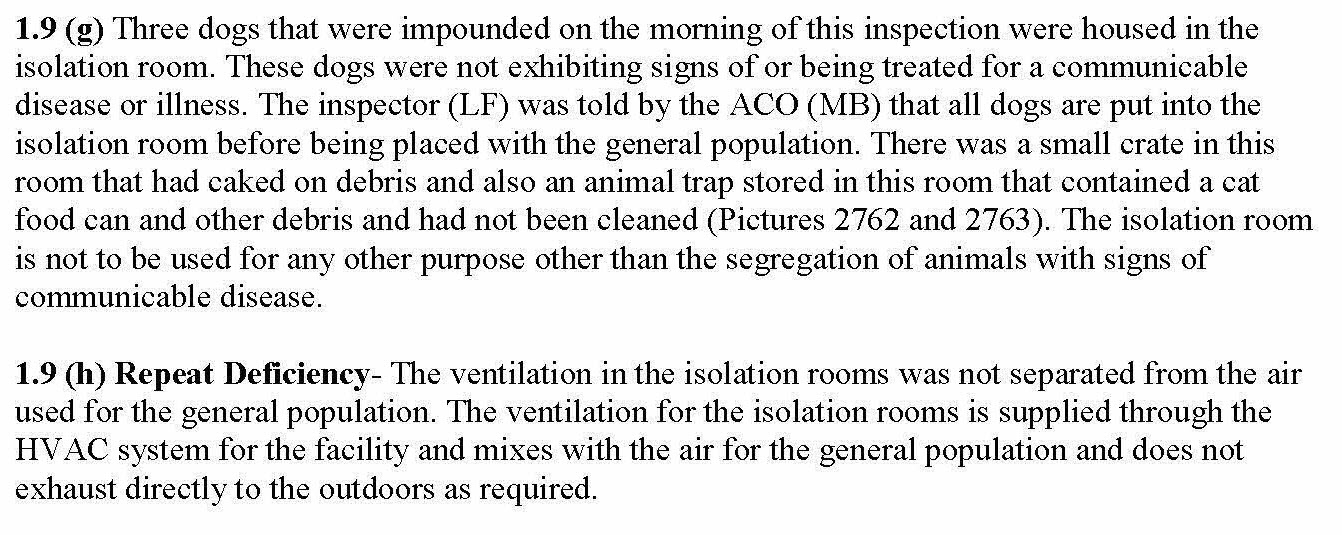
Isolation 1

Isolation 2

The shelter also did not document whether people surrendering several animals for euthanasia were the actual owners. In other words, someone could steal your pet and have East Orange Animal Shelter kill your dog or cat. Additionally, the shelter illegally killed a cat on the day it arrived at the shelter.

Illegally Killing

When the shelter did kill animals, it did not do so humanely. Dr. Kimani Griffith stated animals are not weighed prior to euthanasia/killing as required by N.J.A.C. 8.23A. As a result, animals may not get enough tranquilizer and euthanasia drugs causing the animals to suffer. Even more shocking, Dr. Kimani Griffith “walked” two ACOs through the euthanasia/killing process over the phone while the veterinarian was on vacation. Apparently, taking a life is no big deal and you can learn how to do so over a casual telephone call while your instructor is at the beach or somewhere else. Additionally, the shelter did not keep legally required records, such as the animal’s weight, and drug dosage used to euthanize/kill animals.

Euthanasis Violations 1

Euthanasis Violations 2

If East Orange Animal Shelter was not bad enough, the ACO vehicle used to haul animals to the facility was disgusting as well. Literally, the animals that were brought to the shelter had to lie in a filthy crate covered with blood and dirt on their way to this horrific shelter.

ACO Vehicle

The shelter also failed to maintain legally required intake and disposition records for each of the shelter’s animals:
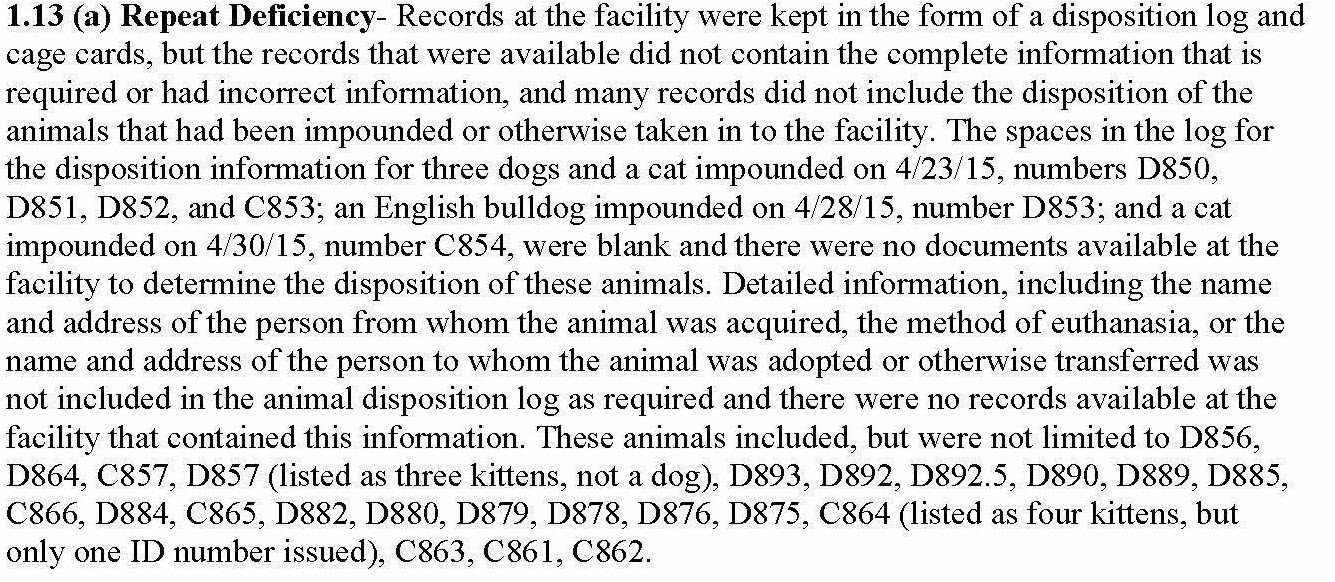
Intake and Disposition Records

Finally, the New Jersey Department of Health answered some questions I had about the recently adopted Liberty Humane Society dog that East Orange Animal Shelter killed. While East Orange Animal Shelter did not kill the dog during the 7 day hold period, the facility did not document the dog was suffering nor did this pound document that it contacted Liberty Humane Society. Thus, East Orange Animal Shelter made no effort to save this dog.

LHS Dog

Reaction to Kane in Your Corner Investigation Raises More Questions

On Thursday, August 20, News 12’s Kane in Your Corner aired its investigation of the East Orange Animal Shelter. Amazingly, East Orange Health Officer, Rochelle Evans, who is ultimately responsible for the shelter, refused to talk with Walt Kane. However, the City’s public relations person, claimed the New Jersey Department of Health revised its report and removed most of its serious findings related to not providing prompt veterinary care. Yet, the New Jersey Department of Health subsequently responded to Walt Kane and stated they did not drop these New Jersey shelter law violations.

Walt Kane’s subsequent interview of Dr. Kimani Griffith also seemed bizarre. Dr. Kimani Griffith, who appeared quite nervous during the interview, stated East Orange’s erroneous claim that the New Jersey Department of Health removed some of the serious violations was due to a typo. On camera, Dr. Kimani Griffith said he is taking constructive criticism from the New Jersey Department of Health so “they could improve the operation.”

Yet, Dr. Kimani Griffith has been the supervising veterinarian for the East Orange Animal Shelter for all of the terrible New Jersey Department of Health inspections since 2010. Dr. Griffith receives $76,500 a year per his 2012 contract with East Orange to provide “animal care and sheltering services” to East Orange despite East Orange already having its own facility. Amazingly, Dr. Griffith’s fee represents nearly half of the shelter’s 2014 budget. Additionally, Dr. Kimani Griffith can bill the city for other services. Furthermore, Dr. Kimani Griffith also operates a shelter/rescue out of his veterinary office and apparently adopts out dogs for $300 and cats for $125. If Dr. Kimani Griffith, “rescues” animals from East Orange Animal Shelter, he could earn additional profits if he performs any vetting himself (i.e. no veterinary labor costs if he spays/neuters animal and provides vaccinations). Additionally, East Orange residents are unlikely to travel all the way to Mine Hill to adopt an animal that came from East Orange. Thus, Dr. Kimani Griffith seems to profit off East Orange’s homeless animals at the expense of East Orange’s taxpayers.

Sadly, the operation cannot just improve as Dr. Kimani Griffith suggests. East Orange must completely overhaul the shelter and remove Dr. Kimani Griffith and Rochelle Evans from having anything to do with the facility. At this point, a private no kill organization should take over as East Orange proved incapable of operating a humane shelter that saves rather than takes lives.

Walt Kane also mentioned the New Jersey State Board of Veterinary Medical Examiners is conducting an investigation. Given this board found Dr. Kimani Griffith grossly negligent in the care he provided to an animal in private practice, perhaps this is why Dr. Kimani Griffith appeared nervous and tried to convey a conciliatory tone?

South Orange Has A lot of Explaining to Do

The South Orange Health Department quarantined and effectively shut down Jersey Animal Coalition after the shelter failed a joint New Jersey Department of Health and South Orange Health Department inspection last year. Yet, the South Orange Health Department, South Orange Board of Trustees and the South Orange Board of Health allowed the Village to contract with a veterinarian who allowed a shelter he supervises to be run to the ground for at least half a decade and fail an inspection just like Jersey Animal Coalition. Additionally, the South Orange ACO brought at least one stray dog to the East Orange Animal Shelter.

The South Orange Board of Health’s hypocrisy has been exposed by these events. At a recent South Orange Board of Trustees meeting, the Board of Health railed against TNR due to alleged risks relating to diseases, such as toxoplasmosis and rabies, despite these diseases virtually never being transmitted from feral cats to humans. However, the South Orange Board of Health apparently had no problems contracting with the supervising veterinarian of a shelter that fails to segregate sick animals from healthy animals and potentially allowing zoonotic diseases to run rampant. Furthermore, the South Orange Board of Health apparently is fine with sick and injured animals not receiving medical treatment for days or even weeks. Would the physicians on the South Orange Board of Health think this is appropriate for the their human patients?

NJ SPCA Fails to Act Again

The NJ SPCA did not promptly act in a number of recent animal shelter cases. Last year, the NJ SPCA only raided the Helmetta Regional Animal Shelter after Kane in Your Corner aired its investigation. The NJ SPCA also did not take action at Linden Animal Control despite abuse that may have been even worse than Helmetta Regional Animal Shelter. In the case of Helmetta Regional Animal Shelter, charges against the shelter directors were downgraded and it appears these people will not face serious consequences for their actions.

The NJ SPCA’s performance in Essex County animal shelter abuse cases has been dismal. Despite multiple miserable inspection reports, some with horrific photos, the NJ SPCA failed to successfully take action against Associated Humane Societies – Newark in 2009 or 2011. The NJ SPCA took no successful action against Montclair Animal Shelter’s former management despite animals being forced to stay in cold conditions. Despite years of complaints about Jersey Animal Coalition, no serious action was taken against the shelter even after it failed its inspection last year. Even after being contacted about the East Orange Animal Shelter’s problems in 2014, the NJ SPCA failed to take serious action.  One has to wonder what Sergeant Al Peterson has been doing in Essex County all these years?

Clearly, the NJ SPCA could have expedited the resolution of these shelter problems if it got more effectively involved. Sadly, just like the New Jersey Commission of Investigation Report on the state’s SPCAs concluded in 2000 and the Animal Welfare Task Force Report found in 2004, the NJ SPCA and the county SPCAs inadequately protect animals and should step aside and let real professionals prosecute animal cruelty.

Special thanks to Reform the East Orange Animal Shelter for providing me with the inspection reports and photos
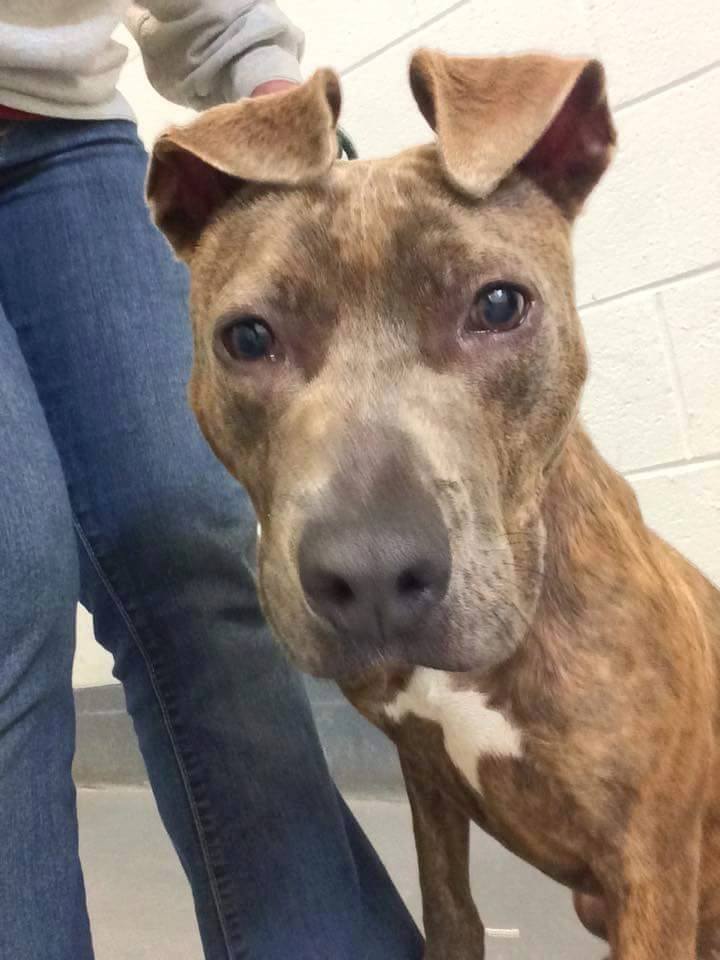
East Orange Animal Control Kills a Dog Adopted from Another Animal Shelter

One year ago, East Orange Animal Control made news for all the wrong reasons. At the time, the city’s recently hired Animal Control Officer, Amanda Ham, dramatically increased the animal shelter’s live release rate. However, East Orange Health Officer, Rochelle Evans, fired the ACO after Ms. Ham complained to the NJ SPCA about dreadful conditions the city refused to fix. Shortly after Ms. Evans fired Amanda Ham, the New Jersey Department of Health inspected the shelter and documented horrific conditions. Specifically, the New Jersey Department of Health reported animals inundated with a toxic feces and chemical filled soup, a fly infestation so severe that animals with open wounds and skin lesions were in danger of having maggots grow inside them, cats not provided with enough water and water they did have was contaminated with cat litter, and improper isolation of sick animals. Thus, East Orange Animal Control’s shelter was a complete mess last year.

East Orange Animal Control Kills a Friendly Dog Adopted from Liberty Humane Society

East Orange Animal Control killed a friendly dog recently adopted from Liberty Humane Society. Roxy was adopted from Liberty Humane Society in late April and was a sweet dog according to the shelter’s volunteers. For some reason, the adopter decided not to keep Roxy and turned her into East Orange Animal Control in late May. On Tuesday, June 2, Liberty Humane Society heard East Orange Animal Control might have Roxy and attempted to contact East Orange Animal Control, but East Orange Animal Control did not respond to Liberty Humane Society that day. On Wednesday, June 3, East Orange Animal Control killed Roxy and two other dogs while the facility had empty kennels.


Roxy Killed by East Orange 2

While some people may blame the owner for this event, this criticism is unfair. The owner did a noble thing and adopted the dog from Liberty Humane Society, a shelter with very little space, and surely saved a life. Certainly, the owner should have returned the dog to Liberty Humane Society. However, we don’t know if there were extenuating circumstances. For example, perhaps the owner could not travel to Liberty Humane Society due to lack of transportation. Alternatively, perhaps East Orange Animal Control was close to her home and she thought the shelter would do its job and get Roxy back to Liberty Humane Society. Either way, East Orange Animal Control decided to kill the dog and must shoulder 100% of the blame.

East Orange Animal Control’s actions raises serious questions. If Roxy was surrendered to East Orange Animal Control on May 28 or after, East Orange Animal Control would have violated N.J.S.A. 4:19-15.16 e. requiring shelters to offer an animal for adoption for at least 7 days before killing that animal. While East Orange Animal Control is not legally required to scan animals surrendered by their owners for a microchip, one would think a shelter would do so. If East Orange Animal Control did scan Roxy for a microchip, East Orange Animal Control would have known Roxy was recently adopted from Liberty Humane Society. If East Orange Animal Control knew Roxy was recently adopted from Liberty Humane Society, the killing of her would be even more heinous. Tragically, Liberty Humane Society had plenty of empty kennels to house Roxy after the shelter adopted out 37 animals a few days earlier during a fee-waived adoption promotion.

Liberty Humane Society Empty Kennels May 2015

East Orange Animal Control’s Questionable Veterinarian

The New Jersey State Board of Veterinary Examiners concluded Dr. Kimani Griffith was grossly negligent in the care he provided a patient’s dog. In September 2004, Dr. Griffith spayed a female dog and performed a mastectomy after noticing a lump on the dogs’s teats. After the owner’s dog experienced complications from the surgery, Dr. Griffith failed to properly diagnose the problem and delayed appropriate treatment that resulted in the dog’s death. The New Jersey State Board of Veterinary Examiners ordered Dr. Griffith to pay nearly $2,500 in fines and complete 20 hours of continuing education in the area of General Surgery.

South Orange Takes Animals to East Orange Animal Control and to Dr. Griffith

South Orange has taken at least one animal this year to East Orange’s animal shelter. After Jersey Animal Coalition left South Orange in 2014 due to conflicts related to a failed New Jersey Department of Health inspection, South Orange brought animals to the high kill Associated Humane Societies – Newark shelter. In 2015, after AHS-Newark required South Orange to also purchase animal control services, South Orange ended its relationship with AHS-Newark. Earlier this year, South Orange ACO, Melanie Troncone stated South Orange currently was taking stray animals to Puppy Love, a pet groomer in Maplewood, and South Orange Animal Hospital. Ms. Trancone stated the animals would be held for 7-10 days at these locations and then released to an unnamed rescue or a shelter. Around the same time as the ACO made this statement, she wrote the following comment on a Facebook post saying she brought a large stray dog to East Orange’s animal shelter:

South Orange Taking Dogs to East Orange

One has to question why South Orange would choose to take a lost dog to one of the state’s worst pounds? Does South Orange have a contract with East Orange Animal Control or Dr. Giffith’s Country Lakes Animal Clinic in Mine Hill? Either alternative is not good and to not notify residents is despicable while the town drags its feet on re-opening the old JAC shelter with new management.

Companion Animal Protection Act Desperately Needed

The Companion Animal Protection Act (“CAPA”) requires several things that would have prevented the tragic killing of Roxy. First, CAPA requires all, not just stray, animals be scanned for microchips and possible owners or caretakers be contacted. In the case of Roxy, a micochip scan would have identified Liberty Humane Society as the faciity she came from and East Orange Animal Control would have had to contact Liberty Humane Society. Second, under CAPA animal shelters cannot kill animals when

(1) there are empty cages, kennels, or other living environments in the shelter; and,

(2) a foster home is available; and,

(3) a rescue groups is willing to accept the animal; and,

(4) the animal can be transferred to another shelter with room to house the animal; and

(5) the director of the agency does not certify that he or she has no other alternative.

Under CAPA, East Orange Animal Control would have been prohibited from killing Roxy since the shelter had empty kennels at that time. Additionally, the shelter would have had to contact rescues, fosters and other shelters before killing Roxy which likely would have caused people to identify her earlier. Certainly, if East Orange Animal Control contacted Liberty Humane Society, which had room, Liberty Humane Society would have taken Roxy back. Thus, CAPA would likely have prevented Roxy’s killing assuming the law was properly enforced.

Mayor Lester Taylor Must Do the Right Thing for His Community and the Animals

East Orange Animal Control is currently spending much more money than other municipal shelters who save their animals. In 2013, the city spent $345 per dog and cat and likely killed most of their animals (the facility did not report outcome data). On the other hand, Perth Amboy only spent $281 per dog and cat in 2013 and saved 97% of its dogs and 93% of its cats. In 2014 East Orange budgeted $2.63 per person on its animal control and sheltering operations while Perth Amboy only spent $2.34 per person in 2014. Thus, East Orange is wasting taxpayers money and embarrassing the city in the process.

East Orange Animal Control currently bans volunteers from its shelter. Basically, the only exposure animals got until recently were pictures a couple of select people were allowed to take through the kennels. Clearly, such pictures are depressing and don’t do nearly enough to promote the adoption of these animals.

East Orange Shelter Photo 1 East Orange Shelter Photo 2 East Orange Shelter Photo 3 East Orange Shelter Photo 4

Sadly, East Orange Animal Control has now illegally banned people from even taking these photos. Furthermore, East Orange Animal Control bars the public from taking photos of the animal shelter as well.

East orange Photo ban

Nathan Winograd, who is a no kill leader and an accomplished attorney, provided the following summary of why it is illegal for animal control shelters to ban photos and videos:

Banning photography and video in public areas of the shelter limits free speech. See Animal Legal Defense Fund vs. Otter, 2014 WL 4388158*10 (D. Idaho 2014). The taking of a photograph or video is “included with the First Amendment’s guarantee of speech and press rights as a corollary of the right to disseminate the resulting recording.” ACLU vs. Alvarez, 679 F.3d 583, 597 (7th Cir. 2012). As the ACLU has correctly argued, “Videotaping and capturing images of poor shelter conditions or neglected animals are indistinguishable from ‘commenting’ or ‘speaking out’ on such conditions.” Volunteers, rescuers, and members of the public have a right to document things they believe are improper. They also can take photographs and videotape to assist in finding animals homes.

Not only is East Orange Animal Control needlessly killing animals, it now is violating our First Amendment rights of free speech and freedom of the press. As a result, East Orange Animal Control has added violating the First Amendment to the United States Constitution to its breaking of state animal shelter laws.

Volunteering at an animal shelter does as much good for the people giving their time as the animals themselves. People need to have meaning to their life. Rehabilitating an animal and being part of its metamorphosis is incredibly moving. Animals open up the most hardened hearts as evidenced by the many successful animal shelter programs at prisons. Senior citizens, young people who need direction, and families looking to spend time together can join up, save lives, and be part of something that builds up their self-esteem and their community. Thus, animal shelter volunteer programs help the people volunteering just as much as the animals those folks help.

East Orange must stop depriving its own citizens from experiencing the opportunity to volunteer and better themselves. Countless communities, such as ones with high poverty rates like Perth Amboy, have come together and made their animal shelter a source of pride. Mayor Taylor touts his community support programs yet his animal shelter refuses to let those citizens help. It is time Mayor Taylor clean house in his Animal Control department, hire caring and compassionate people, and let his community help its animals. If Perth Amboy, which has a higher poverty rate than East Orange, can do this then why can’t East Orange?

East Orange’s residents must come together and demand more from their city government. Illegal activities, unethical actions, and depriving the city’s own citizens the opportunity to better themselves have made the city’s animal shelter an urgent issue. If the elected officials refuse to fix the animal shelter, then East Orange’s citizens should make sure those officials are shown the door.

Associated Humane Societies’ History of Conflicts

Recently, Associated Humane Societies made headlines after it banned volunteers from its Tinton Falls shelter. On Saturday, April 11 I saw a number of social media posts about AHS banning all of its volunteers. On the next day, which ironically fell on the eve of National Volunteer Appreciation Week, the Associated Humane Popcorn Park Facebook page announced AHS suspended the Tinton Falls programs due to alleged misdeeds by the Tinton Falls volunteers. The banned volunteers responded and disputed the shelter’s allegations. While I am not close enough to the situation to comment on the validity of both sides claims, I think looking at AHS’s history of disputes is quite revealing.

Corrupt Start to the Modern AHS Era

Lee Bernstein, who served as AHS’s Executive Director from 1969 to 2003, used highly unethical tactics to raise money for AHS and himself. Bernstein, who was a Newark City Councilman and AHS Board of Trustees member, voted to significantly increase the animal control contract fee Newark paid to AHS in 1968. After this fact became known, Mr. Bernstein faced a recall election to remove him from the Newark City Council. On the day before another Newark City Council resolution in 1969 to increase the fees paid to AHS again, Bernstein told the AHS Board that the new Newark contract was contingent on AHS hiring him as Executive Director for 5 years and paying him a specific salary if Bernstein lost his recall election. Newark residents subsequently booted the corrupt Bernstein from office in the recall election and Bernstein became AHS’s Executive Director.

The City of Newark later won a lawsuit against AHS to render the contract null and void. The judge’s ruling included the following statement:

In the light of the foregoing, the Court is satisfied that the contract of March 25, 1969 had its genesis in a corrupt understanding by which Lee Bernstein would receive employment and be supplied with a regular source of income, in the event that his political tenure (and income) were terminated by the recall election of June 1969. A corrupt understanding that undoubtedly was conceived in the mind of Mr. Bernstein, but to which the other members of the Board of Trustees of the defendant Humane Societies, nevertheless, gave their prior approval and assent.

Ultimately, Lee Bernstein was sentenced to jail for four months relating to this matter. Thus, AHS’s modern history had a corrupt beginning.

Horrific Treatment of Animals During Lee Bernstein Era

In 2003, the State of New Jersey Commission of Investigation (“SCI”) issued a scathing report on AHS. Some of the report’s key findings were as follows:

  • AHS raised massive amounts of money and failed to use enough of it to properly care for its animals
  • Shelters were mismanaged and ruled by then Executive Director, Lee Bernstein, with an iron fist
  • Ineffective oversight by AHS’s Board of Trustees

The SCI report summarized the history under Lee Bernstein as follows:

The history of AHS’s shelter operation has been dominated by deplorable kennel conditions, inhumane treatment of animals by workers, mismanagement and nonexistent or inadequate medical care. The problems were neither singular nor occasional.The accounts and descriptions provided by members of the public and former and current staff members, including veterinarians, paint a bleak picture of shelter life. The reality for the animals belied AHS’s propaganda that its “sole purpose” has been “the care and welfare of animals” and that it has “a high adoption rate.”

One example of Lee Bernstein’s cruelty was when he ordered a veterinarian to use only one needle per animal. Apparently, Bernstein thought the 5 cents savings per animal was more important than the pain an animal endured from being stabbed multiple times with a dull needle:

Bernstein reacted by issuing a memorandum to the veterinarian that “effective immediately, use only ONE needle per animal. . . .

In a responding memorandum, the veterinarian countered that the needles “are not especially high quality to begin with, become much more dull [with one or two passages through a vial’s rubber stopper] and, therefore, more painful to the animal upon injection.” She asserted, “According to you, the cost is $0.03-$0.04 per animal for an additional needle (plus probably at most $0.01 for medical waste disposal) – a bargain for an organization concerned about animal welfare.” She noted that “some shelter personnel are not especially adept at administering injections and a dull needle make[s] the job harder on everyone” and cited a recent complaint by a woman “who was appalled by her cat being stabbed four times before the vaccine was successfully administered at the shelter.” During this timeframe, AHS realized profits in excess of $1 million and had cash and investment balances valued at more than $8 million.

The SCI report stated Bernstein was a firm believer of survival of the fittest when it came to spending money on veterinary care:

His philosophy was that the strong ones would survive and the others would not. Assistant Director Terry Clark also expressed disapproval of her treating shelter animals. In an apparent attempt to dissuade her, Clark stated in one conversation that Bernstein’s remedy would be to euthanize any shelter animals that he finds in the clinic.

While some may say this report is old news, AHS’s current Executive Director, Roseann Trezza, worked at AHS and served on the AHS Board of Trustees for three decades prior to the release of the SCI report. In fact, she was the Assistant Executive Director when the report was released. Popcorn Park Director, John Bergmann, also worked at AHS and was a Board of Trustees member during some of the time period covered by this report. Similarly, AHS Board of Trustees member and Treasurer, Barbara Lathrop, also had been with AHS for 27 years prior to the release of the SCI report. Thus, many people in AHS’s current leadership worked at AHS for many years during the horrible Lee Bernstein era.

Additionally, the SCI report alleged Roseann Trezza helped Bernstein implement his don’t treat the shelter animals plan:

In addition, Dr. Binkowski’s practice of returning animals under treatment to the shelter with instructions to the worker to administer certain medications was thwarted when Trezza issued a memorandum, dated March 9, 1994, to the front office and kennel staff that she was assigning one individual in the front office to “be responsible for dispensing the medication [and that n]o medications are to be held or given out by the kennel staff.” According to Dr. Binkowski, this rule effectively deprived many, if not most of the animals of their medications because the front office employee had numerous other responsibilities and administering to the shelter animals was not her primary assignment.

Finally, Roseann Trezza showed her true colors when AHS published a glowing memorial article on Lee Bernstein in a 2008 issue of the Humane News. Remarkably, AHS made no mention of Lee Bernstein’s egregious acts towards the shelter animals detailed in the SCI report.

Two years after the SCI report was published, AHS paid $138,057 to settle alleged violations of the State’s Consumer Fraud Act and Charitable Registration and Investigation Act. Unfortunately, the settlement agreement only mandated a two year monitoring program to ensure AHS’s compliance.

History of Conflicts with Shelter Veterinarians in SCI Report

The SCI report detailed recurring conflicts between AHS and its veterinarians over the care provided to animals at the organization’s Newark, Tinton Falls and Popcorn Park shelters. The striking thing about these conflicts was the consistency in the accounts from various veterinarians. The following statements by one AHS-Newark veterinarian summarized the theme of all these accounts well:

After you received my letter of resignation, you asked me what it would take to get me to sign a contract. One of the main reasons I am resigning is because insufficient resources are allocated for basic needs – housing, food, and medical well-being of the shelter animals and the operation of the Medical Department. As a result, it is my professional judgment that minimal standards of care are not being met and that delivery of medical care to animals is sorely lacking to the point that animals are suffering. Indeed, I am becoming increasingly alarmed at the level of care provided by AHS which I think is often below the minimal standard of humane care provided by state anti-cruelty laws. Also, I am concerned that AHS is acting negligently toward animal owners and the public that it is supposed to serve. I should state that I have many examples in addition to ones described below which I will discuss with you or any interested party.

Frankly, any animal welfare organization that repeatedly fights with its own veterinarians to provide less care to its animals should get out of the animal sheltering business.

AHS also responded in a defiant tone to the SCI report. The organization did state it would try to improve, accepted Lee Bernstein’s resignation and appointed Roseann Trezza as the new Executive Director. However, AHS also wrote the report was “replete with outdated information, pervasive exaggeration, factual embellishments, and intellectually impossible conclusions.” Thus, I did not leave with a warm fuzzy feeling that AHS was going to become a hunky dory organization.

AHS Throws a Concerned Employee Under the Bus

AHS fired an employee shortly after he raised concerns about a dog that eventually killed an adopter according to court documents. The employee expressed reservations about AHS’s and Roseann Trezza’s decision to adopt out a dog with a serious bite history. The dog’s previous owner paid AHS a $205 fee to keep the dog under observation for ten days, then euthanize, and cremate it. The dog killed the adopter nine days after the adoption in an attack that was eerily similar to the one on the previous owner. After hearing this news, the employee told other workers that he knew this would happen. Two weeks later AHS fired the employee under Roseann Trezza’s orders per the court documents.

AHS allowed another employee to continue working at the organization after he was charged with altering records related to the case. Several months after the dog killed the adopter, Burlington County authorities brought charges against AHS-Newark’s shelter manager at the time, Denton Infield, for allegedly deleting portions of the dog’s records indicating prior vicious behavior. Despite this act, AHS not only continued to employ Mr. Infield for years after this incident, but allowed him to represent the shelter in a number of media interviews.

While I don’t think AHS thought this dog could have killed this woman, the organization’s treatment of the two employees speaks volumes about AHS. The employee who correctly pointed out the issue was fired while the staff member who was charged with tampering with evidence stayed on in a prominent role with AHS. Evidently, loyalty is more important than doing the right thing at AHS.

AHS Fights Against Proposed Improvements from the Animal Welfare Task Force

After the SCI report on AHS and an earlier one on the the state’s SPCAs, Governor McGreevey formed the Animal Welfare Task Force to improve animal welfare in New Jersey. The Animal Welfare Task Force Report made the following recommendations:

  • Update animal cruelty laws
  • Replace the NJ SPCA with specially trained police officers to enforce animal cruelty laws
  • Use low cost financing to build more animal shelters
  • Implement progressive animal shelter policies
  • Make TNR legal and encourage its practice
  • Increase quality and quantity of animal shelter inspections
  • Improve training and oversight of animal control officers

While anyone seriously concerned about animals would enthusiastically support this report, Roseann Trezza came out strongly against a preliminary version. Specifically, Roseann Trezza seemed to parrot PETA, which kills almost all of its shelter animals, with this frightening quote:

“What they want is obviously unrealistic,” said Roseann Trezza, executive director of the Associated Humane Societies, the largest private animal shelter operation in the state with three shelters and a zoo. “In a perfect world, we wouldn’t have to euthanize any animal. But in reality, people do not want to adopt many animals we find and the job of animal protectors is not to merely prolong life, but to relieve suffering,” said Trezza.

To make matters worse, Roseann Trezza appeared to fight against the recommendation to make TNR legal and the preferred practice for dealing with feral cats:

Trezza recited a litany of New Jersey cases––familiar to ANIMAL PEOPLE––involving cat colony caretakers who worked without backups, then died, fell ill, or moved, leaving unfed cats behind.

While I don’t know if AHS opposed TNR for financial or philosophical reasons, the end result was the Animal Welfare Task Force recommendation for TNR never was adopted statewide.

AHS Fights With New Jersey Department of Health Inspectors

New Jersey Department of Health inspectors found horrific problems at AHS in 2009. While I could write an entire series of blogs on these inspection reports, the photos below summarize the conditions very well:

6 Puppy with wounded ears 13 Dogs in feces 14 Dog covered in feces 15 Dogs in dirty kennel 21 Dead animals in shopping cart 24 Closeup of Mange Dog 40 Dead Cat That Was Found in Colony Room 43 Dead Dogs in Shopping Carts. Blood. Maggots 44 Severe Fly And Maggot Infestation

AHS complained the inspectors were just too hard on them. In an interview with NBC New York, Denton Infield, who was charged with tampering with evidence in the dog killing an adopter case six years earlier, basically said dogs are going to poop at night and you can’t prevent them from wallowing in it. Mr. Infield went on to say poor AHS contracts with dozens of municipalities and might close due to potential fines. Ironically, New Jersey animal shelter regulations only allow fines of up to $50 per offense. During that year AHS had a $1.5 million profit and over $10 million in net assets. Clearly, Mr. Infield and AHS were full of it.

Sadly, the New Jersey Department of Health continued to find significant issues during another inspection in 2011. The inspection report noted dogs housed in kennels with a collapsed roof and workers throwing damaged roof material directly over these dogs. Additionally the report stated outdoor drains were in severe disrepair, no isolation areas for sick large dogs existed, automatic dog feeders were filthy, dogs were exposed to contaminated water and chemicals during the cleaning process, and some animals were not receiving prompt medical care.

The following photos were taken during the 2011 inspection:

AHS 2011 Insepction Sick Rottie AHS 2011 Inspection Cakes on Food 2 AHS 2011 Inspection Dog Near Feces in Drain AHS 2011 Inspection Dog Under Roof Construction AHS 2011 Inspection Smeared Feces

Outrageous Fight with Veterinarians and Animal Welfare Activists for Patrick

In 2011, AHS helped rescue an incredibly emaciated pit bull named Patrick. The dog was found in a garbage chute by workers in an apartment building and was rushed to AHS. To AHS’s credit, the shelter’s veterinarian stabilized Patrick and then sent him to a New Jersey veterinary hospital for intensive treatment. After bonding with Patrick, the veterinarians that ran the animal hospital wanted to adopt Patrick.

Instead of celebrating the fact that the severely abused dog finally had a loving home, AHS filed a lawsuit to take Patrick back. The lawsuit stated Patrick was “trademark registration number 23699” and was a “very valuable brand for commercial exploitation and fundraising.” Unsurprisingly, the animal welfare community was outraged by this action. Luckily, AHS ultimately lost the case after a judge awarded custody to the veterinarians who cared for Patrick.

Vicious Fights with Cory Booker

AHS fought with Cory Booker during the Senator’s tenure as Newark’s mayor. In 2011, the former Mayor announced his intention to build a new no kill shelter in Newark. Instead of rejoicing that AHS may have to kill fewer animals with another shelter in the city, AHS trotted out Denton Infield and spewed out all sorts of nonsense about no kill shelters. This nonsense seemed eerily similar to what PETA, which kills almost all of the shelter animals it takes in, says about no kill shelters. Ironically, AHS stated that Cory Booker should give the money he raised to AHS. Newark’s Deputy Mayor at the time, Adam Zipkin, rightfully called AHS on this BS, and cited no kill animal control shelters in Reno, Nevada, Tompkins County, New York, Charlottesville, Virginia, Marquette, Michigan, Berkeley, California, and Austin, Texas to prove Newark can be a no kill community.

AHS again fought with Cory Booker in 2013. This time AHS sent out Scott Crawford who complained former Mayor Booker was “belittling us and causing us problems.” After all, how dare the Mayor question the record of the high kill shelter with such a sordid history in his own city? Deputy Mayor Zipkin stated the city intended to build a new no kill shelter “due to our extreme dissatisfaction with the level of care at the existing AHS facility – and because far too many of the animals are unnecessarily killed there each year by AHS.” Thus, AHS could not get along with the popular mayor of the city where the organization’s largest shelter is.

Repeated Fights with Volunteers

AHS-Tinton Falls banned its volunteers in 1998 after the volunteers complained about poor shelter conditions. When complaints to AHS and the New Jersey Department of Health resulted in no meaningful actions, one volunteer reached out to her Assemblywoman on the matter. Subsequently, the NJ SPCA was contacted and around a week or so later AHS ended its volunteer program at the shelter for “insurance reasons.” At the time, Lee Bernstein said the volunteers complained about shelter conditions because they were just bitter about being banned. The volunteers were ultimately proven right after the SCI report came out citing the deplorable conditions at AHS’s shelters.

AHS-Newark’s relationship with volunteers running two separate “Friends” pages ended in recent years. In 2013, AHS banned the volunteers running the “Friends of Newark NJ Animal Shelter” Facebook page which currently has over 6,700 fans. At the time, the page primarily focused on saving the shelter’s dogs. In 2012, the last full year this page supported the shelter, AHS-Newark reported 15% of its dogs were killed, died, went missing or were unaccounted for. In 2013, after these volunteers were banned, 38% of AHS-Newark’s dogs were killed, died, went missing or were unaccounted for. Subsequent to the banning of these volunteers, another volunteer formed a Facebook page called the “Friends of Associated Humane Society – Newark.” However, the volunteer parted ways with AHS on less than friendly terms in 2014. Thus, AHS has a history of fighting with and banning the very volunteers giving their all to help the organization’s animals.

History Repeats Itself

To be fair, AHS has improved since the Lee Bernstein era. The SCI report did detail Roseann Trezza fighting with Lee Bernstein at times. For example, Roseann Trezza advocated for sending more animals to rescues.

However, AHS has a very long way to go. The organization’s kill rate is still way too high based on recent data. Furthermore, the three AHS shelters only adopted out 14-39 percent and 6-44 percent of cats and dogs that AHS should adopt out based on my recent analyses of the organization’s performance.

At the end of the day, I firmly believe the banned volunteers side of the story verses AHS’s version. This organization’s history of conflict and highly questionable activities is consistent with them banning volunteers for nefarious reasons. George Santayana stated:

“Those who fail to learn from history are doomed to repeat it”

Unfortunately with AHS’s history, fighting with volunteers and other animal advocates is par for the course. Until AHS’s senior leadership is replaced with competent and compassionate people, AHS’s history of not doing right by the animals will continue.