New Jersey’s Lawless Animal Shelters Need Policing

Recently, terrible conditions at New Jersey animal shelters became well-publicized. The NJ SPCA took over Hunterdon Humane Animal Shelter in January after Hunterdon Humane Animal Shelter’s Board President was charged with animal cruelty for failing to provide proper care to a number of cats at the facility. In March, Jersey Animal Coalition failed a joint state Office of Animal Welfare and South Orange inspection resulting in the shelter’s planned closing in November. The Office of Animal Welfare inspected the East Orange Animal Shelter in June and found horrific problems. During June, Elizabeth Animal Shelter illegally killed an owner’s two dogs before the 7 day state mandated hold period elapsed. In July and August, the Office of Animal Welfare inspected Linden Animal Control and requested Linden’s Health Officer shut the facility down. The Office of Animal Welfare also documented significant problems at Helmetta Regional Animal Shelter in July and the problems continue to exist today. Local animal activists in Montclair documented Montclair Township Animal Shelter violating New Jersey animals shelter laws, such as failing to maintain adequate temperatures in the facility, using toxic solutions of chemicals causing burns and possibly lung injuries to shelter animals, and failing to provide prompt veterinary care. As a a result of these events, animal activists in New Jersey are becoming aware of the crisis in our state’s animal shelters.

New Jersey Animal Shelter Laws Are Pretty Good

New Jersey’s animal shelter laws are pretty good relative to other states. Our stray/hold period of seven days is longer than most states. New Jersey also prevents its shelters from killing owner surrendered pets immediately by requiring these animals be held 7 days or sent to rescue. Furthermore, state animal shelter laws require facilities to have a supervising veterinarian who approves a disease control program that addresses “both the animals’ physical and psychological well-being.” N.J.A.C. 8.23A-1.9 also mandates “animals displaying signs of stress shall be provided with relief pursuant to the disease control and health care program.” New Jersey shelters must also keep their facilities clean and use solutions and products that will not harm the animals. Finally, specific rules exist to help ensure euthanasia is done as humanely as possible.

Local Boards of Health Fail Miserably at Enforcing New Jersey Animal Shelter Laws

New Jersey animal shelter laws are largely enforced by local boards of health rather than the New Jersey Department of Health’s Office of Animal Welfare. Under N.J.A.C. 8.23A-1.2 (b), animal shelters must pass an annual inspection by the local health authority. The New Jersey Department of Health’s Office of Animal Welfare, which is tasked with ensuring sanitary and humane conditions exist at New Jersey’s animal shelters, also has the right under state law to inspect these facilities. In practice, the Office of Animal Welfare rarely inspects animal shelters. Ultimately, local municipalities through a recommendation by the local health authority or the state Office of Animal Welfare can revoke an animal shelter’s license.

The shocking conditions exposed this year at northern New Jersey animal shelters prove local health authorities cannot adequately enforce the state’s animal shelter laws. Prior to the NJ SPCA arresting Hunterdon Humane Animal Shelter’s Board President in January 2014, the Office of Animal Welfare issued a scathing inspection report on October 23, 2013. The inspection report noted Hunterdon Humane Animal Shelter housed sick and healthy cats together, kept cats with feces all over their feet and legs, failed to provide sick kittens covered in feces prompt vet care, allowed cats and kittens to have eye discharge so severe they couldn’t open their eyes, illegally killed animals before the 7 day hold period elapsed, and routinely used heart sticking to kill animals. Jersey Animal Coalition, which performed poorly in state Office of Animal Welfare inspections from 2005 – 2007, passed subsequent South Orange inspections and then miserably failed an Office of Animal Welfare inspection in March 2014. The inspection report noted sick/injured animals and animals under severe psychological stress were not treated, massive amounts of feces within and outside the facility, sick and healthy animals were housed together, no disease control program approved by a veterinarian, and animals not provided adequate amounts of water. The Office of Animal Welfare inspected East Orange Animal Shelter in June and reported animals inundated with a toxic feces and chemical filled soup, a fly infestation so severe that animals with open wounds and skin lesions were in danger of having maggots grow inside them, cats not provided with enough water and water they did have was contaminated with cat litter, and improper isolation of sick animals. Montclair’s Board of Health was “unable to locate” legally required inspections from 2010 and 2012, and took a grand total of an hour and 45 minutes and 60 minutes to conduct inspections in 2011 and 2013, respectively. Montclair’s Animal Welfare Advisory Committee documented numerous problems going on for years, such as dogs exposed to the elements, animals left isolated for extended times, and water not being properly supplied to dogs and cats. In October, Clifton Animal Control allegedly forced an owner to surrender their dog and then illegally killed the family pet before the required 7 day hold period elapsed. Thus, we clearly see local boards of health cannot properly ensure New Jersey’s animal shelters are kept sanitary and run in a humane manner.

Reports of serious violations of state animal shelter laws at various central central New Jersey facilities show the problem exists throughout the state. Elizabeth Animal Shelter, which presumably passed the Elizabeth Board of Health’s annual inspections, apparently routinely illegally killed owner surrendered animals. Based on reports at the time, the Elizabeth Animal Shelter told a person surrendering two dogs, which he did not own, to bring the dogs in on their weekly kill day and the shelter executed the animals that very same day. Linden’s Board of Health failed to even perform legally required annual inspections of Linden Animal Control from 2007-2012. When the state Office of Animal Welfare inspected the facility on two occasions, the Office of Animal Welfare requested Linden close the facility immediately due to the horrific conditions. Helmetta Regional Animal Shelter inspections conducted by the Middlesex County Board of Health and Office of Animal Welfare turned up serious problems for years, but the very same local regulator continues to say everything is good. At the same time, activists documented terrible conditions and blatant violations of New Jersey animal shelter and federal controlled substance laws. As a result, local boards of health fail to do the necessary job of ensuring animal shelter laws are properly enforced.

The failure of local boards of health to properly enforce animal shelter laws is not surprising. In reality these entities are ill-equipped to inspect animal shelters. Local boards of health are used to inspecting places, such as restaurants, which are far different than animal shelters. In reality, animal shelters are more akin to hospitals than restaurants and other businesses local boards of health usually inspect. The New Jersey Department of of Health and several other public and private entities inspect health care facilities for compliance with state and federal laws at least annually. As a result, the New Jersey Department of Health’s Office of Animal Welfare should regulate the state’s animal shelters in a similar manner as the New Jersey Department of Health regulates hospitals and other health care facilities.

Local health departments are not independent from many of the shelters these agencies regulate. While local Health Officers must be licensed by the New Jersey Department of Health, these Health Officers and their personnel are employees of local governments. As such, these local health departments will typically not want to rock the boat. After all, would you want to tell the elected official, who is your boss, that his or her animal shelter failed to comply with New Jersey laws? Clearly, the costs to fix, which would either increase property taxes or reduce spending on other popular programs, and negative press hurt the reelection prospects of these local politicians. When you consider the state Office of Animal Welfare rarely performs independent inspections, local Health Officers have a strong incentive to not enforce New Jersey’s animal shelter laws. Thus, the system to regulate New Jersey’s animal shelters is set up to fail.

NJ SPCA Cannot Effectively Regulate Animal Shelters

The NJ SPCA, which are New Jersey’s animal police, has limited authority and will to clean up the state’s animal shelters. This private group, which holds police powers relating to animal cruelty law enforcement, typically handles animal shelters with kid gloves. For example, several people told me the NJ SPCA was notified of Jersey Animal Coalition’s problems years ago, but never acted until after the state Office of Animal Welfare and South Orange Board of Health asked the NJ SPCA to investigate Jersey Animal Coalition for animal neglect/cruelty last March. After seven months, the NJ SPCA has yet to conclude its investigation, but stated last May they would first work with the shelter to clean up its issues before bringing animal cruelty charges. Apparently, this cleanup never happened since Jersey Animal Coalition is closing and the NJ SPCA does not look like it will charge anyone. Similarly, the NJ SPCA’s Monmouth County guy, Buddy Amato, gave Helmetta Regional Animal shelter a glowing report in August despite numerous inspections, photos, and complaints proving otherwise. Subsequently, the NJ SPCA came to the shelter again and found major issues, but gave management 30-60 days to fix their problems. In 2012, Buddy Amato defended several Monmouth County towns who illegally killed feral cats before the state mandated 7 day hold period elapsed. Even when the NJ SPCA did take action against Hunterdon Humane Animal Shelter, the courts put the former Board President charged with animal cruelty back in charge. As a result, the NJ SPCA’s and the courts coddling of cruel animal shelter directors encourages all animals shelter directors to act in their own, rather than the animals, interest.

New Jersey Department of Health’s Office of Animal Welfare Needs to Directly Enforce State Animal Shelter Laws

The Office of Animal Welfare needs to dramatically increase the number of its animal shelter inspections. From January 1, 2013 through August 6, 2014, the Office of Animal Welfare only inspected six different animal shelters out of one hundred plus facilities in the state housing dogs or cats. The Office of Animal Welfare only has one inspector, Linda Frese, to police over one hundred animal shelters plus countless pet shops statewide. Luckily, Linda Frese performs thorough inspections and does terrific work. However, Ms. Frese needs lots of help to ensure all shelters are inspected properly. Given the crisis at our state’s animal shelters, the Office of Animal Welfare needs to hire enough inspectors to ensure every animal shelter in the state is inspected on a quarterly basis. Additionally, the Office of Animal Welfare should conduct these inspections without notifying local health departments to ensure these are truly surprise inspections.

New Jersey must pass new legislation providing the Office of Animal Welfare full power to close down terrible animal shelters. Under current law, the Office of Animal Welfare can only recommend that a municipality revoke an animal shelter’s license. As a result, local politicians currently can allow terrible animals shelters to continue neglecting their animals. Thus, the independent state Office of Animal Welfare must hold this authority to ensure New Jersey animal shelters are run properly.

Companion Animal Protection Act Needs to Become State Law

New Jersey shelter laws and the Office of Animal Welfare encourage shelter killing. Animal shelters in the Garden State may kill animals for any reason after seven days. For far too many shelters it is simply easier and cheaper to kill animals after one week. After all, if you have fewer animals in your facility you don’t have to clean, feed, and provide veterinary care to those animals. In fact, the Office of Animal Welfare actually encourages shelters to kill and advises municipalities to contract with kill rather than no kill shelters. As a result, New Jersey must pass legislation to force shelters to stop killing and start saving their animals.

The Companion Animal Protection Act (“CAPA”) needs to become law to ensure shelters save rather than take lives. CAPA requires shelters to follow many parts of the no kill equation, which is a series of programs proven to reduce or actually end the killing of savable animals. Specifically, CAPA requires animal shelters/municipalities do the following:

  1. Implement TNR and prohibit anti-feral cat policies
  2. Develop detailed animal care protocols for all animals, which includes nursing mothers, unweaned kittens and puppies, and animals which are old, sick, injured or needing therapeutic exercise
  3. Clean animal enclosures at least two times per day to maintain proper hygiene and be welcoming to prospective adopters
  4. Not kill any animal a rescue is willing to take
  5. Prohibit banning of rescues unless the rescue is currently charged with or convicted of animal cruelty/neglect
  6. Contact all rescues at least two business days before an animal is killed
  7. Match lost pet reports with animals in shelter and post stray animals on the internet immediately to help find lost pets owners
  8. Promote animals for adoption using local media and the internet
  9. Adopt animals out seven days a week for at least six hours each day, which includes evenings and weekends when potential adopters are likely to visit
  10. Not have discriminatory adoption policies based on breed/age/species/appearance (i.e. can’t prohibit pit bull, elderly pet, etc. adoptions)
  11. Offer low cost spay/neuter services, substantive volunteer opportunities to the public, and pet owner surrender prevention services
  12. Not kill any animals when empty cages exist, enclosures can be shared with other animals, or foster homes are available
  13. Shelter Executive Director must certify they have no other alternative when killing/euthanizing an animal
  14. Publicly display animal shelter intake and disposition statistics (i.e. numbers of animals taken in, adopted, returned to owner, killed, etc) for the prior year
  15. Provide the local government and the public access to the intake and disposition statistics each month
  16. Pet licensing revenues must be used to fund low cost spay/neuter and medical care for shelter animals rather than go to other government uses

Passing CAPA will require a huge fight as many New Jersey’s animal shelters along with the Humane Society of the United States (“HSUS”) and ASPCA will lobby against these common sense reforms. HSUS and the ASPCA fought similar reform efforts in many other states, such as New York, Minnesota, and California. However, this is a fight we must take on. CAPA, quarterly shelter inspections by the Office of Animal Welfare, and giving the Office of Animal Welfare the power to shut shelters down will spur massive improvements in the state’s animal shelters. Non-compliant municipalities and private animal shelters will face stiff penalties and therefore will dramatically change their ways.

As the past year showed us, we no longer can wait for municipalities and animals shelters to police themselves. Now is the time for a new sheriff to ride into town to bring law and order to our animal shelters. We can make this happen by demanding our state senators and local assemblymen/assemblywomen pass these laws to improve our shelter system. State Senator, Linda Greenstein, seems quite amenable to reforming our state’s shelter system and is someone we should work with.  Animal lovers are a huge voting block and New Jersey politicians better take us seriously. Enough is enough and if the politicians won’t help, we will show them the door. We can do this so let’s get to work!

Helmetta’s Hellhole of a Shelter

Recently, Helmetta Regional Animal shelter has come under fire. A newly created Facebook page, Reform the Helmetta Regional Animal Shelter, and web page details very concerning issues on a daily basis. The documentation includes terrible inspection reports, shocking photos, and detailed accounts from adopters, volunteers and former employees. Most impressively, the Facebook and web pages clearly articulate these points and come across as highly credible.

Helmetta’s Questionable Shelter Project

The shelter opened up in 2011 with a lot of publicity. Helmetta issued $1.9 million in bonds to fund the construction. Mayor Nancy Martin at the time stated “The borough took an area which was in need of redevelopment and built a beautiful state of the art facility that serves 21 Middlesex and Monmouth County municipalities.” Helmetta uses the facility to shelter its homeless animals and numerous other municipalities in exchange for animal control contract fees.

Mayor Nancy Martin hired friends and family to run the shelter. Nancy Martin, who also serves as tax collector of Perth Amboy, hired Perth Amboy Animal Shelter’s former shelter’s managers, Michal Cielesz, and her husband, Richard Ceilesz, to run the new shelter. The couple killed 37% of Perth Amboy Animal Shelter’s dogs and cats per the shelter’s report to New Jersey’s Office of Animal Welfare during their last year in 2010 compared to the new management’s 4% euthanasia rate in 2013. However, Perth Amboy’s police department records show the Cielesz’s killed 43% of the dogs and cats impounded in 2010. Additionally, the Perth Amboy police department reported only 12 dogs and cats were adopted out of 507 dogs and cats impounded during the Cielesz’s last year running the Perth Amboy Animal Shelter. Mayor Nancy Martin also landed her son, Brandon Metz, the head Animal Control Officer job at the shelter and even got the town to approve her son receiving $50 per animal control call “after normal business hours (which may be as early as 3 pm on weekdays and weekends based on some animal control contracts). According to a 2011 town newsletter, the Mayor’s son also receives $1,000 per animal control contract. To further support her son, Mayor Martin even got the town’s taxpayers to pay her son additional hourly wages to clean kennels. Mayor Martin’s son also serves as Borough Laborer, Water Meter Reader, and Certified Recycling Coordinator. As a result, Mayor Martin appears to use a significant amount of the shelter’s funding to pay her friends and family.

The shelter brings in a significant amount of money to Helmetta. In 2013, the shelter earned $415,959 in revenue from its animal control contracts and shelter operations and only incurred $280,125 in related expenses. As a result, Helmetta earned a $135,834 profit from running its shelter. However, the shelter also has debt service costs to cover from Helmetta’s $1.9 billion bond issuance to build the shelter. Per borough officials, Helmetta pays $80,000 – $90,000 of debt service costs each year resulting in the shelter’s net positive cash flow of only around $45,834 – $55,834. The shelter would have negative cash flow of approximately $63,000 – $73,000 without other fees primarily from dogs transported for adoption from out of state shelters. As a result, Nancy Martin’s shelter project has a very thin margin of error to financially succeed.

Helmetta’s Flawed Financial Model Requires Running a Regressive Shelter

Helmetta’s shelter was designed as a profit making enterprise. In a 2011 newsletter to Helmetta residents, Mayor Nancy Martin argued Helmetta was building the shelter to provide a “source of revenue to keep the tax base stable” after the town’s previously hyped real estate redevelopment project on the property fell apart. Mayor Martin also stated each additional animal control contract brought “additional revenue” and was “pure profit.” Thus, the town and the Mayor’s son were to profit from homeless animals in Middlesex and Monmouth Counties.

Helmetta entered into animal control contracts with too many municipalities. To a certain extent, entering into multiple contracts makes financial sense as the revenues earned from such contracts more adequately cover fixed overhead costs, such as the Executive Director’s salary and utilities. However, Helmetta took this to an extreme and impounds too many animals for the space it has. For example, in 2012 Helmetta impounded 483 local dogs. Based on the shelter’s assumed capacity of 33 dogs, these dogs would only have 25 days before no space was left for these animals. To make matters worse, the shelter’s animal control contracts pay Helmetta on a per animal basis and encourage impounding more animals. Furthermore, Mayor Martin’s son, Brandon Metz, opposes TNR in most places and conveniently allows him to bring in more of his $50 per hour “after normal business hours” fees. As a result, Helmetta and the Mayor’s son literally profit off taking in too many animals and killing them.

Helmetta’s original shelter projections grossly underestimated the cost to properly care for animals. In the 2011 newsletter, Helmetta only forecasted total shelter costs, which includes expenses unrelated to animal care, would equal $57 per animal. Even the most efficient and effective shelters, such as KC Pet Project and Nevada Humane Society, incur much higher costs. For example, if Helmetta spent the $218-$395 per animal as these shelters pay, Helmetta’s originally projected $58,000 profit from running the shelter would turn into a $204,000 – $602,000 loss. These private shelters make up for their funding deficiency through fundraising, but Helmetta cannot receive these kind of monetary donations as a government run shelter. As a result of this gross underestimation of sheltering costs, the shelter needed to find other ways to make money to support the Mayor’s grand plan.

Helmetta’s Money Making Rescue Operation

Helmetta’s shelter transports massive numbers of easy to adopt dogs and puppies each year from southern states to the detriment of local dogs. Per the facility’s 2012 Shelter/Pound Annual Report, Helmetta transported 400 dogs in from other communities, 382 of which came from out of state. These additional animals reduce the time dogs have to stay in the shelter before space runs out from 25 to 14 days based on the assumptions above. Furthermore, the shelter impounded many more dogs in 2013 presumably due to increased transports. Based on the 1,296 dogs impounded in 2013 and the assumed capacity of 33 dogs, dogs would only have 9 days before space ran out at the shelter. Thus, Helmetta Regional Animal Shelter significantly reduces the chances of the contracting towns dogs from finding loving homes by transporting massive numbers of out of state dogs.

Transporting animals increases risk of disease at the destination shelter. Transported dogs often bring new and virulent diseases to shelters. The shelters exporting the dogs usually lack proper disease prevention/containment procedures. For example, the source shelter’s need to transport (i.e. overcrowding, lack of resources) often leads to animals being more likely to come down with serious diseases. Additionally, the trip to the new shelter can cause the animals to get sick due to overcrowding in vehicles and stress. Making matters worse, young puppies, whose mothers might not be vaccinated, transported on such trips do not have fully developed immune systems may be even more susceptible to getting sick. Dr. Kate Hurley, Director of the University of California Davis Shelter Medicine Program, who is one of the nation’s leading shelter medicine experts, argues shelters, such as Helmetta, must “have adequate veterinary resources and isolation rooms to
quarantine the animals.” Thus, Helmetta Regional Animal Shelter must have a top notch facility and procedures to transport hundreds of out of state animals each year.

Helmetta should incur significant costs for transporting and caring for these dogs brought to New Jersey. The town’s accounting records show Helmetta pays $400 to transport 10-13 dogs and puppies or approximately $35 per dog/puppy. Maddie’s Fund shelter financial management template estimates dogs staying at the shelter 21 days on average should cost $245 ($16 to feed, $50 to spay/neuter, $53 to vaccinate/de-worm, $66 to hold in facility, $10 for dog supplies and $50 to treat medical problems) to properly care for assuming all animals require medical treatment. Similarly, puppies staying at the shelter for only 14 days should cost $187 ($5 to feed, $50 to spay/neuter, $54 to vaccinate/de-worm, $18 to hold in facility, $10 for dog supplies and $50 to treat medical problems). The town’s adoption fees of $200 per puppy, $150 per vaccinated dog and $100 per unvaccinated dog would result in the following losses per animal:

1) Puppy – $22 loss
2) Dog ($150 fee) – $130 loss
3) Dog ($100 fee) – $180 loss

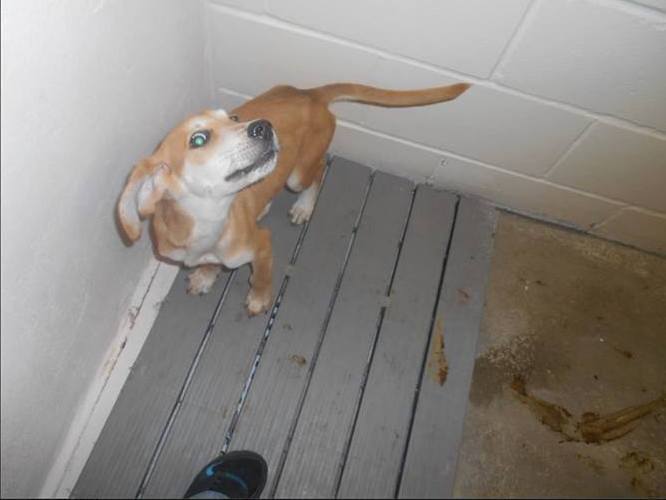
Helmetta’s shelter must cut corners to make a profit off the transported dogs and puppies. The shelter does not vaccinate animals upon intake or spay/neuter dogs and cats it adopts out. Additionally, Helmetta does not have enough staff to care for its animals. The National Animal Control kennel staffing guidelines argue Helmetta should have 15 kennel staff caring for the 182 animals it had at the shelter on July 16, 2014. However, the Middlesex County Department of Health found only 4 employees cleaned the facility in the morning and either the shelter director or another employee, such as an animal control officer, cared for animals after 12 noon when the shelter had a similar number of animals.  Skimping on cleaning staff leads to the following heartbreaking images at Helmetta Regional Animal Shelter:

Helmetta Filth 3

Helmetta Filth 2

Helmetta Filth 1

Furthermore, Helmetta provides little to no medical care for its animals. For example, the shelter’s veterinarian, Dr. Ehab Ibraheim, only visits the shelter monthly for a paid inspection. While Helmetta’s contracts allow the shelter to bill the municipalities for veterinary costs, the shelter does not profit from providing care and the extra fees could encourage these municipalities to not renew their contracts. The billings from several large contracting municipalities show Helmetta rarely provides veterinary care. Additionally, numerous adopters have come forward complaining of gravely sick animals to the point the borough council had to vote to refund the adoption fees. Countless images show the ramifications of not providing proper veterinary care for the shelter’s animals:

Helmetta sick animals 2

Helmetta sick animals

Helmetta sick animals 3

Helmetta’s cutting corners turns its shelter’s financial performance around. The $22 loss per transported puppy transforms into $142 profit per puppy when you don’t employ enough kennel staff and withhold vaccinations, veterinary care, and dog supplies. Similarly, the $130 loss per transported dog with a $150 adoption fee turns into a $33 profit per dog when proper care is not provided. Thus, Helmetta literally makes money off animals suffering.

State and Local Inspections Consistently Reveal Significant Problems

Helmetta’s shelter performed poorly in two New Jersey Office of Animal Welfare inspections. In October 2011, the inspector found the new facility’s kennel flooring was not impervious to moisture and therefore a disease vector. Furthermore, the inspection report noted kennels were not physically cleaned due to lacking enough staff. Additionally, Helmetta did not use the proper cleaning solution when they did happen to attempt to disinfect animal enclosures. The inspection report also noted the shelter’s “Veterinarian of Record” did not approve the shelter’s disease control program and the facility lacked a dedicated isolation area to prevent the spread of disease. The inspection report also noted improper euthanasia documentation and record keeping. In a follow-up inspection a month later, these same problems persisted.

Middlesex County Health Department inspections in October 2012 and July 2014 also documented widespread violations of New Jersey shelter laws. Both inspections revealed the “Veterinarian of Record” did not design, review or approve the facility’s disease control program or individual animal treatment protocols. The inspection reports also revealed kennel flooring continued to allow moisture to build up creating a ripe environment for disease to spread. Additionally, shelter management failed to isolate sick animals and keep proper records. The July 2014 report also noted management failed to properly clean the facility and even used food cans as water bowls. If lack of veterinary care at Helmetta wasn’t bad enough, the shelter transported dogs from out of state without legally required health certificates from a veterinarian. Thus, Helmetta continued to allow serious problems to persist for nearly three years at their “state-of the art facility.”

The repeated violations of New Jersey shelter law are consistent with Helmetta’s profit off the back of animals financial model. Hiring more people to clean, having a veterinarian approving a disease control program and providing proper care to animals, building a proper isolation area all cost money. Additionally, inaccurate record keeping could allow the shelter to kill animals before the 7 day required hold period, over-bill municipalities and even allow employees to sell pets themselves. As a result of Helmetta’s stated goal of profiting from the shelter are consistent with these recurring violations.

NJ SPCA Has No Credibility on the Helmetta Shelter Issue

Monmouth County SPCA’s Chief Humane Law Enforcement Officer’s recent email to Mayor Martin destroyed the NJ SPCA’s credibility on this issue. In the letter, Buddy Amato praised Helmetta Regional Animal Shelter’s cleanliness, staff, and shelter operations contradicting numerous inspection reports and countless other accounts. Helmetta subsequently posted the letter on their web site to discredit activists trying to reform this disgraceful “shelter.” Apparently, Buddy Amato did not expect his letter to cause him “embarrassment” and told Mayor Martin to remove the letter from Helmetta’s web site. Apart from the numerous grammatical errors in Buddy Amato’s emails, the “inspection” itself lacked detail and hardly represents anything close to a thorough inspection. As a result, no one should take this report seriously.

Unfortunately, Buddy Amato, despite working for the no kill Monmouth County SPCA, has a history of defending heinous actions by animal control officers. In 2012, Buddy Amato defended 3 Monmouth County towns who routinely killed stray cats before the legal 7 day stray hold period ended. According to Buddy Amato, there was “no cruelty” and towns just had “administrative issues” and “no one should lose their job.” In what world, is illegally killing a healthy cat not cruelty? If you or I trapped a stray cat and injected it with poison, Buddy Amato certainly would prosecute us and rightly so. Apparently Buddy Amato and the Monmouth County SPCA believe illegally killing animals is fine as long as its done by their friends in the business. Thus, Buddy Amato’s glowing report on Helmetta’s shelter lacks any credibility given it comes from the “no one should lose their job” for illegally killing healthy cats guy.

The NJ SPCA conducted an official investigation subsequent to the Buddy Amato debacle, but it raised more questions than provided answers. Specifically, the NJ SPCA prepared a report and issued 6 warnings, but will not release it to the public. Instead, the state’s animal police gave Helmetta 30-60 days to correct their problems. Helmetta has known about the significant issues at their shelter for 3 years from various local and state inspections. Frankly, the NJ SPCA’s coddling of shelters is disgraceful and enough is enough. Given the NJ SPCA’s own guy in Monmouth County went to bat for the shelter recently, how confident should we be that the NJ SPCA will really make sure the shelter gets cleaned up?

Middlesex County Board of Health Cannot Be Trusted to Do the Right Thing

The Middlesex County Board of Health has a history of being anti-animal. Despite all major animal welfare organizations, such as HSUS, ASPCA, Best Friends and no kill advocates, supporting TNR, Middlesex County Board of Health opposes TNR. Even worse, the Middlesex County Board of Health parrots false claims by cat hating groups, such as the American Bird Conservancy Association and PETA, who actively advocate rounding up and killing cats. To further destroy their credibility, the Middlesex Board of Health claims they advocate trapping and adopting out feral cats (impossible if cat is truly feral). Additionally, the Middlesex County Board of Health openly opposed the construction of a Middlesex County animal shelter in a letter to Mayor Martin. Interestingly, three years later Helmetta opened up its own for profit county animals shelter which fulfilled Middlesex County Board of Health’s catch and kill wish for feral cats.

Helmetta traps

As a result, we must view the Middlesex County Board of Health’s regulatory actions in light of these conflicts of interest.

The Middlesex County Board of Health’s response to Helmetta Regional Animal Shelter’s problems are distressing. Despite Helmetta violating New Jersey animal shelter laws for nearly three years, the Middlesex County Board of Health Director, Lester Jones, said do not worry about it after the issues became widely publicized in August. In fact, Lester Jones performed another inspection about a week later without the Office of Animal Welfare and miraculously reported improvements. After the NJ SPCA got involved one month later, Lester Jones performed another inspection and suddenly the same problems from before recurred, such as failing to isolate sick animals, out of state dogs without proper records, filthy conditions, and improper animal and medical record keeping. Remarkably, four days later Lester and Company inspected the shelter again and said things were greatly improving. Sorry Lester, I and many others are very worried about the conditions at this shelter. Given Middlesex County Board of Health’s failure to take effective action for three years and the conflicts of interest above, we cannot take this agency seriously. Time after time, local health departments fail to inspect shelters properly and ensure problems get fixed. Frankly, the Middlesex County Board of Health needs to request the state Office of Animal Welfare inspect the facility and then get completely out of the way. The Middlesex County Board of Health must have no involvement in the inspection and subsequent corrective actions for this intervention to have any credibility.

Helmetta Attempts to Cover Up its Disgraceful Shelter and Government

Helmetta’s Mayor and Borough Council are trying to hide the shelter’s and local government’s embarrassing facts from the public. During the summer, a former adopter, who adopted a gravely ill puppy from the shelter, took a video of an OPRA request he served at the borough’s municipal building. A part time police officer, who is also collecting a public pension, angrily told the man to stop taking the video and the officer said he did not need to follow the US Constitution. After the video went viral and Helmetta faced wide criticism, the officer resigned. As a response, Helmetta drafted an ordinance to ban all videos and pictures in public buildings, which would include the animal shelter, without a permit approved by the borough. The ACLU of New Jersey stated the proposed ordinance is illegal and would be subject to a legal challenge. In addition to making the borough’s taxpayers pay unnecessary legal expenses, Helmetta is clearly trying to operate under a veil of secrecy. Most disturbingly, Helmetta’s proposed ordinance is a blatant attempt to prevent the public from seeing the consequences of the borough’s for profit shelter.

Helmetta and Other Contracted Municipalities Residents Must Take Action

Residents in towns contracting for animal control and sheltering with Helmetta must demand their governments terminate these contracts. Clearly, Helmetta has no intention of running an animal shelter for the right reasons. The shelter’s stated goal, which is to run a for profit shelter, conflicts with the shelter’s duty to properly care for the animals. Repeated New Jersey shelter law violations over the course of three years prove the town’s elected officials and shelter management do not intend to improve the situation. Additionally, the lack of proper record keeping calls into question the validity of the amounts, which are largely based off these records, these municipalities taxpayers are paying Helmetta. Sayreville, the largest municipality contracting with Helmetta, seriously is considering terminating their arrangement with the shelter. Residents of these municipalities need to openly campaign to remove these politicians if these disgraceful arrangements continue.

Helmetta never needed to build an animal shelter. Based on New Jersey communities with similar demographics, the borough Helmetta should only need to impound around 15 animals a year from its borders. Assuming an average length of stay in the shelter of 30 days, the borough would typically only need to house 1 animal at a time. Literally, someone could foster the borough’s stray animals in their house. Helmetta residents need to question why the town incurred $1.9 million of debt to build a county animal shelter and allowed atrocities to occur at this facility when Helmetta itself barely had to house any animals.

The Mayor previously brought shame on the town by requiring police officers to aggressively write speeding tickets for nonresidents. Now, three officers in a police force of around six are suing Helmetta about this issue. Even worse, one of the lawsuits alleges discrimination based on one officer’s sexual orientation to force him to quit. Like the animal shelter, Mayor Martin tried to use the police department as a revenue source to reduce the need to raise property taxes. As with the animal shelter, the Mayor’s plan appears illegal and highly unethical and has brought negative publicity and embarrassment to this once quiet town.

Helmetta residents must recall Mayor Nancy Martin and all her allies on the Borough Council. At a certain point, Helmetta residents have to say enough is enough. Residents can no longer tolerate elected officials who run the town to the ground and then try to pass laws to hide these facts. Unfortunately, corruption and cruelty to animals go hand and hand in Helmetta. To end the cruelty at the animal shelter, residents must remove the corrupt politicians who caused it.

Merritt Clifton Uses Manipulative Math to Try and Discredit Nathan Winograd and No Kill

Renowned no kill and pit bull hater, Merritt Clifton, recently wrote an article downplaying Nathan Winograd’s no kill success. Clifton uses manipulative math and logic to argue Nathan Winograd’s no kill equation leads to less lifesaving than spay and pray and other archaic shelter policies.

Analysis Focuses on Shelter Animal Deaths Per 1,000 People Rather than Save Rates

Clifton bases his entire argument on shelter animal deaths per 1,000 people rather than shelter save rates. Per capita shelter kill rates certainly are an important statistic as they provide a perspective to the amount of killing in a community. However, per capita rates of shelter killing tell us nothing about how shelters are doing. Per capita shelter killing may decrease due to spay/neuter rates in the community at large, which may be due to socioeconomic status of the population or access to affordable spay/neuter resources outside of the shelter, or other external forces having nothing to do with shelter performance. Additionally, per capita kill rates tell us nothing about an animal’s prospects once it lands in a shelter. In other words, a shelter can kill a large percentage of the animals coming though its doors, but still have a low per capita kill rate. People want their shelters to save most of the animals coming into their facility. Animals having little chance of making it out alive of shelters rightfully disturbs many people. Thus, any comparative analysis of shelter performance must include save rates.

Clifton’s Own Preferred Metrics Show Nathan Winograd’s and No Kill’s Superior Performance

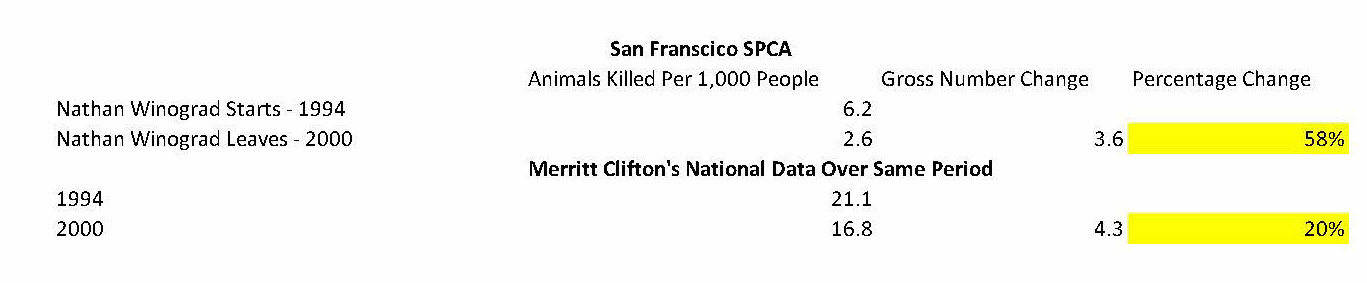
Clifton’s entire argument using total change in per capita kill rates ignores basic logic of any intelligent analysis. In a stunning example of lazy or deliberately deceptive logic, Clifton takes gross changes in per capita kill rates to assert Nathan Winograd wasn’t very successful. Unfortunately, the per capita kill rates were much different in these analyses and they require percentage change analysis. Specifically, per capita kill rates were so much higher in Clifton’s counterexamples to Nathan Winograd’s work at the San Francisco SPCA and Tompkins County SPCA that these kill rates had far more room to decline. However, we clearly can see Nathan Winograd outperformed Clifton’s counterexamples on an apples and apples comparison using percentages.

Clifton’s first misleading example compares Nathan Winograd’s performance at the San Fransisco SPCA with shelters nationally during the same period. As you can see, shelters nationally were killing far more animals than San Fransisco and therefore could decrease shelter killing in total more. However, we see on a percentage basis Nathan Winograd outperformed these shelters by nearly a 3-1 margin.

Merritt Clifton Nathan Winograd Analysis SF SPCA V1

Clifton’s second example is even more misleading. In this example, Clifton compares Nathan Winograd’s improvement in total per capita kill rate in San Fransisco with the period after he left. Clifton not only fails to use percentages, but uses a longer period to show Nathan Winograd’s results were not impressive. Once again, we clearly see the flaw in Clifton’s analysis when we compare the results on a percentage improvement per year basis. Specifically, Nathan Winograd’s save rate was 33% better per year. Additionally, Clifton fails to mention the per capita kill rate decrease at San Fransisco SPCA after Nathan Winograd left largely reflected lower intake, which has been a nationwide trend, and the save rate (percentage of animals impounded leaving alive) has not improved since Nathan Winograd left nearly a decade and a half ago. Clifton also failed to point out San Francisco’s save rate stagnated despite save rates nationwide dropping significantly during that same period.

Merritt Clifton Nathan Winograd Analysis SF SPCA V2

Clifton uses a similar misleading example comparing Nathan Winograd’s performance at Tompkins County SPCA with the period before he arrived. Once again, Clifton uses total rather than percentage improvement in per capita shelter killing rates and periods of differing length. After we adjust for these analytical errors, we see Nathan Winograd reduced per capita shelter killing at a rate over 6 times greater per year:

Merritt Clifton Nathan Winograd Analysis Tompkins

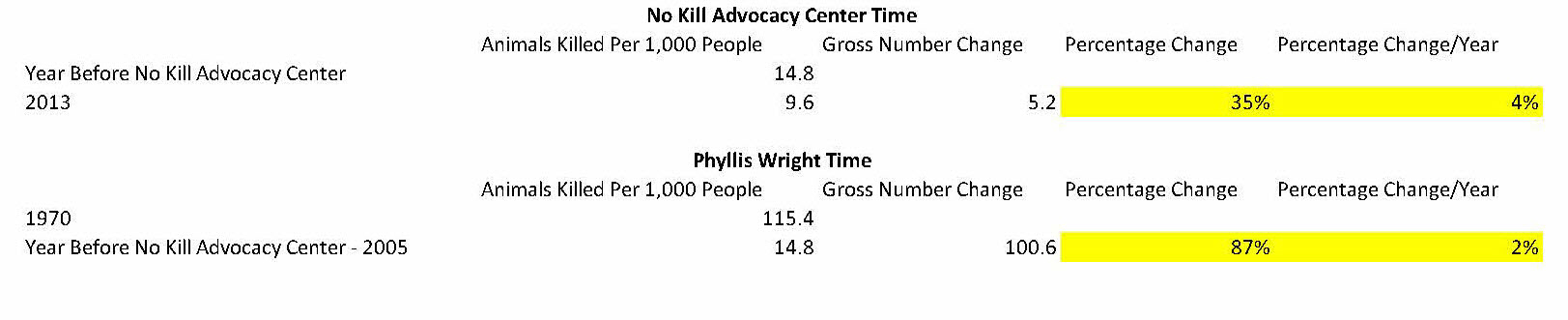
Finally, Clifton posts the most egregious of all comparisons. He compares the era of regressive kill shelter legend, Phillis Wright, with the era of Nathan Winograd’s No Kill Advocacy Center. In addition to the analytical errors above, Clifton also mistakenly assumes all shelters today are following the no kill equation. Even with this assumption stacked against no kill, the per capita kill rate decreased twice as much per year since the No Kill Advocacy Center’s arrival:

Merritt Clifton Nathan Winograd Analysis PW

Nathan Winograd and No Kill Had More Challenging Obstacles to Overcome

Nathan Winograd had to use new techniques to decrease shelter killing. In the previous periods, such as during Phyllis Wright’s era, spay/neuter rates were quite low. All shelters needed to do was point people where to get spay/neuter done and that alone would significantly decrease kill rates. For example, spay/neuter rates were quite low in the early 1970s, but currently dog and cat spay/neuter rates are up to 83% and 91% per nationally per the ASPCA. Additionally, shelters in Phyllis Wright’s era could easily adopt more animals out as massive numbers of highly adoptable animals were killed then. As a result, Nathan Winograd needed to enact innovative programs to further decrease killing. These policies required far more work, and hence met more resistance, from regressive and lazy shelter directors. Thus, Nathan Winograd decreased the rate of killing in a much more challenging environment.

Clifton makes another egregious error by claiming Tompkins County SPCA was doing great before Nathan Winograd arrived and achieving no kill was basically a piece of cake. Specifically, Clifton states the shelter had a below average per capita kill rate during that time. Based on Clifton’s per capita kill rate of 1.8 and Nathan Winograd’s 93% save rate at Tompkins County SPCA, that equates to an intake of 25.7 dogs and cats per 1,000 people. Tompkins County SPCA’s per capita intake during Nathan Winograd’s time was nearly twice the national per capita intake rate of 14 dogs and cats per 1000 people today per Clifton’s former newspaper. Assuming the per capita intake rate was the same during the year before Nathan Winograd arrived at Tompkins County SPCA, the Tompkins County kill rate would have been approximately 30%. Based on Austin Pets Alive’s data, most of the improvement from reducing the kill rate from 30% to 7% would have been due to saving more challenging animals, such as underage puppies and kittens, critically ill or injured animals and animals with behavioral problems. Thus, Nathan Winograd faced a far more difficult challenge if Tompkins County SPCA was doing as great as Clifton claims.

Finally, Clifton fails to mention the animals amazingly short average length of stay at Tompkins County SPCA under Nathan Winograd’s leadership. Nathan Winograd’s animals stayed on average 8 days at Tompkins County SPCA despite the facility being old and rundown when Nathan Winograd arrived. Clearly, getting nearly all of the animals safely out of your facility in 8 days on average would yield no kill results at almost any shelter.

Clifton Makes a 180 Degree Turn on Nathan Winograd

Merritt Clifton praised Nathan Winograd quite a bit not too long ago. In 2008, Clifton concluded his review of Nathan Winograd’s book, “Redemption, The Myth of Pet Overpopulation and the No Kill Revolution in America” by saying:

The loose ends barely matter. Winograd’s arguments would be only strengthened by using better data–and as it stands,  Redemption is probably the most provocative and best-informed overview of animal sheltering ever written.

Similarly, Clifton stated the following when Nathan Winograd ran Tompkins County SPCA:

Animal People, an independent publication, rated the Tompkins County Society for the Prevention of Cruelty to Animals as having the lowest number of animals euthanized per capita in the nation for the past two years. While the national average is 15 animals killed per 1,000 people, Ithaca had 1.9 in 2002 and 1.8 in 2003, said Merritt Clifton, editor of Animal People.

“It’s impressive to see an agency performing 10 times better than the national average,” Clifton said. “Knowing that the local SPCA is doing all it can to save the lives of the dogs or cats raises the level of the community’s satisfaction in the care for its animals.”

Clifton’s about face is quite telling. While we don’t know what is inside Mr. Clifton’s head, clearly Clifton has become anti-no kill. Most likely no kill is at odds with Mr. Clifton’s goal of eradicating pit bull type dogs. After all, numerous open admission shelters achieved no kill for pit bull type dogs alone. At the same time, Clifton has long been an animal welfare “journalist” and supporting outright killing of all pit bulls conflicts with that aspect of his career. Clifton’s play then would be the backdoor eradication through his vocal calls for pit bull sterilization using the bogus claims its for the protection of pit bulls. Thus, advocating only for spay and pray policies is how Clifton can reconcile his pit bull eradication position and his reputation as an animal welfare “journalist.”

Merritt Clifton’s donors for his new web site fit nicely into this ideology. Not surprisingly, Colleen Lynn, who runs the anti-pit bull dogbites.org website, donated to Clifton’s endeavor. The most telling donor is Ruth Steinberger, who advocates spay/neuter as the primary solution to shelter killing. However, Steinberger also believes shelters should NOT adopt out pit bulls using PETA like logic that all of them will be adopted by dog fighters:

“There is no other breed where people go to the shelter to victimize the animal,” said Steinberger.

As such, you just need to follow the money to see where Clifton’s positions come from. Luckily, Clifton no longer is the primary animal shelter commentator in the digital age. Additionally, Clifton’s sloppy and misleading analyses have further brought him to irrelevance. Thankfully, people finally see Clifton for what he truly is.

Linden Animal Control Fails Office of Animal Welfare Inspection

Linden Animal Control, which has had a terrible reputation for years, recently came under fire. At an April 15 City Council meeting, Robert Scutro and several other people passionately argued the shelter needed drastic changes (see 2 hour and 21 minute mark of the video). During the meeting, City Health Officer, Nancy Koblis, and City Council Member, Michele Yamakaitis, largely dismissed the concerns. Yamakaitis heads the Animal Control Committee which was formed to investigate and rectify Linden Animal Control’s issues. Elizabeth’s Health Department, at the request of Yamakaitis’s committee, found serious problems during a May 8 inspection. On July 23, New Jersey Department of Health’s Office of Animal Welfare, which typically conducts much more thorough inspections, visited the facility and failed Linden Animal Control. The city plans to shut the shelter down at the end of 2014, contract with another facility in 2015, and open a new shelter in 2016.

Linden issued a stunning press release after the Office of Animal Welfare inspection report. The city clearly attempted to downplay the shelter’s problems and make it seem as if they were on top of the issue. Basically, Yamakaitis stated the facility is run down, but animals aren’t being neglected. Mayor Richard Gerbounka blamed the issues on Union County not building a facility, but said all was good:

“Our facility certainly wasn’t the best in the area, but we attempted to maintain it with reasonable standards while Union County was proposing a county-wide facility. Many of these issues came with age, which would require larger scale remodeling with a large cost associated, and this remodeling would have been moot if Union County built a facility that would have not only been more modern, but larger.”

Yamakaitis made several general short-term recommendations, but all the recommendations are dependent on “materials, financing, and ability becoming available.” As a result, the recommendations are meaningless because they are not mandatory. Its like a 500 pound man saying “I’ll lose weight if somehow I end up eating healthier and exercising.” In other words, the recommendations are pointless.

Linden’s Animal Control Committee plans on building the new shelter with private funding. As you will see below, Linden Animal Control’s problems were primarily the result of the individuals in charge and we should not donate one cent to these same people.

Office of Animal Welfare Inspection Report Shows Problems Due to People Running the Shelter

The Office of Animal Welfare inspection report revealed little to no effort was made to clean the shelter. Despite only housing 7 dogs from animal control and a handful of cats, shelter staff did not pick up feces. Instead, they sprayed feces with a hose without removing dogs from adjacent kennels, resulting in chunks of feces and chemicals hitting animals. Even worse, spraying rather than scooping feces caused a toxic urine, feces, and chemical filled soup to pass by each animal. Given the trenches were not maintained, this feces, urine, and chemical brew just sat in front of all the animals to breathe in. As a result, Linden Animal Control’s staff allowed the animals to literally live in crap.

Linden Animal Control’s cleaning protocol used frighteningly toxic chemicals. In the report, one animal control officer admitted to using bleach at a concentration 32 times higher than required for safely cleaning with animals present in nearby kennels. In fact, the bleach concentration used with animals in the facility was 10 times higher than the level used to disinfect a facility with no animals present. Additionally, the inspector noted the high concentration of bleach was so corrosive it could have led to the deterioration of the building’s structure. Thus, Linden Animal Control exposed animals to hazardous levels of chemicals and may have contributed to the dangerous conditions of the building itself.

Linden Animal Control did little to contain or treat diseases at the shelter. The facility had no legally required isolation area for sick animals. Additionally no legally required disease control program was put in place by the alleged supervising veterinarian, Dr. Shukla of Rahway Animal Hospital. Also, nothing was being done to alleviate stress or provide for the psychological well-being of animals. In fact, Linden Animal Control had no records or documentation showing many animals received any medical treatment to “alleviate pain and suffering” as required by law. One dog who was lucky enough to see the veterinarian apparently did not receive its required medicine for various worms and Giardia as significant amounts of the medicine were missing during the inspection. The inspector also noted “this dog was not provided with any means of stress relief, such as separation or barriers to prevent the direct view of other dogs, soft bedding, and a clean, dry environment, free from the strong odor of urine and the scent of other bodily secretions that had permeated the porous concrete in the dog enclosures.” As a result, Linden Animal Control’s management did little to help the animals under its care.

2533 Exterior dog enclosures need repair; dog transferred to AHS

Linden Animal Control also failed to perform legally required procedures to reunite lost pets with their families. Records indicated animals were not properly scanned for microchips. Additionally, records proved numerous animals were not held the legally required 7 days. Holes in the ceiling allowed 10 cats to escape over 16 weeks from the Linden prison, which prevented their owners from finding the cats at the shelter. Also, the shelter was left open during the day when the ACOs were out allowing anyone to take any animal they wish.

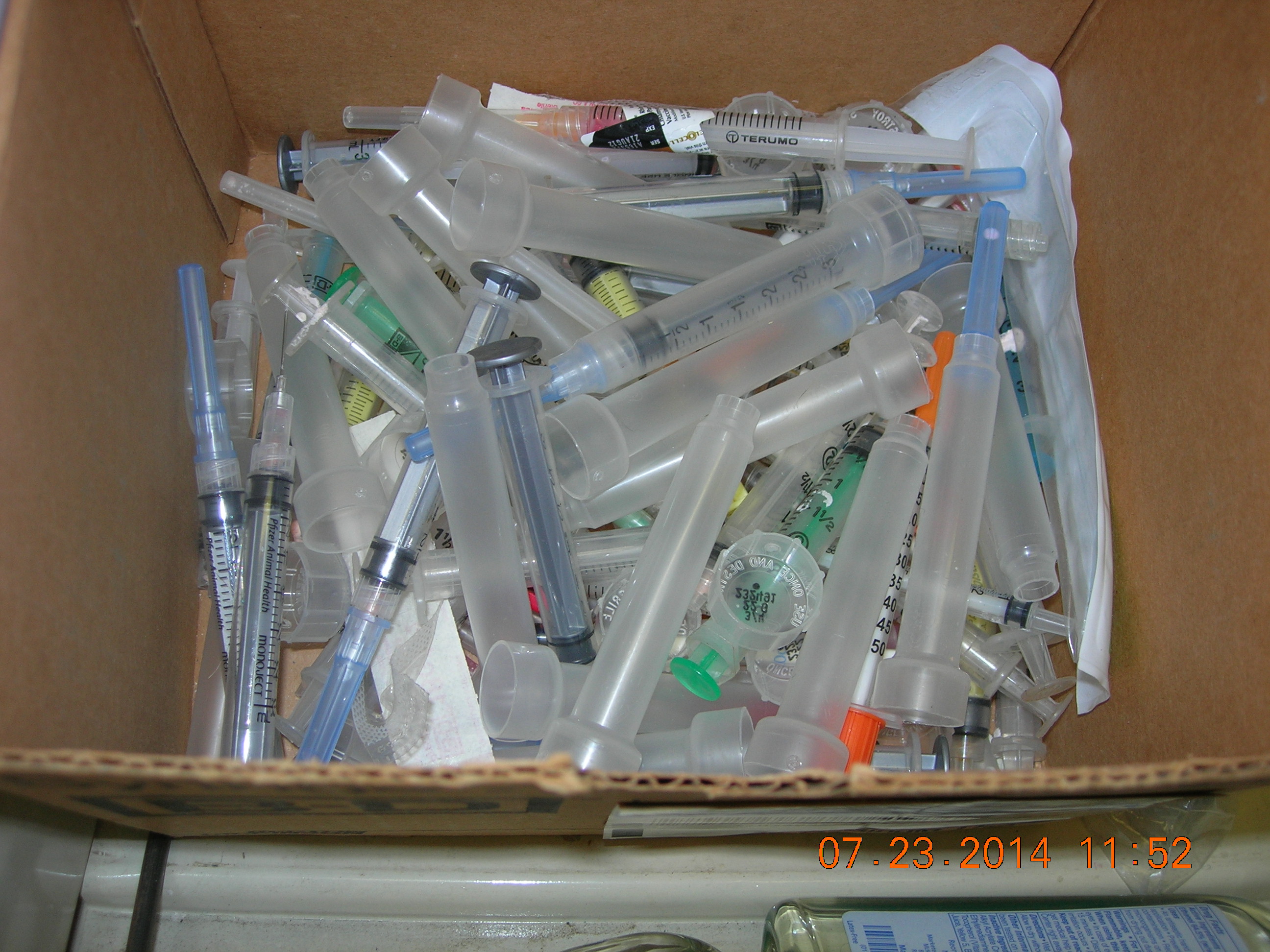
Linden Animal Control failed to document it humanely killed its animals. The shelter has no euthanasia room so animals can see, smell, and hear other animals being killed. No legally required euthanasia instructions, weighing animals for proper drug dosage, or method of killing were documented. Additionally, no one kept records of how these drugs were used as required by law. While City Council member Yamakaitis claimed animals are now being killed at Rahway Animal Hospital, the inspection showed Ketamine, which is widely abused drug, was dispensed and numerous used syringes were found.

2502 Ketamine

2504 Used Syringes in Drawer

Of course Yamakaitis also said “extremely injured or sick animals” are still killed at Linden Animal Control. I guess Linden has lots of “extremely injured or sick animals.” Good thing those pesky animals are suffering so much as Yamaitikis’s dream team can give them the wonderful gift of a cruel death in front of all their cell mates.

Linden Animal Control devoted a significant portion of the shelter’s space for their own and their friend’s dogs. The shelter, which took in 226 dogs in 2012, only has 11 kennels. On average, Linden Animal Control would only have 18 days before it ran out of kennel space. Despite this shortage of space, employees used one kennel to house their personal dog and another enclosure to hold a Linden Department of Transportation employee’s dog. Making matters worse, Linden Animal Control only impounds strays (i.e. does not accept owner surrenders) and is licensed as a pound and not a boarding facility. The staff also used another kennel to hold a scale for euthanasia which they are supposedly not doing. As a result, the shelter lost nearly 30% of its already small amount of kennel space due to employees selfish decisions.

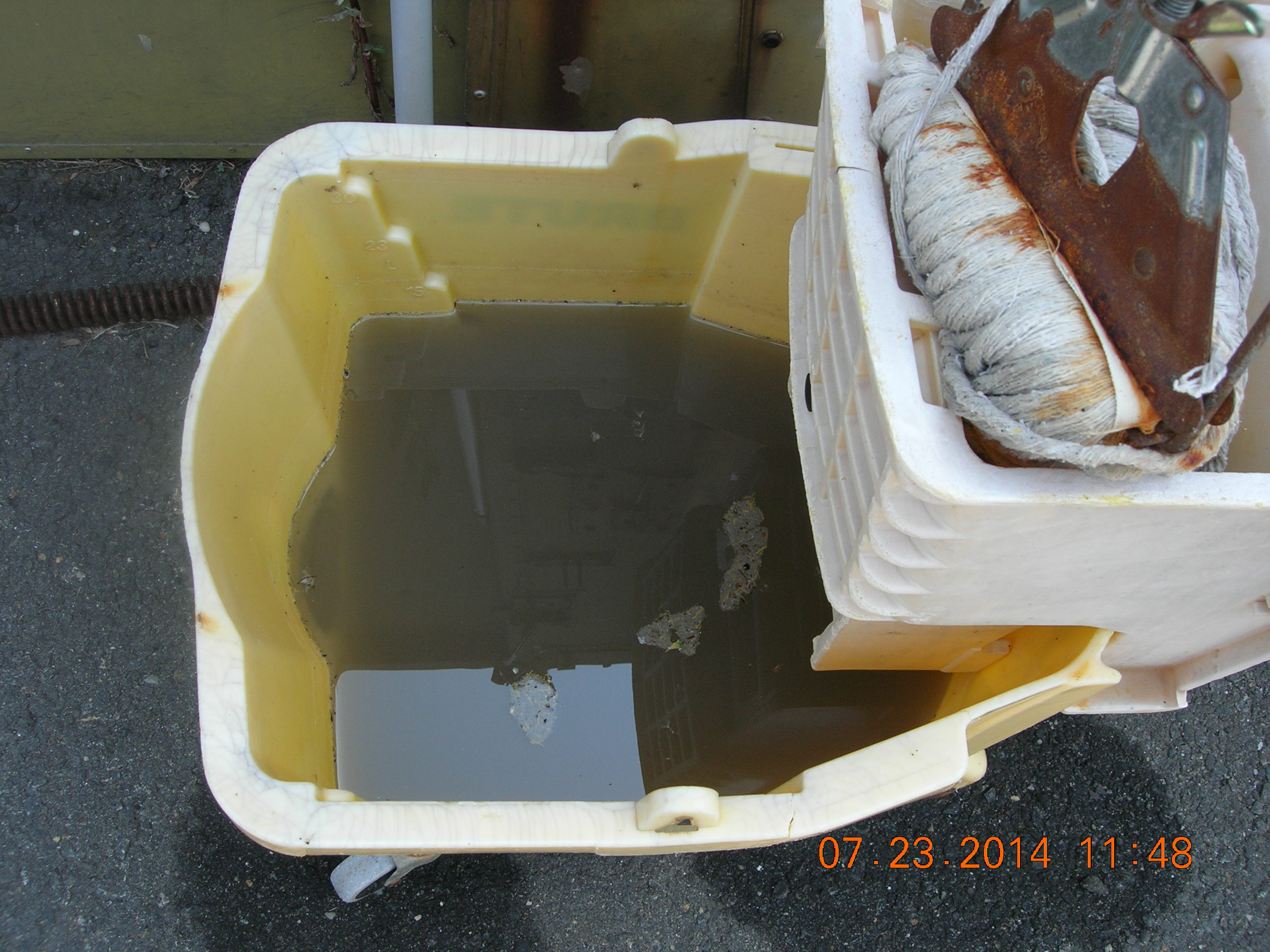
Linden failed to perform even basic maintenance at its shelter. Crumbling cinder blocks, rusted steel posts, dirty food bowls lying around, accumulations of fur and dirt under cat cages, improperly working air conditioning, an oil furnace without its front panel, and overgrowing vegetation engulfing the facility all indicate neglect of the shelter. Similarly, allowing a drainage system to fall into disrepair, which contributed to a feces, urine and chemical soup surrounding the animals like a toxic moat, also indicates the management couldn’t care less about the facility or its animals. In fact, the shelter had holes in the cat room so large that rodents and small mammals could “freely walk in.” To make the shelter more inviting for wild animals, the shelter left open bags of cat food adjacent to these openings. Additionally, if rodents and small mammals were not enough to welcome in, shelter staff allowed a mop to lie in dirty water for god knows how long allowing mosquitoes and other insects to breed at will.

2519 Cat enclosures rusted, stick inside cage

2496 Floor in front of furnace

2498 Mop bucket, dirty water stored outside, rusted mop head

Linden Should Get Out of the Animal Control and Sheltering Business

Mayor Gerbunka’s claim the condition of the shelter was due to Union County failing to build an animal shelter is ridiculous. Employees negligence or downright sadism caused most of these problems. Furthermore, the Union County shelter was not under construction and the idea that it was coming anytime soon is a joke. Additionally, Linden failed to maintain the basic fixtures at the shelter, such as fencing, enclosures, and even doors to the facility. The fact Linden plans to close the shelter at the end of the year and build a new facility clearly shows it failed to do the right thing for many years.

Linden residents must hold Mayor Gerbunka accountable this November. Mayor Gerbunka, in addition to presiding over this disgraceful shelter, has consistently denied the allegations and defended those directly responsible for the situation. Animal advocates need to send a strong message that this behavior has consequences.

Linden, Roselle, Fanwood, Clark, and Winfield residents need to demand a real no kill shelter. All these municipalities will contract with a new facility in 2015. The people running any new shelter must truly care for the animals. Clearly, Mayor Gerbunka Council Member Yamakaitis, Linden Health Officer, Nancy Koblis, and Linden Animal Control staff must have no role in animal control or the operation and oversight of a new shelter. At this time in history, animal control shelters are saving well over 95% of their animals and providing high quality care. We know how to do it and just have to demand it. After all the animals have gone through at Linden Animal Control for decades, the least we can do in those creatures memories is to provide state of the art care for homeless animals in the future.

Additional Information – Key Extracts From Office of Animal Welfare Inspection Report

“The concrete trenches inside the interior and exterior dog enclosures had settled and were in disrepair. Contaminated and stagnant water and excrement collected in these trenches and did not progress to the drain. These trenches and drains were not covered and the dogs housed in these enclosures were not protected from contamination, injury, and disease transmission from the animal waste and chemicals in this water.”

“Feces was not scooped and removed from animal enclosures, but was forced into the drainage trenches with a hose. This action not only increases the risk of contamination of adjacent animal enclosures and animals due to the particles of feces that become air borne when sprayed with a high pressure hose, but large chunks of fecal matter then has to be forced down the trenches toward the drain with the hose. These drainage trenches were not covered inside these animal enclosures and this fecal matter and other waste material had to pass along each animal enclosure, exposing each of these animals in adjacent enclosures to this waste material.”

“Animals in adjacent enclosures were not being protected from water and other waste material when the feces were being sprayed into the drainage trenches. The animal enclosures did not have a barrier between each enclosure to prevent the flow of water and waste materials from contaminating animals and adjacent enclosures. Each time a hose is used in animal enclosures, the animal in that enclosure as well as animals in adjacent enclosures will need to be removed from the enclosures to prevent contamination.”

“The dog enclosures were not sloped appropriately in some areas to allow liquids to run toward the drain. Urine from some of the dog enclosures had streamed into the main walkway at the time of this inspection.”

“There were no grates or other type of coverings over the drainage trenches inside each of the indoor and outdoor dog enclosures. Dogs were not protected from contamination and disease transmission from the animal waste that collected in these trenches.”

“The facility was not being cleaned and disinfected properly. The enclosures were not being cleaned with a detergent followed by a safe and effective disinfectant and feces were not being scooped and removed from enclosures before the enclosures were hosed down. When asked how the facility was cleaned and disinfected on a daily basis, the Animal Control Officer stated that he mixes a half-gallon (8 cups) of bleach into a half-gallon of water and this mixture is poured onto the walls and floors of the animal enclosures. Some of the bottles of bleach found in the facility at the time of this inspection contained a concentration of more than 8% sodium hypochlorite. Bleach to water at a ratio of 1:1 is highly corrosive and could cause eroding of the cinder blocks and other building materials and could also cause skin burns and inhalation injuries to people and animals. The highest concentration of bleach that would be used as a disinfectant for resistant fungal spores in an animal facility is a ratio of 1:10 (1 ½ cups to 1 gallon water) with a product containing 6% sodium hypochlorite. The animals would need to be removed from rooms where this high concentration of bleach is used. The ratio for standard disinfection of animal facilities on a daily basis would be 1:32 (1/2 cup bleach per gallon of water.)”

“The facility did not have a separate isolation room available on the premises to house animals that display signs of communicable disease from healthy animals.”

“Premises were not clean and in good repair to protect animals from injury and disease and to facilitate the prescribed husbandry practices and prevent nuisances. Animal enclosures were in severe disrepair and were unable to be properly disinfected due to the large cracks and chunks of missing concrete in the flooring, around expansion joints, in the walls of the dog enclosures, and in the areas around the guillotine doors. The surfaces of these enclosures were not impervious to moisture and there was a strong odor of urine and animal waste that had permeated these concrete and cinder block surfaces and the odor was unable to be abated, even though the surfaces had been doused with a 1:1 ratio of bleach to water. There was an accumulation of algae or other growth on the mortar joints and the cinder blocks in the outdoor animal enclosures.”

“All areas throughout the facility were not being cleaned on a daily basis. The building was in severe disrepair and the floors, walls, ceilings, exterior doors and other surfaces were not being maintained in good repair.”

“The supervising veterinarian for the facility was said to be Dr. Shukla of the Rahway Animal Hospital, but there was no documentation available at the facility to indicate that a disease control and health care program had been established and was being maintained under the direction of a supervising veterinarian at the facility. There was no evidence that a program to address the psychological well-being of animals, including stress induced behaviors, was in effect at the facility.”

“There were no medical records, no veterinary signatures, and no treatment logs to document that any medical treatments were being or had been administered at the facility and there was no documentation to indicate that a veterinarian had visited the facility and was in charge of a disease control and health care program.”

“Records that were available in the office of the Linden Health Department showed that some animals were described as displaying signs of illness and some of these animals had died at the facility. There were no medical records available to indicate that these animals were provided with at least prompt basic veterinary care to relieve pain and suffering.”

“An emaciated female dog, ticket number 1054, was picked up on 7/22/14 according to the information on the ticket, and was taken to an animal hospital for emergency veterinary care before being transported to the impoundment facility. This dog was said to have been prescribed Panacur (prescription brand of Fenbendazole) by a local veterinarian for the treatment of roundworms and Giardia. This medication is required to be given three days in a row to be effective against certain species of roundworm, hookworm, whipworm and tapeworm and up to five days in a row for Giardia, but only one packet was found in the pouch on the gate of her enclosure on the date of this inspection. There were no records documenting that this medication had been administered, when it may have been administered, and by whom it may have been administered. This dog was also prescribed a feeding regimen by the veterinarian. Instructions indicated that this dog was to be fed small amounts of canned food every four hours; but there were no treatment records available on the premises to document that this dog had been fed as instructed.
This dog also had enlarged and distended teats and may have recently nursed puppies before being impounded. This dog was displaying signs of stress at the time of this inspection; she was pacing from side to side and was snapping at the dogs housed on either side of her enclosure. This dog was not provided with any means of stress relief, such as separation or barriers to prevent the direct view of other dogs, soft bedding, and a clean, dry environment, free from the strong odor of urine and the scent of other bodily secretions that had permeated the porous concrete in the dog enclosures.”

“The facility did not have an isolation room to separate animals with signs of a communicable disease and there were no procedures in place at the time of this inspection to control the dissemination of disease as recommended by the supervising veterinarian.”

“Records indicated that numerous animals that were impounded by Linden Animal Control Officers were not being held for the required seven day holding period before being euthanized, transferred or adopted. Records also indicated that numerous cats had escaped soon after being transported to the facility.”

“No records were available at the facility to indicate that a written description of lost animals and proof of ownership, such as a license for or picture of the animal, was being obtained from persons searching for lost pets. There were no procedures and security measures established at the facility for the viewing of confined animals to prevent the spread of disease.”

“Since the date of this inspection, the NJDOH has received documentation indicating that at least two impounded dogs had been transferred out of the facility before being held the required seven days. One dog, number 1054 described previously, had been transferred to another non-contracting animal facility due to the inability of the Linden Animal Shelter staff to

“The certifications signed by various veterinarians for the three persons administering animal euthanasia at the facility did not state the technique or techniques for which the individuals were certified.”

“It was not determined at the time of this inspection where the euthanasia procedures were carried out. Written instructions for euthanasia is required to be posted in the euthanasia area. This area should not be in the direct view of or within close proximity of other animals housed at the facility to prevent undue stress that may be caused to animals housed in the vicinity.”

“Records were not maintained on the premises that contained the body weight and dosages of the immobilizing and tranquilizing agents administered to each animal being euthanized. There were no records created or maintained that indicated the route of injection of each substance administered to animals as required. There was a bottle of Ketamine on the premises that had been used, as evidenced by the needle punctures and a crystalized residue on the rubber stopper of the bottle. There were no logs and disposition records on the premises documenting the appropriate use of this drug.”

“Some records did not contain complete information as required for animals that had been impounded or otherwise taken into the facility and the final disposition was not being recorded
or was incomplete on most of the documents for impounded animals. There were no medical records available for animals that may have received veterinary medical treatment; and the method of euthanasia, including the dosages by weight and the route of injection, was not being recorded in the animal’s final disposition record for the animals that had been euthanized.”

“When the owner’s identification or other form of identification that could be traced back to the owner was found on an animal picked up by Linden Animal Control Officers, no records were available to indicate that notification was being served by the Animal Control Officers to the owners or persons charged with the care of the animal that the animal had been seized and would be liable to be offered for adoption or euthanized if not claimed within seven days after service of the notice.”

“The facility did not have a certificate of inspection issued by the local health authority showing compliance with these rules. There was no documentation at the facility indicating that the facility was licensed to operate as required under N.J.S.A. 4:19-15.8. The application for licensure shall be accompanied by the written approval of the local municipal and health authorities showing compliance with the local and State rules and regulations governing the location of and sanitation at such establishment. This facility was not in compliance with State rules and regulations at the time of this inspection, which is a prerequisite for licensing.”

“There were two dogs at the facility that were not impounded animals, but were said to be owned by municipal or other employees. One dog was being housed at the facility for long term boarding, but there were no records or other identifying information for the dog or the employee. Another dog was said to be surrendered by its owner and the owner was a Department of Transportation employee. There was no owner information for this dog on the animal’s ticket and there were no other records available for this dog. This facility was not licensed as a boarding kennel at the time of this inspection. The facility has eleven dog enclosures available to house impounded animals for five municipalities, including Linden. One of these enclosures was being used to store the scale for animal euthanasia, and two other’s housed employee’s dogs, and one enclosure housed a dog being held under a court order, leaving seven available enclosures to house impounded animals.”

“The housing facilities for animals were not maintained in good repair, to protect the animals from injury, to contain the animals, and to restrict the entrance of other animals. The soffit panels over the exterior dog enclosures had fallen down and the attic roof space was exposed. This space was large enough to allow wildlife and other animals to enter the building.”

“There were holes in the ceiling of the cat room; one appeared to be for a pipe which had been removed and one was a framed access opening with no panel with which to cover it. This access opening in the ceiling of the cat room was large enough to allow easy escape into the attic space and out of the building through the fallen soffit panels over the exterior dog enclosures. A portion of records that were reviewed documented that ten cats had escaped from the facility within a 16 week period.”

“There was a hole in the wall in the cat room with a white PVC pipe in it that led directly to the outside of the facility and was large enough for rats and other small animals to enter and exit freely. There was a hole in the floor in the cat room which could have originally been some type of drain, but its function was unable to be determined. This hole was not covered and contained an accumulation of cat litter, food, and other waste material.”

“The exterior concrete slab under and surrounding the steel posts which were supporting the roof of the facility was crumbling and the steel posts were severely rusted and deteriorated. The cinder blocks of the lower section of the interior and exterior wall of the building which were surrounding the guillotine doors inside the dog enclosures were separating and the blocks were showing signs of deterioration. The cinder blocks at the end of the wall of the building in the exterior dog enclosures were separating outward from the top of the wall, creating a diminishing gap from top to bottom along the blocks in a step pattern. The steel access door to the underground concrete utility or valve box where the pipe clean outs were located was severely rusted and the hinges were rusted into a position that prevented the lid from closing completely.”

“There was a mop bucket and string mop attached to a severely rusted mop handle that was sitting outside in front of this green metal structure. This bucket was filled with dirty water and appeared to have not been used for some time and was creating a harborage for mosquitos and other water breeding insects.”

“Although the main entrance gate was locked on the morning of this inspection, the exterior door to the main indoor housing area of the facility was ajar and the facility was left unlocked when the animal control officer left the facility. There were no other employees or volunteers at the facility at that time.”

“Inside the building there was an accumulation of food, fur, dirt, and other materials under cat cages, between the filing cabinet and refrigerator, around and behind the utility sink, around and behind the furnace and the base of the wall, and there was a buildup of dirt on the floors in front of the furnace and other areas throughout the facility. There were cobwebs and debris around the wiring that passed through the walls below the ceiling and there were cobwebs and debris around the open bags of food and other items stored in the cat room.”

“The oil furnace had a large rusted area above the oil burner assembly. The facility had working air conditioning at the time of this inspection, but the Health Officer said the unit has to be watched because it was not working properly; it freezes up and the unit shuts down. The unit needs to defrost before it can be started up again. The front panel for the oil furnace that was said to be missing was found during the inspection, but the screws to attach it to the front of the furnace were missing.”

“The concrete flooring in the cat room was in disrepair and was not smooth in many areas and was not easily cleaned and disinfected. The interior and exterior surfaces, including the doors of the cat enclosures were rusted and peeling and unable to be properly cleaned and disinfected.”

“Surfaces of the indoor and outdoor dog enclosures were severely deteriorating, had cracks and chunks of broken concrete in some areas, and the multiple layers of paint on these surfaces had peeled off and the surfaces were not impervious to moisture and able to be readily cleaned and disinfected. There were numerous areas of unsealed concrete that was not impervious to moisture and was unable to be disinfected. The plastic dog beds used inside the enclosures were scratched and chewed in some areas and had crevices that were unable to be properly cleaned and disinfected.”

Linden’s Disgraceful Pound Needs Drastic Change

Recently, Linden Animal Control has come under scrutiny. On April 15, 2014 Linden resident, Robert Scutro, and several other people raised serious concerns about the operation to Linden’s City Council (see 2 hour and 21 minute mark of this video). Residents complained about pound staff spraying feces and urine filled water onto dogs, terrible sanitary conditions, providing little to no medical care, and doing next to nothing to save the animals lives. Despite assurances that the City Council was working on these problems, a news story reveals these problems still exist 3 months later.

Linden Animal Control Has Funding to Run an Excellent Shelter

Linden Animal Control spends significant amounts of money on its animal control operation. The pound, which is separate from the nearby Friends of Linden Animal Shelter, impounds animals from Linden and receives $126,000 to also take in animals from Clark, Roselle, Winfield, and Fanwood. In total, the pound spends approximately $222,000 per year. This equates to $1.97 per resident and $730 per dog and cat impounded. As a comparison, Nathan Winograd provided top notch care and achieved no kill status at the Tompkins County SPCA with funding of only $1.85 per resident. Similarly, KC Pet Project, which runs Kansas City, Missouri’s open admission shelter, reached no kill status despite only receiving total revenue of $225 per impounded dog and cat. Thus, Linden Animal Control should be a model shelter with its plentiful funding.

Heartless and Illegal Killing of a Dog Before 7 Day Hold Period Elapsed

Last September, the John family’s 15 year old pit bull escaped from its yard and Linden Animal Control ordered the dog killed within the legally required 7 day stray hold period. On the day the dog escaped, the family called Linden Animal Control, but Linden Animal Control failed to call them back. The family visited the local police department the next day and were told Linden Animal Contol took the dog to an animal hospital. Unfortunately, the animal hospital was closed and the dog was killed by the time the John family visited the animal hospital. Linden Animal Control decided not to provide medical care and instead told the animal hospital to kill the dog long before the legally required 7 day stray hold period elapsed. Linden’s Health Officer, Nancy Koblis, claimed the dog was in “respiratory distress”, but the medical records only stated the dog was “underweight, had a small tumor, and was walking with difficulty.”

Linden’s Health Officer’s reason for illegally killing the dog is unjustified. N.J.A.C. 8.23A-1.9 specifically states stray animals cannot be euthanized for any reason during the 7 day stray/hold period:

Sick, diseased, injured or lame animals shall be provided with at least prompt, basic veterinary care (that is, to alleviate pain and suffering) or euthanized, unless such action is inconsistent with the purposes for which the animal was obtained and is being held; provided, however, that this provision shall not affect compliance with N.J.S.A. 4:19-15.16, which requires all stray animals to be held for seven days.

Additionally, the medical records do not indicate the dog was hopelessly suffering. At best, the records showed an elderly animal that required care from a loving shelter worker. Clearly, Ms. Koblis did not want to spend any money on the animal despite animal control’s ample funding. Apparently, she thought this animal’s life had no value and did not care if the dog’s distraught owners were looking for their family member. Shame on you Nancy Koblis for breaking New Jersey law and being heartless.

Health Officer Needs to Go

Linden’s Health Officer failed to ensure the pound got a legally required annual inspection from 2007-2013. Nancy Koblis’s only explanation was “it fell by the wayside.” On what planet can someone keep their job after they broke state law for 7 consecutive years? Clearly, Ms. Koblis had so little regard for the animals and state law that she failed to ensure an inspection got done for 7 years.

The City of Elizabeth’s inspection of Linden’s pound on May 9 revealed 23 violations. The violations included “no current certificate of veterinary supervision of the facility” and “no adequate ventilation around the interior of the facility.” Interestingly, this inspection occurred after the April 15, 2014 City Council meeting and was performed by a different city’s health department. Considering Linden Animal Control had over 3 weeks to clean up their act, these results are very sad. Even more sad is the fact the violations were documented by a local health department rather than the state Office of Animal Welfare. The Office of Animal Welfare tends to conduct much more thorough inspections and the results would likely be worse.

The reporter’s visit to the shelter in July showed little improvement has been made. Crumbling doors and fencing, rusted animal enclosures, and standing feces and urine filled water were clearly visible. Nancy Koblis said “we’re working on fixing these things.” Really? You’ve been aware since an April 15 City Council meeting and a May 9 inspection and these problems still exist months later? When will they be fixed? Probably not soon if you ask me.

The shelter also lacks reliable phone service and a computer. However, Koblis says that is not her problem. If the town owns the property, is it not her job to get that person to fix it? The buck stops with Nancy Koblis as she is responsible for the shelter.

Koblis’s lackadaisical attitude towards complying with New Jersey shelter laws is shocking. The Health Officer admits her ventilation system and air conditioning systems do not work right. Under New Jersey shelter law, temperatures in animal enclosures must not go below 45 degrees or exceed 85 degrees. Unfortunately, Ms. Koblis’s remarks do not give me much comfort the shelter complies with that requirement. Furthermore, the Health Officer says don’t worry about us not having a legally mandated isolation area, which is needed to prevent the spread of disease. Why? According to Koblis, the animal control officers can miraculously spot contagious disease (despite frequently not being at the pound) before it can spread and get the animals to a veterinarian. I also hear the pound staff can walk on water and sell you the Brooklyn Bridge.

The Health Officer’s promises are empty and hollow. According to Ms. Koblis, they are going to make more visible attempts to reunite lost pets with owners, but said they’ve “done it all along, but not as much as people would like us to do.” Reuniting lost pets with owners is a primary responsibility of pounds and animal shelters. If you weren’t always doing it, you weren’t always doing your job. Also, what exactly are you going to do? Scan animals in the field for microchips, check license databases in the field, and knock on doors in the neighborhood to find the owners? Unfortunately, her only answer was she’d have a rescue group come in to take photos that pound staff should already be taking. Given this pound generally only holds animals for 7 days, losing critical time waiting for a rescue group to come and take photographs will likely mean some animals will die. Again, why can’t a shelter with such a large amount of funding not do this?

Koblis’s attitude towards adoptions demand her immediate removal of having anything to do with the animal shelter. Specifically, Koblis states she doesn’t want to adopt animals out and provide even basic vetting:

“We are not an adoption facility,” she said. “We do animal control. We hold the dog for at least seven days. Hopefully, the owner will come and look for it.

“If we adopt, we adopt them out with the understanding to the people that we do not vet the dogs. We can’t tell you if its a healthy dog or if it had shots. That’s why we’d rather go to the groups. We don’t have the socializing mechanism that the adoption groups have.”

First, the Health Officer states their efforts to reunite lost pets with their families consists of simply holding the dog. If you don’t know your dog or cat is here, that is your problem. Second, despite receiving over 3 times the funding per dog and cat as KC Pet Project, which is renowned at their efforts to get animals adopted, they “are not an adoption facility.” Basically, she is saying “we don’t want you to adopt from us and if you cooky animal lovers really want the animal go make a rescue do the work we get paid to do.” Let me break something to you, Nancy, your operation gets paid to do animal control AND sheltering. $730 of funding per dog and cat demands you do far more than sitting on your butts and hope a rescue comes in and saves the day. Many other shelters receive far less funding than this and rescue efforts are better spent there. Frankly, your attitude reeks of laziness which is consistent with you’re failure to have your shelter inspected for 7 consecutive years, allowing the facility to fall apart, providing little to no medical care, illegally killing animals, and letting animals to live in a shelter filled with feces and urine soup.

The dogs receive little to no socialization at the shelter. According to Koblis, the staff do not know histories of the dogs and therefore can’t interact with them. Ms. Koblis may find this surprising, but any shelter impounding strays does not know the animals histories. It is your job to evaluate the animals and develop a treatment plan for any animals not currently adoptable. Additionally, N.J.A.C. 8.23A-1.9 states the facility’s supervising veterinarian must develop a disease control program that addresses “both the animals’ physical and psychological well-being.” N.J.A.C. 8.23A-1.9 also mandates “animals displaying signs of stress shall be provided with relief pursuant to the disease control and health care program.” Finally, N.J.A.C. 8.23A-1.9 states socialization is one example of such a program. Logically, dogs are social animals and should have positive human and canine interaction. Thus, Koblis fails again to understand or even try to comply with New Jersey shelter law.

Koblis doesn’t want volunteers to help her lazy staff at the shelter. The Health Officer claims they can’t use volunteers due to insurance reasons and lack of staff to oversee them. In reality, municipal shelters across New Jersey and the country have volunteer programs. People can sign liability waivers. Apparently, Koblis believes letting the animals live in filth is preferable to having unsupervised volunteers. First, the shelter has plenty of funding to pay a volunteer coordinator. Second, shelter work is not rocket science. Once a volunteer is trained you don’t need to hover over them like a taskmaster. Let’s be real. She doesn’t want volunteers to report the disgraceful conditions now being exposed. This a recurring feature of regressive shelters and pounds.

Linden’s mayor also doesn’t understand New Jersey shelter law. The mayor said its ok to spray water (possibly with other animals feces and urine in it) on dogs in their kennels on a “hot day and they enjoy it.” Sorry Mr. Mayor, N.J.A.C. 8.23A-1.6 states “primary enclosures shall be structurally sound and maintained in good repair so as to enable animals to remain clean and dry.” Furthermore, the Association of Shelter Veterinarians “Guidelines for Standards of Care in Animal Shelters” states the same thing as follows:

The primary enclosure should be structurally sound and maintained in safe, working condition to properly confine animals, prevent injury, keep other animals out, and enable animals to remain dry and clean.

Thus, Linden’s Mayor should abstain from commenting on matters he knows little about.

Office of Animal Welfare and NJ SPCA Need to Step In and Make Change Happen Now

Linden Animal Control needs a wake-up call from the authorities. Clearly, the City will not do this on their own based on the months of inaction and attitude of their officials. The Office of Animal Welfare should do a thorough inspection to fully document the issues. Furthermore, the NJ SPCA needs to charge the City of Linden and any responsible individuals with animal cruelty if evidence supports their case. Unfortunately, the NJ SPCA has handled most animal shelters with kid gloves for far too long. If the Union County NJ SPCA chapter does not take action, the state chapter needs to take disciplinary action against the Union County chapter. Without strong actions from the authorities, these conditions will continue to persist in Linden and elsewhere. Enough is enough, and the time for action is now.

East Orange Animal Shelter’s Dismal Office of Animal Welfare Inspection Report

East Orange Animal Shelter was largely unknown until very recently. Prior to Amanda Ham’s hiring as an East Orange Animal Control Officer in 2013, few people knew a shelter existed in East Orange. In fact, East Orange Animal Shelter did not even report its animal intake and disposition statistics to the New Jersey Department of Health. The animal shelter had no web site, adoption site (i.e. Petfinder, Adopt a Pet, etc.) or Facebook page. Additionally, East Orange Animal Shelter prohibits people from volunteering. As a result, the homeless animals entering this shelter probably had a poor chance of making it out alive.

Amanda Ham started turning things around at the shelter, but the city’s Health Officer abruptly ended the progress. In order to serve East Orange, Amanda moved to the city to ensure she could be close to the shelter. Amanda started a Facebook page and aggressively reached out to adopters and rescues. In addition, Amanda started a foster program and single-handedly ran off site adoption events. As a result of the animal control officer’s efforts, adoptions and rescues from the shelter reached levels never seen before. People started visiting the East Orange Shelter and the city had a potential success story in the making. However, Amanda Ham’s complaints about inhumane conditions at the shelter fell on deaf ears among the city’s shelter management. After Amanda Ham filed a complaint with the NJ SPCA, East Orange’s Health Officer fired Amanda for no official reason last month. As a result, East Orange’s heartwarming story came to a tragic end.

On June 17, New Jersey Department of Health’s Office of Animal Welfare inspected East Orange Animal Shelter and found serious violations of New Jersey shelter laws. Some of the report’s key findings along with my commentary are as follows:

  • The shelter was not licensed to operate a New Jersey animal shelter due to its shelter license expiring on February 1, 2013.
  • Dog food spilled over in a storage area had mold growth.
  • All areas of the facility needed cleaning and disenfecting.
  • Uncleaned feces and standing water led to a fly and mosquito infestation. The fly infestation was so severe that animals were at risk of having maggots grow in wounds or skin lesions.
  • Feces were not picked up and led to a strong odor in the shelter. The feces build up clogged the drainage system and caused large amounts of contaminated liquids to be present.
  • Some dog enclosures fencing were being held up with dog leashes.
  • Certain cat cages were in disrepair and could easy be tipped over.
  • Some cat enclosures were barely half the required size.
  • 4-5 week old kitten fed adult cat food instead of kitten milk formula.
  • Cats provided water contaminated with cat food and litter.
  • Cats provided water in extremely small bowls posing risk of dehydration.
  • Shelter lacked enough products to properly clean facility. Additionally, the facility lacked measuring utensils to use appropriate amount of cleaning solution to disenfect shelter.
  • Cat cages were not properly cleaned leading to a build up of fur, litter and food.
  • No medical records on animals were kept at the facility by the supervising veterinarian.
  • No cat isolation area in shelter which is needed to prevent the spread of disease.
  • Dog isolation area allowed contaminated air to vent into areas housing other animals.
  • No documentation that euthanasia was properly done under New Jersey shelter laws. Specifically, the scale did not properly work nor were the agents used to kill/euthanize animals documented. As a result, animals may have been inhumanely euthanized (i.e. not enough tranquilizing/euthanasia drugs provided due to animal not being accurately weighed; illegal means of euthanasia/killing).
  • Required record keeping not done. Specifically, each animal’s ultimate outcome (reclaimed by owner, adoption, rescue, euthanasia, etc) was not documented. Additionally, the animals at the facility lacked information to properly identify them. The shelter also lacked any records of animals coming in from January 16 to April 28 of this year.
  • No records existed to show shelter scanned animals for microchips as required by New Jersey shelter law.

The poor inspection report shows East Orange Animal Shelter’s disregard for the animals under its care. Cleaning up feces, eliminating fly and mosquito infestations, fixing broken animal enclosures, providing adequate water to animals, having enough cleaning supplies, scanning animals for microchips and keeping basic records is not rocket science. Even worse, the shelter had these conditions despite only having 9 dogs (4 of which left during the inspection) and 13 cats. Frankly, one has to wonder what kind of people come to work each day, see these horrific things, and then do nothing? Also, without adequate record keeping we have no comfort that employees are not selling animals on the side and pocketing the money like a worker did at the Hudson County SPCA. Additionally, the city’s 2013 animal control budget suggests funding is not the issue. Specifically, the $151,268 budget is approximately $2.35 per resident and equates to $294 per animal assuming the city impounds animals at a rate similar to other northern New Jersey urban animal shelters (8 dogs and cats per 1000 people). As a comparison, KC Project, which is Kansas City, Missouri’s animal control shelter, had total revenue per animal of $225 in 2012 and saved 90% of its animals in the second half of the year. Clearly, East Orange’s Health Department, which oversees the shelter, is not serving the city’s residents or homeless animals appropriately. As a result, this suggests East Orange’s Health Officer’s motives for firing Amanda Ham were to protect the city’s Health and Animal Control departments rather than to properly run the city’s animal shelter.

The Office of Animal Welfare inspection also reveals local health departments inability to regulate municipal shelters. Typically, municipal animal shelters are run by local health departments. Those same local health departments also are responsible for inspecting the facilities for compliance with New Jersey shelter regulations. Self-policing never works and the idea we should trust local health departments to inspect themselves is preposterous. Additionally, local health departments commonly lack the skills to perform adequate inspections, particularly regarding animal welfare. As a result, the Office of Animal Welfare needs to conduct frequent inspections of municipal shelters due to local health departments’ incompetence and conflicts of interest.

The Office of Animal Welfare inspection report vindicates Amanda Ham and demands East Orange immediately reinstate her. Clearly, Amanda Ham went above and beyond her normal duties as an animal control officer to get the shelter into compliance with public health and animal welfare laws. Additionally, she made herculean efforts to get animals adopted and rescued. Frankly, Amanda Ham should not only be rehired, but promoted to run the animal shelter.

East Orange has a simple choice here. It can continue to waste its citizens hard earned tax money on a catch and kill pound failing to comply with New Jersey shelter laws. Alternatively, the shelter can become a model facility that its residents can be proud of. Imagine a shelter scanning animals for microchips, checking license databases, and knocking on doors in the field, to return lost pets to worried owners at their front door? Imagine a shelter offering distraught pet owners solutions to pet problems which keeps their families together? Imagine a shelter where young people needing some direction, senior citizens looking to do some good, and parents and children searching for ways to spend time together, can unite and help people and animals? Imagine a shelter where local residents can come and bring a new healthy family member home and have a resource whenever they need help? East Orange can achieve this as it has its potential leader willing and able to get the job done. Will East Orange’s Mayor Lester E. Taylor, who touts his community service accomplishments, stand up for his constituents and the city’s homeless animals or the incompetent shelter management responsible for this embarrassing inspection report? We eagerly await Mayor Taylor’s decision.

Lessons Learned from Maddie’s Free Pet Adoptions Event

On May 31 and June 1, Maddie’s Fund sponsored a free pet adoptions event in various parts of the country. Research studies show animal welfare groups can increase adoption numbers without compromising the quality of the homes by waiving fees. People can use the money instead to pay for other substantial costs, such as vet care and pet supplies. In order to save lives now and encourage animal welfare groups to offer such promotions in the future, Maddie’s Fund pays these organizations a substantial per adoption subsidy. Specifically, shelters and rescues receive $500 for healthy younger animals, $1,000 for older animals or ones with certain medical conditions, and $2,000 for older pets with certain medical issues.

Three northern and central New Jersey animal shelter organizations participated in the event. St. Huberts, Liberty Humane Society and Associated Humane Societies’ Newark and Tinton Falls shelters ran the promotion. All three organizations should be commended for participating and choosing to save lives. However, we should also look at the experience and see what areas these shelters can improve upon to save more lives in the future.

Too Many New Jersey Shelters Did Not Participate

Unfortunately, the vast majority of the state’s animal shelters failed to take advantage of this opportunity. Frankly, people who donate to these shelters should question their leadership on why they chose to not take on this opportunity to save lives and receive significant grant money from Maddie’s Fund. Whether the low participation rate was due to not knowing about the event or ideological reasons (i.e. “free adoptions are bad”), the end result is less life saving. The low participation rate shows we need to promote this event better to shelters and hold shelter leaders accountable who choose not to sign up.

Adoption Numbers Increase Significantly

The following table summarizes the participating shelters performance during the Maddie’s Fund event. In order to provide some perspective, I compared each facility’s adoption rate during the two days to these shelters’ most recently available adoption rates. Additionally, I also estimated the percentage of each shelter’s animal population adopted during the promotion by using each shelter’s adoption numbers and the most recently available shelter population numbers. The actual adoption numbers may differ if the shelters revised their totals or did not report some adoptions on their Facebook pages, but the general trend should not be different.

Maddies Results Revised

Each shelter significantly exceeded their typical adoption rate during the event. St. Huberts and Liberty Humane Society adopted out animals at over 20 times their typical two day adoption rate. The two AHS facilities, which reported far fewer adoptions, also adopted out significantly more animals than normal.

AHS-Newark’s improvement may be better than these results indicate. Based on my experience with the shelter, I suspect transfers to rescues might be included in their 2012 adoption numbers. Also, the shelter’s reported 12/31/12 shelter population number seemed extraordinarily high. The shelter reported having 300 dogs and 225 cats (maximum claimed capacity), but a July 30, 2009 Office of Animal Welfare inspection report stated the facility was at full capacity with 325 animals. If we assume half of AHS’s 2012 adoptions were really transfers to rescues and the facility only had 325 animals, AHS-Newark would have adopted out 160% more animals than normal and 4% of its shelter population.  Thus, AHS-Newark may have done a bit better than the table above suggests.

Types of Animals Impacts Adoption Numbers

St. Huberts large number of adoptions may be in part due to the types of animals it takes in. St. Huberts has largely shifted from being an animal control to a rescue shelter. Additionally, St Huberts remaining animal control contracts are in wealthier areas which tend to have easier to adopt dogs (i.e. fewer pit bulls). As a result, St. Huberts probably has more highly adoptable animals than the other three shelters.

Additionally, St. Huberts may have potentially rescued a larger than normal number of animals in preparation for the event. Shelters have a strong incentive to bring more dogs and cats in with the $500-$2,000 subsidy for adopted animals sourced from the local area.

Nonetheless, St. Huberts still did an excellent job during the event. Specifically, I noticed St Huberts adopted a good number of adult pit bull type dogs in photos posted to the St. Huberts Facebook page.

More Adoption Locations Results in More Adoptions

St. Huberts adopted out animals at numerous locations and provided more people the chance to adopt. St. Huberts adopted dogs out at its two shelters and cats were made available at the two facilities and eight off-site adoption locations. Six of the eight off-site locations were at pet stores in retail centers. These retail centers are in high traffic areas and therefore attract large numbers of potential adopters. Thus, St. Huberts made it convenient for people to go and adopt an animal.

Open Adoptions Process Verses Overzealous Screening Leads to More Adoptions

Open adoptions promote matching people with the right pet and providing excellent customer service. St. Huberts and Liberty Humane Society utilize an open adoptions process. The Humane Society of the United States, ASPCA, Petsmart Charities and of course most in the no-kill movement strongly advocate using open adoptions. Specifically, these groups note overzealous screening ends up turning people off from adopting and often doesn’t match people with the right pet or properly educate the adopter.

Open adoptions are even more important during a busy event with large numbers of people. Long and cumbersome adoption procedures can create long wait times for people to adopt which may make them leave. Additionally, shelters with a reputation for difficult adoption processes may attract fewer people to these events due to fear of a long wait time and/or an unpleasant experience. Thus, open adoption processes likely lead to more people coming to the event and more of those folks leaving with a new family member.

How AHS Can Do Better Next Time

While AHS adopted more animals than they typically do, AHS can adopt more animals at future events. Liberty Humane Society, which is an open admission shelter servicing an urban area in Hudson County, adopted out more than 3 times as many animals as both AHS shelters combined per the table above.  Liberty Humane Society’s performance relative to its typical adoption rate was over 4 times and nearly 700 times as great as AHS-Tinton Falls’ and AHS-Newark’s results. Additionally, Liberty Humane Society has far fewer financial resource than AHS. For example, Liberty Humane Society’s and AHS’s net assets per their most recently available financial statements were approximately $197 thousand and $10.7 million (including $7.8 million of cash and investments). Thus, AHS performed far worse than another nearby inner city shelter with less financial resources.

AHS can promote this event better. Liberty Humane Society’s volunteers actively promoted the event, which included plastering the local area with flyers. Strangely, the very popular Associated Humane Popcorn Park Facebook page, which has nearly 50,000 likes, did not promote the event or participate for that matter. The Associated Humane Popcorn Park Facebook page often posts stories about the Newark and Tinton Falls shelters, but did not do so this time. This critical mistake likely resulted in much less foot traffic at AHS facilities during the event. Thus, AHS should promote the event heavily in the communities it serves and on the Associated Humane Popcorn Park Facebook page in the future.

AHS’s adoption process focused on vigorous screening and paperwork may reduce the organization’s ability to process large numbers of adoptions. AHS’s web site describes a pretty long adoption process, which includes not adopting puppies or small dogs to families with children under 5 years old. Additionally, the process involves significant paperwork and “screening” which suggests a cumbersome procedure. Adoption processes such as these often makes an adopter feel disrespected and may decrease their satisfaction with the shelter and adopting in general. Cumbersome adoption processes in an event like the Maddie’s free pet adoption weekend where adoptions must occur during the two days can create a significant bottleneck. For example, people may have to wait at the shelter a long time while veterinarians are called and paperwork is reviewed. Additionally in my past experience with AHS-Newark, the shelter did not alter most dogs until an adoption was approved. People typically would bring the dogs home at a later date after the shelter spayed/neutered the animal. If people met unaltered dogs or cats at AHS during the Maddie’s free pet adoptions weekend, the animals may not have been able to get altered until after the event.  As a result of AHS’s adoption policies and procedures, the organization may not have been able to process adoptions fast enough to adopt as many animals as St. Huberts or Liberty Humane Society.

AHS should move away from its existing adoption process to a procedure focused on making excellent matches. Two great examples are the ASPCA’s Meet Your Match and the Center for Shelter Dogs Match Up II programs. Both programs offer lots of free materials online to help shelters implement these programs. KC Pet Project, which is Kansas City’s open admission shelter, provides an excellent example of how one shelter implements these types of programs. In fact, KC Pet Project has had tremendous success in similar events exemplified by its adopting 228 animals during a 3 day $25 dollar adoption promotion.

KC Pet Project Empty Kennels

Thus, AHS has lots of available information to implement a more efficient and effective adoption process.

AHS-Newark needs more volunteers to better promote its animals. Until recently, AHS-Newark had virtually no volunteer program. Currently, the shelter has a small group of hard-working volunteers doing great things. For example, the volunteers run an excellent Facebook page, do offsite meet and greet events, pack walks with a few select dogs, dog behavioral evaluations and post animals to Petfinder.  AHS-Newark needs additional volunteers or staff to post dogs onto Petfinder. As of today, AHS-Newark only had 60 dogs and cats on Petfinder which likely represents a small portion of the animals at the facility. For example, this would only be 11% of the shelter’s total population if the shelter currently has as many animals it reported having at December 31, 2012 per AHS-Newark’s 2012 Shelter/Pound Annual Report. Additional animals need to get onto Petfinder in order to properly promote all of the animals and not just a select few.

AHS-Newark needs to expand its volunteer program to make animals more adoptable and to facilitate adoptions. Currently, the shelter’s volunteer program is fairly limited. AHS-Newark should seek to emulate Nevada Humane Society whose volunteers contribute over 2,500 hours per month to the organization and conduct a variety of activities. AHS-Newark could greatly benefit by expanding its volunteer base to socialize more animals. Better socialized animals and volunteers knowing more animals well would facilitate adoptions at the Maddie’s event by properly matching families and animals. Furthermore, additional volunteers allows adopters to meet more dogs outside the kennels where the dogs show better.

While the shelter’s space is limited, the organization could find a way to create a playgroup program. Playgroups are a common theme for large shelters who save pit bull type dogs at a high rate. Specifically, these programs make the large dogs, which AHS has lots of, more adoptable and show better in kennels. During the Maddie’s free adoption weekend event, dogs regularly participating in playgroups would seem more attractive to adopters.

Finally, AHS should adopt animals out at multiple locations in future Maddie’s Fund events. Both the Tinton Falls and Newark shelters could increase cat adoptions by holding the event at multiple high traffic locations, such at various Petco, Petsmart, and Pet Valu retail stores. Additionally, AHS-Newark should adopt dogs and cats out at the Union Square adoption center location in New York City. AHS-Newark’s large amount of animals may overwhelm adopters based on recent research and some adopters may not want to visit an inner city shelter. Thus, AHS would likely increase adoptions by adopting animals out at multiple high traffic locations.

Animals Depend On Us Always Improving

Overall, all three organizations adopted more animals than normal during the Maddie’s Pet Adoption Days event. Each organization should evaluate their performance and see how they can better their performance at future events. At the end of the day, animal welfare groups should always strive to improve. Lives are at stake and the animals are counting on you doing the best you can.

No Kill Success is Contagious

Recently Merritt Clifton argued Reno, Nevada’s no kill success came at the expense of surrounding communities. According to Mr. Clifton, the region’s open admission shelter stole adoptions from nearby areas resulting in little net life saving. Clifton used Nevada’s mediocre adoption rate outside the Reno area as the basis for his argument. Is Clifton correct or is this yet another one of Clifton’s meritless arguments? Alternatively, can successful no kill open admission shelters cause other nearby communities to save more lives?

Nevada’s Population Distribution Refutes Clifton’s Claims

Nevada’s primary population centers outside the service area of the Reno, Nevada shelter are very far away. Approximately 86% of Nevada’s population outside the Reno, Nevada shelter’s service area in Washoe County reside in the county where Las Vegas is located. Las Vegas is approximately 450 miles away and around a 7 hour drive from Reno. This is as about as far as Elizabeth City, North Carolina and Ottawa, Canada are from New York City. Do people believe adopters in New York City are regularly visiting shelters in North Carolina and Ottawa, Canada? As a result, Clifton’s argument is completely wrong.

The Las Vegas area’s primary shelter has a history of poor performance and depresses statewide adoption numbers. Recent statistics show roughly half of the shelter’s 40,000 impounded animals were killed. This high kill rate is even more astonishing given Washoe County, Nevada’s open admission shelter takes in nearly 80% more animals per capita and saves 90% of its animals. Thus, Nevada’s other primary shelter performs poorly and that is the reason for the state’s mediocre adoption rate.

Shelters Near the Highly Successful Reno, Nevada Shelter Are Doing Well

Several large shelters within reasonable driving distance of Reno, Nevada are succeeding. The Out the Front Door blog reports Carson City, Nevada’s open admission shelter is doing very well and is in the nearest large population center to Reno. Additionally, Douglas County, Nevada is another reasonably close population center and its open admission shelter saved 98% of its animals. Furthermore, Nevada County, California, which is one of the closest large communities west of Reno, saved 99% of its impounded animals over the last three years. Therefore, open admission shelters reasonably close to Washoe County, Nevada’s highly successful shelter are saving and not taking lives.

Austin, Texas’s Success Leads to More Nearby No Kill Communities

Austin, Texas is the largest no kill community in the country and several nearby cities are also saving lives. Austin, Texas has been a no kill community since 2011 and saved from 91%-95% of its animals each year since then. Shortly after Austin, Texas became a no kill community, Williamson County Regional Animal Shelter, which serves Williamson County, Texas and is located just north of Austin, achieved no kill status. Despite taking in nearly 7,500 animals a year, dogs and cats only stay 11 and 15 days at the shelter. Taylor, Texas, which is just northeast of Austin, saved 93% of its animals in 2012. Pflugerville, Texas, which is also located in the Austin metro area, saved 98% of its animals in 2012 despite the city prohibiting trap, neuter, release. Georgetown, Texas, which is also just north of Austin, saved 85-90% of its animals in recent years. San Antonio, Texas, which is about a 1 hour and 20 minute drive from Austin, recently reported an 81% save rate, which is up from 32% in 2011, and a 90% live release for cats in March and April 2014. This shelter services an area of 1.3 million people and took in over 32,000 animals during fiscal year 2013. Kirby, Texas, which is also in the San Antonio metro area, saved 94% of its animals in 2013. Thus, the success of Austin’s no kill effort led to high save rates in many other nearby communities.

Animal Ark Inspires Positive Change in Minnesota

Animal Ark’s high level of success led to significant improvements in nearby large cities. Animal Ark, which is located in Hastings, Minnesota, has an adoption guarantee arrangement with a local impound facility where Animal Ark takes animals not reclaimed by owners. Also, Animal Ark accepts owner surrenders subject to a waiting list. Animal Ark saved 99% of its 700 impounded dogs and cats in 2013 and takes in about 16 dogs and cats per 1000 people. Additionally, the shelter reports a length of stay of just over a month. Animal Ark’s short average length of stay is impressive given virtually all animals were adopted and no animals were reclaimed by their owners, which tend to have very short lengths of stay, due to the local impound facility holding animals during the stray/hold period. Also, Animal Ark gets its animals quickly out of the shelter despite it likely needing to rehabilitate relatively more animals due to the organization’s very high 99% save rate. The shelter’s director, Mike Fry, is a vocal no kill advocate and argues for positive change in Minnesota and beyond. Recently, Brooklyn Park, Minnesota’s Pets Under Police Security (“PUPS”) shelter reported a 98% save rate. Similarly, St. Paul, Minnesota’s animal control facility reported a 90% + save rate recently as well. Additionally, Minneapolis’s animal control shelter, which has a sordid history, recently hired new management and pledged to change its ways. As a result, Animal Ark’s success adopting out animals has not hurt, but helped nearby shelters.

San Francisco Area Success

San Francisco has a long history of no kill initiatives. In the 1990’s, Richard Avanzino, who now leads Maddie’s Fund, and Nathan Winograd nearly made San Francisco the nation’s first no kill community. During this time, innovative programs, such as an adoption guarantee agreement with the city’s animal control shelter and frequent off-site adoption events, were developed. Unfortunately, the city regressed after both men left the San Francisco SPCA.

The no kill spirit lives on in the San Francisco area and success is being achieved. Based on 2013 reported statistics, San Francisco Animal Care and Control and the San Francisco SPCA collectively reported an 85% save rate for local animals assuming all negative outcomes were for San Francisco animals. Berkeley, California, which is located on the other side of San Francisco Bay, saved 90% of its animals in 2013. Alameida, California, which also is on San Francisco Bay, reported a save rate of 91% in 2013. Thus, communities in the San Francisco Bay area are saving animals at a high rate despite their close proximity to each other.

Boulder, Colorado Region Shelters Save Lives

Open admission shelters in the Boulder, Colorado area are saving their animals at a high rate. Longmont Humane Society, which serves several communities in the Boulder area, saved 93% of the 3,536 dogs and cats impounded in 2013. The nearby Humane Society of Boulder County, which took in 7,669 animals in 2013, reported a save rate of 89% in 2013 (91% if owner requested euthanasia are excluded). The Humane Society of Platte Valley, which is also located in the same metropolitan area, saved 94% of its 1,475 dogs and cats impounded in 2012. Thus, large open admission shelters in close proximity to each other in Colorado are saving animals at a high rate.

Successful No Kill Communities Can Drive Significant Positive Change Elsewhere

No kill communities drive positive change elsewhere directly and indirectly. Successful no kill open admission shelters can directly help nearby communities by rescuing animals. However, these no kill communities help much more by inspiring and/or pressuring poorly performing shelters to improve. The following quote sums it up perfectly:

“Give a man a fish and you feed him for a day. Teach a man to fish and you feed him for a lifetime.”

By changing another shelter’s policies, you can save far more animals than you could rescue directly. The animals you can rescue is limited to your shelter’s excess physical space and foster homes. However, by improving other shelters’ policies you can help far more animals. For example, consider a shelter with a 100 animals and 10% excess capacity due to efficient life saving programs. This shelter would be able to directly pull 10 animals. However, what happens if that successful shelter’s efforts were replicated by two other similar sized shelters and the euthanasia rate dropped from 50% to 10%? The successful shelter would save 80 or 8 times as many animals by getting other shelters to do the right thing verses pulling animals directly. Thus, no kill communities can dramatically increase life saving by getting other communities to do the same.

Creating no kill communities, promoting your success, offering help to other communities, and challenging those shelters who refuse to do the right thing are key to saving the most lives. Austin Pets Alive is a great example of an organization leading its community to no kill and helping others do the same. In early 2012, Austin Pets Alive formed a new organization, San Antonio Pets Alive, to help San Antonio achieve no kill status. Subsequently, San Antonio’s live release rate increased from 31% to 81%. In most cases, poorly performing shelters are reluctant to change their ways. In these cases, more vocal advocacy, such as what Animal Ark has done in Minnesota, is needed. Such advocacy does the following:

  1. Puts direct pressure on government run shelters (and private organizations who operate government owned shelters through short term contracts) to improve through political pressure on elected officials
  2. Puts financial pressure on private shelters as donors become more informed and demand their money be efficiently used to save lives

Unfortunately, the animal welfare community generally prefers unity even when many shelters are clearly doing the wrong thing. At the very least, successful shelters should publicize their statistics and success. This puts subtle pressure on the under performing facilities to do the same. However, vocal advocacy and comparing and contrasting their shelter’s performance with poorly performing facilities who refuse to change is needed. While private citizens can advocate for change, the credibility of advocates is much greater when a reputable animal welfare organization is leading the effort. Thus, we need successful no kill communities and their animal welfare organizations to inspire, assist, advocate and pressure other communities to save lives.

Sometimes you need to fight for what you believe in. Saving lives is certainly one of those fights you should take one.

We Can Save All The Pit Bulls

Most people in the animal welfare movement believe pit bulls are overpopulated and massive shelter killing is unavoidable. The ridiculously inaccurate “1 in 600 pit bulls make it out of the shelter alive” meme frequently appears on Facebook. Merritt Clifton, who is well-known for his discredited pit bull bite data, argues shelters can’t save any more pit bulls without banning breeding and 60% is the highest pit bull live release rate a shelter can hope for. Even certain pit bull rescue groups believe too few homes exist for pit bulls and adoption prospects are bleak. Are these claims true and should we just accept shelters killing pit bulls in droves?

Some Shelters Are Already Saving All of the Pit Bulls

Required save rates for no kill may be lower for pit bulls. No kill requires only irremediably suffering animals and dogs who present a serious danger to people be euthanized. The 90% save rate standard is the threshold for shelters to achieve no kill. In theory, pit bulls should have a lower save rate due to these dogs above average size. Simply put, an untreatable aggression issue may be forgivable in a small dog, but not a larger dog. Thus, no kill for pit bulls may potentially be achieved at a lower save rate than other dogs due to pit bull type dogs larger size.

Many open admission shelters are on the verge of, if not already, achieving no kill for pit bull type dogs. Over a decade ago, which was before many advances in shelter medicine and behavioral rehabilitation, Nathan Winograd saved 86% of all pit bulls at Tompkins County SPCA in upstate New York despite not adopting out pit bulls with dog or cat aggression. Lane County, Oregon’s Greenhill Humane Society saved 91% of the nearly 150 stray pit bulls taken in over the most recently available 12 month period (March 2013 – February 2014).  Salt Lake County Animal Services saved 90% of its impounded pit bull type dogs in both 2013 and the first four months of 2014. During KC Pet Project’s second year in control of Kansas City’s animal control shelter, the organization saved 86% of its over 1,000 impounded pit bull type dogs. Amazingly, the primary facility is small and outdated and Breed Specific Legislation (“BSL”) is prevalent in the area. Most importantly, both KC Pet Project’s and Salt Lake County Animal Services’ live release rates increased significantly in recent years and greater than 90% save rates for pit bull type dogs seem very possible in the near future.

Mathematically speaking, shelters with very high dog save rates and pit bulls comprising a reasonable percentage of dogs will save 90% plus of pit bulls. For example, shelters will automatically save 90% or more of pit bulls with the following statistics:

  • 99% dog save rate with pit bulls equaling 10% or more of dog impounds assuming all dogs euthanized are pit bulls
  • 98% dog save rate with pit bulls equaling 20% or more of dog impounds assuming all dogs euthanized are pit bulls

In reality, even the best no kill shelters typically euthanize 1-2% of animals for medical reasons which makes the pit bull 90% save rate even easier to achieve. Thus, open admission shelters with very high dog live release rates are likely automatically saving 90% plus of their pit bull type dogs.

Other open admission shelters are likely saving 90% or more of their pit bulls. Long Island’s Southampton Animal Shelter’s dog save rate is 97% and pit bulls make up 24% of impounded dogs. If Southampton Animal Shelter euthanizes only 1% of its non-pit bull dogs, the pit bull save rate will equal 91%. The pit bull save rate increases to 94% if 2% of Southampton Animal Shelter’s non-pit bull dogs are euthanized. Colorado’s Longmont Humane Society saves 97% of its dogs and pit bull type dogs made up 8.1% of impounds in the recent past. If Longmont Humane Society euthanizes 1.3% of its non-pit bulls, the pit bull save rate would reach 90%. Monmouth County SPCA states “over a third” of its impounded dogs are pit bull type dogs. Based on pit bulls making up 35% of impounds and assuming all euthanized dogs are pit bulls, the pit bull save rate would equal 96%. If we were to assume the 35% of impounded dogs only applied to local canines (i.e. excluding dogs transferred in from other communities) and all dogs euthanized were pit bulls, the pit bull save rate would be around 90%. Thus, many shelters are likely already saving 90% plus of pit bull type dogs.

Pit Bulls Can Leave Shelters Alive Quicker Than Advertised

The length of time an animal spends in a shelter is critical to saving its life. Reducing the average length of stay in a shelter increases the number of animals a shelter can save. Additionally, reducing the length of stay decreases the chance an animal becomes mentally or physically ill. Also, reducing length of stay decreases the cost of care, such as feeding, cleaning, veterinary treatment, etc. As a result, shelters must do everything they can to get animals out of shelters alive as quickly as possible.

Recent research detailed the length of stay of bully and other major breed groups. Brown, et al. conducted a study in the Journal of Applied Animal Welfare Science on factors impacting the time it took dogs to get adopted at two upstate New York animal shelters. Both animal shelters, Tompkins County SPCA and Humane Society of Yates County, serve as the animal control shelters for dogs and are no-kill. 84% of the data came from Tompkins County SPCA, which is the shelter Nathan Winograd used to run, and was collected from 2008-2011. Several major dog groups were evaluated, which included “bully” breeds (150 American pit bull terriers, 1 American Staffordshire terrier, 1 Staffordshire bull terrier, and 3 American bulldogs), as adults (12 months and older) and puppies (under 12 months).

The study’s results detailed below proved pit bull type dogs do not take that much longer to get adopted than other breeds. Adult pit bull type dogs only took a week longer to get adopted than adults of other breed groups. Additionally, pit bull type dogs length of stay until adoption fell into the medium of the range of dogs around their size (i.e. companion, sporting, hound and guard). Also, pit bull type dogs were adopted quicker than both hound and guard dogs. Similarly, pit bull puppies under a year old took only slightly more time to get adopted than most other breeds and were adopted much quicker than guard and terrier puppies. Furthermore, the 49.3 and 27.5 days it took on average to adopt pit bull adults and puppies is not a long time for shelters to care for dogs.

LOS Study Table

The pit bull adoption length of stay figures are consistent with Greenhill Humane Society’s performance with stray pit bulls. Over the most recently reported 12 month period (March 2013 – February 2014), Greenhill Humane Society’s stray pit bulls took 41 days on average to get adopted. Given most strays are likely not puppies, this figure probably contains mostly adult dogs. As a result, the 41 day pit bull adoption length of stay is actually 8 days shorter than the adult pit bull adoption length of stay from the two upstate New York open admission no kill shelters.

Pit bulls actual length of stay at shelters may be lower due to rescues/fosters and owners reclaiming lost pets. For example, dogs may get pulled by rescues or fostered by volunteers long before the normal time it takes to get adopted. Similarly, owners reclaiming their pets tend to do so shortly after the animal arrives at the shelter. Additionally, animals euthanized due to severe medical or behavioral issues may occur long before the typical time it takes to get adopted. Thus, pit bulls actual length of stay at shelters may be lower than the length of stay until adoption figures from the study above.

Pit bulls have short lengths of stay at several other high performing open admission shelters. Salt Lake County Animal Services adoptable pit bulls, which have a 100% save rate, average length of stay is 30 days. Longmont Humane Society’s pit bulls only stay 38 days on average at their shelter. Greenhill Humane Society’s stray pit bulls had an average length of stay of only 16 days over the most recently reported 12 month period. Southampton Animal Shelter’s pit bull length of stay was 65 days in 2011 and 73 days in 2012.

We can also roughly estimate the pit bull length of stay at other open admission shelters with high pit bull save rates. KC Pet Project reports pit bulls make up around 25% of impounds and 40% or more of the shelter’s population. Additionally, they report most dogs get into playgroups after their 5 day stray hold period and take 9 days on average to leave the shelter via adoption or rescue after entering playgroups. Given we know the following formula for estimating a shelter population size, we can use simple algebra and math to estimate the pit bull length of stay:

Shelter Population Size = Daily Intake * Length of Stay

Using this formula, we can determine pit bulls length of stay is approximately 2 times longer than other dogs assuming pit bulls are 25% of dog impounds 40% of the shelter’s dog population. Based on some basic math and knowing most stray dogs not returned to owners stay 14 days at the shelter, we can estimate stray pit bulls not returned to owners take around 22 days to leave the shelter. Assuming owner surrenders enter playgroups after 3 days and dogs returned to owners happen in 5 days on average, I estimate the KC Pet Project’s overall pit bull length of stay is around 19 days. This estimate assumes pit bulls euthanized and those not entering playgroups do not have significantly different lengths of stay. Additionally, the estimate assumes pit bulls and other dogs are similarly represented in strays not returned to owners, owner surrenders, and returned to owner figures. While this is admittedly a rough estimate, it does provide a reasonable view of how effective this shelter is at getting its pit bulls safely out the door.

Monmouth County SPCA reports “over a third” of its impounded dogs are pit bulls and pit bulls are around 50% of the shelter’s population. Based on the shelter’s reported 54 day average length of stay for dogs and assuming 35% of dog impounds and 50% of the shelter’s population are pit bulls, I estimate pit bulls stay 77 days on average at Monmouth County SPCA.

Pit bulls with behavioral issues can also have a relatively short length of stay at shelters. Austin Pets Alive, which pulls dogs off of Austin Animal Services kill list, reports a 52 day average length of stay for its large dogs with behavioral issues (pit bulls represent a significant portion of such dogs). In other words, Austin Pets Alive is able to rehabilitate and place many pit bull type dogs in a reasonably short period of time.

Successful Shelters Use a Variety Strategies to Save Pit Bulls

Playgroups are used by most of these shelters who successfully save pit bull type dogs. Aimee Sandler created playgroup programs to efficiently exercise dogs at the Southampton Animal Shelter and Longmont Humane Society. Subsequently, KC Pet Project and Salt Lake County Animal Service implemented Aimee Sadler’s program.

Playgroups improve the care of dogs at shelters and help get dogs adopted. In a large shelter, taking out and walking every single dog is time-consuming. Additionally, many pit bull type dogs are high energy and require a lot of exercise. Aimee Sadler estimates a 30 minute playgroup session equates to a 2 hour walk. Given large shelters may have over 100 large dogs, the cost savings becomes immediately apparent. Time spent walking dogs can be devoted to cleaning, marketing, off-site events, fundraising, etc. Additionally, dogs in playgroups tend to overcome many pre-existing behavioral issues, such as fear, anxiety, dog aggression, and reactivity. Playgroups also help dogs act calmer in kennels which increases adoption chances. People are frequently drawn to playgroups and are more likely to adopt a dog who is having fun. Also, dogs who play together are more likely to share a kennel peacefully which increases effective shelter capacity and the dog’s mental well-being at the facility. Finally, playgroups provide lots of information about the dogs and help shelters properly match dogs with adopters. Thus, playgroups are critically important to help pit bull type dogs live in shelters and safely get out of these facilities.

Greenhill Humane Society and KC Pet Project use differing strategies to save their pit bull type dogs. Greenhill Humane Society relies on a very high return to owner rate of 68% to achieve impressive pit bull live release rates and reduce these dogs length of stay. On the other hand, KC Pet Project uses a customer oriented, retail business philosophy, to promote adoptions. For example, KC Pet Project uses “open adoptions” which focuses on educating adopters and making great matches verses overzealous screening. Additionally, KC Pet Project set up adoption centers in a strip mall outlet and a local Petco. KC Pet Project also transfers some large dogs to colder rural areas, which have high demand for these dogs, due to local rescues not wanting to take such dogs.

Salt Lake County Animal Services uses a balanced approach for its pit bull type dogs. Several years ago the shelter formed the Salt Lake County Pit Crew program to increase the pit bull live release rate. The program utilizes a variety of programs, such as community support and education, and also promotes adoptions. Community support programs include free spay/neuter, microchipping and leash and collar exchanges. As a result of these programs, pit bull intakes decreased and the pit bull return to owner rate increased over the last several years. Additionally, the percentage of dogs adopted, fostered/rescued increased significantly since the Salt Lake County Pit Crew program started. The shelter uses an “open adoptions” process to make great matches for adopters. Additionally, the shelter adopts pit bulls out at a retail location called the Best Friends Sugar House Adoption Center and does many off-site events. Finally, the Salt Lake County Animal Services’ adoption fee for large dogs is only $50 and discounted adoption fee programs are also offered.

Longmont Humane Society, Southampton Animal Shelter and Monmouth County SPCA use other strategies to save pit bull type dogs. All three organizations invested in facilities which make the dogs stay at the shelters more pleasant and create an atmosphere where the dogs are more appealing to adopters. Additionally, all three shelters have qualified behaviorists to treat and rehabilitate dogs. Also, both Southampton Animal Shelter and Monmouth County SPCA provide free spay/neuter for pit bull type dogs.

Challenges Can Be Overcome

Recently, Dr. Emily Weiss of the ASPCA hypothesized high pit bull intake rather than too few pit bull adoptions results in large numbers of pit bulls killed in shelters. Dr. Weiss concluded shelters were doing a good job with pit bull adoptions due to pit bulls being the 5th most common dog admitted to Banfield Animal Hospitals (i.e. a measure of overall popularity) and the third most frequently adopted dog at animal shelters. The five major flaws in this analysis are as follows:

  1. Pit bulls tend to have more owners who are poor and lack resources to take dogs to animal hospitals (i.e. understating pit bull popularity)
  2. Most shelters do a poor job at adopting dogs so adoption potential is much greater than current level
  3. Pit bulls having more restrictive adoption polices
  4. Overly strict temperament testing for pit bulls reduces the number placed for adoption
  5. Pit bulls were the most frequently impounded dog which suggests the shelter adoption numbers are due to high intake rather than successful adoption efforts

That being said, pit bulls do tend to have above average lengths of stay at shelters. At the high performing shelters above, pit bull type dogs had a length of stay about 2-3 times the average of non-pit bull type dogs. However, these shelters non-pit bull type dogs length of stay is short so the 2-3 times longer length of stay for pit bulls is still reasonable. Also, the study above suggests pit bulls length of stay until adoption is not much different than other large breeds. As a result, pit bull adoption/foster/rescue efforts should be prioritized as these are the primary ways pit bulls not returned to owners leave shelters alive.

Over the longer term efforts to reduce intake and end BSL are key to saving pit bull lives. BSL restricts pit bull type dog ownership in some communities. However, the bigger problem are landlords and/or insurance companies preventing tenants from owning pit bull type dogs. Animal welfare groups need to advocate for legislation requiring landlords to allow pets. The New Jersey Animal Welfare Task Force Report issued a decade ago argued for this and used precedents of Federal Section 527 public housing and New Jersey subsidized senior citizen housing projects requiring landlords to allow pets.

Until the housing availability disparity between pit bulls and other dogs disappears, animal welfare groups should step up efforts to prevent pit bulls from ending up at shelters. Pet owner prevention programs are especially beneficial for pit bull type dogs where housing options are more limited. Downtown Dog Rescue in South Los Angeles is a great example as this organization prevented 2,622 pets from entering the shelter system over the first year of its pet owner support program. Similarly, increased efforts by animal control officers and shelters to return lost dogs to owners are particularly important for pit bulls. Additionally, free pit bull spay/neuter programs may help reduce pit bull intakes over the longer term.

At the end of the day, we can save all the pit bulls. We just need to enact proven successful policies and do the necessary hard work.

CNN Takes An Inside Job To Defend High Kill Shelters

CNN’s “Insight Man” featuring Morgan Spurlock, who is best know for his “Super Size Me” documentary, aired a show this week about the Animal Rescue League of Berks County, Pennsylvania (“Berks ARL”). The program had Mr. Spurlock volunteer at this shelter and showed various aspects of its operations. Berks ARL and Mr. Spurlock should be commended for bringing the shelter killing issue to a large audience. Unfortunately, this documentary perpetuated the myth that open admission shelters have no choice in killing and the killing is the irresponsible public’s fault. No kill shelters were falsely labeled as only being no kill by significantly limited admissions.
 
Berks ARL serves Berks County, Pennsylvania which has a population of around 413,000 people. The shelter claims to kill more than half the animals it takes in. Based on the shelter’s claimed intake of around 9,000 – 10,000 dogs and cats, this equates to a per capita intake rate of 22-24 dogs and cats per 1000 people. This per capita intake rate is significantly lower than many no kill open admission shelters, such as Washoe County Animal Services – Nevada Humane Society (36 dogs and cats per 1000 people) and Williamson County Regional Animal Shelter in Texas (38 dogs and cats per 1000 people), which save 90% plus of their impounded animals. Both shelters boast extremely short length of stays despite these 90% plus save rates. For example, Williamson County Regional Animal Shelter’s dogs and cats stay on average 11 and 15 days at the shelter.
 
Shelter Policy on Impounds and Adoption Show Misguided Priorities
 
Berks ARL makes surrendering animals easy, but adoption difficult. During the episode, Berks ARL revealed the shelter has an after hours “drop-off” area. Apparently, Berks ARL views pets value so low that the animals should be discarded like a piece of trash in the middle of the night. Similarly, their animal control officers are available 24 hours a day, 365 days a year, to pick up animals. On the other hand, the shelter is closed for adoptions on Wednesdays and Sundays and is only open from 11-3 on Saturdays. As a result, the shelter is only open for four hours on weekends, which is the busiest adoption time, but allows people to surrender pets anytime. Additionally, the adoption process involves all sorts background checks, such as veterinarian calls, verifying homeowner and landlord information in databases, as well as having all children and other household dogs present. Also, don’t think about adopting an animal if its 15 minutes before closing time either. Additionally, a dog adopted during the show was not altered which forced the adopter to come back a second time to pick the animal up after surgery. While the shelter does bring dogs to occasional events for “meet and greets”, offsite adoptions are apparently not generally done. As a result, people who do not want to visit an animal shelter because it is sad or otherwise unpleasant can’t usually adopt from Berks ARL. The adoption procedures contrast sharply with KC Pet Project, which made Kansas City’s outdated open admission shelter no kill in a year and a half.  Thus, Berks ARL makes surrendering an animal easy and adopting one a pain.
 
Berks ARL should manage intake if it cannot adopt out the animals received fast enough. Mainstream animal welfare groups, such as Humane Society of the United States and the ASPCA, advocate managed intake for shelters who would be forced to kill animals to make room for others. Managed intake serves many useful purposes for shelters. For example, pet owners who must make an appointment or wait a week may reconsider their decision. Additionally, that time could be used to implement solutions provided by the shelter through a pet owners surrender prevention program. Also, these programs ensure animals are vaccinated before intake, which reduces disease at the shelter, and manages the flow of animals to reduce costs and increase save rates.
 
Berks ARL also impounds cats at will and killed 4 out of 5 of them during the 2010 kitten season. As the mainstream animal welfare groups proposed, shelters should not impound stray healthy cats unless TNR is done. Apparently, Berks ARL’s former Board President did not hear of this strategy in 2010 as he provided no other viable solution at the time. Now, perhaps the shelter’s viewpoint has more recently changed, but I doubt cat save rates are very high now (I cannot find the shelter’s recent cat statistics anywhere). During the show, one of the shelter’s staff had a very lackadaisical attitude about Morgan Spurlock taking a newborn kitten home to foster. Unlike many shelters which have robust kitten foster programs or nursery wards which save 90% of neonatal kittens, the Berks ARL staff member nonchalantly stated its “50-50” he survives the night and gave the highly vulnerable kitten to Mr. Spurlock who never fostered a kitten before. Not surprisingly this kitten eventually died, but this was after Mr. Spurlock got the kitten through that first vulnerable night. Additionally, the shelter apparently only refers people to other organizations for trap, neuter, release and such programs are apparently done on a small scale. Thus, Berks ARL is not doing the right thing with feral cats or their kittens.
 
Frightening Evaluation Used to Kill a Dog
 
The shelter’s behavioral evaluations were done under unnatural conditions. During the show, the canine evaluator took a grey pit bull from his cage into a room literally a few feet away. Speaking as someone who has done many behavioral evaluations, I would never evaluate a dog without taking them for at least a 5 minute walk. Behavioral evaluations in stressful shelter environments often provide incorrect results. Taking a dog straight from the cage and into an adjacent room is not an accurate way to gauge an animal’s behavior in more normal circumstances. Another pit bull was taken straight out for a face to face meeting with an “aggressive” dog. While this pit bull passed the dog to dog evaluation, that is no way to introduce dogs, particularly ones stressed out in a shelter environment.
 
Berks ARL’s canine evaluator displayed a warped mindset on adoptability. Most interestingly, the canine evaluator never did a formal evaluation. She just observed some body language and felt the dog was neglected and labeled him unadoptable. The dog was killed during the documentary, but the killing was not shown. In a blog post by the shelter, they claimed they did their duty by holding the dog the legally mandated 48 hour hold period and the dog “displayed aggression.” The type of aggression, and the possible reasons (such as temporary stress, health condition, specific trigger) were not mentioned. While this dog may have been unadoptable, the time devoted to and efforts at rehabilitation were virtually nonexistent. Even the ASPCA states their SAFER test, which Berks ARL says is part of their behavioral testing protocol, should be used to develop a plan for rehabilitation and not a thumbs up and down life or death test. Given shelters taking in stray dogs under animal control contracts/adoption guarantee agreements, such as Animal Ark in Hastings, Minnesota, and UPAWS in Marquette, Michigan save 98%-99% of animals, behavioral euthanasia should be quite rare. Similarly, Austin Animal Services, which has a lower overall save rate, only reports around 4% of adult dogs euthanized for behavioral reasons.
 
Berks ARL used other questionable adoptability criteria. Dog park safety is apparently one of their criteria for “adoptability” per their blog post which likely relegates a large segment of the nation’s dog population to death if they end up at Berks ARL. Additionally, the dog evaluator stated on the show that resource guarding and animal aggression may also lead to killing. Given that research finds 50% of resource guarders in shelters don’t display such behavior in a home environment and most owners don’t care about it, using food aggression as a make or break adoption criteria is highly questionable. Additionally, a very large percentage of dogs display some animal aggression, whether it is towards other dogs, cats, rabbits, etc. Simply using that as an excuse for killing is unacceptable. Clearly, Berks ARL are using temperament tests as a reason to kill.
 
“Overwhelming” Number of Animals Due to Berks ARL and Not the “Irresponsible Public”
 
Berks ARL must take responsibility for the “overwhelming” number of animals entering their shelter. Based on the documentary, Berks ARL typically houses 170 dogs and cats (presumably its capacity) and takes in 9,000 -10,000 dogs and cats which equates to animals needing to get in and out of the shelter within 6-7 days. However, Berks ARL’s per capita intake of around 22-24 dogs and cats per 1000 people is far less than many open admission shelters who achieved no kill status. This tells me the shelter over contracted for its capacity and that is the shelter’s and not the public’s fault. No one forced Berks ARL to contract with nearly every municipality in Berks County. If the number of animals coming in under those contracts is too much, they should do some or all of the following:
 
1) Enter into less contracts so they can service their contracts properly (i.e. save lives and not take them)
2) Build enough kennels and cages to house animals long enough to get them adopted (the shelter has 10 acres of property)
3) Get rid of overnight drop off area which encourages pet abandonment
4) Stop impounding stray cats unless they do TNR and/or implement a robust barn cat program
5) Build a large foster program to expand effective shelter capacity
6) Do offsite adoptions in multiple high traffic locations each day
7) Start large scale dog playgroups where nearly every dog participates to enrich dogs lives and increase adoptability
8) Animal control officers should search lost pet reports, ask people in area about impounded pets, post fliers and scan microchips in the field to increase owner redemptions
9) Develop appointment system and pet surrender prevention programs to manage intake and help owners solve fixable problems
10) Work with local and national animal welfare groups to get volunteers to effectively target high impound areas with free spay/neuter, identity tags, microchips and pet owner retention efforts (Beyond Breed, Downtown Dog Rescue, and Spay/Neuter Kansas City are great examples)
11) Conduct behavioral evaluations properly to solve issues instead of looking for reasons to kill
12) Fully implement all other parts of the no kill equation to reduce length of stay
 
If Berks ARL wants to stop the killing, it will need to enact these changes instead of complaining about “pet overpopulation” and “not enough homes.” The data shows enough homes exist and other large open admission shelters ended the killing with much greater challenges. The question is does Berks ARL have what it takes to end the killing or will they use CNN’s Inside Man to rationalize the killing?