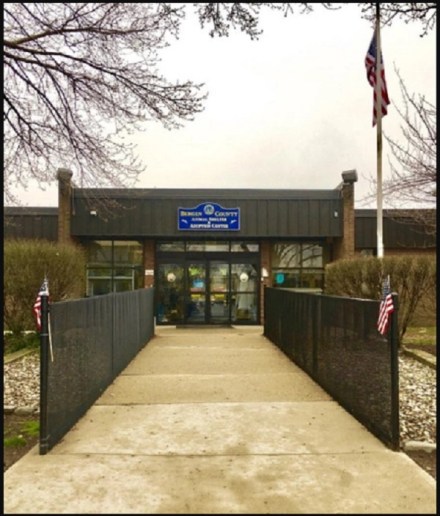
Bergen County Animal Shelter Has Another Bad Year in 2017

In 2016, I wrote a series of blogs on the regressive Bergen County Animal Shelter. Part 1 highlighted the shelter’s high kill rate in 2015 despite the facility claiming it was “no kill.” Part 2 examined the absurd reasons Bergen County Animal Shelter used to justify this killing. Part 3 discussed the shelter’s poor policies and how it could change them to improve.

Last year, I wrote two blogs on the Bergen County Animal Shelter. The first blog detailed Bergen County Animal Shelter’s 2016 statistics for dogs and cats coming in from the town of Kearny. Sadly, the shelter’s Kearny statistics revealed the facility killed many dogs. Additionally, despite having a successful TNR program, Bergen County Animal Shelter still killed healthy and treatable cats. Later in the year, I found these trends also applied to all the municipalities Bergen County Animal Shelter serviced in 2016.

Was Bergen County Animal Shelter still a high kill facility in 2017? What kinds of animals lose their lives at this shelter? Does the shelter comply with state law?

Shelter Kills Dogs at a High Rate

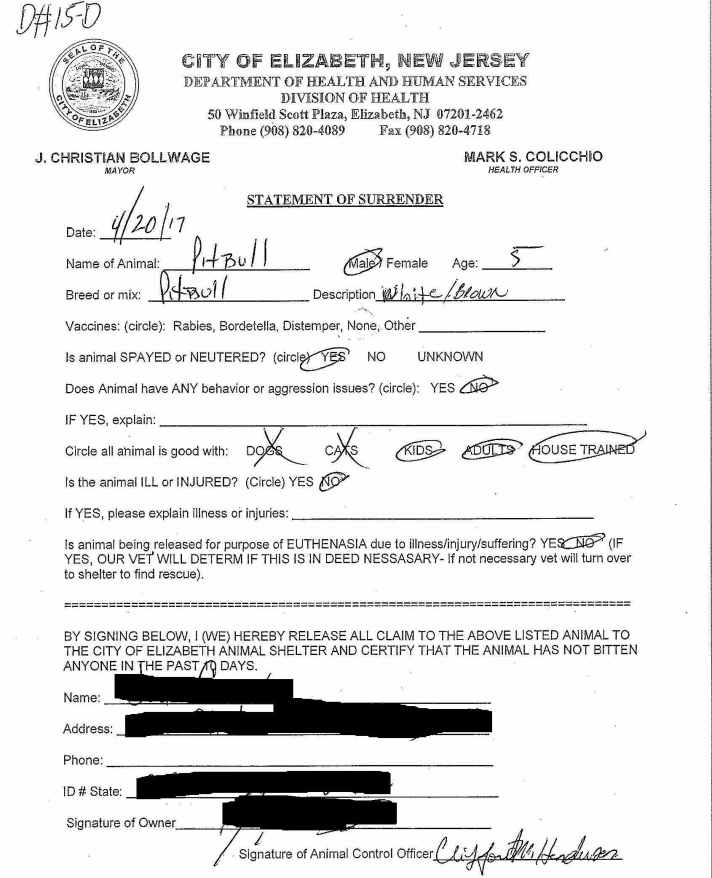
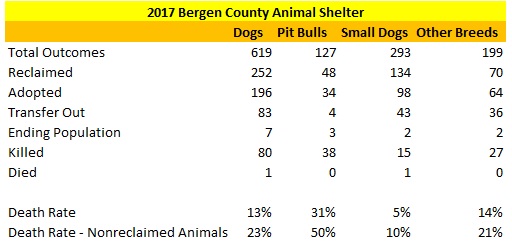
Bergen County Animal Shelter continued to kill many dogs in 2017. You can view all the shelter’s dog and cat intake and disposition records here and here. Overall, 13% of all dogs, 31% of pit bulls, 5% of small dogs and 14% of other medium to large sized breeds lost their lives at the Bergen County Animal Shelter during the year. As a comparison, only 1% of all dogs, 1% of pit bulls, 2% of small dogs and 2% of other breeds lost their lives at Austin Animal Center in 2017 despite that shelter taking in many more dogs in total and on a per capita basis. If we just count dogs who Bergen County Animal Shelter had to find new homes for (i.e. excluding dogs reclaimed by their owners), 23% of all dogs, 50% of pit bulls, 10% of small dogs and 21% of other medium to large sized breeds were killed or died at the shelter. To put it another way, around 1 in 4 nonreclaimed dogs, half of nonreclaimed pit bulls and more than 1 in 5 nonreclaimed other medium to large size breeds lost their lives at the Bergen County Animal Shelter. Thus, all types of medium to larger size dogs entering the Bergen County Animal Shelter had a significant chance of losing their life.

Bergen County Animal Shelter hardly adopted out any dogs. Despite being a well-known county shelter in a high traffic area, the facility only adopted out 196 dogs during the year or around one dog every two days. Furthermore, 98 of those adoptions were small dogs, which shelters have to do little work to adopt out. Bergen County Animal Shelter only adopted out 98 medium to large size dogs, which included just 34 pit bulls and 64 other medium to large size breeds. This works out to less than three pit bull adoptions and around five other medium to large size breed adoptions a month.

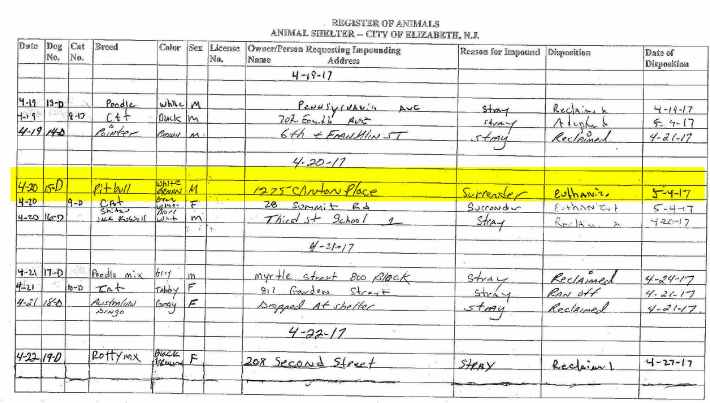
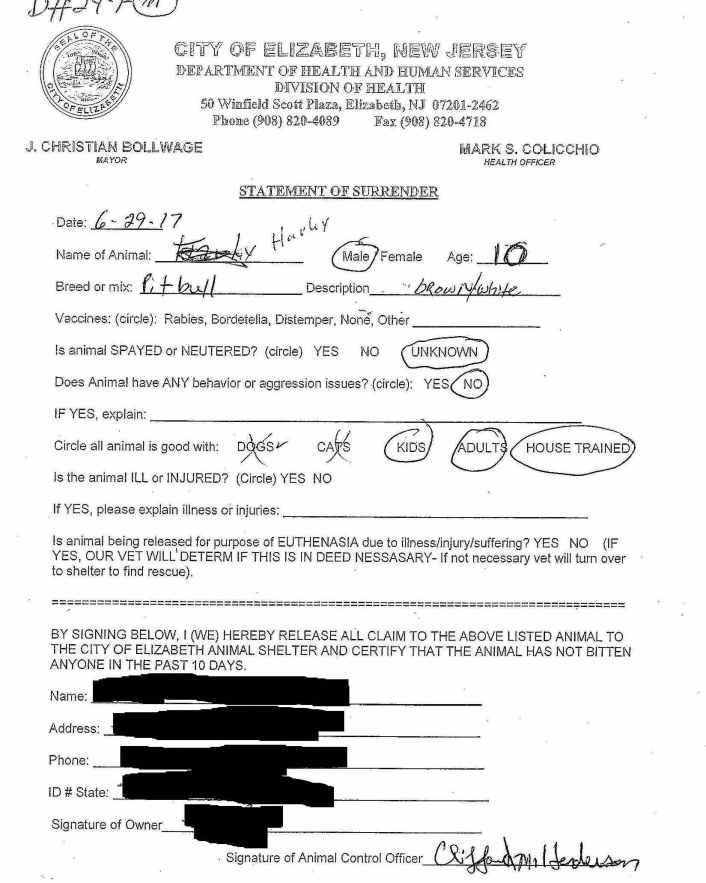
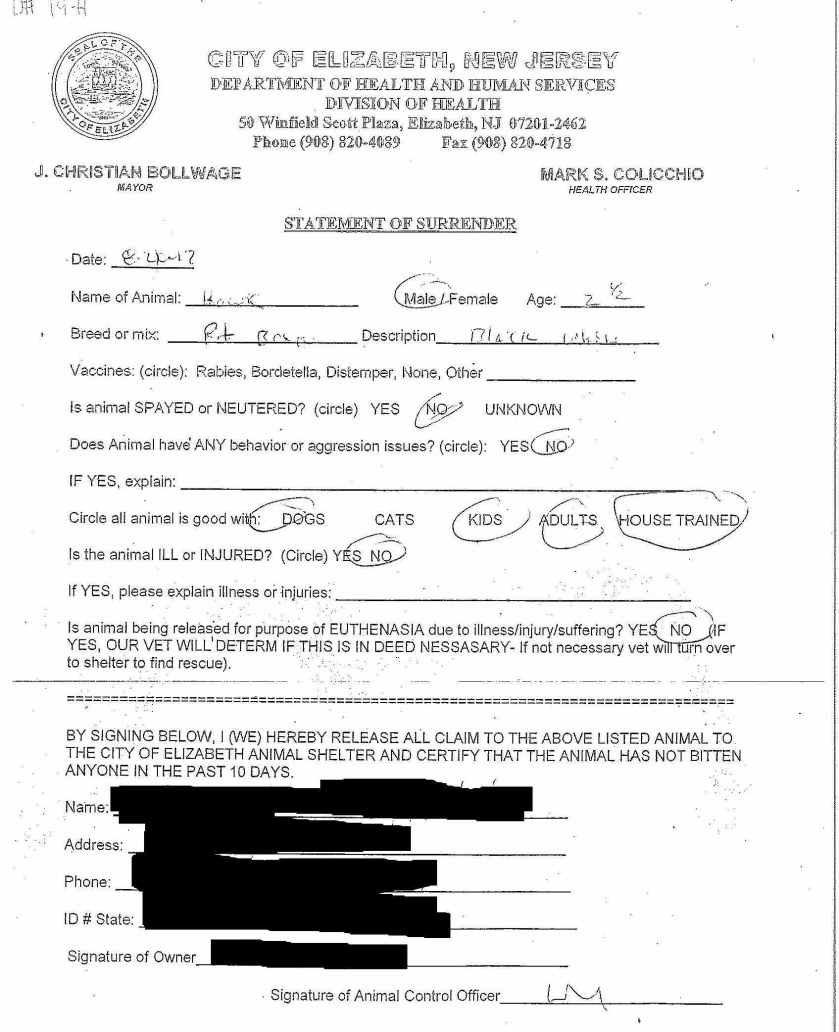
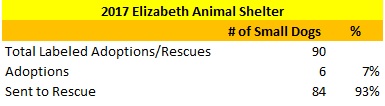
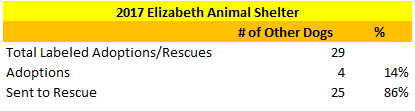
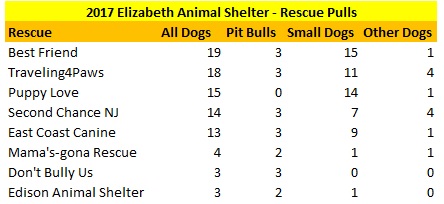
The shelter also sent very few medium to large size dogs to rescues. While my recent dog report card blog on the state’s shelters showed Bergen County Animal Shelter had plenty of space to adopt out all of its nonreclaimed dogs, one would think the facility would at least try to send dogs it was going to kill to rescues instead. In fact, Bergen County Animal Shelter only sent 40 out of 326 medium-large size dogs to rescues in 2017. Even worse, Bergen County Animal Shelter only transferred 4 out of 127 pit bulls to rescues during the year. In fact, Bergen County Animal Shelter killed 10 times more pit bulls than it sent to rescues. As a comparison, Elizabeth Animal Shelter sent 29 pit bulls to rescues in 2017 or seven times as many as Bergen County Animal Shelter. Despite the shelter’s policy of contacting rescues prior to killing, I’ve personally never seen Bergen County Animal Shelter ever make a public plea to rescues to save dogs the shelter was going to kill. Thus, Bergen County Animal Shelter would rather kill medium to large size dogs than actually ask for help to save these animals.
2017 Bergen County Animal Shelter Dog Data.jpg

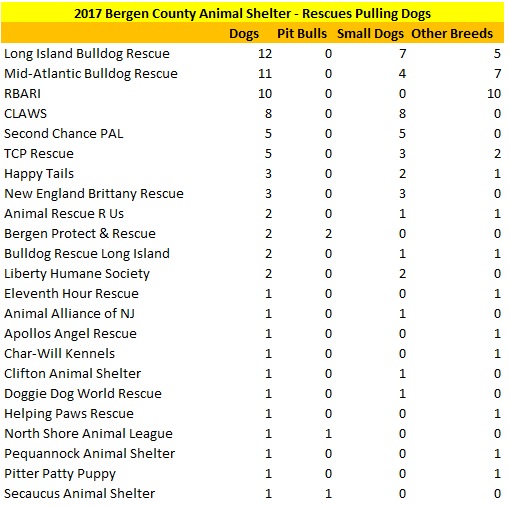
The following table illustrates how few dogs the shelter sent to rescues. As you can see, almost all the rescues pulled less than ten dogs for the entire year. Furthermore, the rescues pulling the most dogs did not save any pit bulls. Even worse, every single one of the pit bulls rescued on this list went to other shelters. This suggests Bergen County Animal Shelter made little effort to reach out to rescues to save these types of dogs.
2017 Bergen County Animal Shelters Rescues Pulling Dogs

Dogs Stay Too Long at Shelter

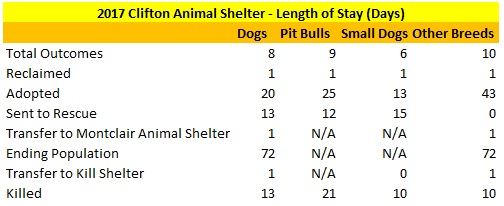
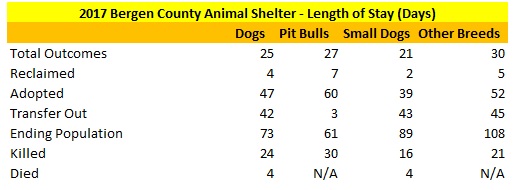
Bergen County Animal Shelter took too long to adopt out dogs. Overall, the average length of stay was 25 days for all dogs, 27 days for pit bulls, 21 days for small dogs and 30 days for other medium to large size breeds. Despite killing many dogs, sending few dogs to rescues and hardly adopting out dogs (i.e. the dogs the facility adopted out were likely the cream of the crop), the shelter took on average a very long 47 days to adopt out its dogs. Similarly, Bergen County Animal Shelter took 60 days, 39 days and 52 days to adopt out its pit bulls, small dogs and other medium to large size breeds. As a comparison, other successful shelters adopt out dogs, pit bulls in particular, at a much quicker rate despite having to place animals with more issues due to these facilities’ high live release rates. Oregon’s Greenhill Humane Society adopted out its pit bulls about 50% more quickly than Bergen County Animal Shelter. Similarly, Austin Animal Center, which took in a similar percentage of pit bulls and a much smaller percentage of small dogs, adopted out its dogs in around 10 days in 2016. In other words, Bergen County Animal Shelter took nearly five times longer to adopt out its dogs than Austin Animal Center. Thus, Bergen County Animal Shelter adopted out few dogs and took too long to do so.

The shelter also took too much time to send dogs to rescues. Specifically, Bergen County Animal Shelter took on average 42 days to send each dog to a rescue. While the shelter did not take long to send pit bulls to rescues on average, the facility sent too few of these dogs to rescue to make this a meaningful number. The shelter took on average 43 days and 45 days to send each small dog and other medium to large size breed to rescues. As a comparison, the Elizabeth Animal Shelter took on average 14 days, 6 days and 15 days to adopt out/send to rescues (almost all were sent to rescues rather than adopted out) its dogs, small dogs and other medium to large size breeds. In other words, Bergen County Animal Shelter took approximately three to seven times longer to send its dogs to rescues than the Elizabeth Animal Shelter. Therefore, even though Bergen County Animal Shelter sent few dogs to rescues, it still took way too much time to do so.

Bergen County Animal Shelter’s inability to safely place dogs quickly increases the chance animals develop behavioral problems, medical issues, and ultimately raises the cost to operate the facility. In fact, shelter medicine experts consider length of stay a “critical factor” for shelters and decreasing it is essential for reducing disease, behavioral problems, and costs. Ultimately, if a shelter wants to achieve a high live release rate it must quickly place its animals safely.
2017 Bergen County Animal Shelter Dogs Length of Stay

Too Many Cats Lose Their Lives

Bergen County Animal Shelter’s cat statistics in 2017 were also not good. Overall, 16% of cats lost their lives or went missing. If we just count cats the shelter had to find new homes for (i.e. excluding owner reclaims and cats “released” through TNR and other programs), 20% of these cats lost their lives or went missing. Thus, cats were not safe at Bergen County Animal Shelter.

While I tabulated the cat statistics by age, I could not include them due to inaccuracies I noted. Specifically, the shelter had a very large number of cats with an age of zero days in their intake and disposition records report. However, when I obtained underlying records for a sample of these cats, I found a lot of these animals were different ages. Therefore, I could not conduct this analysis by age as I typically do.

Bergen County Animal Shelter’s cat statistics were also much worse than Austin Animal Center. While 16% of cats and 20% of nonreclaimed cats lost their lives at Bergen County Animal Shelter in 2017, only 5% of cats and 6% of nonreclaimed cats lost their lives at Austin Animal Center in 2017. Thus, Bergen County Animal Shelter’s cats were three times more likely to lose their lives than cats at Austin Animal Center.

2017 Bergen County Animal Shelter Cat Data.jpg

Shelter Fails to Safely Place Cats Quickly

Cats typically do not take life in traditional shelter environments well. While shelters can modify housing and create enrichment programs to make cats happier, reducing length of stay in a good way is critical. Ultimately, shelters are unnatural and scary environments for cats and facilities must quickly place these animals to achieve high live release rates.

Bergen County Animal Shelter took too long to adopt out its cats. Overall, the shelter’s average length of stay was 45 days for cats. As a comparison, Colorado’s Longmont Humane Society’s average length of stay for cats over 4 months of age and 4 months and younger in 2016 were 23 days and 27 days (most cats were adopted out). Furthermore, Longmont Humane Society moved its cats quickly out of its shelter through adoption and achieved a 92% cat live release rate (92% for older cats and 91% for 4 months and younger cats). Similarly, Williamson County Animal Shelter in Texas saved 90% of its cats and had an average cat length of stay of just 13 days in its fiscal year 2017. Thus, Bergen County Animal Shelter took too long to adopt out its cats.

Bergen County Animal Shelter also took too much time to send cats to rescues. Despite transferring only 9% of its cats to rescues, the shelter took 51 days to send those cats to rescues. As a comparison, the Elizabeth Animal Shelter sent significantly more cats to rescues in 2017 and only took 8 days on average to send those cats to rescues/adopters (almost all went to rescues). Thus, Bergen County Animal Shelter took too long to transfer cats to rescues.

2017 Bergen County Animal Shelter Cats Length of Stay

Illegal Killing of Animals Before Seven Days

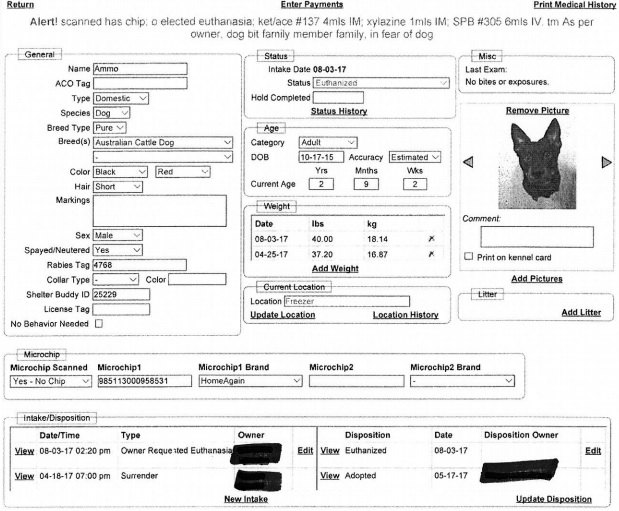
Ammo was two year old Australian Cattle Dog originally surrendered to Bergen County Animal Shelter on April 18, 2017 and adopted out on May 17, 2017. Ammo’s original evaluation noted he was a friendly dog, but had minor food guarding issues. On August 3, 2017, Ammo’s adopter returned him to the shelter for allegedly biting a family member. On that day, the owner filled out an owner requested euthanasia form and the shelter killed Ammo on that very same day. Unfortunately, the shelter provided no documentation of the severity of the bite or the circumstances. For example, was the dog provoked or did it involve an avoidable situation (e.g. being close to the dog while it had a bone)?

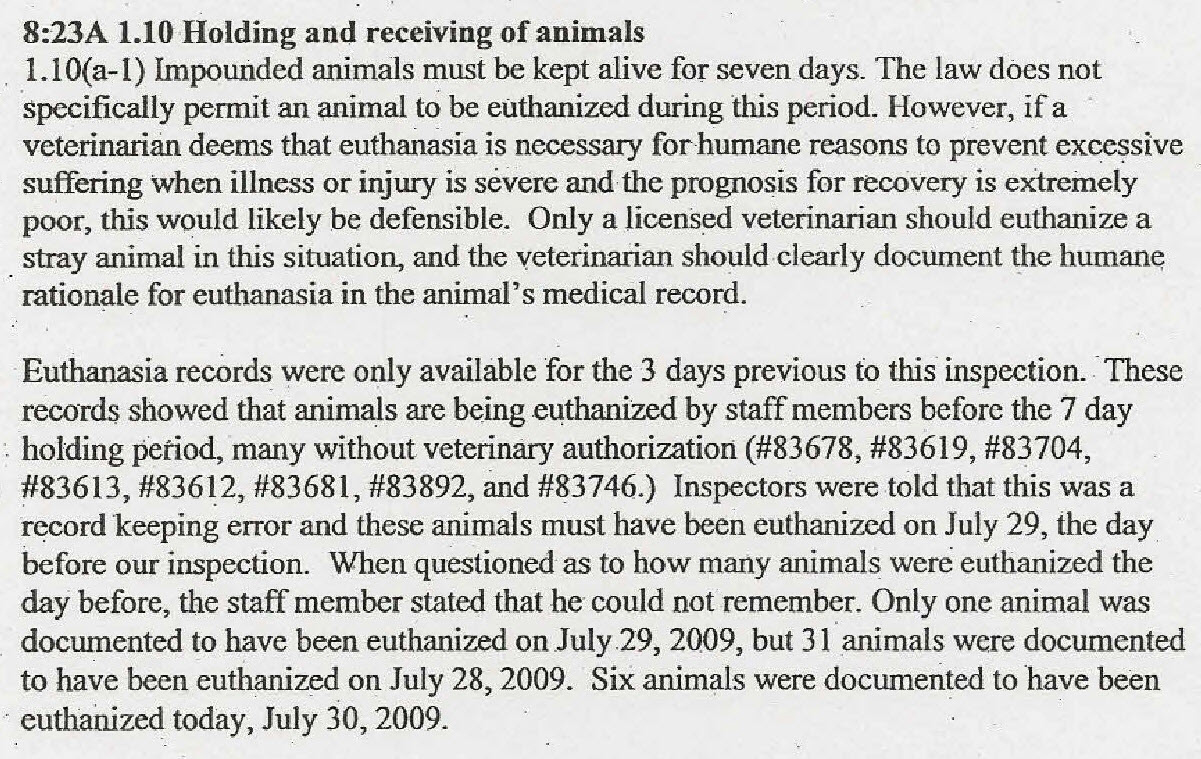
New Jersey animal shelter law clearly states shelters must not kill animals, whether they are strays or owner surrenders, for at least 7 days. Furthermore, the New Jersey Department of Health recently issued guidance summarizing the law’s requirements:

Pursuant to State law (N.J.S.A. 4:19-15.16 a. through l.) all municipalities must have a licensed animal impoundment facility (pound) designated where stray and potentially vicious animals can be safely impounded. Impounded stray animals shall be held at the pound for at least seven days (i.e., 168 hours) from the time impounded before the animal is offered for adoption or euthanized, relocated or sterilized, regardless of the animal’s temperament or medical condition.

Animals that are voluntarily surrendered by their owners to licensed pounds or shelters shall be offered for adoption for at least seven days prior to euthanasia or shelter/pound management may transfer the animal to an animal rescue organization facility or a foster home prior to offering it for adoption if such a transfer is determined to be in the best interest of the animal.

In practice, the New Jersey Department of Health allows shelters to euthanize animals during the 7 day hold period if both of the following conditions are met as discussed in this section of the New Jersey Department of Health’s July 30, 2009 inspection report on Associated Humane Societies-Newark.

  1. If a veterinarian deems euthanasia necessary for humane reasons to prevent excessive suffering when illness and injury is severe and the prognosis for recovery is extremely poor
  2. Only a licensed veterinarian should perform euthanasia in the above situation and they must clearly document the humane rationale in the animal’s medical record

Regardless of the severity of the bite, Bergen County Animal Shelter illegally killed an owner surrendered animal before seven days. Simply put, a shelter cannot kill an animal for aggression before seven days unless it is declared vicious by a New Jersey court and such court orders the killing of the dog.

Dog ID# 1093.jpg

Dopg ID 1093 pt 2

Dog ID 1093 pt3.jpg

Dog ID 1093 pt 4

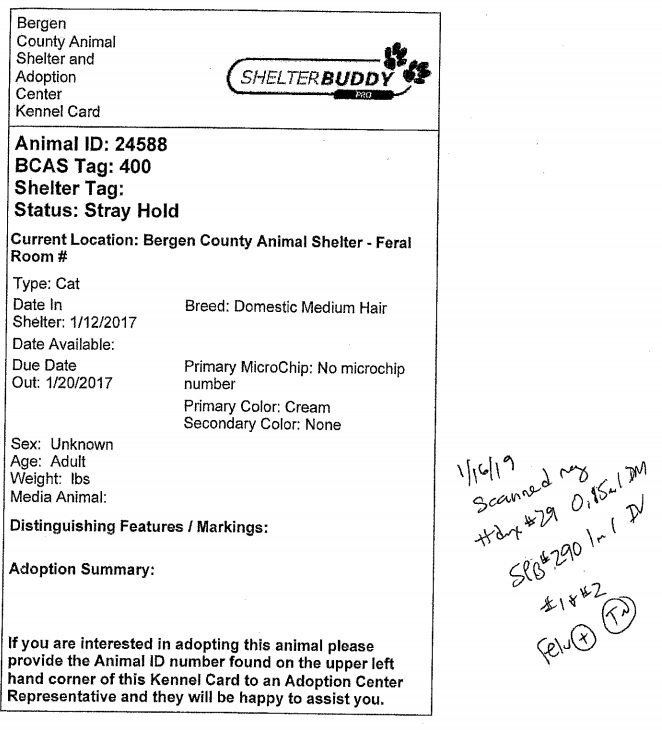
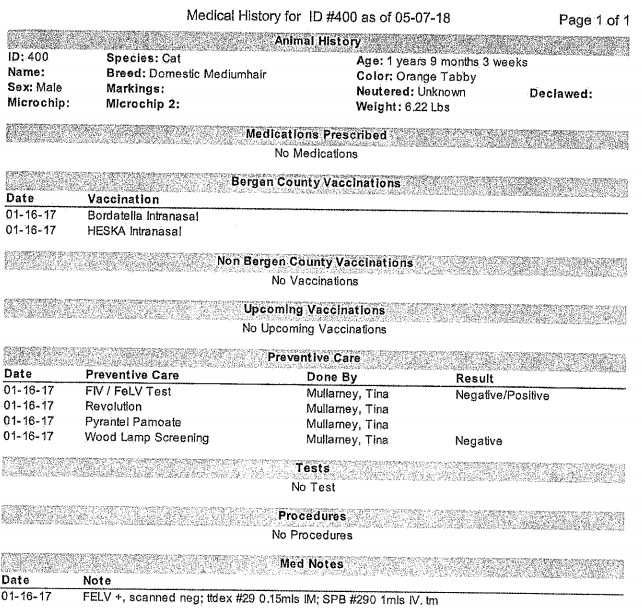
Cat ID# 400 was a stray young cat brought to Bergen County Animal Shelter on January 12, 2017. Four days later the shelter gave the cat a medical exam, During the exam, the cat weighed 6.22 pounds, which is a weight that is not unusually low for a stray and young cat (i.e. the cat was not completely emaciated), and gave him an FIV/FELV test. After the cat tested positive for FELV and the shelter labeled him “Feral”, the shelter killed him on the very same day. The shelter provided no documentation that this animal was hopelessly suffering.

Frankly, Bergen County Animal Shelter’s actions are outrageous. While FELV is a serious disease, many cats can live happily quite a long time with this disease. That is why shelters, such as Austin Pets Alive, adopt out FeLV positive cats successfully. Thus, Bergen County Animal Shelter illegally killed Cat ID# 400 only four days after he arrived at the shelter.
Cat ID 400 pt 1.jpg

Cat ID 400 pt 2.jpg

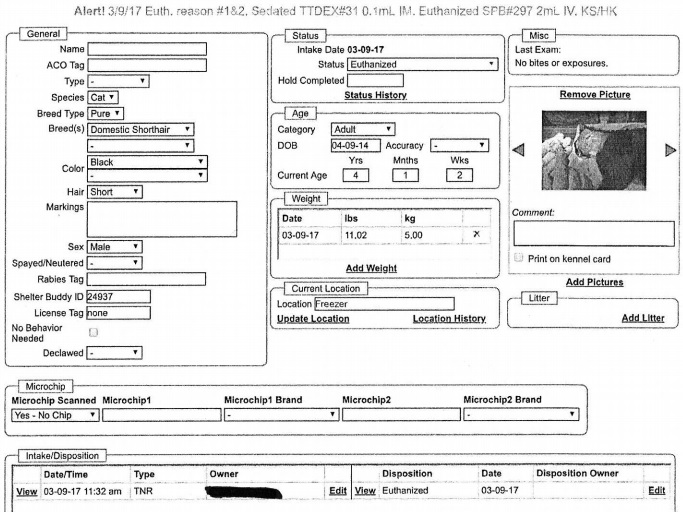
Cat ID# 781 was a four year old male cat initially brought to the shelter for TNR. According to the shelter, the cat had a 4-5 cm wound, but otherwise was generally pretty healthy. For example, the cat weighed 11 pounds. However, this cat had a positive result on an FIV snap test on the day the animal arrived at the shelter. Despite many shelters successfully adopting out FIV positive cats, Bergen County Animal Shelter killed Cat ID# 781 on the day he arrived at Bergen County Animal Shelter stating the person bringing the cat to the shelter couldn’t keep the pet segregated and as an inside pet. Clearly, Bergen County Animal Shelter illegally killed a cat who was not hopelessly suffering before seven days.
Cat ID#781 pt 1.jpg


Cat ID# 781 pt 2

Shelter Kills Animals for Absurd Reasons

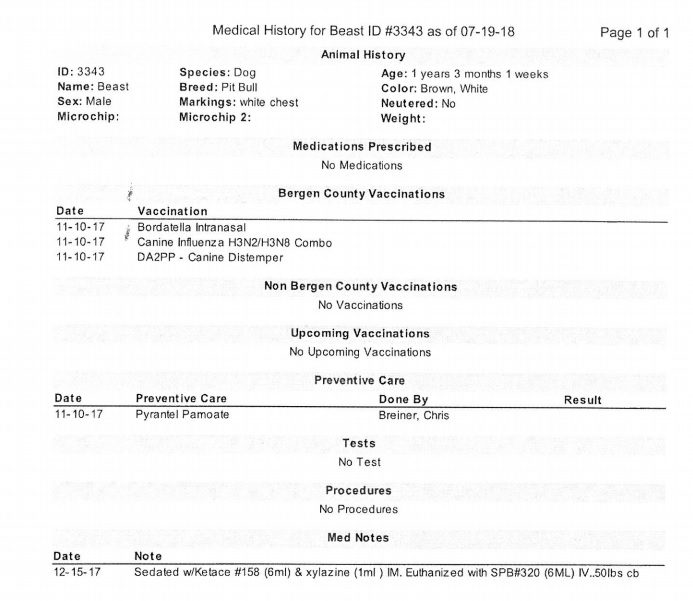
Beast or Dog ID# 3343 was a seven month old pit bull surrendered to Bergen County Animal Shelter on November 7, 2017. Two days later the shelter noted the owner requested they be notified if Beast failed his behavior evaluation. The owner contacted the shelter three days later stating she found someone interested in giving Beast a home. However, Bergen County Animal Shelter performed one of its infamous “evaluations” 15 days later on November 27, 2017 and stated Beast had an “unhealthy obsessive personality and high arousal, coupled with his resource guarding will eventually leave any handler injured”

How did the geniuses at Bergen County Animal Shelter determine a seven month old puppy would maul “any handler?” Despite having no bite history and taking “corrections well”, he was “very rough, rambunctious and ill-mannered.” In other words, Beast was a big puppy. The crackpot staff at Bergen County Animal Shelter also claimed he guarded a rawhide. Given that multiple studies have found shelter dog evaluations, including food/resource aggression tests, unreliable and even the creator of one of the major food/resource aggression tests has come out against using these evaluations, its amazing Bergen County Animal Shelter would use this to condemn this puppy to death. As the shelter continued to antagonize Beast during during a stranger-test, he “lunged” (but did not attack) at one of the shelter workers. In other words, the dog communicated to the staff he didn’t like what they were doing and did so without harming them. However, Beast acted “more loose” with another employee and “was willing to investigate.”

Given we know behavior evaluations in shelters are completely inaccurate, the shelter’s decision to kill this dog for acting like a big puppy, guarding a rawhide and showing non-violent protective behavior during a stressful evaluation is absurd. Even worse, the shelter refused to even attempt to modify these so-called behavior problems. In other words, Bergen County Animal Shelter killed Beast for no good reasons.

Dog ID 3343


Dog ID 3343 1

Dog ID 3343 2

Dog ID #3343 Killed

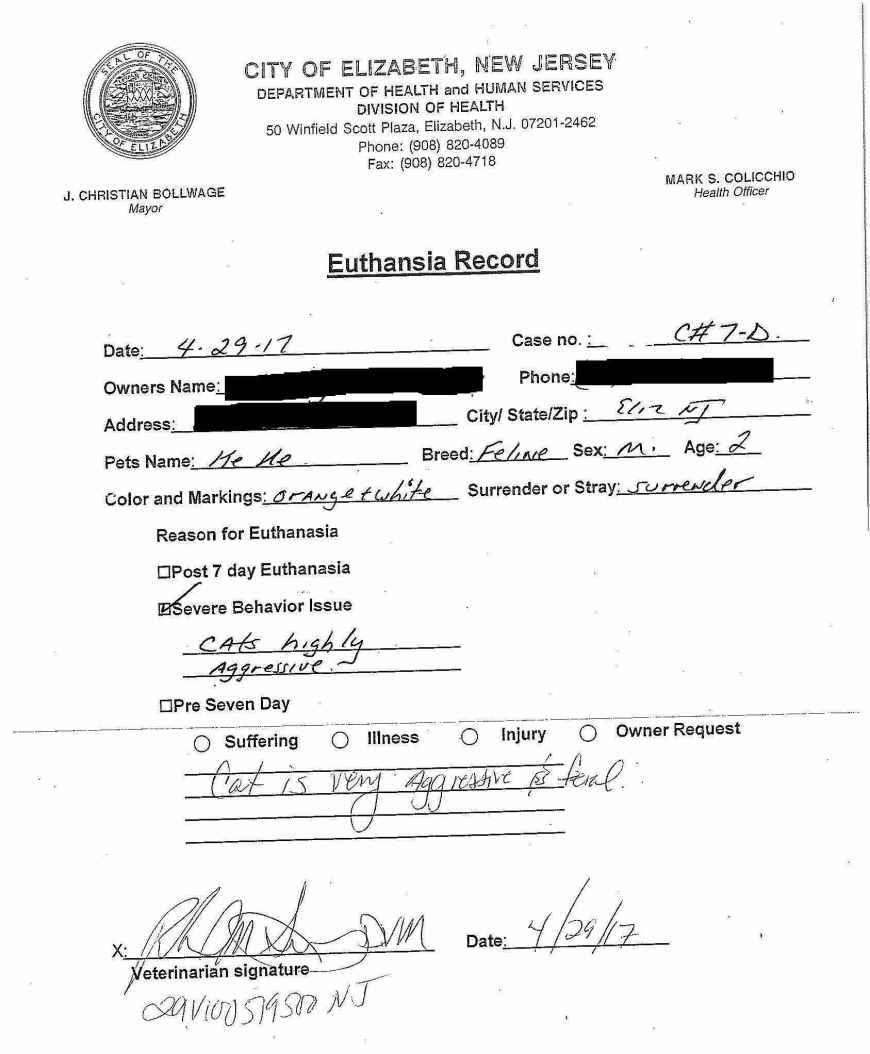
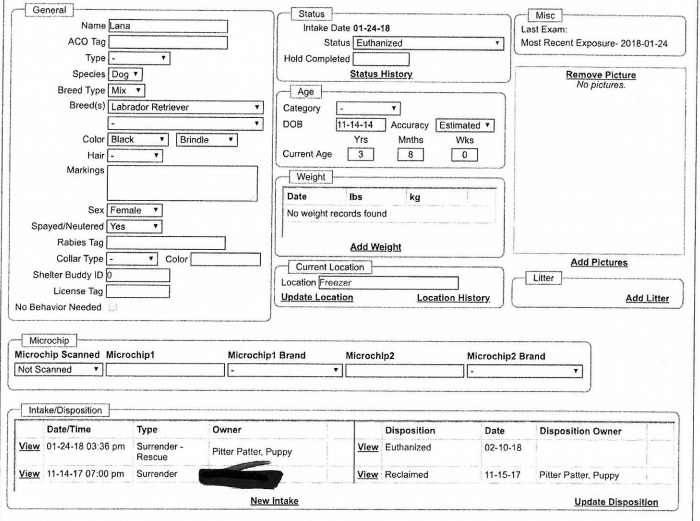
Lana was three year old Labrador retriever surrendered to the Bergen County Animal Shelter by a rescue called Pitter Patter on January 24, 2018. Apparently, the rescue’s full name is Pitter Patter Puppy House. Initially, the rescue surrendered the dog to the shelter in November and then reclaimed the animal. In January 2018, Pitter Patter surrendered the animal for good. According to the shelter, Pitter Patter surrendered Lana because of “unprovoked aggression to other dogs.” However, Bergen County Animal Shelter’s own evaluation found Lana had no issues with people, veterinarians and groomers. Despite being fine with people, Bergen County Animal Shelter killed Lana three days on February 10, 2018 after her so-called evaluation. How any “rescue” can surrender a dog, let alone for dog aggression, to a high kill shelter is beyond reprehensible.

Lana 1.jpg

Lana 4.jpg

Lana 2

Lana 3

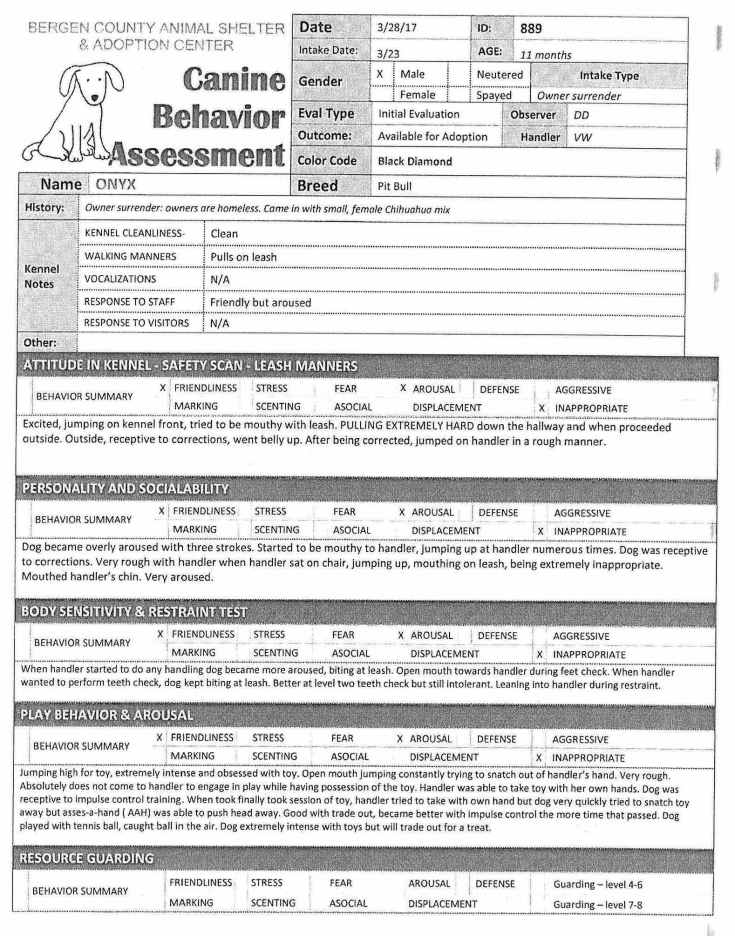
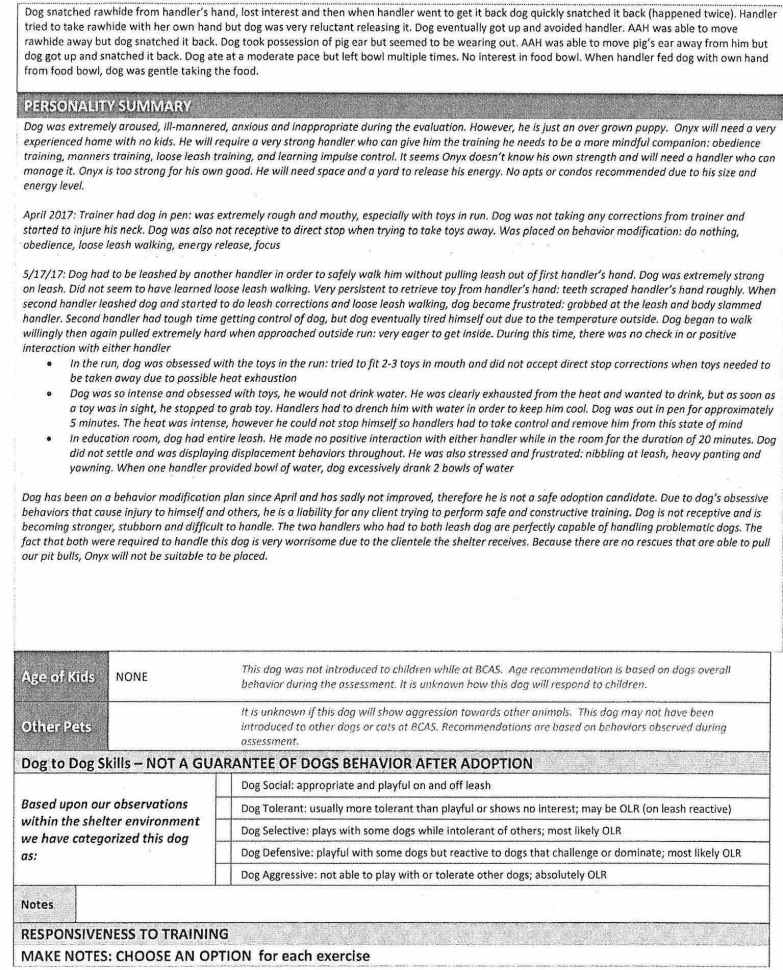
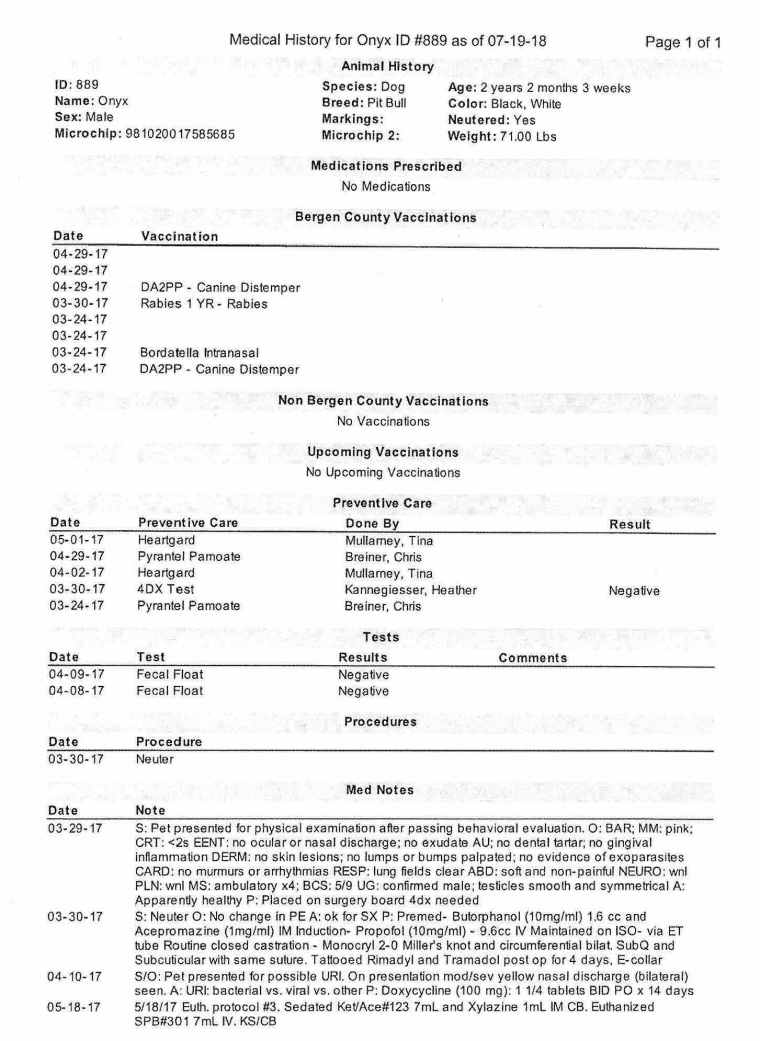
Onyx or Dog ID# 889 was an 11 month old dog surrendered to the Bergen County Animal Shelter on March 23, 2017 due to the owner having housing issues and not having the money to afford a boarding facility. According to Onyx’s owner, Onyx lived with the family since he was three months old. The owner stated they spent time everyday training Onxy, playing with him and walking him. In addition, Onyx’s owner stated the dog had no moderate or severe behavior issues. Additionally, the owner stated Onyx was crate trained, friendly with strangers, good with kids and dogs, trained and walked well on a leash.

Despite the owner clearly indicating Onyx was a wonderful dog, Bergen County Animal Shelter’s staff viewed Onyx as a terrible dog. According to Onyx’s evaluation on March 28, 2017, he “PULLED EXTREMELY HARD” when taken out of the kennel, exhibited various jumpy/mouthy behaviors, and was “obsessed” with his toy. In other words, Onyx was a big puppy, which the shelter even admitted in its evaluation. Despite Onyx being an overgrown puppy, Bergen County Animal Shelter decided to kill him on May 17, 2017 due to these so-called problems not improving. Miraculously, the shelter claimed Onyx was not a “safe adoption candidate” due to his strength and energy even though he was great with his prior family. To make matters worse, the shelter claimed they had no rescues to place their pit bulls even though the facility does not seem to make public pleas to such organizations. Bergen County Animal Shelter killed Onyx the day after the shelter’s evaluator condemned him to death.

Dog ID 889 Pt 1.jpg

Dog ID 889 pt2.jpg

Dog ID 889 pt2 (2).jpg


Dog ID# 889 Pt3.jpg

Dog ID# 889 Pt3 (2)


Dog ID 889 pt 4

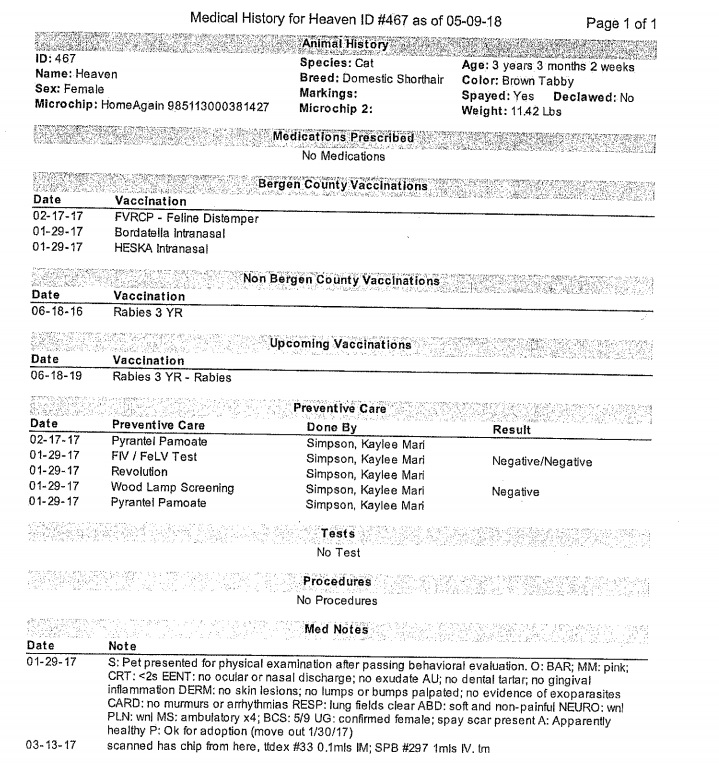
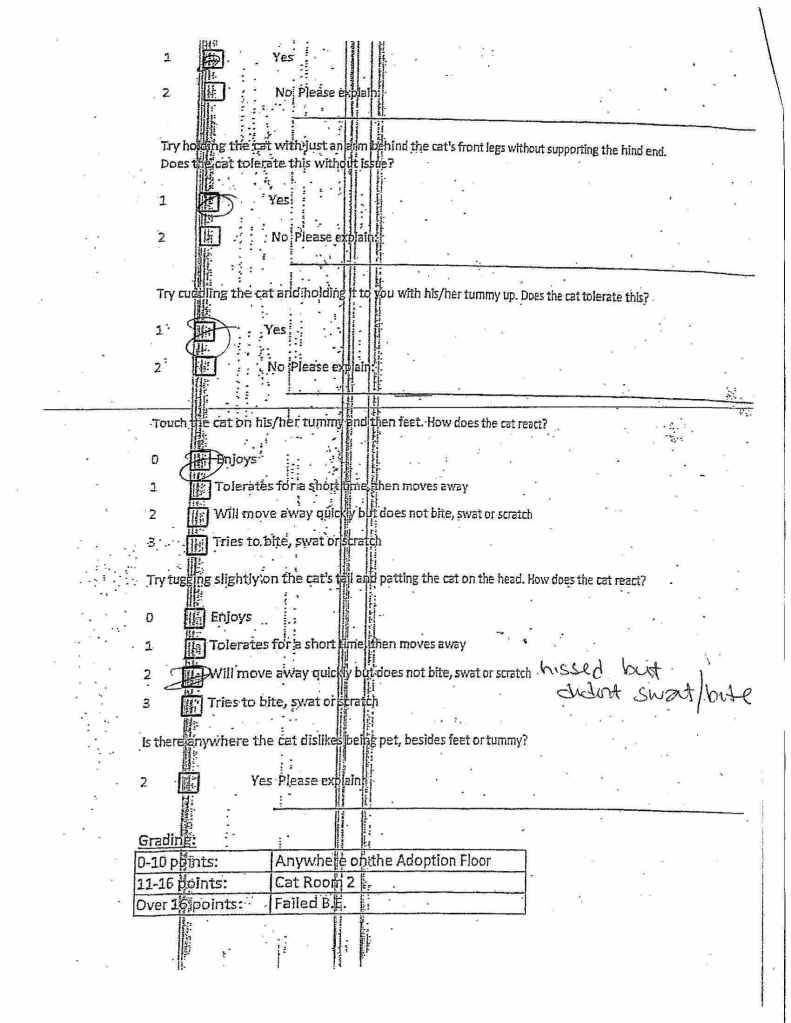
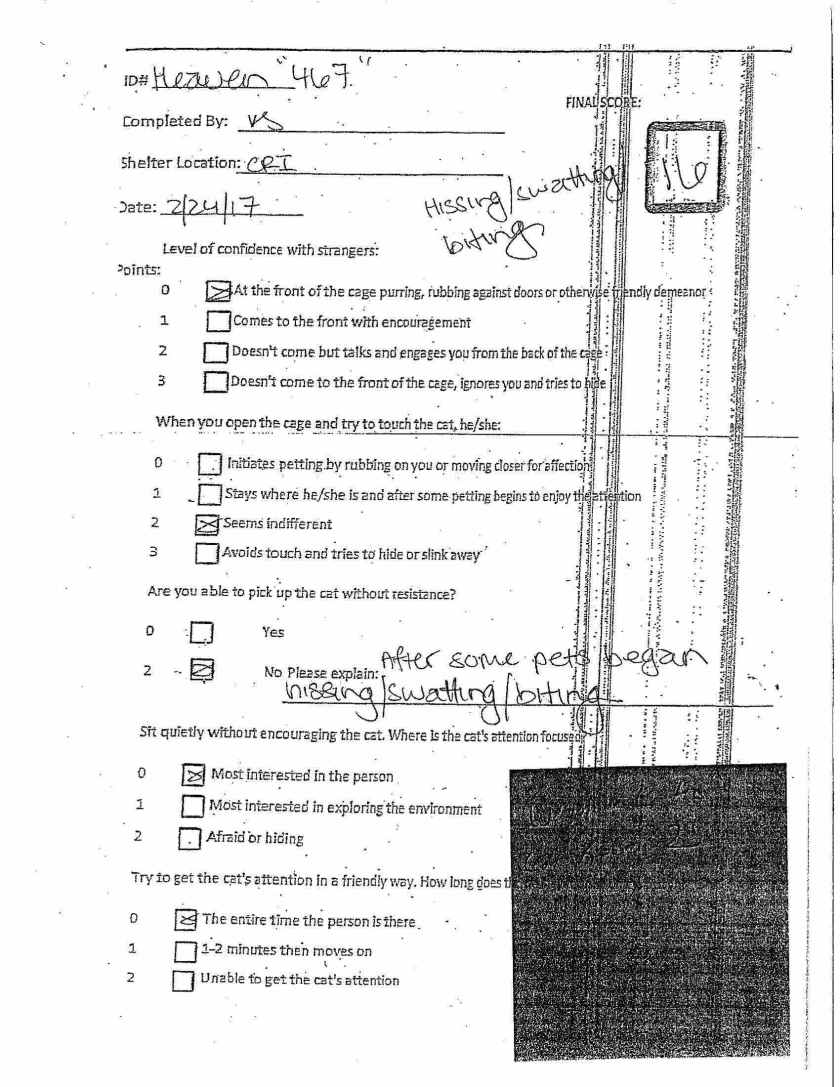
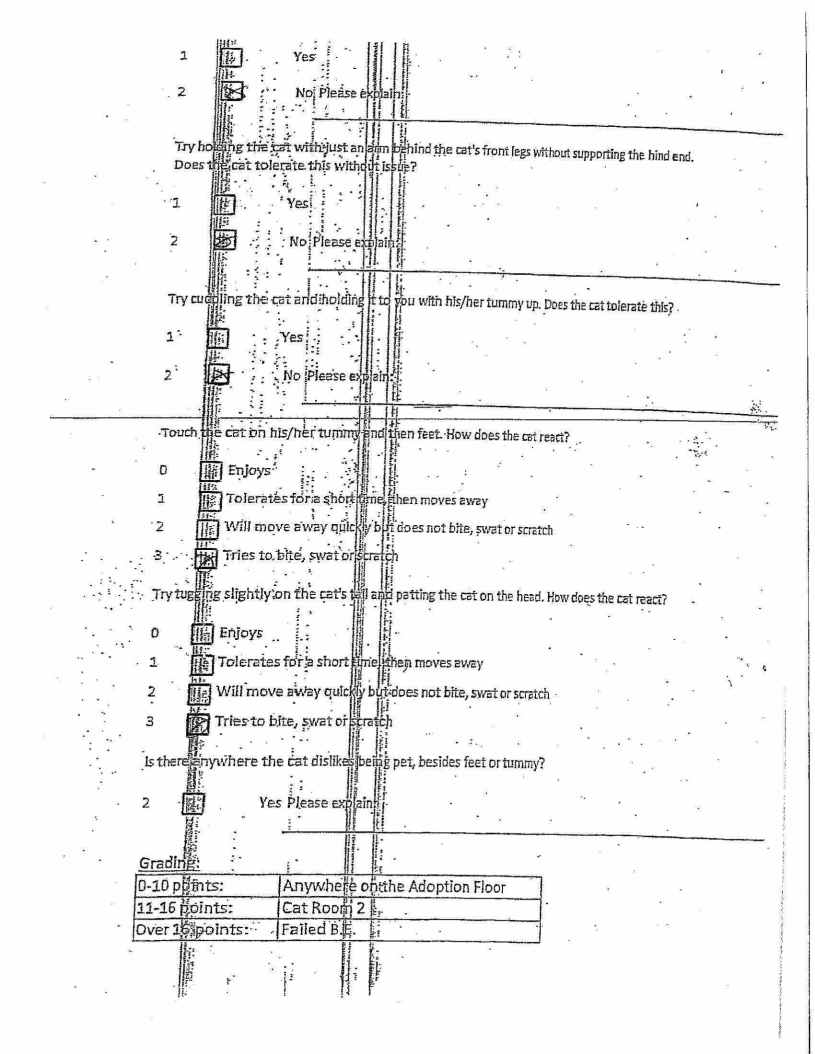
Heaven was a two year old female cat surrendered to Bergen County Animal Shelter on January 25, 2017 due to her owner having cancer. According to the owner, Heaven was litter box trained, liked to be petted, enjoyed scratching posts and was an indoor cat. Given the owner was going through a crisis in their life and this cat seemed like a nice pet, you would think Bergen County Animal Shelter would make every effort to save this animal.

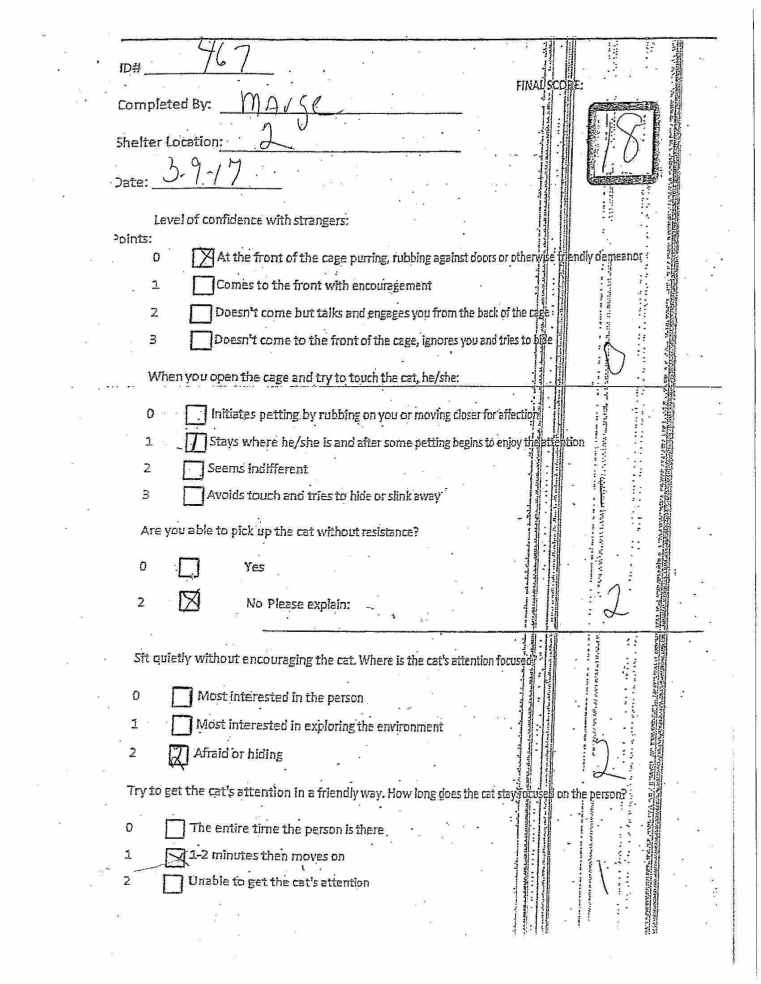
Bergen County Animal Shelter used its absurd cat temperament tests to kill Heaven. Like dog behavioral evaluations, these tests, which deliberately stress out cats to provoke a bad response, are discredited due to their inaccuracy. Heaven passed a behavioral evaluation given to her four days after she arrived at the shelter. She received a score of 9 points on a scale where under 10 points results in placement anywhere on the adoption floor. Apparently, Bergen County Animal Shelter wasn’t happy with saving a cancer patient’s cat since the shelter tested Heaven again on February 24, 2017. Despite this test finding Heaven approaching the evaluator in a friendly manner and not bothered by petting, the tester complained Heaven hissed, swatted and bit when she was picked up. As many cat owners know, some cats just don’t like being picked up, particularly when they are stressed. Heaven scored 16 points on this test and was placed in a middle grade of the test’s scoring scale, 11-16 points, which resulted in the shelter placing her in Cat Room 2. Bergen County Animal Shelter then tested Heaven again on March 9, 2017, putting her though the abusive provoking exercises once more, and failed her this time. Why? Apparently, after being harassed in several tests, Heaven was afraid/hiding when the people torturing this poor cat sat next to her. Bergen County Animal Shelter killed Heaven four days later.

Heaven 2.jpg

Heaven 1

Heaven 3

Heaven 5 (5)

Heaven 5 (6)


Heaven 5 (3)

Heaven 5 (4)

Heaven 5.jpg

Heaven 5 (2)

Bergen County Health Department’s Bogus Inspections of Itself

The Bergen County Health Department runs the Bergen County Animal Shelter and inspects itself. As expected, the Bergen County Health Department gave itself a “Satisfactory” grade in 2017. The inspection report, which contained illegible handwriting, looked like someone spent two minutes preparing it. Most noteworthy, the inspector completely missed the animals Bergen County Animal Shelter illegally killed before seven days.

Bergen County Animal Shelter should not have had a license to operate for more than five months in 2017 and at least four months and counting in 2018. Under N.J.S.A. 4:19-15.8(b), a shelter’s license expires on June 30th each year. N.J.A.C. 8.23A-1.2 requires a shelter to comply with state law and receive a Certificate of Inspection for the current licensing year. In other words, a shelter must be inspected and found to comply with state law by June 30th of each year to have a license to operate. Furthermore, Teterboro’s municipal clerk told me in the email below that the county health department has not inspected Bergen County Animal Shelter as of November 6, 2018 and may not inspect the shelter until next year. Thus, Bergen County Animal Shelter should not have had a license to operate for more than five months in 2017 and should not have a license to operate the shelter as of November 6, 2018.

Bergen County Health Department No Inspection of Bergen County Animal Shelter November 2018

Bergen County Residents Must Demand Much More

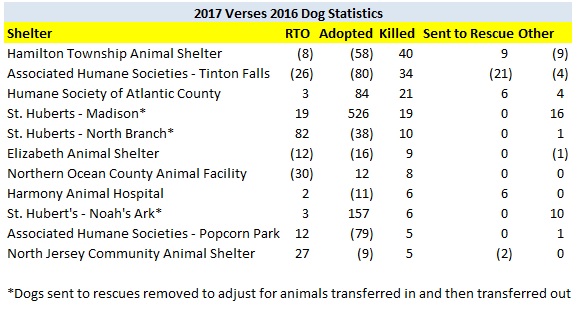
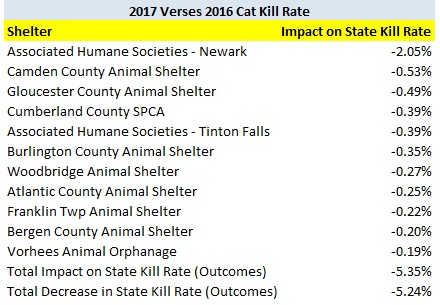
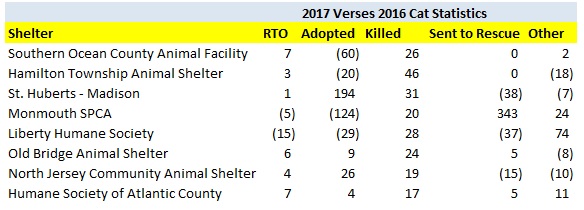
Sadly, Bergen County Animal Shelter continues to fail the animals entrusted in its care. Despite its $2,117,725 budget or $850 per dog and cat impounded, Bergen County Animal Shelter continues to kill large numbers of its animals. As you see in the table below, Bergen County Animal Shelter receives more government funding per impounded animal than Austin Animal Center and kills dogs at rates ranging from 5-25 times more than Austin Animal Center. Similarly, Bergen County Animal Shelter kills cats at over three times the rate as Austin Animal Center. Thus, Bergen County taxpayers are getting ripped off by this failing animal shelter.

2017 Bergen County Animal Shelter and Austin Animal Center Comparison

Clearly, Bergen County continues to operate a regressive animal shelter. As I discussed previously, Bergen County residents should be outraged that their tax dollars support a high kill shelter that conducts illegal activities and their elected leaders tried to deceive their constituents into believing it was “no kill.” If you live in Bergen County, please contact the following elected representatives and tell them you expect Bergen County to hire a top notch shelter director who will adopt the 11 step No Kill Equation and achieve live release rates well over 90% like Austin, Texas and hundreds of other communities have.

  • James Tedesco III, Bergen County Executive: 201-336-730; countyexecutive@co.bergen.nj.us
  •  Tracy Silna Zur, Bergen County Board of Chosen Freeholders: 201-336-628; Tracyzur@co.bergen.nj.us
  • Thomas J. Sullivan, Bergen County Board of Chosen Freeholders: 201-336-6277; tsullivan@co.bergen.nj.us 
  • Joan M. Voss, Bergen County Board of Chosen Freeholders: 201-336-6279; jvoss@co.bergen.nj.us
  • Mary J. Amoroso, Bergen County Board of Chosen Freeholders: 201-336-6275; mamoroso@co.bergen.nj.us 
  • David L. Ganz, Bergen County Board of Chosen Freeholders: 201-336-6280; DavidLGanz@co.bergen.nj.us 
  • Germaine M. Ortiz, Bergen County Board of Chosen Freeholders: 201-336-6276; gortiz@co.bergen.nj.us 
  • Steven A. Tanelli, Bergen County Board of Chosen Freeholders: 201-336-6278; STanelli@co.bergen.nj.us 

2017 Dog Report Cards for New Jersey Animal Shelters

In a blog from earlier this year, I disclosed New Jersey’s depressing animal shelter statistics. This blog explains why so many dogs are losing their lives in the state’s animal shelters and whether these facilities can end the killing.

Successful organizations set measurable goals and regularly monitor their performance. Examples include financial budgets, customer and employee satisfaction surveys, and product reliability metrics. Unfortunately, many animal shelters for far too long have failed to set lifesaving goals and standards. Municipalities, donors and volunteers need to know where their resources will be best utilized. Time and money are scarce resources and people should allocate these assets to organizations who will best utilize them. As a result, animal shelters need to set goals and hold their leadership and staff accountable for achieving these objectives.

Model Assesses New Jersey Animal Shelters’ Life Saving Performance

In order to assess how good of a job New Jersey animal shelters are doing, I’ve developed an analysis I call the “Life Saving Model.” While shelter performance is dependent on many variables, such as finances, facility design, local laws, etc., the most critical factor impacting potential life saving is physical space. Without having enough physical space, a shelter might not have enough time to find loving homes for its animals. Shelters can overcome financial limitations through creative fundraising or recruiting more volunteers. Similarly, organizations can save their dogs despite having run down facilities if these groups enthusiastically implement policies to get animals into loving homes quickly. As a result, my analysis focuses on making the best use of space to save the maximum number of New Jersey and nearby states dogs.

The Life Saving Model measures the number of local animals a shelter should adopt out, rescue from other facilities, send to rescues or other shelters, and euthanize. The targeted outcomes take into account each facility’s physical capacity and the number and types of dogs the organization receives from its community (i.e. strays, owner surrenders, cruelty/bite cases). I assume a target euthanasia rate, take the number of dogs actually returned to owners and then estimate how many community dogs a shelter should adopt out. To the extent space runs out, I then calculate how many dogs the shelter must send to rescues. If the shelter has excess space after properly serving its local community, the facility uses that room to rescue and adopt out dogs from nearby areas. The targeted results calculated from this model are compared to the actual or estimated actual results from each shelter below.

For shelters with animal control contracts, I place 10% of all dogs that are not reclaimed by owners into the targeted sent to rescue category. Austin Pets Alive used data from Austin Animal Center, which is the local municipal shelter, to determine large dogs with behavioral challenges are part of the last 10% of animals losing their lives. While shelters can save most of these dogs through behavioral rehabilitation and/or foster programs, I decided to put an estimate of these dogs into the sent to rescue category since that is another good outcome for these dogs.

My analysis puts a cap on the targeted numbers of dogs rescued from other shelters and adoptions. While my unmodified targeted numbers of rescued and adopted animals are quite achievable, I want to provide very conservative goals for New Jersey animals shelters. For example, the unmodified model resulted in a statewide per capita dog adoption rate of around 30% to 70% of the level found at some of the nation’s best animal control shelters. Similarly, the unmodified model yielded a statewide pit bull per capita adoption rate (2.0 pit bulls per 1,000 people) that is less than the pit bull per capita adoption rate at one of the best animal control shelters in the country. In my opinion, New Jersey shelters could more easily achieve that per capita pit bull adoption rate given my model includes far fewer dogs from competing breeds than those in this role model animal control shelter.

My modified analysis capped pit bull adoptions at 2 pit bulls per 1,000 people within each New Jersey county. In other words, the targeted numbers of dogs rescued from other shelters and adopted below are the lesser of

  1. Number predicted by model
  2. Number determined by capping pit bull adoptions at 2 pit bulls per 1,000 people in the county

In simple terms, a shelter is expected to achieve this per capita adoption rate unless the facility lacks enough space. If a shelter does not have sufficient room, it won’t have the time to reach all the potential adopters and requires assistance from rescues and/or other facilities. Given my model assumes 80% of rescued dogs are pit bull like dogs, my targeted numbers of dogs rescued and adopted are quite low as detailed in the section below. For example, shelters in counties where dog adoptions are capped have extra space that they do not use to adopt out other dog breeds.

To read specific details and assumptions used in the model, please see the Appendix at the end of this blog.

New Jersey Animal Shelters Contain Enough Space to Save All of New Jersey’s Dogs and Many More from Other States

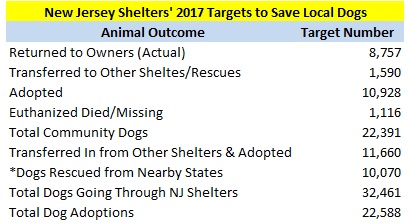
New Jersey’s animal shelter system has enough space to save all of the state’s healthy and treatable dogs. The table below details the targeted numbers of dog outcomes the New Jersey animal shelter system should achieve. Out of the 22,391 New Jersey dogs coming into the state’s animal shelters in 2017, 10,928 and 1,590 dogs should have been adopted out and sent to other shelters/rescues by the facilities originally taking the dogs in. However, other New Jersey animal shelters had more than enough capacity to rescue the 1,590 dogs from space constrained facilities. Thus, New Jersey animal shelters should be able to able to adopt out every single healthy and treatable dog taken in from the state and not require any support from rescue organizations without physical facilities from a space perspective.

New Jersey animal shelters have enough excess space to save many dogs from out of state as well. Specifically, New Jersey animal shelters had enough physical capacity to rescue and adopt out 10,070 dogs from out of state after achieving a 95% live release rate for New Jersey dogs. To put this number into perspective, New Jersey animal shelters could make both New York City and Philadelphia no kill cities for dogs and increase those cities’ dog live release rates to 95% in 2017 as follows:

  • New York City – 1,304 additional dogs need saving
  • Philadelphia – 935 additional dogs need saving

Additionally, New Jersey animal shelters could save another 7,831 dogs from other locations outside of the state. Of course, some New Jersey animal shelters do pull some dogs from New York City and Philadelphia animal control shelters. However, most of these dogs are likely easy to adopt and therefore have short lengths of stay. As a result, the additional number of dogs New Jersey animal shelters could save from New York City, Philadelphia and elsewhere is probably not much lower than the figures above. Thus, New Jersey animal shelters could make New Jersey a no kill state for dogs as well as many other places.

These adoption goals are quite achievable when comparing the performance of well-run animal control shelters across the country. New Jersey animal shelters would only need to adopt out 2.5 dogs per 1,000 people in the state (1.4 dogs if no dogs rescued from out of state). As a comparison, recent per capita dog adoption numbers from several high performing no kill open admission shelters are as follows:

  • Lynchburg Humane Society (Lynchburg, Virginia) – 10.7 dogs per 1,000 people
  • Longmont Humane Society (Longmont, Colorado area) – 10.5 dogs per 1,000 people
  • Nevada Humane Society (Reno, Nevada and Carson City, Nevada areas) – 8.5 dogs per 1,000 people
  • KC Pet Project (Kansas City, Missouri) – 6.5 dogs per 1,000 people
  • Humane Society of Fremont County (Fremont County, Colorado) – 5.8 dogs per 1,000 people
  • Williamson County Animal Shelter (Williamson County, Texas) – 5.5 dogs per 1,000 people
  • Lake County Animal Shelter (Lake County, Florida) – 4.6 dogs per 1,000 people

Thus, many communities are already adopting out around two to four times as many dogs as the goal set for New Jersey animal shelters.

Some naysayers may claim New Jersey would have a more difficult time due to the state’s shelters taking in many pit bulls. However, this is a myth. My model estimates New Jersey animal shelters would need to adopt out roughly 0.5 pit bulls per 1,000 people to save 95% of New Jersey’s dogs. Our shelters would only need to adopt out around 1.4 pit bulls per 1,000 people if New Jersey shelters also rescued and adopted out the targeted number of pit bulls from other states. As a comparison, I estimate Longmont Humane Society adopts out 2.2 pit bulls per 1,000 people based on the number of pit bulls impounded in 2014 as a percentage of total dogs impounded in 2014 and multiplying that number by the 10.5 dogs per 1,000 people adoption rate in 2017. Furthermore, the pit bull adoption targets are even more reasonable given the model assumes there are roughly 1/8 of the number of dogs from other breeds to compete with in the New Jersey adoption market compared to the Longmont, Colorado area.

2017 New Jersey Dog Targeted Outcomes

Animal Deaths Vary Widely at New Jersey Animal Shelters

The goal of any properly managed animal shelter is to save all of its healthy and treatable animals. In some cases, such as selective admission rescue oriented shelters, it is pretty easy to not kill animals. In addition, other animal shelters with easy to service animal control contracts (i.e. few animals impounded, most strays quickly returned to owners) can avoid unnecessary killing due to having lots of extra space. As a result, some shelters may have an easier time than others in preventing killing at their shelters.

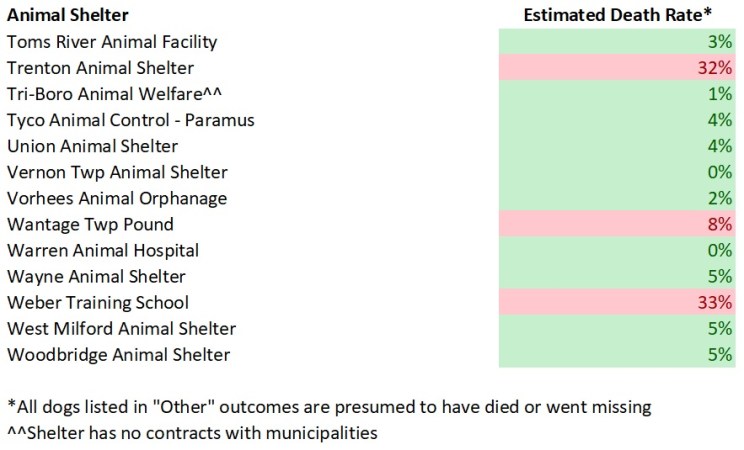
The tables below detail the estimated dog death rates. All dogs missing are assumed “dead” based on the assumption they died or went to a very bad place. As discussed in a prior blog, the estimated death rate includes “Other” outcomes as animals who died or went missing along with dogs reported as killed. Based on my review of a number of shelters’ underlying documents, virtually all of the dogs in the “Other” outcome category died or went missing. Shelters having estimated dog death rates equal to or less than and greater than 5% are highlighted in green and red in the table below.

The Humane Society of Atlantic County and St. Hubert’s-Noah’s Ark had unusually high estimated dog death rates of 11% and 8% (St. Hubert’s estimated death rates reflect an adjustment for the organization’s Sister Shelter Waystation program discussed in this blog). These facilities’ estimated death rates are very high for rescue oriented shelters with no animal control contracts and raise serious questions about how life and death decisions are made by these organizations. The estimated death rates at other rescue oriented shelters, such as Ramapo-Bergen Animal Refuge and Animal Welfare Association (both had estimated dog death rates of 1%) are much lower than the Humane Society of Atlantic County and St. Hubert’s-Noah’s Ark. Thus, the Humane Society of Atlantic County’s and St. Hubert’s-Noah’s Ark’s estimated dog deaths rate are extremely high for rescue oriented shelters.
Certain shelters may kill a larger percentage of local animals. Since a number of both rescue oriented and shelters with animal control contracts transport large numbers of highly adoptable dogs from out of state, its helpful to look at their estimated death rates for just local animals. Unfortunately, shelters do not provide data to precisely compute this local dog death rate. If we assume these shelters only killed the generally less adoptable local dogs, we can estimate the local dog death rate as follows:

Total Dogs Killed and in Other Outcomes (died, missing)/(Total Dogs Impounded-Total Dogs Transported In from Other States)

When we calculate this estimated local death rate, a number of shelters stand out. The Humane Society of Atlantic County’s estimated dog death rate rises from 11% to 21% under this calculation. Additionally, St. Hubert’s-Madison’s estimated dog death rate increases from 10% to 48% under this calculation. While these facilities may not be only killing local dogs and therefore may have lower local dog death rates, I think its very possible these shelters’ local dog death rates are significantly higher than their total estimated dog death rates in the tables below.

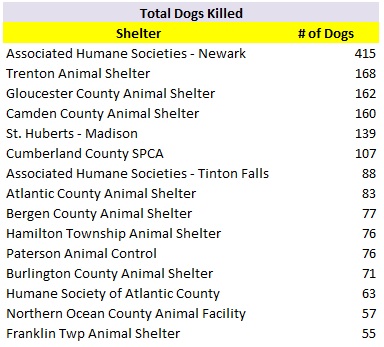
The largest number of dogs unnecessarily dying occurred at a relatively small number of shelters. Specifically, 12 out of 93 or 13% of the shelters accounted for 80% of the estimated 1,507 dogs unnecessarily losing their lives under the model’s assumptions. In fact, Associated Humane Societies-Newark, which broke state shelter law left and right in 2017 per New Jersey Department of Health inspection reports, and Trenton Animal Shelter, which also violated state shelter law last year per a state health department inspection report, accounted for 31% of the dogs needlessly losing their lives at New Jersey animal shelters. Shelters with the greatest number of unnecessary dog deaths (assuming all dogs killed were local animals) are as follows:

  • Associated Humane Societies – Newark (338)
  • St. Hubert’s – Madison (138)
  • Trenton Animal Shelter (134)
  • Gloucester County Animal Shelter (128)
  • Camden County Animal Shelter (83)
  • Hamilton Township Animal Shelter (76)
  • Associated Humane Societies – Tinton Falls (66)

Thus, the bulk of the dogs unnecessarily dying at New Jersey animals shelters occurs at a small number of facilities.

2017 NJ Shelters Estimated Dog Death Rates 1.jpg

2017 NJ Shelters Estimated Dog Death Rates 2

2017 NJ Shelters Estimated Dog Death Rates 3.jpg

2017 NJ Shelters Estimated Dog Death Rates 4.jpg

2017 NJ Shelters Estimated Dog Death Rates 5.jpg

Most New Jersey Animal Shelters Require Little Rescue Assistance

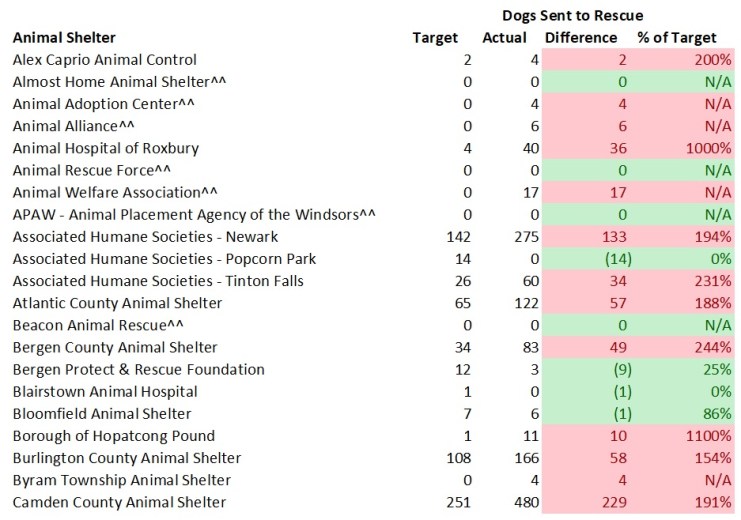
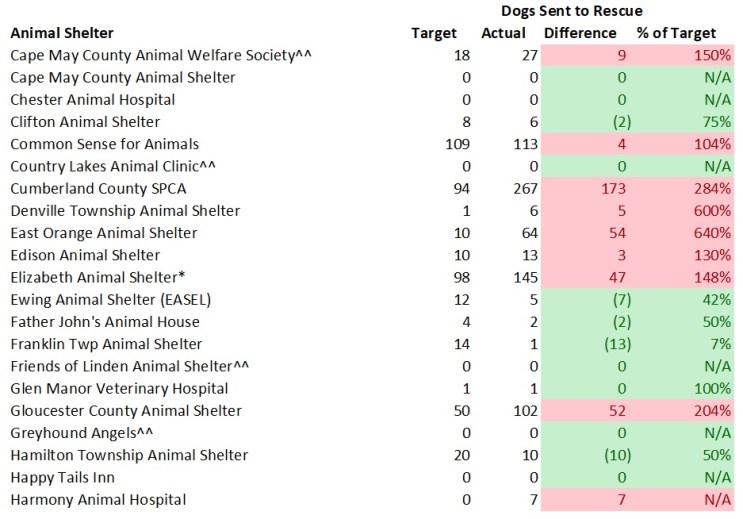
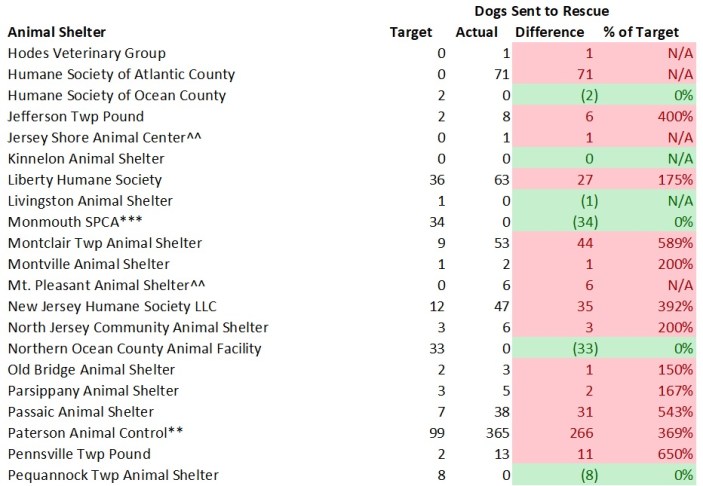
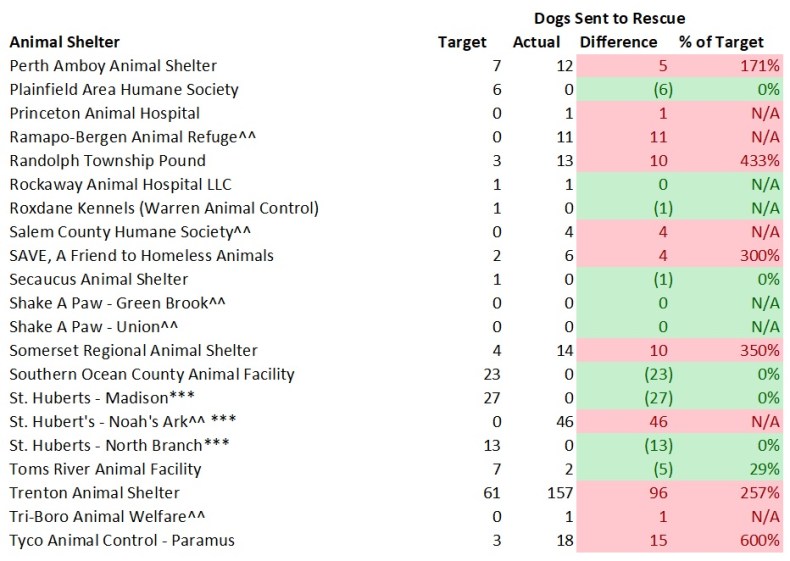
Some animal shelters will require more support from rescues and animal shelters with excess space than others. If a shelter has relatively high intake, very limited space, and few stray dogs returned to owners, it will need more help than other shelters. In an ideal world, rescues would take all shelter animals. However, due to limited numbers of foster homes, lesser ability to find foster homes due to many rescue organizations’ small sizes, and most rescues’ restrictive adoption policies, all shelters cannot heavily rely on rescues. The tables below compare the number of dogs a shelter should transfer to other organizations per the model and the number of dogs actually sent to other animal welfare groups. Shelters marked in green are receiving less than the expected rescue support while facilities marked in red are receiving too much rescue help.

Overall, most New Jersey animal shelters require little rescue support if space-constrained facilities fast-track their most highly adoptable dogs. Shelter medicine experts advocate prioritizing the processing of highly adoptable animals to make the best use of space and reduce disease. For example, making sure these animals are the first to get spayed/neutered and vaccinated and receive microchips to ensure they can leave as soon as the shelter finds a good home.

54 shelters received too much help, 17 facilities received just enough assistance and 22 shelters received too little help from other animal welfare organizations. However, the excess dogs rescued (1,743 dogs) at shelters receiving too much assistance was far higher than the rescue deficits at other shelters (232 dogs) resulting in the state’s shelters sending 1,511 more dogs than needed to rescues and other animal welfare organizations. Northern Ocean Animal Facility and Southern Ocean Animal Facility received less rescue support than needed. However, neither of the shelters reported rescues taking any animals, which raises questions as to whether these shelters correctly reported their data (i.e. counting animals sent to rescues as adoptions). Nonetheless, the New Jersey shelter system as a whole is receiving enough rescue assistance, but some shelters are hurt by rescues pulling animals from less needy facilities.

Rescue groups and shelters with extra space should pull dogs from kill shelters with the highest rescue “target” numbers and deficits in the tables below. If shelters not needing rescue support get that extra help, these shelters will not take the steps necessary to properly run their facilities. As a result of enabling poorly performing shelters and not pulling dogs from truly space constrained facilities, rescuing dogs from shelters with enough space leads to less lifesaving.

Shelters receiving less than needed rescue support should also examine their own policies and performance. Are the shelter’s operating processes allowing too many animals to get sick and therefore discouraging organizations to rescue their animals due to subsequent medical costs? Does the shelter actively reach out to rescues/other shelters and treat them with respect? Does the shelter make it convenient for other organizations to pull their animals?

Given killing animals for space is intolerable, the space-constrained shelters need to expand their effective dog capacity. These facilities could use extra space in their buildings to house dogs on a short-term basis. These shelters can enter into arrangements with local veterinarians to house and adopt out some dogs. Furthermore, shelters can create or expand foster programs to increase the number of dogs cared for. Additionally, creating a pet owner surrender prevention program, implementing a proper managed intake policy (i.e. where animals are impounded when in danger and waiting periods for owner surrenders are relatively short) and making serious efforts to return lost dogs to owners could free up space in these shelters. Finally, space-constrained shelters with multiple animal control contracts should terminate some of these arrangements to bring their capacity for care in line with the number of dogs they take in. As a result, space constrained shelters still need to take active steps to reduce killing rather than simply solely relying on rescue support.
In certain circumstances, it may make sense for shelters with excess space to send dogs to rescues. For example, a unique breed or a dog needing very specialized behavioral or medical rehabilitation. However, these cases are accounted for in my targeted sent to rescue figures for animal control shelters.

2017 NJ Shelters Targeted Verses Actual Dogs Sent to Rescues 1.jpg

2017 NJ Shelters Targeted Verses Actual Dogs Sent to Rescues 2.jpg

2017 NJ Shelters Targeted Verses Actual Dogs Sent to Rescues 3

2017 NJ Shelters Targeted Verses Actual Dogs Sent to Rescues 4

2017 NJ Shelters Targeted Verses Actual Dogs Sent to Rescues 5

Most New Jersey Animal Shelters Fail to Come Close to Reaching Their Local Dog Adoption Potential

We can assess each shelter’s contribution to making New Jersey and nearby areas no kill. While a shelter may be able to avoid killing healthy and treatable animals, it still may not live up to its potential for adopting out local dogs. On the other hand, a space constrained shelter may kill healthy and treatable dogs, but still do a good job adopting animals out.

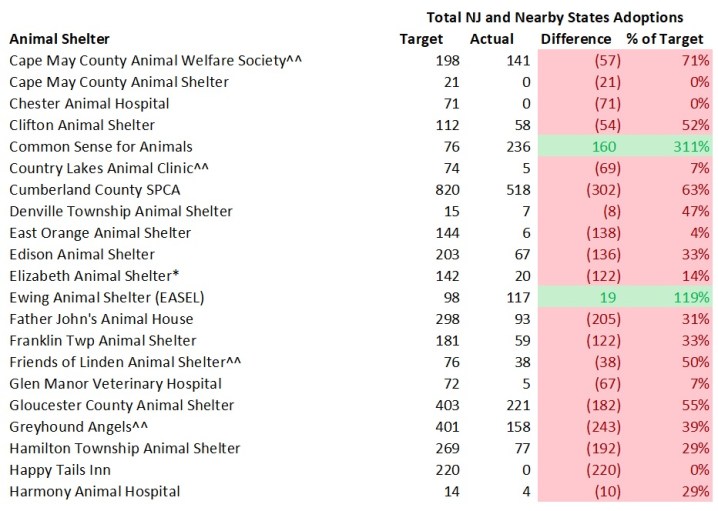
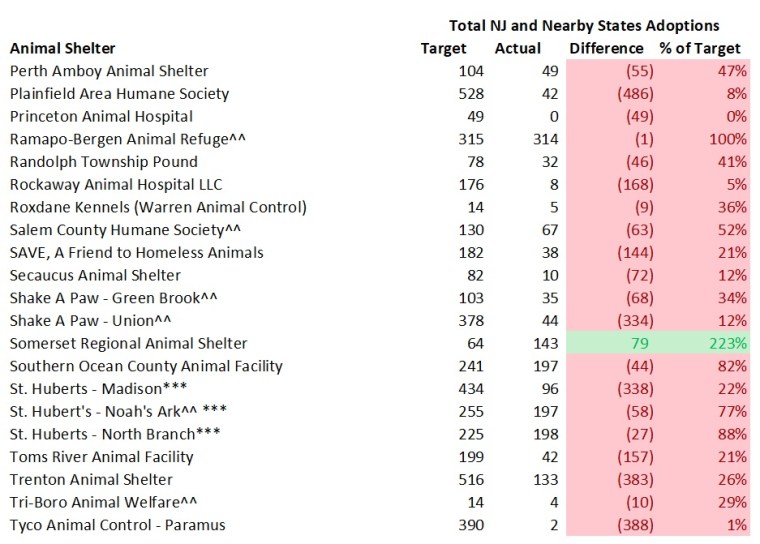
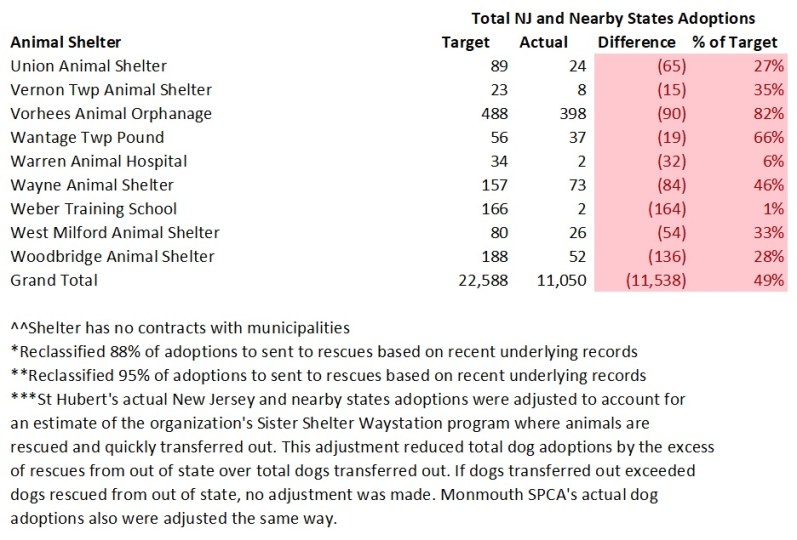
The tables below compare the number of dogs from New Jersey and nearby states each animal shelter should adopt out with the estimated number of local dogs actually adopted out.

Many rescue oriented shelters likely pull much easier to adopt dogs than the bulk of dogs needing to get rescued from local facilities. Thus, the results from rescue oriented shelters may look better than they actually are.

Few organizations reached or exceeded their adoption targets. Specifically, only 10 out of 93 shelters met the adoptions goals computed by the Life Saving Model. Thus, the overwhelming number of New Jersey animal shelters need to step up their adoption efforts.

A number of other rescue oriented shelters exceeded their adoption targets, but this may at least partially be due to the types of dogs they impounded.  Common Sense for Animals operates more like a rescue oriented than an animal control shelter. While this organization exceeded its adoption targets, the shelter’s figures were off by 128 dogs using the methodology outlined in another blog. This makes me wonder if their adoption numbers were accurate. Somerset Regional Animal Shelter, which also operates more like a rescue oriented shelter than an animal control facility, exceeded its adoption target. However, this shelter appears to mostly rescue easier to adopt dogs from New Jersey animal shelters. Other rescue oriented shelters, such as Mt. Pleasant Animal Shelter and Animal Welfare Association also exceeded their adoption targets, but this is likely due to these organizations rescuing easier to adopt dogs from New Jersey shelters. Thus, I believe most of these rescue oriented shelters’ high local dog adoption numbers were due to these organizations selecting easier to adopt dogs.

Pequannock Animal Shelter’s higher than targeted local dog adoption result is a bit misleading. This facility benefited from the method I used to cap adoptions in the county and reduce the adoption targets for these two shelters. For example, the shelter only reached 61% of its adoption target using my unadjusted model only taking the shelter’s physical space into account. Since Morris County has many shelters that collectively have a very large capacity (i.e. very high adoption potential), my model reduces all Morris County animal shelters’ target adoptions to my county adoption cap. Therefore, Pequannock Animal Shelter has a relatively low dog adoption target. Thus, this shelter really didn’t do an excellent job adopting out dogs.

Three animal control shelters deserve mentioning. Camden County Animal Shelter exceeded its adoption target by 40 dogs. As a large county shelter that includes a poor urban area, this is an impressive result. Similarly, Burlington County Animal Shelter, which also takes in many dogs, exceeded its dog adoption target by 82 dogs. Ewing Animal Shelter, which is operated by EASEL Animal Rescue League, adopted out 19 more dogs than its adoption target. Unsurprisingly, all three shelters had dog live release rates exceeding 90% in 2017 (Camden County Animal Shelter: 92%, Burlington County Animal Shelter: 96%, EASEL Animal Rescue League: 98%) and all three facilities provide either condensed or full statistics on their web sites.

Shelters adopting out the fewest animals in total relative to their targets were as follows:

  • Associated Humane Societies-Newark – 1,412 fewer dogs adopted than targeted
  • Monmouth SPCA – 629 fewer dogs adopted than targeted
  • Associated Humane Societies-Popcorn Park – 593 fewer dogs adopted than targeted
  • Plainfield Area Humane Society – 486 fewer dogs adopted than targeted
  • Bergen County Animal Shelter – 458 fewer dogs adopted than targeted
  • Tyco Animal Control – Paramus – 388 fewer dogs adopted than targeted
  • Trenton Animal Shelter – 383 fewer dogs adopted than targeted
  • St. Hubert’s – Madison – 338 fewer dogs adopted than targeted
  • Shake a Paw-Union – 334 fewer dogs adopted than targeted
  • Paterson Animal Shelter – 313 fewer dogs adopted than targeted
  • Jersey Shore Animal Center – 310 fewer dogs adopted than targeted
  • Cumberland County SPCA – 302 fewer dogs adopted than targeted
  • Associated Humane Societies-Tinton Falls – 300 fewer dogs adopted than targeted

Unsurprisingly, Associated Humane Societies has archaic adoption policies that make it more difficult to adopt than the procedures recommended from national animal welfare organizations. Furthermore, Associated Humane Societies-Newark, Associated Humane Societies-Tinton Falls, Trenton Animal Shelter, Paterson Animal Shelter, Monmouth SPCA, Paterson Animal Shelter and Bergen County Animal Shelter had troublesome stories involving the shelters and/or prominent people affiliated with these organizations over the last several years. Shake a Paw-Union’s low local adoption numbers are not surprising since it also operates a for profit pet store and transports almost all of its dogs it rescues from out of state. Finally, Plainfield Area Humane Society’s local dog adoption deficit is quite disturbing since this organization could easily take on Plainfield’s dogs who currently go to the horrific and high kill Associated Humane Societies-Newark.

2017 NJ Targeted Verses Actual NJ and Nearby States Dog Adoptions 1.jpg

2017 NJ Targeted Verses Actual NJ and Nearby States Dog Adoptions 2.jpg

2017 NJ Targeted Verses Actual NJ and Nearby States Dog Adoptions 3.jpg

2017 NJ Targeted Verses Actual NJ and Nearby States Dog Adoptions 4

2017 NJ Targeted Verses Actual NJ and Nearby States Dog Adoptions 5.jpg

Shelters Fail to Use Excess Space to Save Local Dogs

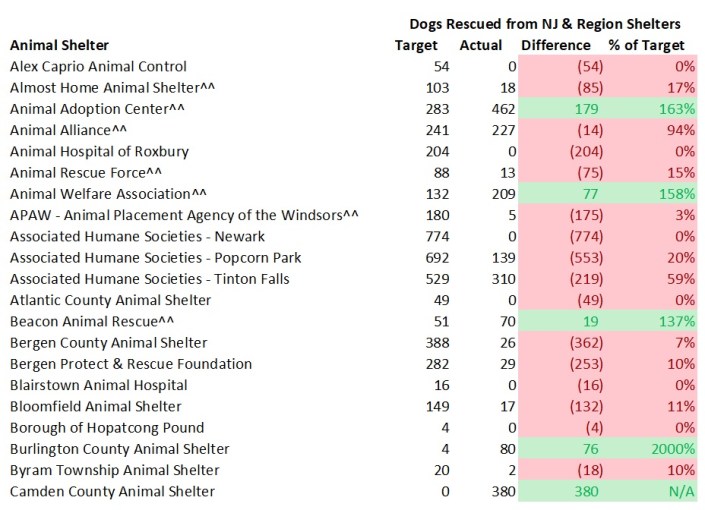
To further examine New Jersey animal shelters’ performance in saving the state’s homeless dogs, I compared the targeted number of dogs each shelter should pull from nearby shelters and compared it to the number actually rescued from local facilities. I assume all reported out of state rescued dogs came from southern or other far away states (except for Animal Alliance due to the shelter stating it primarily pulls out of state dogs from Pennsylvania). While some of the out of state rescued dogs may have comes from nearby areas, I believe this is a small number and does not significantly impact the results.

Virtually all New Jersey animal shelters are failing to rescue the number of local dogs they should. 90 of the 93 shelters should rescue some dogs from other local shelters. In fact, 41 of the 90 shelters with targeted excess capacity failed to rescue even a single dog from a New Jersey animal shelter. Of the 90 shelters that should have rescued dogs, the following shelters were the only facilities that met or exceeded their local dog rescue targets:

  1. Animal Adoption Center – 179 more dogs rescued than targeted
  2. Animal Welfare Association – 77 more dogs rescued than targeted
  3. Burlington County Animal Shelter – 76 more dogs rescued than targeted
  4. Somerset Regional Animal Shelter – 73 more dogs rescued than targeted
  5. Humane Society of Atlantic County – 32 more dogs rescued than targeted
  6. Ewing Animal Shelter (EASEL) – 21 more dogs rescued than targeted
  7. Beacon Animal Rescue – 19 more dogs rescued than targeted
  8. Mt. Pleasant Animal Shelter – 12 more dogs rescued than targeted
  9. Harmony Animal Hospital – 10 more dogs rescued than targeted
  10. Gloucester County Animal Shelter – 5 more dogs rescued than targeted
  11. Trenton Animal Shelter – 4 more dogs rescued than targeted

As mentioned above, many of these shelters local rescue numbers are inflated due to these organizations cherry picking highly adoptable animals to rescue. Thus, nearly all New Jersey animal shelters with targeted excess capacity are failing to do their share in ending the killing of local healthy and treatable dogs.

Camden County Animal Shelter also deserves mentioning. This facility rescued 380 dogs from other New Jersey shelters last year. While this is an obviously good thing, this may have artificially decreased this shelter’s estimated local death rate by as much as 2% if it only pulled highly adoptable dogs.

Shelters can overcome challenges in rescuing dogs from outside their service area. In some cases, municipalities may frown on government run shelters using taxpayer funds to rescue dogs from elsewhere. However, shelter directors at these facilities can encourage individuals to form a non-profit or raise money on their own to pay for these rescued dogs. Additionally, shelters with limited capacity or even some of the well-off private shelters could contribute funding for each dog rescued. For example, Maddie’s Fund paid an approximate $160 subsidy to rescues pulling dogs from New York Animal Care & Control. Similarly, private shelters with excess space, but limited financial resources, could expand their fundraising efforts to save more local dogs. Thus, perceived obstacles to rescuing local dogs can and should be overcome.

2017 NJ Shelters Targeted Verses Actual Dogs Rescued from NJ Shelters 1

2017 NJ Shelters Targeted Verses Actual Dogs Rescued from NJ Shelters 2

2017 NJ Shelters Targeted Verses Actual Dogs Rescued from NJ Shelters 3.jpg

2017 NJ Shelters Targeted Verses Actual Dogs Rescued from NJ Shelters 4

2017 NJ Shelters Targeted Verses Actual Dogs Rescued from NJ Shelters 5

New Jersey Animal Shelters Need to Form Life-Saving Coalitions

The improper allocation of space within the state’s animal shelter system requires organizations to form coalitions. While putting a competent and compassionate director in every shelter would likely be even more effective, that will likely take time to do. No kill coalitions between animal control facilities and selective admission shelters have been used in places, such as Portland, Oregon, Reno, Nevada, Jacksonville, Florida and Austin, Texas to radically increase life saving. Maddie’s Fund, which has supported using coalitions for over a decade, has many resources for organizations seeking to collaborate with each other. Thus, New Jersey animal shelters need to formally work together, develop quantifiable and measurable goals (such as the targeted outcomes in this blog), and hold each organization accountable for meeting these benchmarks.

Sobering Results Require Shelter Leaders to Critically Examine Themselves

Shelters should examine the reasons why their adoption numbers fall far short of these benchmarks. In some cases, shelters need to expand the hours they are open for adoptions. Many shelters should switch from an overly judgmental adoption process based on black and white rules to a conversational one focused on educating the adopter. Organizations will need to radically increase their off-site events and do same day adoptions. Similarly, many shelters must reduce adoption fees and run frequent promotions. Executive Directors should monitor the latest life-saving programs on Maddie’s Fund’s, ASPCA Pro’s, American Pets Alive Conference’s, and the Best Friends National Conference’s web sites and put some of these policies into place. Shelter management teams will need to ensure their facilities are clean and customers are treated with respect (this can be measured by encouraging the public to complete surveys). Thus, poorly performing shelters need to stop making excuses and do what it takes to reach their adoption potential.

We can turn New Jersey, New York City and Philadelphia into no kill communities. It is time we give our money and volunteer efforts to organizations who raise their performance to help us reach that goal. To do otherwise, would betray all the animals whose lives are on the line.

Appendix – Life Saving Model Assumptions

The Life Saving Model utilizes the following basic animal shelter population equations to calculate the targeted dog outcomes for each facility:

Daily capacity or population = Daily animal intake x average length of stay

Average length of stay = Daily capacity or population/daily intake

Each shelter’s community dog intake (i.e. owner surrenders, strays, cruelty bite cases), number of dogs returned to owners, and maximum dog capacity were taken from its 2017 “Shelter/Pound Annual Report” submitted to the New Jersey Department of Health.

This data was then used as follows:

  • Community dog intake and dogs returned to owners were initially estimated for each month by dividing the annual figures by 12. In order to take into account the extra space in low intake months and reduced space in high intake months, we multiply that number by each month’s percentage of the average month. For example, assume 240 dogs were taken in during the year and the average month equals 20 dogs (240/12). In July, the dog intake is 120% higher than the average month and we therefore multiply 20 dogs by 1.2 to equal 24 dogs. If 120 dogs were returned to owners during the year, the estimated number of dogs returned to owners in July would equal 12 dogs (120/12 = 10; 10*1.2). The monthly intake percentages were based off the average of the 2017 dog intake data on New York Animal Care & Control’s and ACCT Philly’s web sites.
  • The estimated number of community dogs returned to owners each month are then assumed to stay 5 days on average at shelters based on data from other shelters across the country. If anything, this estimate is conservative (i.e. average length of stay for dogs returned to owners may be less than 5 days and therefore frees up more shelter space for adoptions) based on some shelters returning the bulk of their dogs to owners within 3 days.
  • The number of community dogs euthanized (including animals who died or are missing) is set to equal 5% of intake. 5% is a reasonable standard euthanasia rate for shelters in New Jersey to meet given few vulnerable stray puppies (i.e. who could die or require euthanasia) arrive in the state’s animal shelters. The average length of stay for euthanized dogs is assumed to equal 14.5 days. Half of dogs are assumed euthanized for untreatable aggression towards people and 21 days is the time estimated to make that determination. The other half of dogs are assumed euthanized for severe and untreatable health issues and I estimate these dogs are euthanized after 8 days (subsequent to the end of the stray hold and owner surrender protection periods).
  • Adopted dogs are assumed to stay at shelters for varying lengths of time. Adoption length of stay was based on data from a study in the Journal of Applied Animal Welfare and the figures used (except for space-constrained shelters) are located in a prior blog on pit bull adoption. The data primarily comes from Tompkins County SPCA during a time it saved over 90% of its dogs. This was a fairly conservative data set to use as other no kill open admission shelters’ average length of stay are substantially shorter. Specifically, the following assumptions were made:
    1. 80% and 20% of each communities dogs (including pit bulls) were adults 1 year and older and under 1 year.
    2. Pit bulls were assumed to comprise 50%, 35% and 25% of community dog intake at poor, middle/upper middle class, and wealthy area animal control shelters. While some shelters may have pit bulls comprising more than 50% of their shelter dog population at a given time, this is due to pit bulls longer average length of stay. For example, a shelter with pit bulls making up 50% of their dog intake and pit bulls having an average length of stay three times longer than other dogs will have pit bulls constituting 75% of the dog population. Shelters without animal control contracts were assumed to only have pit bulls make up 10% of their community dogs (i.e. strays and owner surrenders) based on most of these shelters’ highly selective admission practices.
    3. Pit bull adoption length of stay was taken directly from the Journal of Applied Animal Welfare study. The average adoption lengths of stay for other breeds from this study were averaged and used for dogs other than pit bulls in the analysis
  • Space constrained shelters were assumed to adopt out their easiest to adopt animals first until they ran out of space. To estimate the average adoption length of stay, I used pit bull adoption length of stay data from Greenhill Humane Society from March 2013 through May 2015. I broke the adoption length of stay data into 5 groups that each made up 20% of the data. The average adoption length of stay for each of these 5 groups was calculated. The average adoption length of stay of each group was divided by the average length of stay for all of the adopted pit bulls in the Greenhill Humane Society data set. Those percentages were then multiplied by the average dog adoption length of stay determined in the previous bullet and used to determine the adoption lengths of stay used for space-constrained shelters.
  • Dogs transferred to rescue or other facilities are assumed to stay at shelters 8 days on average based on the assumption strays can’t be released until the 7 day hold period elapses.
  • Community dogs not returned to owners or euthanized are initially assumed as adopted for each month. However, if the calculated length of stay exceeds the shelter’s required length of stay, dogs are moved from adoption (i.e. longer length of stay) to rescue (i.e. shorter length of stay) until the calculated length of stay each month approximately equals the required length of stay.
  • Animal control shelters have a minimum of 10% of unclaimed dogs go to rescues. To the extent shelters transfer 10% of unclaimed dogs to rescues despite having space (i.e. reclassifying dogs from adoptions with a longer length of stay to rescues with a shorter length of stay), I do not require these facilities to use that space to rescue additional dogs.
  • Required length of stay = Shelter’s reported capacity/adjusted daily intake for the month. Adjusted daily intake for month = Adjusted monthly intake per first bullet above/the number of days in the month.
  • Shelters with excess capacity are assumed to use the extra space to rescue and adopt out dogs from other New Jersey animal shelters. To the extent all healthy and treatable New Jersey animal shelter dogs are saved, I assume additional dogs are pulled from nearby states with similar types of dogs. I assume all rescued dogs will not be killed since the transferring and receiving shelters should evaluate these dogs’ behavior. Based on pit bull type dogs having longer lengths of stay at shelters, I assume 80% of dogs rescued from local animal shelters are pit bulls and 20% are non-pit bulls. 80% and 20% of pit bull and non-pit bull type dogs are considered 1 year and older and under 1 year. The average length of stay for rescued pit bulls and other dogs are the same as the adoption length of stay figures above.
  • Each month’s targeted outcomes are added to determine how many local dogs New Jersey animal shelters should adopt out, send to rescue, rescue from other nearby animal shelters and euthanize.
  • The targeted number of dogs rescued and adopted were capped at 2 pit bulls per 1,000 people in each county. If the model yielded a higher result than this cap, the targeted numbers of dogs adopted were set to equal to this cap using the pit bull percentage assumptions above. For shelters in these counties (except Passaic County), I calculated the cap at the county level and then reduced the number of cats adopted for the county to equal the cap. I excluded West Milford from Passaic County due the town’s large distance from the population centers in the rest of the county. Each shelter’s percentage of total targeted adoptions in the county from the unmodified model were applied to the the total reduction in the number of adoptions in the county to yield the targeted numbers of dogs adopted in the modified model. If the shelter also rescued animals from other shelters, the rescued numbers were also reduced since I assume rescued animals are adopted.

Clifton Animal Shelter Can’t Comply with State Law

In my last blog, I discussed Clifton Animal Shelter’s senseless killing of healthy and treatable animals. That blog detailed Clifton Animal Shelter routinely breaking state law when it killed animals during the state’s seven day protection period. Did Clifton Animal Shelter break other laws during 2017?

Inhumane and Illegal Killing Methods

Clifton Animal Shelter’s euthanasia records do not specify how the shelter killed or euthanized animals as required by state law. Specifically, the records do not state whether the shelter euthanized/killed each animal by an intravenous (preferred method), intraperitoneal or intracardiac (i.e. heart sticking) injection. Per New Jersey law, shelters can only use intraperitoneal injections on comatose animals and neonatal kittens. Under this method, animals are injected in the abdominal cavity and can take up to 30 minutes to die. Heart sticking, as the name implies, involves stabbing an animal in the heart with Fatal Plus poison and New Jersey shelters can only use this method on heavily sedated, anesthetized or comatose animals. Thus, Clifton Animal Shelter’s euthanasia records do not indicate whether animals are in fact humanely euthanized.

To make matters worse, Clifton Animal Shelter’s records indicated the facility did not even weigh animals prior to killing them. In other words, the shelter could have not provided enough sedatives to calm the animals and not enough euthanasia drugs to kill them. Therefore, animals could have experienced stress and pain during the procedure and then may have been dumped or put into an incinerator while still alive.

Clifton Animal Shelter also used excessive doses of Ketamine. The shelter administered 1.0 to 2.0 milliliters of Ketamine to virtually every adult cat it killed. The product label states 1 milliliter of the Ketamine drug contains 100 milligrams of the active Ketamine ingredient. In addition, the product label states cats requiring restraint should receive a dose of 5 milligrams/pound of cat. The product label also states veterinary personnel should use a dose of 10-15 milligrams/pound of cat to produce anesthesia. Based on most cats weighing 8 pounds, that means the cats should have only received 40-120 milligrams or 0.4-1.2 milliliters of the Ketamine drug. In other words, Clifton Animal Shelter provided doses of up to five times greater than the label indicates. Given large doses can “produce convulsions and seizures”, this indicates many animals could have experienced agony prior to their killing.

Clifton Animal Shelter Sedative Log Example

Clifton Animal Shelter Fatal Plug Log

To make matters worse, Clifton Animal Shelter had no records showing how it used another sedative, Xylazine, despite the facility purchasing significant quantities of this drug. While the shelter is not required to keep controlled dangerous substance logs of Xylazine under existing law, the facility must detail how much of this substance it gave to animals it killed under N.J.A.C 8.23A-1-11(f)(4).  Thus, Clifton Animal Shelter either broke state law by not recording its use of Xylazine, violated the Open Public Records Act by not providing the records I requested or spent $456 on drugs it didn’t use.

Clifton Animal Shelter's 2017 Purchases of Sedatives

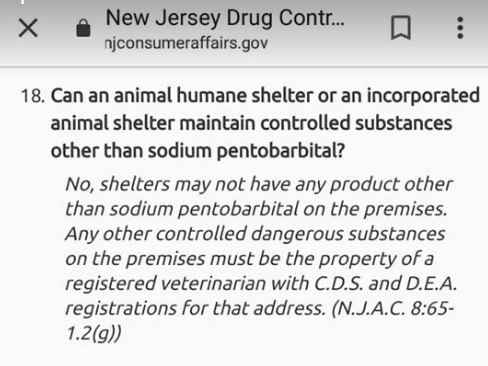
If this was not bad enough, Clifton Animal Shelter violated New Jersey’s controlled dangerous substance law by having Ketamine at the shelter. As you can see here, Ketamine is a Schedule III Controlled Substance. Per the New Jersey Department of Consumer Affairs, animal shelters cannot have Ketamine at their shelters unless the controlled substance is the property of the veterinarian. As the invoice above shows, Parkview Animal Hospital sold Ketamine to Clifton Animal Shelter. Furthermore, Clifton Animal Shelter does not have an in-house veterinarian. Therefore, the shelter illegally kept Ketamine in the facility.

Animal Shelters Holding of Controlled Dangerous Substances

Local Health Department Inspection Report Reveals Big Problems

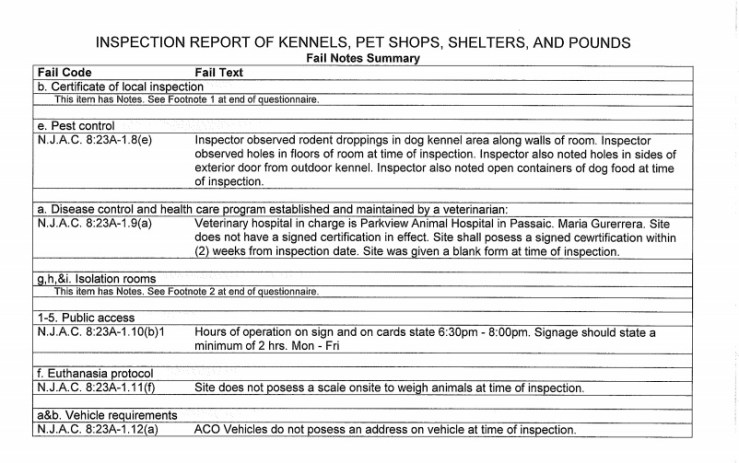
The Clifton Health Department inspected Clifton Animal Shelter on July 25, 2017 and found serious issues. You can read the full inspection report here. The shelter’s dog kennel area had rodent droppings and the dogs likely had the rodents enter their enclosures. How did the rodents likely get into this area? The shelter had holes in the floors and open containers of dog food. Therefore, the shelter effectively lured rodents into the facility with open containers of food and gave the rodents a clear path inside by leaving holes in the floors unfixed.

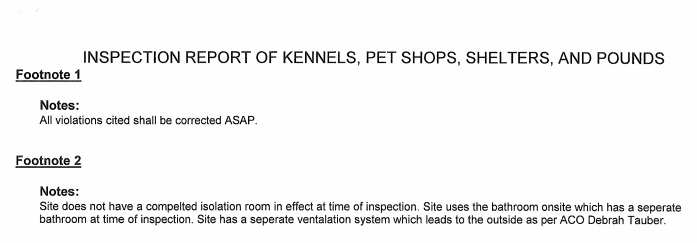
Clifton Animal Shelter did not have a legally required isolation area. Under N.J.A.C. 8.23A-1.9(g)N.J.A.C. 8.23A-1.9(h) and N.J.A.C. 8.23A-1.9(i), a shelter must have a separate isolation area. What did the shelter use instead? A bathroom that the animal control officer claimed had a separate ventilation system. Call me crazy, but I’m highly skeptical that a facility which can’t fix holes in the floor and leaves food containers open would build a separate ventilation system for its bathroom. Regardless of the ventilation system, a bathroom is too small to serve as isolation room and presents other challenges if people also use the bathroom. For example, people coming in and then spreading disease to the rest of the facility. Thus, Clifton Animal Shelter lacked one of the key required features of an animal shelter.

The shelter did not have a scale to weigh animals. This finding confirms my suspicion, which was based on the shelter not listing weights of the animals it killed and euthanized, that the facility did not weigh animals prior to killing animals. Therefore, Clifton Animal Shelter could have easily provided excessive doses of Ketamine, which can “produce convulsions and seizures”, and/or not provided enough Fatal Plus to ensure animals were actually dead. As a result, Clifton Animal Shelter could have easily dumped animals in a landfill or placed pets into an incinerator who were still alive.

Clifton Animal Shelter also was not open the required hours according to the signs on its doors at the time. Under N.J.AC. 8.23A-1.10(b)(1), a shelter must be open at least two hours each weekday and two hours on Saturday or Sunday. However, the shelter’s signs said it was only open one and a half hours each weekday. While the signs on the shelter’s door now indicate Clifton Animal Shelter is open long enough to meet state law requirements, the facility is hardly ever open to adopters. Specifically, the shelter is only open from 6:30 pm to 8:30 pm Monday to Friday and Sunday from 12 pm to 4 pm. In other words, the shelter is only open on average two hours each day. Furthermore, the facility is closed on Saturdays (except for appointments) despite people adopting many animals on this day at other shelters.

The shelter also lacked a disease control program that was certified by its supervising veterinarian. Given having a disease control program certified by a licensed veterinarian is extremely important and required by state law, this is a serious problem. While the shelter did have a veterinarian certify its disease control program in 2018, the actual program did not provide adequate detail, particularly regarding different types and ages of animals as well as addressing the mental health and “stress” of animals as required by N.J.A.C. 8.23A-19(d)(2).

Despite all these significant problems plus the shelter illegally killing animals before seven days, the Clifton Health Department remarkably gave Clifton Animal Shelter a “Satisfactory” rating. As regular readers know, local health departments typically are incapable of conducting proper inspections of animal shelters due to incompetence and conflicts of interest. Therefore, a state health department inspection would likely find many more significant problems.

Clifton Animal Shelter Inspection Report Notes Part 1

Clifton Animal Shelter Inspection Report Notes Part 2.jpg


Clifton Animal Shelter Hours

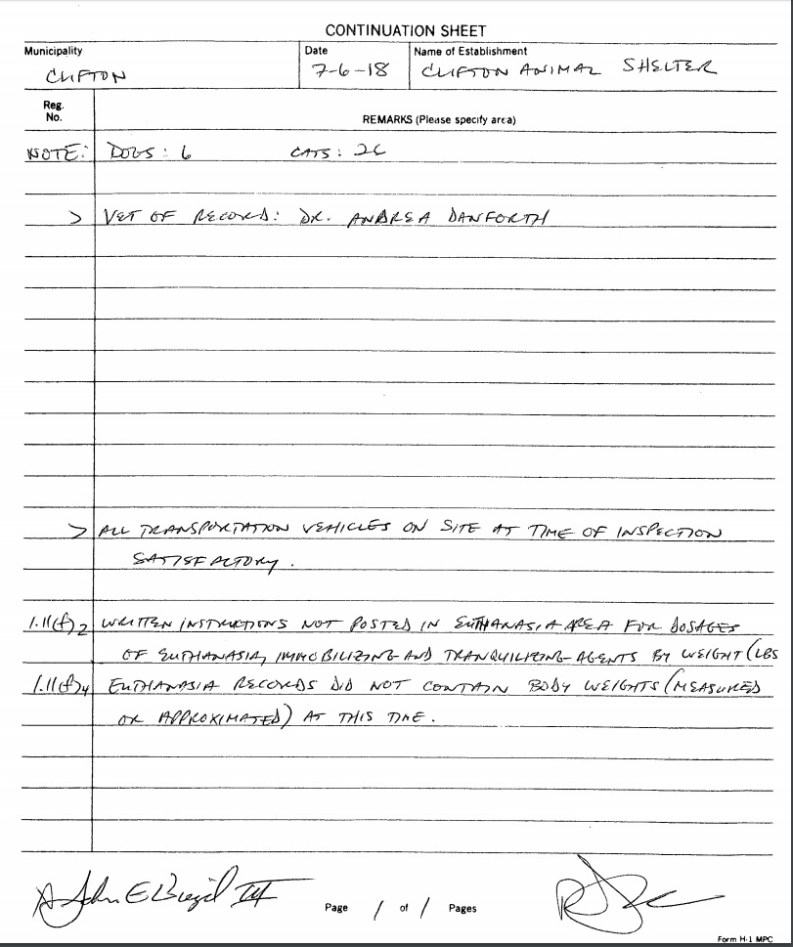
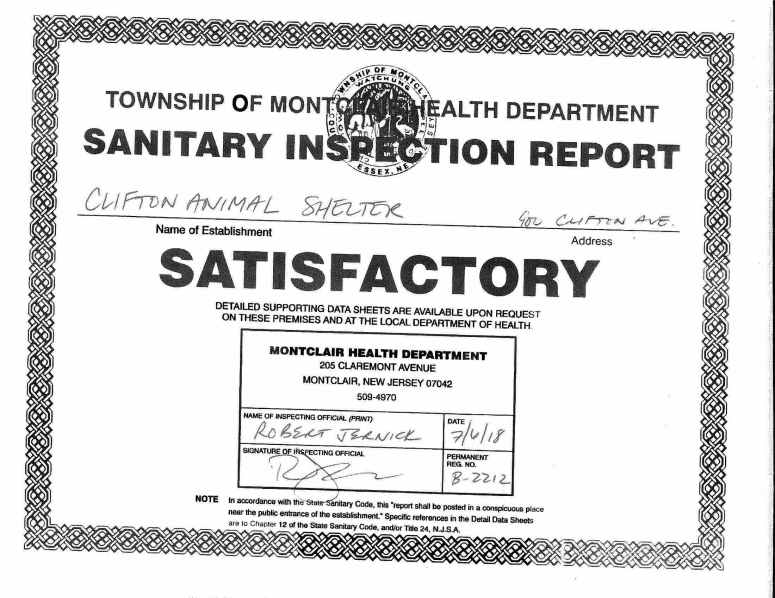
The Montclair Health Department inspected Clifton Animal Shelter on July 6, 2018 and also found some problems. During the obviously too short one hour and twenty minute inspection, the Montclair Health Department noted Clifton Animal Shelter had no written euthanasia instructions posted in the facility and its euthanasia records still did not list body weights as required by N.J.A.C. 8.23A-1.11(f). Thus, Clifton Animal Shelter may have continued to kill animals inhumanely in 2018.

Given Montclair Health Department’s history of missing obvious violations of state law at its town shelter in the past and having no records of legally required annual inspections in 2010 and 2012, one should assume this was a poor quality inspection.

Montclair Health Department Finds Euthanasia Violations at Clifton Animal Shelter

Clifton Animal Shelter should not have had a license to operate for 25 days in 2017 and six days in 2018. Under N.J.S.A. 4:19-15.8(b), a shelter’s license expires on June 30th each year. N.J.A.C. 8.23A-1.2 requires a shelter to comply with state law and receive a Certificate of Inspection for the current licensing year. Thus, Clifton Animal Shelter should not have had a license to operate during 25 days in 2017 and six days in 2018.

Clifton Animal Shelter Certificate of Inspection.jpg

Clifton Animal Shelter Certificate of Inspection (2).jpg

Finally, both inspection reports confirmed the conclusion from my last blog that Clifton Animal Shelter killed animals with empty kennels. Despite both inspections taking place during a time of the year when shelters are crowded due to high intake, Clifton Animal Shelter only housed 5 dogs and 28 cats during the July 25, 2017 inspection and 6 dogs and 26 cats during the July 6, 2018 inspection. As a comparison, Clifton Animal Shelter reported having a capacity of 16 dogs and 52 cats in its 2017 Shelter/Pound Annual Report. Thus, Clifton Animal Shelter killed animals around the times it only used about one third of its dog capacity and one half of its cat capacity.

Friends of the Shelter Take Adoption Fees from Animal Shelter

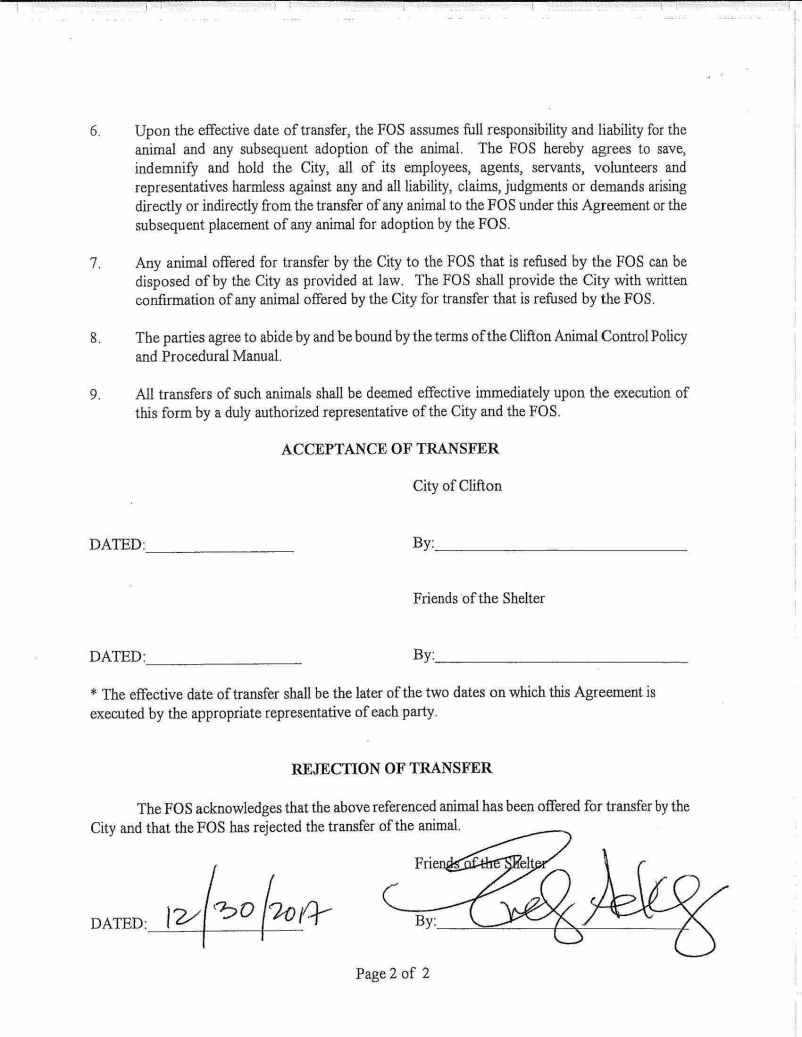
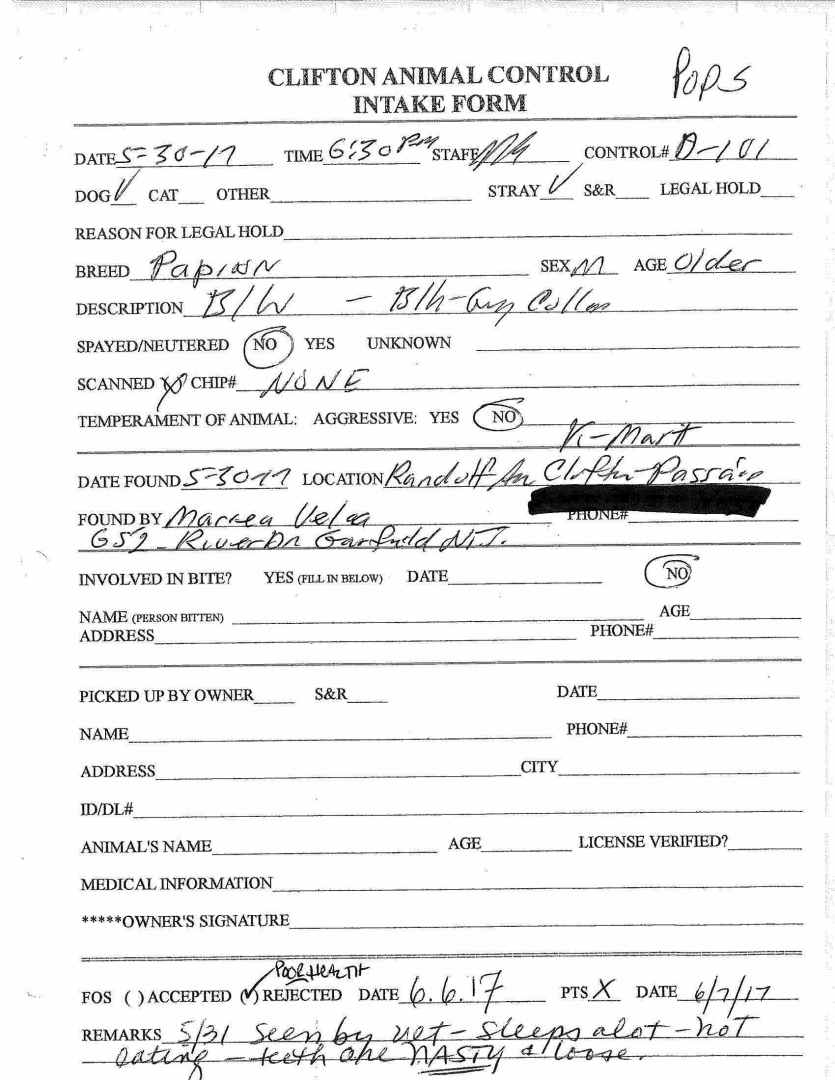
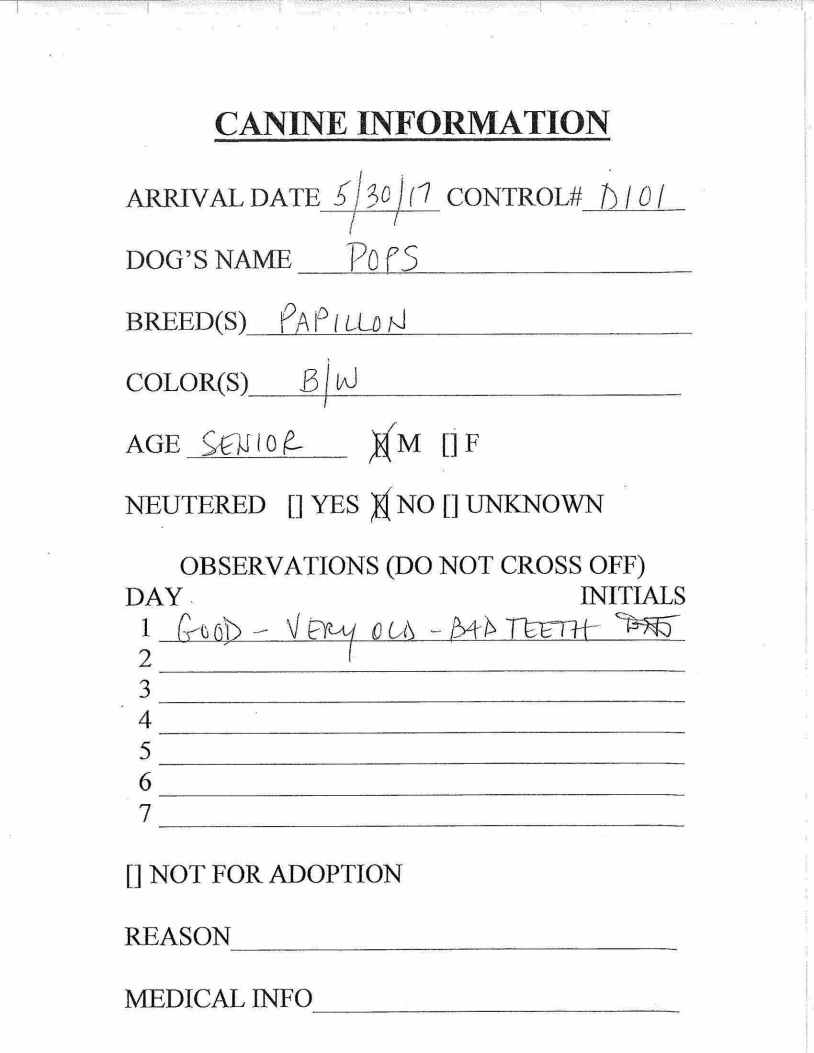
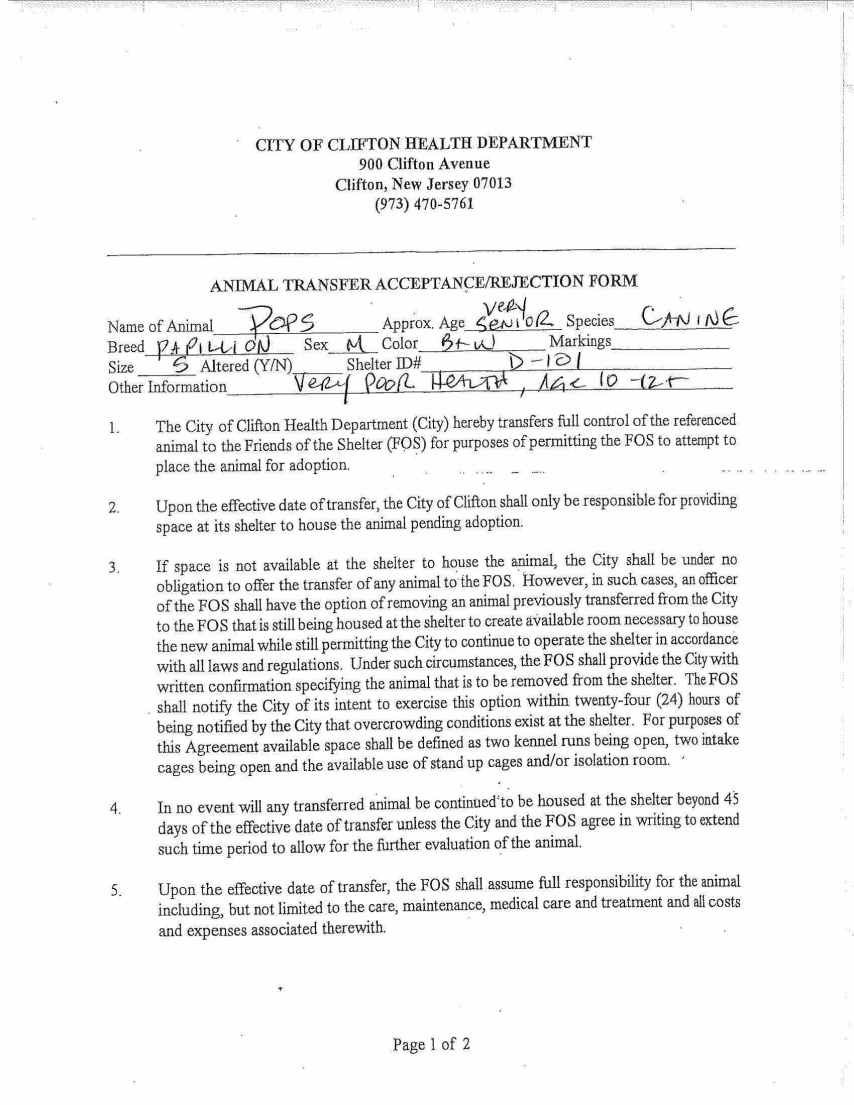
As I discussed in my last blog, Friends of the Shelter is an organization that controls the volunteer program at the shelter and also has the option to save animals Clifton Animal Shelter plans to kill. According to the shelter’s intake and disposition records, a number of these animals remain at the shelter.

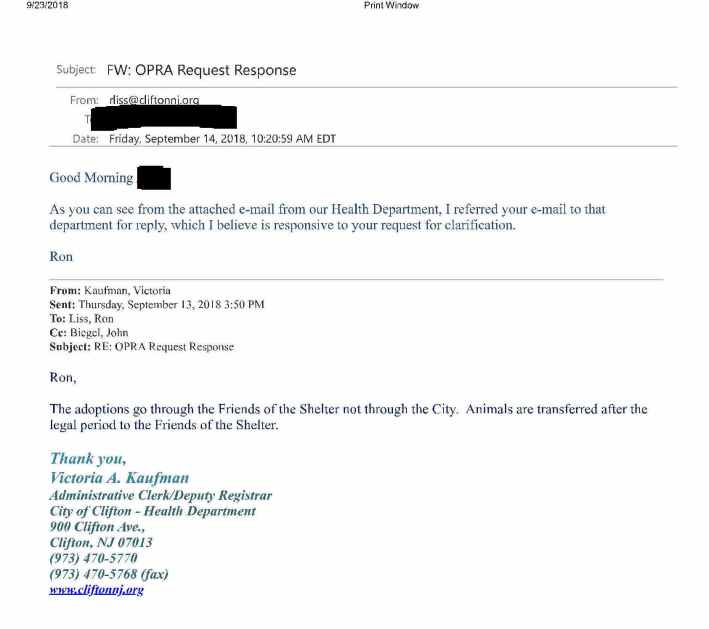
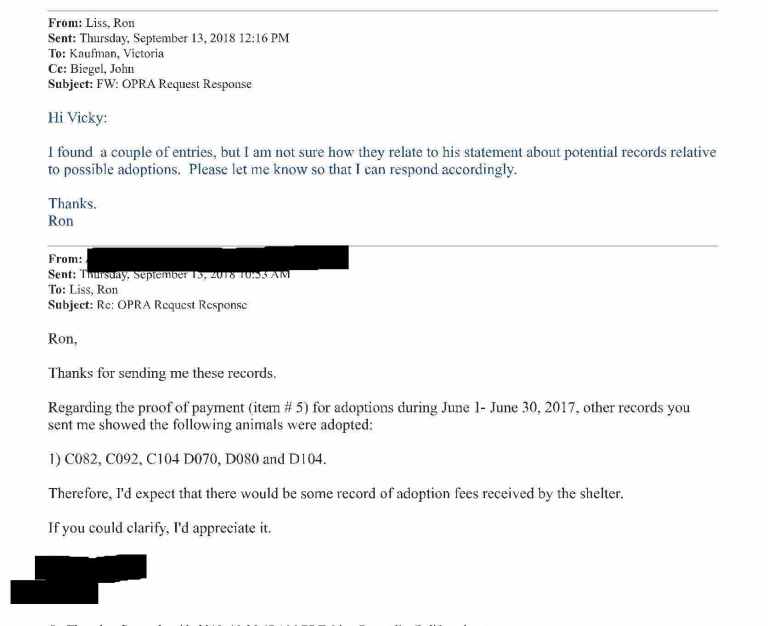
As you can see from the emails below, the adoption fees for all the cats and dogs adopted from the shelter during the month of June in 2017 went to Friends of the Shelter and not Clifton Animal Shelter. While the agreement between Friends of the Shelter and Clifton Animal Shelter, which you can find here and here, does require Friends of the Shelter to pay any subsequent costs after the transfer of an animal takes place, I am skeptical that Friends of the Shelter is assuming 100% of the costs given the animals are housed in the city’s shelter.

Friends of Animal Shelter Adoption Fees

Friends of Animal Shelter Adoption Fees (2).jpg

Most importantly, I’m struck between the performance of Friends of the Shelter and EASEL Animal Rescue League. Prior to 2015, when EASEL Animal Rescue League took over managing Ewing Animal Shelter, it also had a similar arrangement to Friends of the Shelter in many respects. However, EASEL Animal Rescue League is a proud no kill organization. We see this difference when we look at the 2014 kill rates of Ewing Animal Shelter and Clifton Animal Shelter. In 2014, Ewing Animal Shelter only euthanized 3% of its dogs and 1% of its cats while Clifton Animal Shelter killed 13% of its dogs and 39% of its cats. Thus, Friends of the Shelter is not performing at the level it should be.

While Friends of the Shelter obviously does some good work, their leadership seems behind the times. For example, I could not find an active Facebook page from this group or the animal shelter itself. While a Clifton Animal Shelter Facebook page exists, its “unofficial” and just has information about the facility and reviews (i.e. animals up for adoption are not posted). In 2018, its shocking that any animal shelter or rescue group would not have a Facebook page.

Clifton Residents Must Demand Better

The saying “a picture is worth a 1,000 words” perfectly applies to the Clifton Animal Shelter. What do visitors see when they enter the door to the shelter? A sign showing the facility is virtually never open and a threat of imprisonment if the person leaves an animal outside the building. Obviously, this is not welcoming to adopters who walk in the door.

Clifton Animal Shelter Hours

Clifton Animal Shelter Unwelcoming.jpg

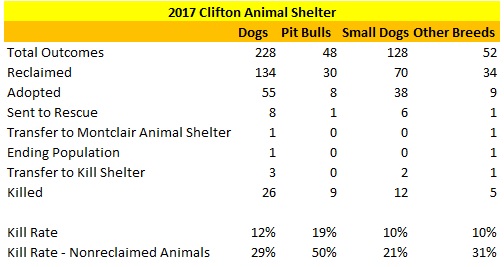
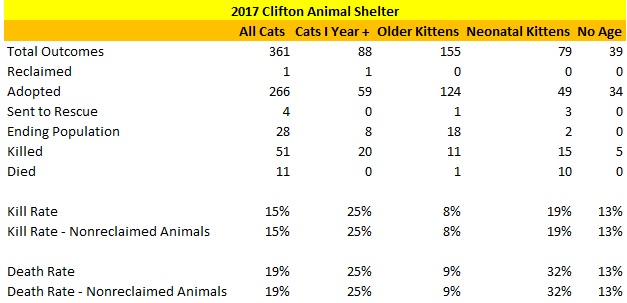
Clifton Animal Shelter is not serving the city’s homeless animals and residents well. In 2017, Clifton Animal Shelter impounded just 4.9 dogs and cats per 1,000 people and received $300 per dog and cat impounded from the city. As a comparison, Michigan’s Chippewa County Animal Shelter took in 21.1 dogs and cats per 1,000 people and received just $228 from the government per dog and cat impounded. Clifton Animal Shelter had nonreclaimed animal death rates of 29% for dogs and 19% of cats in 2017 while Chippewa County Animal Shelter had nonreclaimed death rates of 1% for dogs and 2% for cats. Thus, Clifton Animal Shelter’s nonreclaimed dogs and cats lost their lives at 29 times and 10 times the rate as an animal control shelter receiving far more animals on a per capita basis (and in total too) and having significantly less funding from its government.

Clifton taxpayers are also spending more money per animal than Ewing’s taxpayers on its animal shelter and killing more animals. According to a recent news article, Ewing pays EASEL Animal Rescue League $150,000 per year to run the shelter. When we add this amount to the town’s $104,750 animal control department budget, Ewing pays $254,750 per year for animal control and its animal shelter. Based on EASEL Animal Rescue League taking in 896 dogs and cats in 2017, Ewing pays $284 per dog and cat. As a comparison, Clifton allocated $176,900 in its 2017 budget to its animal control and sheltering operation. Based on Clifton Animal Shelter taking in 589 dogs and cats in 2017, the town had $300 of funding per dog and cat. In 2017, EASEL Animal Rescue League reported only 2% of noneclaimed dogs and 7% of nonreclaimed cats lost their lives. As a comparison, Clifton Animal Shelter had nonreclaimed death rates of 29% for dogs and 19% for cats. Thus, Clifton taxpayers spent more money than Ewing taxpayers on its animal shelter and its nonreclaimed dogs were 15 times and its nonreclaimed cats were three times as likely to lose their lives.

To add insult to injury, Clifton Animal Shelter blatantly violated the following laws:

  1. Frequently killed animals during the seven day protection period
  2. Euthanasia records did not indicate method of killing to determine if it was a humane way
  3. Euthanasia records did not list animals’ weights to determine if they received the proper doses of sedative and killing agents
  4. Euthanasia records did not indicate how the shelter used the sedative Xylazine
  5. Held Ketamine at the facility in violation of the state’s controlled dangerous substance laws
  6. Shelter did not have a scale and therefore could not have weighed animals to ensure they received the proper doses of sedative and killing agents
  7. Shelter did not have an adequate disease control program meeting state law requirements
  8. Shelter was not inspected as required by June 30th in both 2017 and 2018 and should not have had licenses to operate for parts of 2017 and 2018

Clifton residents and people who shop in the city should contact the elected officials below and demand the following:

  1. The shelter stop illegally killing animals during the seven day protection period
  2. The shelter follow all state laws
  3. The shelter fully and comprehensively implement the No Kill Equation
  4. The city pass the Companion Animal Protection Act and require the shelter to save at least 90% of its animals
  5. The city replace the ACO in charge with an effective and compassionate shelter manager
  6. Eliminate Friends of the Shelter’s monopoly over the volunteer program and allow the effective and compassionate leader to build such a program based on best practices across the country

The contact information for these officials is as follows:

Mayor James Anzaldi: (973) 470-5757; janzaldi@cliftonnj.org

Councilman Peter C. Eagler: peagler@cliftonnj.org

Councilman William Gibson: wgibson@cliftonnj.org

Councilman Raymond Grabowski: rgrabowski@cliftonnj.org

Councilman Steven Hatala, Jr.: shatala@cliftonnj.org

Councilman Joseph C. Kolodziej: jkolodziej@cliftonnj.org

Councilwoman Lauren E. Murphy: lmurphy@cliftonnj.org

Given the relatively small numbers of animals this shelter takes in, it should achieve great things. With your advocacy and persistence, we can make this change happen.

Clifton’s Crummy Animal Shelter

Last year, Clifton Animal Control Officer, Robert Boyle, made headlines when he told a cop to shoot and kill a dog named Wildfire that was lying down in the woods. Mr. Boyle was also listed as the “Shelter Manager” on Clifton Animal Shelter’s 2016 Shelter/Pound Annual Report. Additionally, Robert Boyle was the Chief of the Passaic County SPCA and a board member of the NJ SPCA.

Does Clifton Animal Shelter also kill healthy and treatable animals when lifesaving alternatives exist? Is the shelter complying with state law?

Deadly Dog Data

In order to get a better understanding of the job Clifton Animal Shelter did in 2017, I obtained the intake and disposition records for each individual dog and cat the shelter took in during the year. You can find those records here. In addition, I obtained all supporting records for each dog and cat the shelter killed. You can find those records here.

Clifton Animal Shelter killed too many dogs in 2017. While the overall dog kill rate of 12% was not extremely high, it was still much greater than kill rates at elite municipal shelters. As a comparison, Austin Animal Center only euthanized 1% of its dogs in 2017. Thus, Clifton Animal Shelter killed dogs at 12 times Austin Animal Center’s rate.

Pit bulls fared far worse at the Clifton Animal Shelter in 2017. The shelter killed 19% of pit bulls. As a comparison, Austin Animal Center only euthanized 1% of its pit bulls in 2017. As a result, Clifton Animal Shelter killed pit bulls at 19 times Austin Animal Center’s rate.

Clifton Animal Shelter also killed too many small dogs and other medium to large size breeds in 2017. Overall, the shelter killed 10% of both small dogs and other medium to large size dogs. Frankly, shelters should be able to save nearly all small dogs due to the fact such animals cannot seriously injure dog savvy adult owners. Even the Elizabeth Animal Shelter, which is far from a progressive facility, only euthanized 1% of small dogs in 2017. Austin Animal Center only euthanized 1% of small dogs and 1% of other medium to large size breeds last year. Thus, Clifton Animal Shelter killed both small dogs and other medium to large size dogs at 10 times Austin Animal Center’s rate.

While Clifton Animal Shelter’s overall dog kill rates were bad, the shelter’s kill rates for dogs not reclaimed by their owners were far worse. Since dogs reclaimed by their owners typically have licenses and/or microchips and quickly leave the shelter, its informative to look at dogs who were not reclaimed by owners. When we just look at dogs not reclaimed by owners, Clifton Animal Shelter killed 29% of all dogs, 50% of pit bulls, 21% of small dogs and 31% of other medium to large size breeds. In other words, Clifton Animal Shelter killed around 1 out of 3 dogs, 1 out of 2 pit bulls, 1 out of 5 small dogs and 1 out of 3 other medium to large size breeds not reclaimed by owners. As a comparison, only 2% of all dogs, pit bulls, small dogs and other medium to large size dogs not reclaimed by their owners at Austin Animal Center lost their lives in 2017. Thus, Clifton Animal Shelter killed all dogs, pit bulls, small dogs and other medium to large size breeds not reclaimed by owners at 15 times, 25 times, 11 times and 16 times Austin Animal Center’s rates.

2017 Clifton Animal Shelter Dog Statistics

Too Many Cats Lose Their Lives

Clifton Animal Shelter’s statistics reveal the shelter killed too many cats. Overall, 19% of cats lost their lives at Clifton Animal Shelter in 2017 or about four times the percentage at Austin Animal Center last year. Both adult cats and neonatal kittens lost their lives at higher rates, 25% and 32%. As a comparison, only 7% and 9% of adult cats and neonatal kittens lost their lives at Austin Animal Center in 2017. Therefore, adult cats and neonatal kittens were four times more likely to lose their lives at Clifton Animal Shelter than at Austin Animal Center in 2017.

2017 Clifton Animal Shelter Cat Statistics

Other Domestic Animals and Wildlife Killed in Droves

Clifton Animal Shelter’s other domestic animals’ kill rate was too high. Overall, the shelter killed 13% of all domestic animals and 14% of nonreclaimed other domestic animals in 2017.

The shelter killed wildlife at an astronomical rate during 2017. Clifton Animal Shelter killed 109 of 145 wild animals or 75% of those it took in. If we add the 5 wild animals that died, the shelter had a 78% death rate for wild animals. In other words, 4 out of 5 wild animals lost their lives after encountering Clifton’s animal control officers in 2017.

2017 Clifton Animal Shelter Other Domestic Animals and Wildlife Statistics.jpg

Clifton Animal Shelter Quickly Kills Animals

Clifton Animal Shelter’s dog length of stay data revealed the shelter quickly killed dogs. Specifically, the shelter killed all dogs, pit bulls, small dogs and other medium to large size breeds after 13 days, 21 days, 10 days and 10 days on average in 2017. Clearly, this is not nearly enough time to determine if the shelter can save these animals. Based on the shelter taking in 228 dogs during 2017, its 8 day average length of stay for dogs and shelter capacity calculations, we can estimate the shelter only held around five dogs on average at the shelter in 2017 compared to its reported capacity of 16 dogs. Thus, Clifton Animal Shelter killed dogs throughout the year while it only on average used less than one third of the shelter’s dog capacity.

2017 Clifton Animal Shelter Dogs Length of Stay

Clifton Animal Shelter also quickly killed cats. Amazingly, Clifton Animal Shelter killed all cats on average after just a single day. The shelter killed adult cats, older kittens, neonatal kittens and cats with no age listed after one day, two days, one day and zero days on average in 2017. In fact, the shelter killed 47 of the 59 cats it killed before seven days went by. Given shelters cannot kill either stray or owner surrendered cats until seven days pass (except for cats a veterinarian documents as hopelessly suffering and the veterinarian euthanizes the animals), this could indicate the shelter illegally killed these animals (see below for more details).

Based on the shelter taking in 361 cats during 2017, its 41 day average length of stay for cats and shelter capacity calculations, we can estimate the shelter only held around 41 cats on average at the shelter in 2017 compared to its reported capacity of 52 cats. Thus, Clifton Animal Shelter killed cats throughout the year despite only using 79% of its cat capacity on average during the year.

2017 Clifton Animal Shelter Cats Length of Stay.jpg

Clifton Animal Shelter also quickly killed other domestic animals and wildlife in 2017. The shelter killed the other domestic animals after just six days on average. Two of these three animals were killed immediately for being “injured”, but the records I received never specified what those injuries were. More disturbing, Clifton Animal Shelter killed wild animals after zero days on average. Of the 109 wild animals the shelter killed in 2017, 107 were killed immediately and two were killed after one day. Given the shelter’s astronomical wildlife kill rate and the fact it killed virtually all these animals immediately, one must conclude the shelter has the same lack of respect towards wildlife as Robert Boyle did for the dog Wildfire.

2017 Clifton Animal Shelter Other Domestic Animals and Wildlife Length of Stay.jpg

Dogs Killed for Absurd Reasons

Clifton Animal Shelter killed most of its dogs for alleged aggression and behavior problems. The table below shows 65% of the dogs the shelter killed were for aggression and behavior problems, 8% for being “old”, 8% for no documented reason and most of the rest for health related reasons. When we look at all dogs, Clifton Animal Shelter killed 7% of all dogs for aggression related reasons. As a comparison, Austin Animal Center only euthanized 0.2% of the dogs it took in during 2017 for aggression and behavior related reasons. In other words, Clifton Animal Shelter killed dogs for aggression and behavior related reasons at 35 times Austin Animal Center’s rate. Thus, Clifton Animal Shelter erroneously labeled dogs aggressive in its shelter just as its ACO, Robert Boyle, did when he told a police officer to shoot the dog Wildfire.

The shelter also killed too many dogs for medical reasons. During 2017, Clifton Animal Shelter killed 3% of all dogs for medical reasons. However, Austin Animal Center only euthanized 0.8% of all dogs for medical reasons. Thus, Clifton Animal Shelter killed dogs for medical reasons at four times Austin Animal Center’s rate.

2017 Clifton Animal Shelter Reasons for Killing Dogs

Lokie or D-022 was a stray adult husky impounded by Clifton Animal Shelter on February 9, 2017. Upon intake, the shelter noted Lokie was not aggressive. After eight days passed, Clifton Animal Shelter offered Lokie to the Friends of the Shelter. What did this “Friends” group do? Friends of the Shelter refused to accept Lokie into their adoption program due to food aggression/resource guarding. Given that multiple studies have found food aggression tests unreliable and even the creator of one of the major food aggression tests has come out against using these evaluations, it is shocking the Friends of the Shelter would not accept this dog. Even more perplexing, huskies are in high demand and many people would adopt one with or without food aggression. On the day after Friends of the Shelter refused to save Lokie, Clifton Animal Shelter killed him.

D-022.jpg

D-022 (2).jpg

D-022 (3)

Jack was an adult Labrador-pit bull mix that was surrendered to the Clifton Animal Shelter on April 23, 2017 and adopted on the very same day. On May 18, 2017, Jack was returned to the Clifton Animal Shelter. The shelter stated Jack had “anxiety issues” and offered him to Friends of the Shelter as a “courtesy.” Friends of the Shelter “rejected” Jack on May 25, 2017 and the shelter killed him on the very same day. Why did Friends of the Shelter reject Jack? They claimed he had “severe separation anxiety.” Both the shelter and their partners in crime, Friends of the Shelter, refused to treat Jack and the shelter killed him.

D-094.jpg

D-094 (2)

D-094 (3)

D-094 (4)

Cliff was an adult stray poodle that the Clifton Animal Shelter impounded on December 18, 2017. The shelter noted the dog had a matted coat and was dirty. Therefore, this dog was likely on the streets for a period of time and likely had difficulty finding food. Despite poodles being highly sought after by adopters, Friends of the Shelter “rejected” Cliff on December 30, 2017 for having “food aggression.” On that very day, Clifton Animal Shelter killed Cliff. Even though most adopters do not care about food aggression and the behavior frequently disappears in a home, both the shelter and Friends of the Shelter thought Cliff was not worth saving.

D-222

D-222 (3)

D-222 (4).jpg

Pops was a stray senior Papillion that Clifton Animal Shelter impounded on May 30, 2017. According to the shelter, the dog was sleeping a lot, not eating and had “nasty and loose” teeth. Given the condition of the dog’s teeth, one could easily see why the dog was not eating and was acting lethargic. While the Clifton Animal Shelter stated Pops was “seen by vet”, the shelter provided me no documents proving the dog saw a veterinarian and any orders for ensuring the dog received proper nourishment. In reality, even toothless dogs can eat if given the proper soft food. On June 6, 2017, Friends of the Shelter “rejected” Pops claiming he was in “very poor health” and “10-12+” years old.

Instead of reaching out to the community for help, Clifton Animal Shelter apparently just gave its henchman, Friends of the Shelter, the chance to save Pops. However, when it comes to Friends of the Shelter, having a medical condition and being old means your not worth saving.

D-101.jpg

D-101 (2).jpg

D-101 (3)

D-101 (4)

D-101 (5).jpg

Cats Killed for Having Treatable Medical Conditions

Clifton Animal Shelter killed cats for many treatable conditions. As you can see in the table below, the shelter killed many cats for testing positive for FeLV or FIV, being feral, having no mother, having ringworm (which is very treatable), testing for rabies (requires killing the cat and the results frequently reveal cats do not have the disease) and no documented reasons.

Feline Immunodeficiency Virus or FIV is a disease similar to HIV that weakens a cat’s immune system. Generally speaking, FIV is difficult to spread as it is only passed to other cats through deep bite wounds. While the disease can compromise a cat’s immune system, some cats can live many years pretty much like a normal cat. Practically speaking, FIV cats should be altered and live either alone or with other cats that are compatible with them. While these cats may need extra care, progressive shelters save these animals and adopt them out.

Feline Leukemia Virus or FeLV is a retrovirus that only affects cats. Healthy cats with normal immune systems quickly fight off the disease. However, the disease can infect cats with impaired immune systems. The disease suppresses a cat’s immune system and most cats live 2-3 years with the disease, but some animals live for a much longer period of time. In a shelter environment, FeLV positive cats won’t spread the disease as long as the animals are housed in separate areas and shelters adhere to proper cleaning and disease control protocols. Progressive no kill shelters, such as Austin Pets Alive, adopt out FeLV positive cats successfully. Furthermore, shelters can use foster programs to effectively house these animals outside a shelter environment.

2017 Clifton Animal Shelter Reasons for Killing Cats

Pumpkin was 5-7 year old neutered cat the Clifton Animal Shelter took to its veterinarian after he was hit by a car. While Pumpkin did have two broken canines and had a short post-trauma seizure after he was brought to the veterinarian, Pumpkin’s medical records stated he “ate well”, was “alert, purring” and was “very friendly.” However, Clifton Animal Shelter told the veterinarian to kill Pumpkin after he tested positive for FeLV on the day after the shelter impounded him.

New Jersey animal shelter law clearly states shelters must not kill animals, whether they are strays or owner surrenders, for at least 7 days. Furthermore, the New Jersey Department of Health recently issued guidance summarizing the law’s requirements:

Pursuant to State law (N.J.S.A. 4:19-15.16 a. through l.) all municipalities must have a licensed animal impoundment facility (pound) designated where stray and potentially vicious animals can be safely impounded. Impounded stray animals shall be held at the pound for at least seven days (i.e., 168 hours) from the time impounded before the animal is offered for adoption or euthanized, relocated or sterilized, regardless of the animal’s temperament or medical condition.

Animals that are voluntarily surrendered by their owners to licensed pounds or shelters shall be offered for adoption for at least seven days prior to euthanasia or shelter/pound management may transfer the animal to an animal rescue organization facility or a foster home prior to offering it for adoption if such a transfer is determined to be in the best interest of the animal.

In practice, the New Jersey Department of Health allows shelters to euthanize animals during the 7 day hold period if both of the following conditions are met as discussed in this section of the New Jersey Department of Health’s July 30, 2009 inspection report on Associated Humane Societies-Newark.

  1. If a veterinarian deems euthanasia necessary for humane reasons to prevent excessive suffering when illness and injury is severe and the prognosis for recovery is extremely poor
  2. Only a licensed veterinarian should perform euthanasia in the above situation and they must clearly document the humane rationale in the animal’s medical record

Clearly, Pumpkin was not hopelessly suffering since he was eating well, acting friendly and most vital signs were normal. Thus, Clifton Animal Shelter illegally killed Pumpkin before seven days passed.

Given Pumpkin was neutered and very friendly, he likely had an owner. Clifton Animal Shelter ensured Pumpkin would never get the chance to go back to his family.

C-006.jpg

C-006 (2)

Cat ID#s 025, 026, 027, 028 and 029 were a litter of newborn kittens the Clifton Animal Shelter impounded on March 31, 2017. After the shelter could not find the mother, it decided to kill every single one of the kittens stating they were “not viable.”

As with Robert Boyle’s order to kill Wildfire, the shelter’s lack of respect for life is apparent. Instead of killing these kittens right away, the shelter could have sent them to a foster home or had volunteers set up a nursery to bottle feed the animals. Instead, the shelter illegally killed the kittens immediately without making any effort to save them.

C-025-029.jpg

Midnite was a two month old stray cat the Clifton Animal Shelter impounded on June 4, 2017. After two days, Clifton Animal Shelter’s veterinarian, Dr. Barbara Barrow, wrote a letter authorizing the killing of Midnite. According to the veterinarian, she would have to amputate the kitten’s tail and he was too feral to be handled by staff while he recovered.

While the veterinarian can write this letter, this animal was not hopelessly suffering and the shelter and veterinarian illegally killed Midnite in my view. First, no person can determine if a cat is truly feral after just two days. Second, even if the cat was feral, the animal was not hopelessly suffering. Third, shelter workers get paid to handle all types of animals, including feral ones. Thus, the veterinarian’s claim the animal was difficult to handle does not allow the shelter or the veterinarian to kill an animal during the stray/hold period.

C-082.jpg

C-082 (2).jpg

Marina was an “older” stray cat the Clifton Animal Shelter took in on October 16, 2017. According to the shelter, their outside veterinarian, Dr. Aziz, approved killing Marina for “severe ringworm.” According to the veterinarian’s record, Marina “most likely” had ringworm “all over the face”, but the record never mentioned killing Marina. The shelter then killed Marina on the very day it took her in.

Frankly, ringworm is a highly treatable condition and never should be a reason to kill an animal. Even more egregious, Clifton Animal Shelter killed this stray cat immediately and blatantly violated the state’s stray hold period. Thus, Clifton Animal Shelter illegally killed Marina.

C-279

C-279 (2)

Clearly, Clifton Animal Shelter, like its former ACO, Robert Boyle, frequently chooses to kill animals since its easier. Even more egregious, the shelter often violates the state’s seven protection period when it kills animals. While this all goes on, the Friends of the Shelter group, like its name suggests, acts more like a friend to the shelter than the animals that reside in it. Thus, Clifton Animal Shelter and Friends of the Shelter have a dysfunctional relationship that is not helping the animals as much as it should.

In my next blog, I’ll examine whether Clifton Animal Shelter humanely euthanizes animals and violates other aspects of state law.

New Jersey’s Highest Kill Shelters in 2017

Last month, I wrote a blog discussing decreased killing at New Jersey animal shelters in 2017. This blog will explore the 2017 statistics in more detail and assess the current status of the state’s animal shelters.

Most New Jersey animal shelters voluntarily report detailed data to state authorities. Last month, I shared the 2017 summary statistics for New Jersey animal shelters on my Facebook page. Each year, the New Jersey Department of Health requests each licensed animal shelter in the state to submit animal shelter data for the previous year. Animal shelters voluntarily submit this data in the “Shelter/Pound Annual Report.” The New Jersey Department of Health takes these Shelter/Pound Annual Reports and compiles the number of dogs, cats and other animals impounded, redeemed, adopted and euthanized to prepare its Animal Intake and Disposition report. However, the Shelter/Pound Annual Reports include additional information on how animals were impounded (i.e. strays, owner surrenders, rescued from in-state facilities, rescued from out of state shelters, and cruelty/bite cases/other) and disposed of (i.e. returned to owner, adopted, sent to rescue/another shelter, and died/missing/other outcome). Additionally, the Shelter/Pound Annual Reports include the number of animals in shelters at the beginning and end of the year as well as the maximum number of animals facilities can hold. Thus, the Shelter/Pound Annual Reports include very important data not found in the New Jersey Department of Health’s summary report.

I compiled the data from these reports and analyze the results in this blog. 2017 statistics for each New Jersey animal shelter are listed at this link. You can also view each “Shelter/Pound Annual Report” at this link.

Garbage Data Raises Serious Questions About New Jersey Animal Shelters’ Statistics

Most New Jersey animal shelters do not properly account for their animals. Simple math dictates the number of animals at a facility at the beginning of the year, plus all animals coming in during the year, less all animals leaving for the period, should equal the number of animals a shelter has at the end of the year. Stunningly, 59 out of 93 shelters reporting these dog statistics and 60 out of 91 facilities submitting this cat data failed to get this right. This raises serious questions about the accuracy of these shelters’ reported statistics. 39 of the 59 shelters with flawed dog statistics and 38 of the 60 facilities with incorrect cat statistics should have had more animals at the end of the year than reported. While these errors could have been due to incorrect counts of the number of animals at facilities, these shelters may have not recorded outcomes, such as animals who were killed, died, or went missing. To put it another way, 2,245 cats and dogs should have had outcomes reported and did not. Thus, there is the potential that as many as 2,245 additional dogs and cats were killed, died or went missing from New Jersey animal shelters than were reported in 2017.

Even worse, a number of animal shelters reported having a different number of animals at the end of 2016 and at the beginning of 2017. Obviously, shelters should report the same number of animals at the end of the prior year and the start of the current year. However, 34 of 93 shelters reported different numbers of dogs at the end of 2016 and the beginning of 2017. Similarly, 43 of 91 shelters reported different numbers of cats at the end of 2016 and the beginning of 2017. The worst offenders are listed in the tables below:

2017 New Jersey Animal Shelters Beginning Missing Dogs.jpg

2017 New Jersey Animal Shelters Beginning Missing Cats

Shelters may have failed to classify animals adopted out and sent to rescues properly. Both Paterson Animal Control and Elizabeth Animal Shelter reported no animals were sent to rescues and all dogs and cats leaving their facilities alive were owner reclaims or adoptions. However, intake and disposition records I reviewed at both of these shelters in recent years revealed almost all “adopted” animals are actually rescued. One has to wonder how many other facilities failed to properly classify adoptions and rescues properly. This data is very important as it provides details on the burden rescues and other shelters are taking on from these facilities.

We need better oversight of New Jersey animal shelters’ data reporting. Currently, these statistics are voluntarily reported and most shelters are not taking this seriously. For example, I noticed a large number of reports were submitted many months after the end of the year. This data should be easy to compile since facilities can utilize animal shelter software programs, some of which are free, to do this task. Furthermore, New Jersey animal shelter laws mandate facilities maintain much of the raw data found in the Shelter/Pound Annual Report. Unfortunately, New Jersey Department of Health inspections routinely find shelters do not properly keep records on animals. We need to make the data reporting mandatory for animal shelters as the shelter reform bill, S725, does along with serious penalties for significant errors (especially if deliberate). In order for animal shelters to take data reporting seriously, we may also need to require audits of these reports. Thus, these results show we need stronger laws and the New Jersey Department of Health to play a greater role in ensuring reported animal shelter statistics are in fact accurate.

Despite the errors in these reports, the data provided still reveals important information.

More Animals Losing Their Lives in New Jersey Animal Shelters Than Disclosed in Summary Report

The more detailed data in the Shelter/Pound Annual Reports allows one to more critically examine the percentage of locally impounded animals dying in New Jersey’s animal shelters. The following table summarizes my analysis of the kill rate calculated from the New Jersey Department of Health’s summary report and the data reported in the Shelter/Pound Annual Reports.

2017 New Jersey Detailed Dog and Cat Kill Rates

This year I revised the dog statistics to remove an estimate of the dogs St. Hubert’s transfers in and quickly transfers out through its Sister Shelter WayStation program. Since St. Hubert’s is effectively acting as a middle man and not holding these animals very long, it makes sense to exclude these dogs from the various kill rate statistics below. If I did not exclude these animals, I would understate the dog kill rate due to inflated intake and outcomes numbers. Therefore, I removed all of St. Hubert’s dogs transferred out from the intake and outcomes figures to calculate the kill rates above except the “Kill Rate Per State Report (Intake).” This adjustment increased the dog kill rate (intake) from 6.6% to 7.3%. While St. Hubert’s also transfers in and transfers out cats through the Sister Shelter WayStation program, the numbers did not have a material impact on the statewide kill rates. As a result, I did not revise the cat statistics.

The Animal Intake and Disposition report prepared by the New Jersey Department of Health only allows one to calculate the number of animals killed as a percentage of total animals impounded or intake. I prefer calculating the kill rate as a percentage of outcomes rather than intake as this metric directly compares positive and negative outcomes. Using intake may depress the kill rate since shelters can simply hold animals for a long time to the point of overcrowding. Calculating the kill rate based on outcomes rather than intake caused the cat kill rate to increase from 18.4% to 18.8% while the dog kill rate remained at 7.3%.

To calculate the statewide kill rate, we must also back out transfers from one New Jersey animal shelter to another state facility to avoid counting animals still in the state’s shelter system or registering two outcomes for the same animal (i.e. one New Jersey animal shelter transfers a dog or cat to another state facility which then adopts out the animal). This adjustment increases the dog kill rate from 7.3% to 8.0% and the cat kill rate from 18.8% to 20.5%.

In addition, we should increase the kill rate for animals who died or went missing in shelters. In the past, I’ve labeled this metric the death rate as these animals are likely dead or in a very bad situation. Unfortunately, the Shelter/Pound Annual Report includes animals who died or went missing in the “Other” outcome category. The “Other” category contains positive live releases, such as TNR for cats, at a few shelters. While including the “Other” category in the death rate for most shelters is appropriate (i.e. those facilities that don’t do TNR or don’t include cats released through TNR programs in “Other” outcomes), I’m no longer doing this due to an increasing number of shelters implementing TNR. Instead, I calculated the kill rate by subtracting out “Other” outcomes from total outcomes. If a shelter specifies the number of animals included in “Other” that left the shelter alive, I count this as “Other Live Release” and do not back these amounts out of total outcomes. After making this adjustment, the dog kill rate increases from 8.0% to 8.1% and the cat kill rate rises from 20.5% to 21.9%. For those interested in seeing the estimated death rates, you can find them in the supporting spreadsheet.

Also, many shelters transport easy to adopt animals from out of state which artificially increases live release rates. To properly calculate the percentage of New Jersey animals losing their lives, we need to adjust for transports. Unfortunately, shelters don’t break out their save rates by local and out of state animals. However, most likely nearly all of the out of state animals (primarily puppies and easy to adopt dogs) make it out of shelters alive. Therefore, I back out the number of out of state transports from total outcomes to estimate the local kill rate. This adjustment increases the New Jersey dog kill rate from 8.1% to 10.5% and the state’s cat kill rate from 21.9% to 22.2%.

Also, I estimate a maximum local kill rate by including the number of unaccounted for animals described in the section above. Making this adjustment increases the maximum potential New Jersey dog kill rate from 10.5% to 14.2% and the maximum potential state cat kill rate from 22.2% to 24.7%.

Some animal shelters quickly return large percentages of their animals to owners. At these shelters, the populations served are typically well-off and animals are licensed and have microchips. To account for the animals facilities actually have to shelter, I calculated a kill rate for non-reclaimed animals and a maximum potential kill rate for non-reclaimed local animals. The non-reclaimed kill rate and maximum potential kill rate for dogs is 11.6% and 23.5%. Non-reclaimed cats had a 22.8% kill rate and a 25.8% maximum potential kill rate. Thus, the percentage of New Jersey animals losing their lives in our state’s animal shelters may be much higher than the state summary report suggests.

Kill Rates Extremely High at a Number of New Jersey Animal Shelters

Dogs and cats are likely to lose their lives at a number of New Jersey animal shelters. Shelters with the highest kill rates for dogs and cats (excluding very low intake facilities) are listed in the following tables:

2017 Dog Kill Rate

2017 Cat Kill Rate NJ.jpg

Thus, both dogs and cats have a very good chance of leaving many New Jersey animal shelters dead rather than alive.

In terms of raw numbers, the following shelters killed the most animals:

2017 Shelters with Most Dogs Killed

2017 Shelters with Most Cats Killed

Many shelters fail to account for large numbers of their animals. As discussed above, a shelter’s number of animals at the end of the year should be calculated as follows:

Beginning number of animals + animals impounded – animals leaving the shelter

Unfortunately, a large number of shelters take in far more animals than they can explain where they went. Shelters having the highest numbers of unaccounted for dogs and cats are listed in the following tables:

2017 Shelters Most Unaccounted for Dogs.jpg

2017 Shelters Most Unaccounted for Cats

Dog and cat kill rates at many shelters may be even higher if these unaccounted for animals are counted as killed. If we only consider animal shelters which reported transporting few or no animals in 2017, facilities with the highest dog and cat kill rates considering the unaccounted for animals described above are as follows:

2017 Shelters Maximum Potential Dog Kill Rate.jpg

2017 Shelters Maximum Potential Cat Kill Rate.jpg

Thus, the plight of dogs and cats may be far worse in New Jersey animal shelters when we consider the unaccounted for animals.

Shelters Turn Their Backs on New Jersey’s Animals

New Jersey animal shelters rescue far more dogs from out of state than from other New Jersey animal shelters. Specifically, New Jersey animal shelters transferred in 9,918 dogs from out of state animal shelters and only rescued 2,950 dogs from other New Jersey animal shelters. However, St. Hubert’s frequently transfers a substantial number of its transports quickly to its partners in New Jersey and other states. If I back out St. Hubert’s transfers of dogs to out of state organizations, the number of transports decreases from 9,918 dogs to 8,326 dogs. As a comparison, the total and adjusted transports in 2016 were 7,948 dogs and 7,033 dogs. While the state’s local kill rate decreased in 2017, it is likely the local kill rate would have decreased by more if not for the massive number of out of state transports.

While perhaps some shelters, such as Animal Alliance in Lambertville, take animals from nearby New York or Pennsylvania animal control shelters, the overwhelming majority of these dogs most certainly came from down south. In fact, New Jersey animal shelters transported more dogs from out of state than dogs who were killed in New Jersey animal shelters. This number does not include additional out of state dogs transported into New Jersey by rescues operating without a physical facility. Shelters transporting the most dogs from out of state were as follows:

2017 Dogs Transported into NJ

Shelters Do Far Worse with Animals Requiring New Homes

Since dogs reclaimed by their owners typically have licenses and/or microchips and quickly leave the shelter, its informative to look at dogs shelters have to find new homes for. To get a better idea of how organizations are doing with animals they actually have to shelter, I also examined what percentage of non-reclaimed dogs lose their lives at each facility. Shelters with the highest non-reclaimed dogs kill rates are as follows:

2017 Nonreclaimed Dog Kill Rate.jpg

Shelters with the highest maximum non-reclaimed dogs kill rates are as follows (excluding facilities that reported transporting many dogs in and taking very few animals in):

2017 Maximum Potential Nonreclaimed Dog Kill Rate

Shelters Leave Animal Enclosures Empty While Dogs and Cats Die

New Jersey animal shelters fail to use their space to save animals. Based on the average number of animals at all of New Jersey’s animal shelters at the beginning and the end of 2017, only 56% of dog and 71% of cat capacity was used. Given December is a low intake month, I also increased these populations to an average intake month. This adjustment only raised the dog capacity utilization to 62%. While this adjustment did increase the cat capacity utilization to 97%, it is highly unlikely this happened in reality. Shelter inspection reports I’ve reviewed often did not reveal significantly larger dog and cat populations in the summer and winter months. This is likely due to the influx of highly adoptable kittens having short lengths of stay and shelters killing cats with empty cages.

Many animal shelters with low kill rates failed to rescue animals with their excess space. Additionally, other shelters used little of their available space and still killed a large percentage of their animals. Some examples after increasing the population (and therefore capacity utilization) based on the adjustment discussed above are as follows:

Space Usage Dogs

Space Usage Cats

Thus, many New Jersey animal shelters are killing dogs and cats despite having ample space to house these animals.

New Jersey’s animal shelters continue to fail the state’s animals. The state’s animal shelters only impound 9.2 dogs and cats per 1,000 New Jersey residents. If we just count animals originating from New Jersey, the state’s animal shelters only impound 7.3 dogs and cats per 1,000 people. As a comparison, the average community in the country impounds anywhere from 14-30 animals per 1,000 residents based on estimates from Animal People Newspaper and the Humane Society of the United States. Despite New Jersey shelters impounding a fraction of the animals other no kill communities take in on a per capita basis, the state’s animal control facilities continue to kill and allow animals to die under their care. Even worse, many of these shelters can’t even properly keep track of how many animals leave their facilities dead or alive. Our state’s animals deserve far better treatment than this. Contact your local city council members and mayor and demand better from the animal shelter serving your community. We can do so much better and it is time our shelters operate this way.

New Jersey Animal Shelters Kill Fewer Animals in 2017

In 2016, New Jersey animal shelter statistics significantly improved. This decrease in killing was driven by increased numbers of animals adopted out, sent to rescues and released through TNR programs.

How did New Jersey animal shelters perform in 2017 compared to 2016? What caused these changes? What shelters had positive and negative impacts on the state’s kill rates in 2017?

Killing Decreases Significantly in 2017

The tables below summarize the statewide dog and cat statistics in 2017 and 2016. To see how I calculate the various metrics, please review the footnotes in this link and my blog analyzing the 2015 statistics. You can view the full 2017 statistics here.

This year I revised the dog statistics to remove an estimate of the dogs St. Hubert’s transfers in and quickly transfers out through its Sister Shelter WayStation program. Since St. Hubert’s is effectively acting as a middle man and not holding these animals very long, it makes sense to exclude these dogs from the various kill rate statistics below. If I did not exclude these animals, I would understate the dog kill rate due to inflated intake and outcomes numbers. Therefore, I removed all of St. Hubert’s dogs transferred out from the intake and outcomes figures to calculate the kill rates below. While St. Hubert’s also transfers in and transfers out cats through the Sister Shelter WayStation program, the numbers did not have a material impact on the statewide kill rates. As a result, I did not revise the cat statistics.

All dog and cat statistics improved in 2017 verses 2016 at a faster rate when compared to 2016 verses 2015. Most of the dog kill rates decreased around 0.5% more in 2017 verses 2016 when compared to 2016 verses 2015. Similarly, most of the cat kill rates decreased around 3% to 4% more, with some kill rates dropping even more, in 2017 verses 2016 when compared to 2016 verses 2015. In fact, the decrease in most of the cat kill rates in 2017 verses 2016 were nearly double the decrease in the cat kill rates in 2016 verses 2015. In particular, the kill rates for non-reclaimed dogs and cats decreased more than most of the other kill rates. Since high reclaim rates sometimes mask killing of animals at shelters, this is good news. Thus, New Jersey animal shelters’ kill rates decreased at an even faster pace in 2017 than in 2016.

2017 New Jersey Animal Shelters Dog Statistics

2017 New Jersey Animal Shelters Cat Statistics

Decreased Intake and More Positive Outcomes Drive Increased Life Saving

Since a number of high kill shelters, such as Ron’s Animal Shelter and T. Blumig Kennels, did not report data in 2017, I added their 2016 numbers to the 2017 analysis below. Similarly, I did the same thing for several shelters that failed to report 2016 statistics, but disclosed 2017 data. As a result of doing this, the 2017 dog kill rate (outcomes) increased from 7.3% to 7.6% while the 2016 dog kill rate (outcomes) remained at 9.2%.

New Jersey animal shelters’ dog kill rate decreased due to both fewer animals taken in and increased live outcomes. New Jersey animal shelters reported killing 574 fewer dogs (626 dogs if we assume the animals in “Other” outcomes died). While a substantial percentage of this decrease was due to 479 fewer dog outcomes, New Jersey animal shelters sent 217 more dogs to rescues in 2017. Even though dog adoptions increased in 2017, local dog adoptions decreased after we take higher numbers of transported dogs into account.

2017 Verses 2016 Dog Outcomes.jpg

The following shelters contributed most to the decrease in the statewide dog kill rate.

2017 Verses 2016 Dog Kill Rate Decrease Shelters

The table below provides insight as to why these shelters decreased the statewide dog kill rate the most. As you can see, most of the shelters, which are relatively large, had kill rates over 10% in 2016. All the shelters except for Camden County Animal Shelter, Burlington County Animal Shelter and Vorhees Animal Orphanage had fewer outcomes primarily due to decreased dog intake. In particular, Associated Humane Societies-Newark’s much lower intake, which may partially be due to its loss of animal control contracts relating to several horrific state health department inspections, was significant. Since these facilities have above average kill rates, these shelters had a smaller impact on the state’s dog kill rate in 2017. Finally, all these shelters had lower kill rates in 2017 compared to 2016.

2017 Verses 2016 Dog Kill Rate Change Shelters

The following table explains why most of these shelters’ kill rates decreased. In the case of Burlington County Animal Shelter, it adopted out many more dogs. On the other hand, Trenton Animal Shelter, Camden County Animal Shelter, Bergen County Animal Shelter and East Orange Animal Shelter all sent more animals to rescues. Camden County Animal Shelter, Burlington County Animal Shelter and Vorhees Animal Orphanage also significantly increased the number of dogs returned to owners. Most of the other facilities had fewer positive outcomes due to fewer animal outcomes, but the decrease in killing was greater. Thus, these shelters improved primarily due to having fewer animals come in.

2017 Verses 2016 Shelter Kill Rate Decrease Outcomes

Other Shelters Increased Statewide Dog Kill Rate

While the statewide dog kill rate decreased in 2017, several shelters partially offset this decrease. Specifically, the following shelters increased the dog kill rate, but this was more than offset by the facilities above.

2017 Verses 2016 Dog Kill Rates Shelters Increase

The following table provides more details on these shelters. Hamilton Township’s Animal Shelter’s and Harmony Animal Hospital’s dog kill rates increased dramatically to very high levels in 2017. Hamilton Township Animal Shelter recently came under fire for its needless killing and other problems. Both Associated Humane Societies-Tinton Falls’, Associated Humane Societies-Popcorn Park’s, Elizabeth Animal Shelter’s and Humane Society of Atlantic County’s kill rates increased from under 10% in 2016 to 10% and higher in 2017. While St. Hubert’s-Madison’s kill rate decreased in 2017, its kill rate was still higher than the statewide kill rate. Therefore, this shelter’s increased number of dog outcomes in 2017 increased the statewide kill rate more in 2017 than in 2016. All the other shelters reported kill rate increases from relatively low levels.

2017 Dog Kill Rate Increase Shelters Kill Rates.jpg

The table below explains why most of these shelters’ dog kill rates increased. Hamilton Township Animal Shelter, Associated Humane Societies-Tinton Falls, St. Hubert’s-North Branch, Elizabeth Animal Shelter, Harmony Animal Hospital, Associated Humane Societies-Popcorn Park and North Jersey Community Animal Shelter all adopted out fewer dogs in 2017. Northern Ocean County Animal Facility’s increased kill rate was driven by lower owner reclaims and more dogs killed. St. Hubert’s-North Branch and St. Hubert’s-Noah’s Ark killed a greater percentage of dogs and had fewer live releases relative to total outcomes in 2017 verses 2016.

2017 Verses 2016 Dog Kill Rates Shelters Increase Reasons

More Cats Leave Shelters Alive

Since a number of high kill shelters, such as Ron’s Animal Shelter and T. Blumig Kennels, did not report numbers in 2017, I added their 2016 numbers to the 2017 analysis below. Similarly, I did the same thing for several shelters that failed to report 2016 statistics, but disclosed 2017 data. In addition, Bergen County Animal Shelter included cats it brought in explicitly to TNR (not included in statistics per the Shelter Animals Count methodology) as intake and returned to owners in 2016 and intake and adopted in 2017. Therefore, I replaced Bergen County Animal Shelter’s summary data with numbers I obtained via an OPRA request that excluded Bergen County Animal Shelter’s TNR cats. As a result of doing this, the 2017 statewide cat kill rate (outcomes) increased from 18.8% to 20.4% while the 2016 cat kill rate (outcomes) increased from 24.8% to 25.6%.

New Jersey animal shelters killed many fewer cats in 2017. The decrease in killing was driven by shelters taking less cats in (i.e. reflected in reduced outcomes). Since owner reclaims increased and shelters often classify cats that are impounded and then neutered and released as reclaimed, TNR efforts likely played a role in shelters impounding fewer cats. Even if shelters simply took in fewer cats, that still is a good thing since cats on the streets have a better chance surviving and finding their owners than cats entering into high kill shelters.

2017 Verses 2016 New Jersey Cat Statistics Changes Adjusted

The following shelters decreased the statewide cat kill rate the most.

2017 Verses 2016 Shelters Impact on Decrease in Cat Kill Rate

The following table provides insight as to why these shelters decreased the statewide cat kill rate the most. As you can see, the shelters, which are relatively large, had kill rates over 16% in 2016 and all reported decreases in those kill rates. All the shelters except for Bergen County Animal Shelter and Vorhees Animal Orphanage had fewer outcomes primarily due to decreased cat intake.

2017 Verses 2016 Cat Kill Rate Decrease Shelters.jpg

The table below explains why these shelters’ kill rates decreased. Associated Humane Societies-Newark’s positive outcomes all went down and indicates the decrease in its cat kill rate was due to reduced intake. This may be due to the shelter’s loss of some contracts after its abysmal state health department inspection reports in 2017. Most of the other shelters had fewer positive outcomes, but most increased their adoptions. Therefore, these shelters’ decreased cat kill rates were primarily due to taking fewer cats in. In the case of Woodbridge Animal Shelter, the decrease in cat intake is due to the fact the facility had an unusually large number of hoarding cases in 2016. On the other hand, Bergen County Animal Shelter and Vorhees Animal Orphanage significantly increased their number of positive outcomes. Both shelters sent more animals to rescues and Bergen County Animal Shelter also adopted out a good number more animals. As regular readers of this blog know, I’ve been criticizing Bergen County Animal Shelter’s high kill rate since the Fall of of 2016.

2017 Verses 2016 Cat Kill Rate Decrease Shelter Outcomes

Other Shelters Increased Statewide Cat Kill Rate

While the statewide cat kill rate decreased in 2017, several shelters partially offset this decrease. Specifically, the following facilities increased the cat kill rate, but this was more than offset by the shelters above.

2017 Shelters Increasing Cat Kill Rate

The following table provides more details on these shelters. All the shelters, with the exception of Monmouth SPCA, had higher cat kill rates in 2017 compared to 2016. In addition, most of the shelters had kill rates of around 20% or higher in 2017. Hamilton Township Animal Shelter recently came under fire for its needless killing. Similarly, Old Bridge Animal Shelter effectively banned its volunteers a couple of years ago and that could have resulted in the shelter killing more cats.

2017 Verses 2016 Cat Kill Rate Increase Shelter Reasons

The table below explains why most of these shelters’ kill rates increased. Southern Ocean Animal Facility’s and Hamilton Township Animal Shelter’s increased cat kill rates were due to decreased adoptions. Liberty Humane Society’s increased cat kill rate was due to decreased numbers of cats sent to rescues and lower adoptions. North Jersey Community Animal Shelter’s increased kill rate was due to it sending fewer cats to rescues. St. Hubert’s-Madison, Old Bridge Animal Shelter and Humane Society of Atlantic County Animal Shelter did not achieve enough increased positive outcomes after these facilities took more cats in during 2017.

2017 Verses 2016 Cat Kill Rate Increase Outcomes

Advocacy Works

Overall, New Jersey’s 2017 animal shelter statistics are good news. While decreased animal intake was a major driver of the reduced kill rates in the state, shelters did send more dogs to rescues in 2017 compared to 2016. In addition, expanding TNR efforts may be a reason explaining the decreased cat intake at the state’s shelters in 2017.

Clearly, growing animal advocacy efforts are pressuring shelters to improve. Individuals contacting their elected representatives puts pressure on shelters to do better. Similarly, donors communicating their concerns to privately run facilities also makes it difficult for these organizations to not make positive changes. Most importantly, this pressure provides strong incentives to these shelters to work with boots on the ground animal advocates, such as TNR groups, rescues and shelter volunteers. Thus, the synergistic efforts of no kill advocates and people working directly with animals helped drive the state’s improved animal sheltering statistics.

The data proves this theory correct. In 2014, I and other shelter reform advocates started making the public aware of the needless killing going on in our state’s shelters. From 2013 to 2017, both the dog and cat kill rates decreased more than twice as much as the kill rates over the prior four year time period (2009 to 2013). Therefore, shelter reform advocacy is helping the animal welfare community save lives.

That being said, many New Jersey animal shelters are still horrific. In my next blog, I will identify these shelters and detail how they are failing their animals.

Hamilton’s Horror House of an Animal Shelter

Hamilton Township Animal Shelter came under fire recently for its high kill rate and alleged violations of state law after the town poured money into its animal shelter. Despite spending over $1 million on this project and increasing its animal shelter operating budget by 56% since 2014, the shelter still killed huge numbers of animals. In 2017, the shelter’s kill rates for dogs and cats were 22% and 38%, but as many as 28% of dogs and 60% of cats may have lost their lives if animals listed in “Other” outcomes died. Furthermore, local shelter reform activist, Steve Clegg, uncovered shelter documents that suggesting the shelter illegally killed owner surrendered animals before seven days and did not have an adequate disease control program. As a result, the Hamilton Township Council announced it would investigate the animal shelter.

Recently, Hamilton Mayor Yaede and Health Officer Jeff Plunkett pushed back hard against the allegations. Mayor Yade issued a press release stating a shelter employee filed a “Notice of Claim” against several council members for allegedly creating a “Hostile work environment.” In addition, the press release cited several shelter insiders, including its veterinarian, who vouched for the shelter management. During a Hamilton Township Council meeting about the shelter, Health Officer, Jeff Plunkett, aggressively confronted critics and boldly claimed he could refute all the assertions against the shelter.

On July 16, 2018, the day before the Hamilton Township Council meeting about the shelter, the New Jersey Department of Health inspected the Hamilton Township Animal Shelter. You can read the full inspection report here. What did the New Jersey Department of Health find? Were Hamilton officials defending the shelter right or were shelter reform advocates?

Shelter Illegally Kills Animals Before Seven Days

State health department inspectors found Hamilton Township Animal Shelter killing “many animals” before seven days passed. Remarkably, the shelter killed not just owner surrendered animals, but strays as well, before seven days went by. Given the basic function of even the most regressive shelters is to allow owners to reclaim their lost pets, this is simply unforgivable.

N.J.A.C. 8.23A-1.10 (a) 1. and N.J.S.A. 4:19-15.16 Many animals were being euthanized before being held the required 7 days after intake or impoundment. Records showed that numerous stray and surrendered animals that were received at the facility by animal control officers and other individuals were being euthanized within the mandatory 7 day holding period. Stray impounded animals are required to be held at least 7 days to provide an opportunity for owners to reclaim their lost pets. Animals were also being accepted for elective euthanasia and were being euthanized on intake. In the case of an owner surrender, the facility is required to offer the animal for adoption for at least 7 days before euthanizing it or may transfer the animal to an animal rescue organization facility or a foster home prior to offering it for adoption if such transfer is determined to be in the best interest of the animal by the shelter or pound.

Animals Not Scanned for Microchips

Hamilton Township Animal Shelter failed to scan animals for microchips before animals were killed or released from the facility. Therefore, the shelter could have killed, adopted out, or transferred animals who already had families.

N.J.S.A. 4:19-15.32 Animals were said to have been scanned for a microchip on intake, but animals were not scanned again prior to release of any cat or dog for adoption, transfer to another facility or foster home, or euthanasia of the cat or dog. All impounded animals are required to be scanned for a microchip three times: upon capture by the animal control officer; upon intake to the facility; and before release or euthanasia. N.J.S.A. 4:19-15.32 Animals were said to have been scanned for a microchip on intake, but animals were not scanned again prior to release of any cat or dog for adoption, transfer to another facility or foster home, or euthanasia of the cat or dog. All impounded animals are required to be scanned for a microchip three times: upon capture by the animal control officer; upon intake to the facility; and before release or euthanasia.

Animals’ Safety Put at Risk

The shelter left a kitten in a so-called isolation room without proper ventilation. So how did the geniuses at the Hamilton Township Animal Shelter try to solve this problem? They opened a window so 90 degree outside air could flow in. In other words, the shelter left a kitten in conditions that could possibly cause heat stroke or at best make the kitten feel very uncomfortable.

N.J.A.C. 8.23A-1.4 (c) The isolation room where one kitten was housed was not adequately ventilated to provide for the health and comfort of this animal at the time of this inspection. Inspectors were told that the window to this room was opened to assist in ventilating the room, but the outside air temperature was over 90 degrees and the auxiliary ventilation (HVAC) was insufficient to remove the hot, stale air from the room.

Hamilton Township Animal Shelter stacked wire crates used for housing dogs on top of each other and were at risk of collapsing.

N.J.A.C. 8.23A-1.6 (a) Wire crates that were used to house dogs in the room where the ferret was located were stacked one on top of the other without proper support brackets creating a risk of collapsing. The wire crates used in this room were the type that are manufactured for temporary household use and are not structurally sound for use as permanent primary enclosures.

Despite spending over $1 million on a facility renovation, both the indoor and outdoor dog enclosures had peeling paint which dogs could ingest and be injured from. Furthermore, these surfaces could not dry quickly. So what was the stellar shelter staff’s solution to this problem? Leaving dogs outdoors for extended periods of time even when weather conditions were not safe for the animals.

N.J.A.C. 8.23A-1.6 (a) The surfaces of the indoor and outdoor dog enclosures in the older section of the facility had peeling paint which could cause injury to the animals if swallowed. The surfaces of these enclosures were not impervious to moisture and easily dried, therefore animals were said to be left outdoors for extended periods of time in all weather conditions while waiting for these surfaces to dry.

If that was not bad enough, the shelter exposed cats to harsh chemicals (see below) when it cleaned the shelter’s cat enclosures. The cat enclosures had no doors between the feeding and litter box sections. Hamilton Township Animal Shelter’s bright staff put towels in place of these doors when they cleaned each section of the cat enclosures. Of course, the towels were unable to block the cleaning solutions that the shelter employees would inevitably spray on the cats.

N.J.A.C. 8.23A-1.8 (a) The cat enclosures located in the new section of the facility have walls with portals between the main section of the enclosure and the feeding station and litter section. A significant aspect of these portals is to limit cross contamination that can occur when a cat is removed from the enclosure during the cleaning process and placed in an enclosure previously inhabited by another. These enclosures were missing the portal doors that separate the cat from the section being cleaned and allow them to be safely housed in the alternate section to avoid contamination from the cleaning and disinfecting chemicals during the cleaning process. The animal caretaker stated that a towel is held up over the portal when the chemicals are sprayed into the enclosure, but this is method is insufficient to safely contain and protect the animals in the enclosure during the cleaning process.

Animals Kept in Filthy Conditions

Hamilton Township Animal Shelter failed to conduct basic cleaning at the shelter. Cats were left to roam over vomited cat food on the window sill, cat furniture, scratching items and under the litter plan. In addition, the cat furniture had an accumulation of fur and litter debris. In other words, when cats rested, exercised and went to the bathroom, they had to expose themselves to old vomit and disease.

N.J.A.C. 8.23A-1.3 (f) There were several areas of vomited cat food in the older section of the facility where the resident cats roam, including on the window sill, carpeted cat furniture, and cardboard scratchers and on the carpet under the cat litter pan. The carpeted cat furniture also contained an accumulation of fur and litter debris. This area, which was previously the main entrance and reception area needed cleaning.

The shelter did not even bother disinfecting the cats’ food and water receptacles on a daily basis. In other words, cats had to consume dirty and likely disease filled food and water.

N.J.A.C. 8.23A-1.7 (e) and (h) Food and water receptacles were not being cleaned and disinfected daily as required. A bird cage located in the previous reception area of the old section of the building contained food, but the animal caretaker stated that the bird had been removed from the facility approximately two weeks prior to this inspection. The animal caretaker stated that the food and water receptacles for cats are washed with a detergent, rinsed, and hand dried, but these receptacles are not disinfected daily.

The shelter may very well have fed animals tainted food. Specifically, the shelter left a bag of dog food open and had a can of cat food that expired three years before in the refrigerator.

N.J.A.C. 8.23A-1.3 (c) Opened bags of food were not stored in sealed containers to prevent contamination or infestation. A large opened bag of dry dog food was found in the room where the ferret was located. An unopened can of kitten food which had expired in 2015 was found in the refrigerator in the isolation room.

After animals left the facility, the shelter failed to clean and disinfect their cages for extended periods of time. How much disease built up and spread while these cages were left filthy?

N.J.A.C. 8.23A-1.8 (c) The small animal cages were not being cleaned and disinfected for a significant amount of time after an animal is removed from the facility. The bird cage in the older section of the facility had not been cleaned and disinfected since the bird was removed from the premises approximately two weeks prior to this inspection. Ten empty cat cages in the adult cat room and three empty cages in the adoption room contained wood and paper litter debris and fur and had not been cleaned and disinfected the day the animals were removed from the enclosures. The animal caretaker stated that four cats had been adopted on the previous Saturday, but inspectors were unable to determine how long the other nine cages had been empty without being cleaned and disinfected. A wire dog crate that was set on the floor and did not contain a crate tray contained an accumulation of spilled dog kibble, feces, and other debris. This crate was located against the back wall directly adjacent to other crates in this room and needed to be removed from the room to adequately clean and disinfect both the crate and the floor.

DSCN3248

DSCN3249

DSCN3250

If that was not bad enough, the shelter failed to clean and disinfect the cat enclosures they did attempt to clean:

N.J.A.C. 8.23A-1.8 (c) The cleaning and disinfecting products available at the facility for the cat enclosures were not being used in accordance with the manufacturer’s label instructions and in accordance with these regulations. Enclosures are required to be thoroughly cleaned with a detergent solution, rinsed to remove the dirt, debris and chemical residue from the cleaning process, followed by the application of a safe and effective disinfectant.

Shelter staff used Mr. Clean, which apparently wasn’t very “clean”, given it had “an opaque precipitate or growth floating in the liquid.” When asked, the employee couldn’t even say what this gross substance was in the bottle. Furthermore, the shelter did not even create fresh bleach cleaning solutions each day and did not use the right amount of the bleach in the solutions. In fact, the shelter lacked even a measuring device to mix bleach and water to the proper concentration. Based on the shelter worker’s recollection, the shelter used a bleach solution that was 7-10 times greater than the required concentration. Thus, the shelter likely exposed cats to harsh bleach concentrations that could have possibly irritated the animals’ skin and lungs.

N.J.A.C. 8.23A-1.8 (c) Inspectors found a spray bottle in the cat adoption room with a Mr. Clean label that contained a clear liquid with an opaque precipitate or growth floating in the liquid. An animal caretaker told inspectors that the bottle contained bleach but was unable to determine when it was mixed or what the contamination was floating in the bottle. Bleach solutions were not made fresh daily as required and the bottles used to mix cleaning and disinfecting solutions were not marked with the contents and ratio of mixed use solution and the date the solution was prepared. There were no measuring devices available on the premises to accurately measure the disinfecting bleach and water or other chemicals as required. Inspectors were told that water and bleach was poured into containers without being measured. When an animal caretaker was asked what ratio of water to bleach was used, inspectors were told three parts water to one part bleach (1:3), which is approximately 7 to 10 times higher than the mixed use concentration specified on the manufacture’s label for disinfecting bleach, depending on the percentage of sodium hypochlorite in the product and the target organism.

DSCN3245

DSCN3244.JPG

Even when the shelter put Mr. Clean down in the cat intake room, it failed to subsequently put a disinfectant down to kill pathogens. But don’t worry, the shelter had a bottle of disinfecting bleach in this area that it did not use!

N.J.A.C. 8.23A-1.8 (c) The animal caretaker stated that the cat enclosures in the intake room were sprayed down with Mr. Clean, allowed to set approximately 5 minutes to loosen the debris and wiped down before clean bedding and litter was placed into the enclosures. This cleaning step was not being followed with the application of a disinfecting solution followed by the required set time, which is usually 10 minutes depending on the product used and mixed-use ratio, to allow for adequate disinfection of the precleaned surfaces. A bottle of disinfecting bleach was found in the cat intake room, but the animal caretaker stated that it was not being used on the day of this inspection.

Building Fails to Comply with State Law Despite $1.1 Million Renovation

The shelter’s “new” section had floors with a material or coating that was not impervious to moisture. Furthermore, older sections of the facility had broken floor tiles that made the surfaces not impervious to moisture. Similarly, the indoor and outdoor dog enclosures had peeling paint making those surfaces not impervious to moisture. Thus, the shelter couldn’t clean and disinfect these areas properly even if it had correct cleaning procedures.

N.J.A.C. 8.23A-1.4 (f) The inspectors were told that the floors of the new section of the facility were unable to be disinfected because of the material or coating on these floors. The floors were not constructed so that they may be readily cleaned and disinfected as required. The floors of the older section of the facility contained broken floor tiles in some areas and therefore, were not impervious to moisture and able to be readily cleaned and disinfected. Carpeted cat furniture used for the resident cats at the facility cannot be sufficiently cleaned and disinfected. The indoor dog enclosures in the older section of the facility had peeling paint and these surfaces were no longer impervious to moisture and able to be readily cleaned.

N.J.A.C. 8.23A-1.5 (e) Surfaces of the outdoor enclosures in the older section of the facility had peeling paint and were not maintained so that they were impervious to moisture and were unable to be readily cleaned and disinfected.

Once animals inevitably got sick in this cesspool of disease, the shelter could not even properly isolate sick animals from healthy ones in the facility. Specifically, even after spending $1.1 million on a shelter renovation project, the facility lacked functioning and legally required isolation areas. Thus, sick animals likely spread their diseases to healthy animals.

N.J.A.C. 8.23A-1.9 (g) The facility does not have an isolation room to house dogs with signs of communicable disease.

N.J.A.C. 8.23A-1.9 (h) Inspectors were told that the isolation room for cats does not have an exhaust system which creates air movement from the isolation room to an area outside the premises of the facility. The HVAC system is not separated and the exhaust air from the isolation room is permitted to enter or mix with fresh air for use by the general animal population.

Shelter Fails to Provide Proper Veterinary Care

Hamilton Township Animal Shelter failed to have its supervising veterinarian establish a written and adequate disease control program. In fact, the shelter could not provide any evidence that this veterinarian had visited the facility let alone provided any care. In other words, the very veterinarian who defended the shelter in Mayor Yaede’s press release, failed miserably at his job servicing the shelter’s animals.

N.J.A.C. 8.23A-1.9 (a) The supervising veterinarian had not established a written disease control and adequate health care program at the facility and a disease control program was not being sufficiently maintained under the supervision of the veterinarian. Inspectors were told that animals are taken to three area veterinary hospitals when care is needed, and the supervising veterinarian visits the facility periodically, but there was no evidence or documentation indicating when the veterinarian had visited the facility and what care, if any, had been provided to animals at the facility. There were no veterinary medical records, veterinary treatment orders, medication administration logs or other documents available on the premises for animals that had received veterinary care from area veterinary hospitals. The veterinary hospital documents were said to be released to the adopter when the animal left the facility. Veterinary treatment documents were not kept on file for animals that had been euthanized at the facility.

The shelter’s 2018 disease control program form that must be signed by the supervising veterinarian was effectively a fake document. Specifically, the 2018 form was a photographed copy of the 2017 form with the veterinarian’s name and license number changed. The signature on this form did not match the veterinarian’s signature on the policy and procedure document stating the shelter takes sick animals to the veterinarian. Finally, the shelter’s license number listed on the 2018 form was the 2017 license number even though a 2018 shelter license number was never issued. If shelter management pulls these shenanigans with publicly accessible paperwork, can we really trust them to treat animals properly behind closed doors?

N.J.A.C. 8.23A-1.9 (b) The facility did not have a VPH-20 form signed by the supervising veterinarian for the current year indicating that a disease control and health care program is in effect at the facility. The VPH-20 form posted at the facility and dated 1/2/18 was a photocopy of the signed form dated 1/3/2017 with the date and the veterinarian’s name and veterinarian’s license number changed. The photocopied signature on the VPH-20 form did not match the signature on a policy and procedure document that stated animals with signs of illness or wounds of unknown origin are taken to a veterinarian. The veterinarian’s name was changed on both documents. Although the facility was not issued a license number when a license was issued for 2018, the photocopied VPH-20 document shows the facility license number as 090, which was the photocopied information from a previous year.

Hamilton Township Animal Shelter killed many animals citing medical conditions without having any records to indicate the facility provided any veterinary care.

N.J.A.C. 8.23A-1.9 (a) Numerous animals were recorded in the disposition logs and/or the euthanasia logs as “sick,” “very sick,” “URI,” “emaciated,” etc., but no veterinary medical records were available to indicate that these animals had received treatment before being euthanized or transferred. Examples included, but were not limited to: C538, euthanized 12/30/16, “very sick, URI since 11/28/16”; C533, C534, C535, and C536, euthanized 12/6/16, “very sick, trapped”; C546, transferred 1/12/17, “URI”; C547, died at shelter 12/9/16, “very old”; C545, euthanized 12/5/17, “very sickly”; C417, C418, C420, C421, C422, euthanized 9/22/17, “URI emaciated” (#419 died at shelter); C3, euthanized 1/18/18, “flat ear, very sickly”; C10, euthanized 1/21/18, “very sickly”; and 46 cats from a hoarding house were documented as euthanized on the same day of intake due to “medical issues.”

The shelter also had numerous expired medicines with no records indicating whether the shelter gave these drugs to animals. If the shelter did in fact give expired medicines to animals, they put the animals health at risk.

N.J.A.C. 8.23A-1.9 (a) There were numerous bottles of expired medications that had been prescribed by various animal hospitals to animals that had been housed at the facility, but there were no medication administration logs or other treatment records available to indicate why these medications had not been administered as prescribed on the prescription labels. Examples of medications included, but were not limited to: buprenorphine, expired in 2015; cephalexin, expired in 2013, and another dispensed in 2015, expired; clindamycin, dispensed in 2015, expired in 2017; Rimadyl, expired in 2017; two full bottles of expired amoxicillin-clavulanate, one prescribed to Haley and one to Connie; clindamycin prescribed to Onyx on 4/30/17, not administered; 3 boxes of Meloxidyl for cats, dispensed 8/15/15, expired in 2017; Deramaxx, expired 5/17; and a full bottle of Rimadyl prescribed to Sparky 5/2016, expired 2017.

A dog that was currently at the facility at the time of this inspection was prescribed cephalexin on 10/13/15 (20 caps) which had since expired. This bottle was full but there was no documentation available to indicate why this medication had not been administered as prescribed.

Dog number 116, described as a Rottweiler mix, was dispensed enrofloxacin on 12/13/17, but this bottle of 30 tablets was full and had not been administered as prescribed. This same dog was also prescribed 14 caplets of Novox on the same date, 12 of which remained in the bottle and were not administered as prescribed.

DSCN3242.JPG

DSCN3240

DSCN3243

DSCN3241

Inhumane Killing Methods

Hamilton Township Animal Shelter primarily used intracardiac injections, otherwise known as heart sticking, as the “primary method” to kill animals instead of the recommended intravenous method. As the name implies, heart sticking involves stabbing an animal in the heart and injecting poison. Under state law, heart sticking can only be used when an animal is heavily sedated or comatose with a depressed vascular function. Why? The killing method is so brutal that an animal must be completely unconscious and “have no blink or toe-pinch reflexes” according to the Humane Society of the United Stated Euthanasia Reference Manual.

If that was not bad enough, the shelter used the wrong euthanasia drug to kill cats. Specifically, the euthanasia drug Hamilton Township Animal Shelter used is only approved for dogs. Given the drug the shelter uses, sodium pentobarbital combined with phenytoin sodium, can lead to cardiac arrest before the animal goes unconscious in certain circumstances, this is deeply concerning.

N.J.A.C. 8.23A-1.11 (c) The method of injection that was being used for euthanasia of cats at the facility was not acceptable as the primary method of injection of the euthanasia solution. The primary method of euthanasia for cats was said to be an intracardiac injection of a euthanasia solution. The recommended method is an intravenous injection of a barbiturate. Intracardiac and intraperitoneal injection may be made where intravenous injection is impractical, as in the very small animal, or in the comatose animal with depressed vascular function. The product being used at the facility contains pentobarbital sodium and phenytoin sodium and is licensed for use in dogs only. The package literature for this product states that it is approved only for IV and IC injections in dogs (not to be used in other body cavities due to the addition of phenytoin sodium in the product).

More disturbing, the shelter did not even weigh animals before killing them. Instead, the shelter used weights from the time the animal came into the shelter to determine the dose of tranquilizing agents and poison used to kill animals. Since the facility had no working scale, one must question if the shelter actually weighed the animals when they arrived. Even if staff weighed animals upon intake, an animal may lose or gain weight once at the shelter. Therefore, there is a good chance the animals were given the wrong drug dosages.

If animals were given too low a dose of euthanasia drugs, the shelter may have disposed of animals, such as in a landfill or in a crematorium, while they were still alive. In other words, animals could have been buried and burnt alive. Similarly, if animals were not given enough sedatives, the animals may have experienced significant pain when killed. This is especially the case since the shelter used the barbaric heart stick method to kill pets.

The shelter’s own records did indicate some animals were given too little euthanasia drugs. Furthermore, the shelter’s euthanasia logs contained numerous errors and raise questions as to whether the shelter killed even more animals inhumanely.

N.J.A.C. 8.23A-1.11 (f) Written instructions were not posted in the euthanasia area and there were no instructions available that included the dosages by weight in pounds of all euthanasia, immobilizing, and tranquilizing agents used at the facility. Animals were not being weighed prior to administration of euthanasia, immobilizing, or tranquilizing agents. A scale was unavailable at the facility to weigh dogs and the scale for small animals was inoperable at the time of the inspection. The weight recorded on an animal’s record at the time of intake was being used to calculate the dosages of these agents, but the weight on intake may not be the same weight of the animal at the time it is euthanized. It was unclear how the weight of each animal was obtained on intake when the facility did not have any working scales to weigh animals.

The weight of animals recorded in the euthanasia logs compared to disposition logs did not match, which indicated that the dosage by weight for several animals may have been miscalculated. Some examples of errors included but were not limited to the following: Dog number 16, released to the facility by its owner on 1/30/17 was recorded in the disposition log with a weight of 120 lb., but the euthanasia log shows the weight of the dog as 80 lb. This dog was administered 10 mL of euthanasia solution rather than the minimum 12 mL required for a 120 lb. dog. Dog number 17, released by its owner on 1/30/17 was record in the disposition log with a weight of 65 lb. This dog was listed as 80 lb. on the euthanasia log on 1/31/17 with a dosage of 10 mL recorded on the euthanasia log and 9 mL recorded in the disposition log, both of which are suitable for either of these recorded weights depending on the route of injection. Dog number 31 which was released to the facility by its owner on 2/22/17 and euthanized the same day was recorded in both the disposition log and the euthanasia log with a weight of 12 lb., but both records indicate that this dog was only administered 1 mL of euthanasia solution, which is suitable for a 10 lb. dog depending on the route of injection. Dog number 19, recorded in the disposition log with a weight of 80 lb. was euthanized on 2/11/17, but was not recorded on the euthanasia log. The disposition records indicate that this dog was administered 4 mL of  euthanasia solution, but the tranquilizing agent is recorded as “8”, so it is possible these numbers were written in the wrong column and the dog may have been given 8 mL of euthanasia solution which is suitable for an 80 lb. dog depending on the route of injection. Dog number 239, recorded as a 75 lb. Labrador in the disposition records but recorded as 30 lb. in the euthanasia log on 9/4/17, appears that it should be dog number 240. Dog number 198 recorded in the euthanasia log on 10/24/17, appears that it should be dog number 298, but dog number 198, euthanized on 8/1/17 according to the disposition log, is missing from the euthanasia log.

State health department inspectors noted the shelter likely guessed the weights of wildlife when it used euthanasia drugs to kill these animals. Even worse, the inspectors mentioned the weights of several animals were probably not accurate indicating the shelter may have inhumanely killed these animals as well.

N.J.A.C. 8.23A-1.11 (f) The weights recorded in the euthanasia records for various species of wildlife appear to be rough estimates due to the descriptions provided. The estimated weights and the calculated dosages recorded for some wildlife species, such as the injured rabbit on 4/21/17 and the injured squirrel on 4/22/17 do not appear to be accurate and the dosages of euthanasia solution administered may be insufficient. The supervising veterinarian should include the dosages by weight for various wildlife species when developing the instruction sheets for animal euthanasia.

If this was not bad enough, the shelter appeared to incorrectly use sedatives to comfort animals while they were killed with a stab to the heart. The shelter had no dosage instructions or logs of the tranquilizers it used. In other words, the shelter could not prove it knew how to provide sedatives to animals and if it even did. Furthermore, the tranquilizing agents mixed with sterile water at the facility were not refrigerated giving them a useful life of just seven days. The shelter did not put dates on these sedative solutions and it seems likely the shelter could have used such solutions after their seven day shelf life. Thus, the shelter may have provided animals ineffective sedatives if the facility actually used tranquilizing agents at all.

N.J.A.C. 8.23A-1.11 (f) There were no prescription labels, instructions for use, dosage calculation sheets, or substance usage logs for the anesthetic agent used at the facility. There were several bottles of this agent found on the premises, and the inspectors were told that these bottles were ordered by the local health department through the supervising veterinarian, but no records were available to indicate that this product was being used by or on the order of a licensed veterinarian. The manufacturer’s package insert for this product indicates that this product is to be reconstituted with 5 mL sterile water, but there were no bottles of sterile water found with this anesthetic agent. The package insert states to discard unused solution after 7 days when stored at room temperature or after 56 days when kept refrigerated. The reconstituted product was not stored under refrigeration and there was no date marked on the bottle or records available to indicate when the bottle had been reconstituted.

Shelter Employees Not Trained to Perform Humane Euthanasia

Several employees “euthanizing” animals at the shelter did not have legally required certifications by a licensed veterinarian. Given the horrific killing practices noted above, is it a surprise the staff did not receive the mandated training?

N.J.A.C. 8.23A-1.11 (e) Two employees administering animal euthanasia at the facility were not certified by a licensed veterinarian in the acceptable euthanasia techniques used at the facility. Inspectors were told that these two employees had taken a 16-hour “Euthanasia by Injection” course which was based on the Humane Society of the United States’ Euthanasia Reference Manual and was offered by a humane organization in Pennsylvania on February 26 and 27, 2015, but this course is not approved to replace the direct supervision, training and certification by a licensed veterinarian in the State of New Jersey. The trainer listed on the course document was not a licensed veterinarian and inspectors were told that no hands-on training was provided.

Another employee who was certified by a licensed veterinarian to perform euthanasia, was not sufficiently trained in the acceptable techniques; specifically, IV injection as the primary method of euthanasia for cats. Additional training and certification in administration of IP injection will also be required if this technique will be used at the facility.

Shelter Drug Records Raise Concerns About Where Controlled Substances Went

Inspectors found the shelter failed to include 67 milliliters of euthanasia drugs in the usage logs provided to the state’s Drug Control Unit. Furthermore, the shelter did not even keep usage records for sedatives it used. Given these are controlled substances, major questions arise as to whether the unaccounted for drugs are due to incompetent shelter management or people using these substances for nefarious and illegal purposes.

N.J.A.C. 8.23A-1.11 (f) Many animals that had been euthanized at the facility were not recorded on the euthanasia substance usage logs as required under the authority of the New Jersey Department of Law and Public Safety, Division of Consumer Affairs, Drug Control Unit. Records indicated that at least twenty animals were recorded in the disposition logs as euthanized during the year 2017, but these animals were not recorded on the pentobarbital sodium usage log forms, resulting in approximately 67 mL of euthanasia solution unaccounted for. Approximately 200 records on the euthanasia log forms and over 150 records on the disposition record logs were missing the name or initials of the certified personnel who had administered euthanasia and tranquilizing or anesthetizing agents to these animals.

There were no prescription labels, instructions for use, dosage calculation sheets, or substance usage logs for the anesthetic agent used at the facility.

Shelter May Have Killed More Animals Inhumanely

Hamilton Township Animal Shelter failed to keep proper intake and disposition records. Shelters are required by law to keep specific details on each individual animal, such when it came in and left and its outcome. Inspectors noted many animals had different information in their intake and disposition records and the euthanasia logs. Therefore, its quite possible Hamilton Township Animal Shelter’s reported statistics are wrong.

Furthermore, the shelter did not document how it killed animals as required by state law.

N.J.A.C. 8.23A-1.13 (a) The method of euthanasia, such as IV, IC, or IP, was not recorded in each animal’s record as required or on any other document maintained at the facility. There were numerous errors found in the intake and disposition log records and the euthanasia log records including but not limited to the following examples: Two cats were given the same ID number 110, one on 5/3/17 and another on 5/4/17; dog number 310 was recorded as euthanized on 11/25/17, but was also recorded as reclaimed on 11/14/17; cat number 502 (2016) was recorded as adopted on 3/15/17, but was also recorded as euthanized on 9/1/17 with a notation “URI 8 months”; cat number 372 was recorded as euthanized on 8/24/17, but was also recorded as adopted on 10/4/17; cat number 111 was recorded as euthanized on 5/9/17, and was recorded as euthanized again on 8/24/17; there was no ID number for a cat euthanized on 2/23/17; cat number 579 that was euthanized on 1/7/18 was not recorded in the disposition log and cat number 581 that was euthanized on 1/7/18 was not recorded on the euthanasia log. These types of errors can result in discrepancies in the amount of euthanasia solution used and recorded on the New Jersey Drug Control Unit’s Sodium Pentobarbital Usage Log Forms.

Employees responsible for filling out intake records need to take care to accurately describe the animal and its distinguishing marks. If the breed of dog cannot be easily determined, the animal may be described by hair length, coat type, weight and build. It was recommended to obtain a breed chart for dogs to assist in selecting the closest breed, but to avoid significant errors, such as describing a Havanese type mixed breed as a chihuahua, the breed of dog may be recorded as mixed with an accurate description of its characteristics.

Mayor Yaede’s Monumentally Poor Response

Hamilton’s mayor responded hours after the inspection report’s release declaring “State inspection report does not list one finding of animal abuse or animal cruelty” and “the majority of the report cited clerical errors and other items that have already been corrected.” First, the New Jersey Department of Health does not bring animal cruelty charges. However, the report did in fact document numerous potential examples of animal cruelty. It is up to law enforcement authorities to bring charges. Specifically, law enforcement authorities could bring charges for killing animals before seven days, not providing veterinary care, leaving animals in dangerous conditions and killing animals inhumanely. In addition, law enforcement officials should bring individual charges for every single animal that endured these atrocities. As this blog details, these are far more than a few “clerical errors.” Finally, based on past experience, I find it next to impossible to believe this shelter fixed all of the extensive problems, particularly those involving the actual structure of the facility.

Mayor Yaede also falsely claimed the state health department’s “recommended method of euthanasia”…”appears not to be a State requirement.” In fact, N.J.AC. 8.23A-1.11 (c) (1) states IV injections are the preferred method and heart sticking is only allowed on a heavily sedated or comatose animal with depressed vascular function. Furthermore, the shelter failed to weigh animals, at least properly, per the inspection report, which also is required by state law to ensure humane euthanasia.

The good mayor also claimed the fact the shelter remained open proved all was fine. The state health department almost never shuts a shelter down. Even after the most egregious state inspection reports, the New Jersey Department of Health has never in recent years shut a shelter down after an initial inspection. Simply put, the state health department does not do so since it fears the repercussions of where the displaced animals will go. In other words, saying your shelter isn’t so bad because it wasn’t immediately shut down is about as a low standard once can try to achieve.

Mayor Yaede then tried to claim all the killed animals at the shelter were mercy killings where owners requested euthanasia. As the state report found, stray animals were also illegally killed before seven days passed. Therefore, those animals were not owner requested euthanasia. Additionally, 46 cats were immediately killed illegally on a single day last year and the records indicated most were treatable (i.e. URI, ringworm, etc.). Furthermore,  true owner-requested euthanasia, where a shelter humanely ends the life of a hopelessly suffering animal, makes up a very small percentage of an animal control shelter’s total animal intake. For example, owner requested euthanasia only made up 0.7% of the total dogs and cats Kansas City Missouri’s animal control shelter took in during 2017. While Hamilton Township Animal Shelter or any other facility can claim many of the animals it killed were “owner requested”, that does not mean the animals were hopelessly suffering.

What was the other mayor’s other excuse? The state health department inspected on a “Monday morning during the very same time when routine cleaning operations would normally occur following the weekend.” As regular readers know, this is a typical and nonsensical excuse used by regressive shelters. Good shelters don’t allow their animals to live in filth period. Even more troubling, Mayor Yaede’s statement suggests the shelter is NOT cleaned during the weekend. If that is the case, the shelter has even bigger problems than we thought.

Mayor Yaede then goes on to claim Hamilton Township’s Council members are mean to call the shelter staff “killers.” After reading this report and the shelter’s 2017 Shelter/Pound Annual Report, we know the shelter leadership are “killers” since they illegally and quickly killed animals despite the facility having empty cages. Simply put, shelter management would rather kill animals than do the work caring for them.

Finally, Mayor Yaede stated she “worked tirelessly to help promote the adoption of our shelter animals” and is a “forceful advocate for our animal shelter and our shelter’s pets.” If she was “working so tirelessly” and such a “forceful advocate for our animal shelter and our shelter’s pets”, she wouldn’t have circumvented the town’s ban on pet store puppy sales by buying a puppy from a nearby community’s pet store. The mayor should call herself a puppy mill princess instead.

As I previously stated, Hamilton residents must demand serious reforms at the Hamilton Township Animal Shelter. Specifically, they must accept nothing less than the following:

  1. Fire shelter manager Todd Bencivengo and other key employees and replace them with a competent and compassionate shelter manager and staff members who will save lives
  2. Create a No Kill Implementation plan similar to the one in Austin, Texas that mandates the shelter fully put the No Kill Equation into place and achieve a minimum 90% live release rate

However, after seeing Mayor Yaede’s and her Health Officer’s reactions to this inspection report, I believe the town would be better off with EASEL Animal Rescue League operating the shelter. Given EASEL Animal Rescue League receives less than half the taxpayer funding per impounded animal than Hamilton Township Animal Shelter and achieves very high live release rates, both Hamilton’s animals and taxpayers would benefit from this organization running the Hamilton Township Animal Shelter.

Elizabeth Animal Shelter Breaks the Law and Kills Healthy and Treatable Animals in 2017

My last blog detailed Elizabeth Animal Shelter killing more animals in 2017. Elizabeth Animal Shelter’s dog death rate nearly doubled and its cat death rate increased by nearly 50% in 2017 compared to 2016. Furthermore, the shelter hardly adopted out any animals themselves, but instead relied almost entirely on rescues.

What reasons did Elizabeth Animal Shelter use to kill animals in 2017? Were they justified? Did the shelter continue to violate state law as the shelter did in 2016?

Shelter Kills Large Numbers of Dogs for Aggression

Elizabeth Animal Shelter killed too many dogs for aggression/behavior. As the table below shows, the shelter killed 9% of all dogs for aggression/behavior. On the other hand, Austin Animal Center only euthanized 0.2% of all the dogs it took in for aggression/behavior during 2017. Thus, Elizabeth Animal Shelter killed dogs for aggression/behavior at 45 times the rate as Austin Animal Center.

Elizabeth Animal Shelter also killed too many dogs for treatable medical reasons. During 2017, the shelter killed 3% of all dogs medical related reasons. As a comparison, Austin Animal Center only euthanized around 0.8% of all dogs in 2017 for medical reasons. Thus, Elizabeth Animal Shelter killed dogs for medical reasons at four times the rate as Austin Animal Center.

2017 Elizabeth Animal Shelter Dogs Killed.jpg

The shelter killed even more pit bulls for aggression/behavior. During 2017, Elizabeth Animal Shelter killed 25% of the pit bull like dogs it took in for aggression/behavior. As a comparison, Austin Animal Center only euthanized 0.3% of the pit bulls it took in during 2017 for aggression/behavior. To put it another way, Elizabeth Animal Shelter killed pit bull like dogs for aggression/behavior at 83 times the rate as Austin Animal Center.

As with all dogs, Elizabeth Animal Shelter killed too many pit bulls for medical reasons. Elizabeth Animal Shelter killed 5% of all pit bulls for medical reasons in 2017. However, Austin Animal Center only euthanized 0.6% of all pit bulls in 2017 for medical reasons. As a result, Elizabeth Animal Shelter killed pit bulls for medical reasons at eight times the rate as Austin Animal Center.

2017 Elizabeth Animal Shelter Pit Bulls Killed.jpg

Elizabeth Animal Shelter also killed more dogs for aggression/behavior in 2017 as compared to 2016. The shelter killed 9% and 6% of all dogs for aggression/behavior in 2017 and 2016. Similarly, Elizabeth Animal Shelter killed 25% and 18% of pit bull like dogs for aggression/behavior in 2017 and 2016. Thus, Elizabeth Animal Shelter’s dog and pit bull kill rates for aggression/behavior increased by nearly 50% in 2017.

Dog ID# 15-D was a 5 year old pit bull surrendered to the Elizabeth Animal Shelter on April 20, 2017. According to the owner, the dog had no aggression/behavior problems or medical issues. While the owner mentioned the dog was not compatible with other dogs and cats, the owner stated the dog was good with kids and adults and was house trained. Despite this dog obviously not having aggression issues with people, the shelter’s veterinarian labeled the dog “not friendly” and killed him after just two weeks at the shelter.

15-D Surrender Form.jpg

15-D Dog Killed at Ellizabeth Animal Shelter

15-D Euthanasia Record

Harley (Dog ID# 24-F) was a ten year old pit bull like dog surrendered to the Elizabeth Animal Shelter on June 29, 2017. While Harley’s owner mentioned the dog was not compatible with other dogs and cats, the owner stated the dog was good with kids and adults and was house trained. Even though Harley’s owner clearly indicated the dog was good with both kids and adults, Elizabeth Animal Shelter killed Harley seven days later for “human aggression.”

Dog 24-F Elizabeth Surrender Form.jpg

Dog 24-F Elizabeth Euthanasia Record.jpg

Hawk (Dog ID# 19-H) was a two and half year old pit bull like dog surrendered to the Elizabeth Animal Shelter on August 24, 2017. According to Hawk’s owner, Hawk had no aggression/behavior problems and was not sick or injured. In addition, Hawk’s owner stated the dog was good with other dogs, kids and adults and was house trained. Despite these facts, Elizabeth Animal Shelter killed Hawk two weeks later for alleged human and animal aggression. Furthermore, the records did not indicate the shelter made any rehabilitation efforts to fix these so-called behavior issues.

Dog 19-H Elizabeth Surrender Form.jpg

Dog 19-H Elizabeth Euthanasia Record

Rocky was a one year old pit bull like dog surrendered to the Elizabeth Animal Shelter on March 13, 2017. According to Rocky’s owner, the dog was not sick or injured and had no aggression/behavior issues. After seven days, Elizabeth Animal Shelter killed Rocky and cited parvo and bloody diarrhea as the reasons. Furthermore, the veterinarian’s invoice suggests Elizabeth Animal Shelter did not treat Rocky other than possibly giving him a parvo vaccine on the day they killed him (the vaccine could have been administered to another dog).

Elizabeth Animal Shelter failed Rocky in every way. Assuming the dog was not sick when he arrived at the shelter, the shelter would have been able to treat Rocky as soon as he displayed symptoms. If the dog was displaying parvo symptoms when he arrived at the shelter, Elizabeth Animal Shelter would have broken state law by not providing prompt medical care since Rocky did not see a veterinarian until seven days later. Instead, Elizabeth Animal Shelter should have treated Rocky with fluid therapy, anti-nausea medications and antibiotics and given him several fecal and blood tests. Most importantly, parvo virus is highly treatable and shelters, such as Austin Pets Alive, are saving around 90% of puppies who contract parvo. Adult dogs, such as Rocky, would certainly have an even higher chance of surviving this disease if the shelter properly treated this dog. Thus, Elizabeth Animal Shelter either waited too long to treat Rocky or simply found it easier and cheaper to kill him.

Dog ID 11-C Elizabeth Surrender Form.jpg

Dog ID 11-C Euthanasia Record.jpg

Dog 11-C Vet Invoice.jpg

Shelter Kills Too Many Cats for Aggression and Questionable Medical Reasons

Elizabeth Animal Shelter killed large numbers of cats for aggression and other behavioral reasons. Overall, the shelter killed 9% of all cats citing aggression/behavior and feral as the reasons. Frankly, shelters should never kill cats for behavior and large animal control facilities, such as Austin Animal Center, prove it is possible.

The shelter also killed too many cats for medical reasons. Overall, the shelter killed 11% of all cats due to various medical reasons. As a comparison, Austin Animal Center only euthanized 4% of their cats for medical reasons even though rescues took a much smaller percentage of cats. Given rescues take so many cats at Elizabeth Animal Shelter, it is highly likely a number of additional ill/injured cats died or were euthanized shortly after rescues took the animals.

2017 Elizabeth Animal Shelter Cats Killed Reasons

Ke Ke was a one year old cat surrendered to the Elizabeth Animal Shelter on April 13, 2017. Ke Ke’s owner stated he had no behavior or aggression issues, no health problems, was good with cats, adults and kids and was house trained. Despite Ke Ke being obviously adoptable, Elizabeth Animal Shelter killed him 16 days later stating the “cat is very aggressive and feral.” Clearly, this cat was scared in a shelter environment and Elizabeth Animal Shelter used that as a basis to kill him.

7-D Cat Elizabeth Animal Shelter Surrender Form.jpg

7-D Cat Elizabeth Animal Shelter Euthanasia Record.jpg

Tiger was a six month old cat surrendered to the Elizabeth Animal Shelter on October 5, 2017. The owner stated Tiger had no behavior or aggression problems, no health issues, and was good with cats and kids. Despite the owner stating the cat was not aggressive, Elizabeth Animal Shelter killed her just seven days later for having a “Severe Behavior Issue.”

4-J Cat Elizabeth Animal Shelter Surrender Form.jpg

Cat 4-J Elizabeth Animal Shelter Euthanasia Record.jpg

Kitty was a four year old cat surrendered to the Elizabeth Animal Shelter on November 11, 2017. The owner stated Kitty was good with dogs, kids and adults and was house trained. While the owner stated the cat had no illnesses or injuries, they did note the cat had urine issues. After just five days, Elizabeth Animal Shelter killed Kitty for having “bloody urine.” While bloody urine can be caused by a serious disease, such as cancer, the shelter did not document the cat was hopelessly suffering. Furthermore, cats with blood in the urine, which is also known as hematuria, can be treated. Thus, Elizabeth Animal Shelter may have illegally killed Kitty during the seven day protection period and made little effort to save her life.

7-K Elizabeth Animal Shelter Surrender Form

7-K Elizabeth Animal Shelter Euthanasia Record

Chester was a three month old kitten surrendered along with his sister, Diamond, to the Elizabeth Animal Shelter on November 30, 2017. According to the owner, the two kittens were good with dogs, cats, kids and adults and were not sick or injured. In addition, the owner requested the shelter keep the animals together. After 20 days, Elizabeth Animal Shelter killed Chester for having bloody diarrhea. No records provided to me indicated any effort to treat this kitten.

18-K Elizabeth Animal Shelter Surrender Form

18-K Elizabeth Animal Shelter Euthanasia Record

18-K Elizabeth Animal Shelter Veterinary Invoice

Shelter Becomes Less Transparent

As I reported last year and in 2016, Elizabeth Animal Shelter’s legally required euthanasia records did not comply with state law. Specifically, the records did not identify the euthanasia drug the shelter used (the records stated “Euth.” which could mean Euthasol or just an unnamed euthanasia drug) and the method of euthanasia. Furthermore, the euthanasia records in 2016 and 2015 indicated euthanasia was not conducted humanely based on the shelter using pure ketamine in excessive doses as a tranquilizing agent. Finally, many of the legally required weights listed in the euthanasia records were convenient numbers, such as those ending in a zero or five, and possibly suggested the shelter did not weigh animals before administering tranquilizers and euthanasia drugs.

Elizabeth’s Health Officer told me the shelter moved its euthanasia activities to its veterinarian’s office in 2017 and did not have euthanasia records. Furthermore, I found many killed animals, particularly cats, were only included in the veterinarian invoices and not the shelter’s records. While the shelter can have animals killed/euthanized at an outside veterinarian’s office, the shelter must maintain all of the euthanasia records as well as intake and disposition records at the shelter as the New Jersey Health Department of Health’s July 23, 2014 inspection report on Linden Animal Control stated. Thus, Elizabeth Animal Shelter violated N.J.A.C. 8.23A 1.11 (f) (4) and 1.13 (a) and (b).

Elizabeth Animal Shelter may have illegally killed cats before seven days passed. While the shelter stopped routinely illegally killing owner surrendered animals in 2016, the shelter’s veterinarian killed many cats at his office that the shelter did not include in its intake and disposition records. If the shelter’s veterinarian did not hold these animals for seven days, and the animals were not hopelessly suffering, the shelter would have violated the state’s stray/hold period found in N.J.S.A. 4:19-15.16. Overall, I found the shelter failed to include nearly 40 cats in its intake and disposition records that were killed at the shelter veterinarian’s office. Almost all the cats the veterinarian listed as ill or injured did not have sufficient documentation in the records provided to me to prove these cats were hopelessly suffering. Furthermore, the veterinarian killed a number of cats for aggression or being feral. Thus, Elizabeth Animal Shelter may have illegally killed large numbers of cats before seven days passed.

Shelter Has No Disease Control Program, No Recent Inspection Reports and Does Not Keep All Required Records

Elizabeth Animal Shelter currently has no disease control program. While the city’s Health Officer assured me a draft program was under review by the Elizabeth Dog Control Committee last year, the city did not provide me a disease control program this year despite repeated requests under New Jersey’s Open Public Records Act. Under state law, a shelter must have a disease control program in order to operate. In 2016, the New Jersey Department of Health made this explicitly clear:

If a facility does not have a disease control program established and maintained by a licensed veterinarian, the facility cannot be licensed to operate in New Jersey.

Therefore, Elizabeth Animal Shelter must put an appropriate disease control program into place as soon as possible.

Furthermore, the City of Elizabeth failed to provide me any legally required health department inspection reports that were conducted in 2017 and 2018. Under state law, a shelter must be inspected each year, by June 30 of that year, and show compliance with shelter statutes to receive a license to operate in that year. As a result, Elizabeth Animal Shelter was illegally operating an animal shelter since it should not have had a license to operate the facility after July 1, 2017.

Elizabeth Animal Shelter also failed to document the breed on many cats it took in as required by N.J.A.C. 8.23A-1.13 (a). The shelter should start doing so especially since it does not require much effort.

Shelter Continues to Illegally Transfer Stray Animals During the Seven Day Hold Period

Elizabeth Animal Shelter transferred and adopted out 38 dogs and cats during the seven day stray hold period in 2017 (almost all went to rescues). 31 of the 38 animals were cats which often have very low owner reclaim rates. Of the 31 cats, 21 were kittens which are highly susceptible to catching deadly illnesses in animal shelters. However, only two of the seven dogs and 10 of the 31 cats were released for medical reasons. Thus, Elizabeth Animal Shelter appeared to release most of these animals during the seven day hold period for reasons other than medical treatment.

Elizabeth Animal Shelter should retain ownership of the animals it releases during the seven day hold period. In other words, Elizabeth Animal Shelter should have the rescues and adopters “foster” these animals during this time. After seven days, the rescuers and adopters should then take ownership of the pets. While animals are being fostered, the shelter should keep photos and other records as well as the rescue’s/adopter’s contact information to allow someone to redeem their pet. Similarly, individuals or groups fostering these animals must return pets back to the owners during the stray hold period. Thus, Elizabeth Animal Shelter can easily comply with state law, give owners a chance to reclaim their lost pets, and create much needed space to save lives.

Elizabeth Animal Shelter Must Make Bold Moves to Improve

Clearly, Elizabeth Animal Shelter must fix many basic sheltering issues. Specifically, the shelter must pass rigorous inspections every year, create and implement a robust disease control program, keep proper records and comply with the stray/hold law. Simply put, Elizabeth Animal Shelter must follow the law.

Unfortunately, Elizabeth Animal Shelter continues to act as if its above the law. Despite my blogs over the last couple of years alerting the shelter to its violations of state law, it continues to break state law. Ultimately, the New Jersey Department of Health must inspect this shelter to force it to take these blatant violations of state law seriously.

Elizabeth animal advocates must step up and resume the activism they conducted in 2014. At that time, the promised volunteer/contractor was the major change the city made to placate animal advocates. As the data from my last blog and this blog show, this person, at least in her current part time role, is not enough to end the killing of healthy and treatable animals in Elizabeth. Instead, the city must create a No Kill Implementation plan similar to the one in Austin, Texas that mandates the shelter fully put the No Kill Equation into place and achieve a minimum 90% live release rate. Furthermore, the City of Elizabeth can hire a no kill consultant, such as No Kill Learning, to help the shelter put this plan into place. If the City of Elizabeth makes these changes, Elizabeth Animal Shelter will finally become a facility that saves rather than takes lives.

Elizabeth Animal Shelter Kills More Animals in 2017

Elizabeth Animal Shelter came under fire in 2014 after it illegally killed an owner’s two dogs on the day they arrived at the facility. While the owner and several animal advocates initially put significant pressure on elected officials, the animal advocates appeared to cut a deal. From what I could tell, the shelter reform activists ended their campaign in exchange for having a volunteer, who eventually became a paid contractor, spend time at the shelter. In her role, this contractor evaluates dogs, makes recommendations about whether a dog is suitable for adoption, and networks with rescues and donors.

In 2016, I wrote a series of blogs highlighting significant problems at the Elizabeth Animal Shelter. You can read the two blogs here and here. Specifically, I discussed the following findings:

  1. Shelter had an unacceptably high kill rate
  2. Shelter routinely killed owner surrendered animals illegally during the seven day protection period
  3. Shelter frequently transferred stray animals to rescues illegally during the seven day hold period
  4. Shelter did a poor job promoting and adopting out animals
  5. Shelter did not spay/neuter animals adopted out
  6. Rescues were often the only reason unclaimed animals made it out of the shelter alive
  7. No volunteers allowed at the shelter
  8. Little to no veterinary care provided
  9. Records indicated possible inhumane euthanasia/killing practices

Last year, I wrote two blogs, which you can read here and here, which showed some improvements, but many problems remaining. Specifically, Elizabeth Animal Shelter stopped illegally killing animals during the seven day stray/hold and owner surrender protection periods and decreased its kill rate. However, most of the shelter’s other issues still existed.

Did Elizabeth Animal Shelter improve in 2017? Did the shelter’s strategy of almost completely relying on rescues end the killing of healthy and treatable animals? Is Elizabeth Animal Shelter violating state law?

Data Reviewed

I obtained Elizabeth Animal Shelter’s intake and disposition records for each animal coming into the Elizabeth Animal Shelter in 2017. Additionally, I requested all other supporting documents for a few months of the year. However, the City of Elizabeth gave me these records for almost every animal impounded in 2017.

As I discovered in past years, Elizabeth Animal Shelter brought a significant number of animals directly to its veterinarian. In many of these cases, the veterinarian killed these animals, but the shelter did not include these dogs and cats in its intake and disposition records. In a much smaller number of instances, the intake and disposition records included killed animals that the veterinarian did not list in his invoices to the shelter. As a result, I added all killed animals from the veterinarian’s invoices that were not included in the intake and disposition records in the statistics below.

You can find the 2017 intake and disposition records here and the veterinary invoices including additional killed animals here.

Many Medium to Large Size Dogs and Adult Cats Killed 

Elizabeth Animal Shelter killed many medium to large size dogs in 2017. Based on my review of the facility’s individual animal records and veterinary invoices, 15% of all dogs lost their lives. While the shelter did an excellent job with small dogs based on only 1% of these animals losing their lives, 35% of pit bull like dogs and 13% of other medium to large size dogs were killed or died in 2017. Since dogs reclaimed by their owners typically have licenses and/or microchips and quickly leave the shelter, its informative to look at dogs the shelter had to find new homes for. When we just look at nonreclaimed dogs, 21% of all dogs, 45% of pit bulls, 1% of small dogs and 21% of other medium to large size dogs were killed or died. Thus, nearly half the pit bulls and around 1 out of 5 other medium to large size dogs requiring new homes lost their lives at the Elizabeth Animal Shelter last year.

2017 Elizabeth Animal Shelter Dog Statistics

Elizabeth Animal Shelter killed many adult cats in 2017. Overall, 23% of the cats and kittens lost their lives or went missing during the year. While the shelter did a good job with kittens as evidenced by its 6% kitten death rate, the shelter did a poor job with adult cats. Specifically, 37% of adults cats were killed, died or went missing. Thus, more than 1 out of 3 adult cats lost their lives or went missing in 2017.

2017 Elizabeth Animal Shelter Cat Statistics.jpg

Statistics Deteriorate Despite Shelter Taking Fewer Animals In

Elizabeth Animal Shelter impounded fewer dogs in both 2016 and 2017. While the significant decrease in dog intake from 2015 to 2016 was accompanied by a sharp drop in the dog death rates in 2016, Elizabeth Animal Shelter’s 2017 dog death rates essentially went back to the 2015 levels despite the facility taking in 20% fewer dogs.

Elizabeth Animal Shelter 2015 to 2017 Dog Intake and Death Rate

Most disturbing, Elizabeth Animal Shelter killed a much higher percentage of their pit bulls despite taking far fewer of these animals in. As you can see in the table below, Elizabeth Animal Shelter’s pit bull death rates nearly doubled from 2016 to 2017 despite the shelter taking in 11% fewer pit bulls. Even worse, Elizabeth Animal Shelter’s 2017 pit bull death rates were significantly higher than its 2015 pit bull death rates even though the shelter took in 33% fewer pit bulls in 2017 compared to 2015. Thus, Elizabeth Animal Shelter did a much poorer job with its pit bulls in 2017 than it did in both 2016 and 2015.

Elizabeth Animal Shelter 2015 to 2017 Pit Bull Intake and Death Rate

Elizabeth Animal Shelter did go in the right direction with small dogs. While its small dog intake dropped modestly over the three years, the shelter decreased its small dog death rates to a very low level.

Elizabeth Animal Shelter 2015 to 2017 Small Dog Intake and Death Rate

Elizabeth Animal Shelter also did a worse job with other medium and large dogs in 2017. While its other medium to large dogs intake increased slightly in 2017 compared to 2016, its other medium and large dog death rates quadrupled. However, these death rates were still lower than its 2015 other medium and large dog death rates.

Elizabeth Animal Shelter 2015 to 2017 Other Dog Intake and Death Rate

The shelter’s cat death rate also significant increased in 2017. Cat intake rose by a modest 9% in 2017 compared to 2016, but the cat death rate increased significantly from 16% to 23%. While the cat death rate in 2017 is lower than it was in 2015, Elizabeth Animal Shelter took in 26% fewer cats in 2017 compared to 2015.

Elizabeth Animal Shelter Cats Impounded and Death Rates

Elizabeth Animal Shelter’s adult cat death rate skyrocketed in 2017. Despite adult cat intake increasing by just 5% in 2017 compared to 2016, Elizabeth Animal Shelter’s adult cat death rate nearly doubled. Furthermore, Elizabeth Animal Shelter’s adult cat death rate was only a little lower in 2017 compared to 2015 even though Elizabeth Animal shelter impounded 35% fewer cats in 2017 than in 2015.

Elizabeth Animal Shelter Adult Cats Impounded and Death Rates

Elizabeth Animal Shelter’s kitten numbers improved in 2017. Even though the shelter’s kitten intake increased by 14% in 2017 compared to 2016, the kitten death rate decreased from 8% to 6%.

Elizabeth Animal Shelter 2015 to 2017 Kitten Intake and Death Rate

Rescues Do Most of the Work

Elizabeth Animal Shelter continued to push the dog lifesaving burden onto the rescue community. Overall, I reviewed the underlying records for 157 of the 164 dogs adopted out or sent to rescues. Elizabeth Animal shelter only adopted out 12% of all these dogs, 24% of these pit bull like dogs, 7% of these small dogs and 14% of these other medium to large dogs. Thus, Elizabeth Animal Shelter placed substantially all the burden for finding dogs new homes on the rescue community.

Elizabeth Animal Shelter’s pit bull adoption and sent to rescue numbers explain why the shelter kills so many of these animals. While the shelter adopted out a larger percentage of the pit bulls adopted out or rescued than other dogs, this is due to Elizabeth Animal Shelter saving so few of these pit bulls. The shelter only adopted out 9 pit bulls or just 10% of all the pit bulls it took in. Since many rescues do not take in pit bull like dogs or take way too long to adopt these dogs out, animal control shelters must adopt out large numbers of these dogs to stop killing these pets. Thus, Elizabeth Animal Shelter’s weak adoption program dooms vulnerable animals like pit bull like dogs.

2017 Elizabeth Animal Shelter Dogs Sent to Rescue and Adopted Out

2017 Elizabeth Animal Shelter Pit Bulls Sent to Rescue and Adopted Out

2017 Elizabeth Animal Shelter Small Dogs Sent to Rescue and Adopted Out.jpg

2017 Elizabeth Animal Shelter Other Dogs Sent to Rescue and Adopted Out

Elizabeth Animal Shelter also almost exclusively relied on rescues to find new homes for cats and kittens. Overall, I reviewed the underlying records for 243 of the 248 cats adopted out or sent to rescues. Elizabeth Animal Shelter only adopted out 7% of these cats, 6% of these adult cats and 9% of these kittens. Thus, Elizabeth Animal Shelter depended almost entirely on rescues to save their cats and kittens.

2017 Elizabeth Animal Shelter Cats Sent to Rescue and Adopted Out

2017 Elizabeth Animal Shelter Adult Cats Sent to Rescue and Adopted Out.jpg

2017 Elizabeth Animal Shelter Kittens Sent to Rescue and Adopted

Reliance on Rescues Dooms Less Adoptable Animals

Rescues mostly focused on pulling small dogs and took few pit bull like dogs. As you can see in the table below showing the rescues taking the most dogs, most of these groups, including a rescue run by the Elizabeth Animal Shelter’s contractor, pulled far more small dogs than pit bulls and other medium to large size dogs. Given shelters have to do little to no work to adopt out small dogs, one has to wonder whether the shelter really needed rescues to pull so many small dogs.

2017 Elizabeth Animal Shelter Dogs Pulled By Rescues.jpg

Elizabeth Animal Shelter’s dog length of stay data also shows rescues rushing to save small dogs, but not quickly pulling pit bulls and other medium to large size dogs. As you can see below, all dogs had an average length of stay of 11.5 days during the year compared to just 10.7 days in 2016. While small dogs’ average length of stay decreased from 6.1 days in 2016 to 4.8 days in 2017, the average length of stay for pit bulls (2016: 19.4 days; 2017: 22.1 days) and other medium to large dogs (2016: 6.3 days; 2017: 10.1 days) increased significantly. Thus, Elizabeth Animal Shelter’s over-reliance on rescues resulted in medium to large size dogs, particularly pit bulls, staying at the shelter for a long time.

2017 Elizabeth Animal Shelter Dog Length of Stay

Most rescues focused on pulling kittens more than adult cats. As you can see below, rescues pulling the most cats took similar numbers of adult cats and kittens. However, since Elizabeth Animal Shelter impounded more adult cats (57%) than kittens (43%), rescues disproportionately took in kittens. While this is not as extreme as the dog data, it does show most rescues were less likely to take adult cats than kittens.

2017 Elizabeth Animal Shelter Cat Rescue Pulls

Elizabeth Animal Shelter’s cat length of stay data also shows rescues took longer to pull adult cats than kittens. As you can see below, all cats, adult cats and kittens had average lengths of stay of 7.8 days, 8.7 days and 6.9 days. However, rescues took 1.5 days longer to pull adult cats than kittens (8.7 days for adult cats and 7.2 days for kittens).

2017 Elizabeth Animal Shelter Cat Length of Stay Data

Elizabeth Animal Shelter’s strategy of relying virtually entirely on rescues to create space is doomed to fail. While the shelter’s use of many rescues reduces the facility’s risk of any single rescue closing or not pulling animals for other reasons, large coalitions of rescues rarely are efficient at adopting out animals. Why? No single rescue faces any negative consequences if it fails to adopt out enough animals to prevent the shelter from killing. For example, if a single shelter or rescue agreed to pull all animals from Elizabeth Animal Shelter’s kill list, and Elizabeth Animal Shelter killed animals the rescue organization did not pull, the rescue organization could face criticism and lose donations. Similarly, if a single rescue saved all of the shelter’s animals it would receive praise and likely receive more financial support from the public. However, when dozens of organizations rescue animals voluntarily, no single group faces any repercussions and such groups have little to gain. Therefore, these organizations will often stick with overly restrictive adoption policies, less aggressive marketing, and overall less effective processes that result in fewer adoptions. Thus, Elizabeth Animal Shelter has limited the number of positive outcomes it can achieve and therefore kills animals when it runs out of space.

As a result, this strategy is failing less “adoptable” animals, such as medium to large size dogs, especially pit bulls, and adult cats. If Elizabeth Animal Shelter expects to save these animals, it will have to fully implement the 11 programs found in the No Kill Equation. In particular, Elizabeth Animal Shelter must develop a robust adoption program, which should include using volunteers, to save the many medium to large size dogs and adult cats losing their lives at the facility.

In my next blog, I’ll highlight the reasons Elizabeth Animal Shelter uses to kills animals. Additionally, I’ll discuss whether the shelter is complying with state law.

Hamilton’s Horrendous Response to Animal Shelter Criticism

In May, I shared Hamilton Township’s horrible 2017 animal shelter statistics on my Facebook page. Overall, the shelter killed 22% of the dogs who had outcomes during the year. If the 18 dogs listed in “Other” outcomes died or went missing, then 28% of dog would have been killed, died or went missing. Since many dogs in suburban shelters like Hamilton Township Animal Shelter have licenses and/or microchips and are quickly reclaimed, its informative to look at the dogs that owners did not reclaim. Hamilton Township Animal Shelter killed 76 dogs or 41% of unclaimed dogs during 2017. Assuming the 18 additional dogs in “Other” outcomes died or went missing, 52% of Hamilton Township’s non-reclaimed dogs would have lost their lives or went missing last year. On the other hand, Austin Animal Center saved 99% of its dogs and 98% of its non-reclaimed dogs in 2017. Thus, Hamilton Township Animal Shelter’s dogs lost their lives at 22 to 26 times the rate of Austin Animal Center.

Hamilton Township Animal Shelter’s cats faced an ever more grim fate. Hamilton Township Animal Shelter killed 220 or 38% of the cats who had outcomes in 2017. If the 125 cats classified in “Other” outcomes lost their lives or went missing, 60% of the cats who had outcomes in 2017 at Hamilton Township Animal Shelter would have been killed, died or went missing. As a comparison, only 5% of cats were euthanized, died or went missing at Austin Animal Center in 2017. Thus, cats at Hamilton Township Animal Shelter were around 8 to 12 times more likely to lose their lives than cats at Austin Animal Center.

Even more troubling, the shelter celebrated the expansion of its animal shelter in 2015. Despite spending over $1 million on this project and increasing its animal shelter operating budget by 56%, the shelter still kills huge numbers of healthy and treatable animals.

Hamilton Township Council Demands Improvement

In June, the Hamilton Township Council decided to conduct a full investigation of the animal shelter. Councilman Rick Tighe said:

Innocent animals are being killed each year due to the ineffective leadership of the mayor and her administration

AND

I believe there are ways we can improve the town’s euthanasia rate while also reducing the burden on our taxpayers. I look forward to conducting a full investigation to fix this problem once and for all.

Council Vice President Jeff Martin stated:

Three years ago Hamilton spent $1.1 million to improve the Hamilton Animal Shelter with the promise it would reduce euthanasia rates, improve adoption rates and therefore reduce costs. Unfortunately, what we have seen is the opposite.

Mayor Yaede Carts Out Biased People to Defend the Animal Shelter

On July 11, Mayor Yaede issued a poorly written press release. The press release cited a shelter employee filing a “Notice of Claim” against several council members for allegedly creating a “Hostile work environment.” How did the council do this according to the employee and Mayor Yaede? By daring to speak the truth and calling the shelter workers “killers of innocent animals.” To support her claims, the Mayor stated:

We are now beginning to see respected community leaders coming forward to defend the reputation of our shelter staff.

So who are these “respected community leaders?”

Mayor Yaede used the veterinarian the town contracts with to vouch for the shelter. So let me see, we expect someone who is paid by the shelter to provide an unbiased assessment of that very shelter? Additionally, this veterinarian has worked with the shelter for decades and surely must have known about the needless killing of healthy and treatable animals.

Furthermore, Hamilton shelter reform advocate, Steve Clegg, obtained the following two sentence long “Disease Control Program” the veterinarian approved.

Hamilton Township Animal Shelter Disease Control Program.jpg


Under state law, shelters must have a disease control program and such program must “address the physical and psychological well-being of animals at the facility, including stress-induced behaviors, such as repetitious behavior or vocalizations, from auditory, visual, and olfactory stimuli.” Clearly, the veterinarian approved an inadequate disease control program.

Dr. Carter’s credibility is further diminished by the following statements insinuating the shelter only euthanizes hopelessly suffering animals.

The [Hamilton Township] shelter also promotes humane treatment for terminally ill rescues and abandoned pets to lessen the suffering.  At times euthanasia is the last resort given and at times it’s heartbreaking to put an animal down knowing that it was the right decision for all involved.

Hamilton Township Animal Shelter’s high kill rates compared to high performing animal control shelters proves this facility kills healthy and treatable animals. In 2017, 22% of dogs and 38% of cats lost their lives at Hamilton Township Animal Shelter (those number could be as high as 28% for dogs and 60% for cats if animals listed in “Other” outcomes died). As a comparison, EASEL Animal Rescue League, which operates the nearby Ewing Animal Shelter, only had 1% of their dogs and 7% of their cats lose their lives in 2017. In other words, 22-28 times more dogs and 5-9 times more cats lost their lives or went missing at Hamilton Township Animal Shelter compared to Ewing Animal Shelter. Thus, these numbers prove Hamilton Township Animal Shelter is killing pets and not just euthanizing hopelessly suffering animals.

Hamilton Township Animal Shelter’s own euthanasia records also show the shelter killing healthy and treatable animals. For example, on May 22, 2017 Hamilton Township Animal Shelter took in and killed 46 cats on the very same day and cited “Hoarder House, Ringworm, Upper Respiratory Infection” as the reasons for killing most of these animals. No effort was made to save these cats. The shelter just killed them. Similarly, the shelter killed a 10 year old dog named Havoc during the seven day protection period citing “Owner Surrender Senior Dog in December 2017.” Since many of these animals were not hopelessly suffering according to Hamilton Township Animal Shelter’s records, it is likely the shelter illegally killed these animals during the state’s seven day protection period. Thus, Hamilton Township Animal Shelter kills many healthy and treatable animals.

Hamilton Township taxpayers are also getting ripped off by their animal shelter. According to a recent news article, Ewing pays EASEL Animal Rescue League $150,000 per year to run the shelter. When we add this amount to town’s $104,750 animal control department budget, Ewing pays $254,750 per year for animal control and its animal shelter. Based on EASEL Animal Rescue League taking in 896 dogs and cats in 2017, Ewing pays $284 per dog and cat. As a comparison, Hamilton allocated $546,966 in its 2018 budget to its animal control and sheltering operation. Based on the Hamilton Township Animal Shelter taking in 938 dogs and cats in 2017, the town pays $583 per dog and cat. In other words, Hamilton is paying more than twice as much per dog and cat than Ewing. Even if we exclude animals EASEL rescued from other shelters, Hamilton would still pay 53% more per animal than Ewing. Thus, Hamilton taxpayers are getting ripped off in that they are paying much more money than Ewing taxpayers and Hamilton Township’s animal shelter is killing far more animals.

Mayor Yaede’s press release also cited the President of a rescue group that has had a special relationship with the shelter for nearly two decades. Unfortunately, certain people in the rescue community put their friendships with shelter directors over the interests of animals. According to this rescue group’s President, this group volunteers at the shelter. However, it appears they have an exclusive ability to do so as I know of no way someone can volunteer at the shelter without being under the control of this group. Whether this group defends the shelter because they are friendly with shelter management, enjoy their special status, feel they must defend the shelter to continue volunteering or are completely misguided, they have no credibility in my book.

Finally, Mayor Yaede’s press release cited a positive 2017 “inspection” by an NJ SPCA official. Specifically, the press release quoted “Corporal” Matt Payne stating the following:

The facility was very clean, there was no waste in any of the kennels, the animals appeared to be in good health, had water/food, and were well cared for.

Given that the Hamilton Township Animal Shelter hardly used any of its capacity since it killed so many animals, is it surprising someone could find the shelter “clean?” At the beginning and end of 2017, Hamilton Township Animal Shelter reported having 10 dogs and 16 dogs and a capacity for 36 dogs. Similarly, the facility’s 2017 Shelter/Pound Annual report also stated the shelter held 15 cats and 11 cats at the beginning and end of 2017 and a capacity for 53 cats. In other words, Hamilton Township Animal Shelter only on average used 36% of its dog capacity and 25% of its cat capacity. Thus, any shelter can be “clean” if the shelter kills many animals and has few in the facility.

The good “Corporal” went on to state the following:

The shelter has multiple intake rooms, a sick quarantine room, and a vet that sees the animals.

While the NJ SPCA official can state the shelter has intake and quarantine rooms, using them is a totally different matter. Specifically, the shelter’s inadequate and probably illegal “disease control program” provides no requirements, let alone procedures, for the shelter to use these parts of the facility to reduce and treat illnesses. Furthermore, the New Jersey Department of Health, and not the NJ SPCA, is the agency responsible for determining if a shelter complies with state law. If Hamilton Township Animal Shelter was serious about complying with state law, it would have requested a surprise inspection from the state health department.

Over the years, the NJ SPCA has looked the other way as shelter after shelter clearly broke animal cruelty laws. Examples include Linden Animal Control, Associated Humane Societies-Newark, Jersey Animal Coalition, Elizabeth Animal Shelter, Gloucester County Animal Shelter and Paterson Animal Shelter to name just a few. In all these cases, the NJ SPCA had documented evidence, such as state health department inspection reports and/or shelter records provided/made public by animal advocates. Even when the NJ SPCA brought charges, such as against the Helmetta Regional Animal Shelter and Associated Humane Societies-Newark (after years of not doing anything), the NJ SPCA brought too few charges and could not produce strong enough evidence to secure convictions with serious penalties.

Most importantly, the NJ SPCA has no credibility. Last year, the New Jersey Commission of Investigation issued a scathing report on this state agency. For example, the report found the NJ SPCA unresponsive to animal cruelty complaints, spent much more money on legal bills than animal care, had high ranking officials enrich themselves by entering into business transactions with the NJ SPCA and the organization’s top brass received all sorts of questionable benefits, such as cars for personal use. Subsequently, the NJ SPCA told its members to lie to legislators by using fake names in attempt to kill a bill that eliminated the NJ SPCA’s law enforcement powers. Thus, in the very same year the NJ SPCA wrote its glowing report on the Hamilton Township Animal Shelter, the NJ SPCA’s corrupt and inept actions became well-known to the public.

The NJ SPCA lost its law enforcement powers on July 1, 2018. After the state legislature approved the bill, including a 63-0 vote in the state Senate, Governor Christie signed the bill into law in early 2018. In other words, both Republicans and Democrats were so appalled with the corrupt and inept nature of the NJ SPCA that they agreed the organization could no longer enforce animal cruelty laws. Thus, its fitting that a wasteful and animal unfriendly shelter would cite another corrupt organization that failed the animals most needing its help.

Hamilton Residents Must Demand Reform

Mayor Yaede’s poorly thought out press release is consistent with her other actions. In 2016, Mayor Yaede and the council correctly put into place an ordinance banning the sales of dogs and cats, except those that are rescue animals, at retail pet stores. However, Mayor Yaede recently admitted to buying a puppy from a pet store called the Puppy Palace in a nearby community. In other words, Mayor Yaede circumvented the very law she put into place. Even worse, Mayor Yaede sent a message that it is better to obtain pets from shady pet stores rather than saving lives from the town’s animal shelter. If that was not enough, Mayor Yaede brought her dog to a park where dogs are not allowed. Even worse, the Trentonian newspaper said Mayor Yaede contacted the Hamilton Little League President to make excuses for the mayor. While I do not approve of banning dogs from parks, Mayor Yaede’s total disregard for the law and her attempt to get others to excuse it speaks volumes about her character.

Mayor Yaede’s person overseeing the shelter proved the current people running the facility cannot make positive change. In order to solve a problem, one must acknowledge the problem exists. Unfortunately, Jeffrey Plunkett, Director of the Department of Health, Recreation, Senior and Veterans Services, thinks the shelter is doing a fantastic job according to a recent NJ.com article:

I couldn’t be more proud of our animal shelter staff and the…commitment they show to the citizens and animals of Hamilton

Apparently, a shelter that violates state law, spends far more money per dog and cat and kills many times more animals than a neighboring community’s shelter makes Mr. Plunkett “proud” and shows “commitment” to the “citizens and animals of Hamilton.” If that’s what commitment means to Mr. Plunkett, both the taxpayers and animals of Hamilton can use a lot less of it. In reality, it seems Jeffrey Plunkett is defending the shelter to protect his job paying him $122,535 a year.

Hamilton residents must demand serious reforms at the Hamilton Township Animal Shelter. Specifically, they must accept nothing less than the following:

  1. Fire shelter manager Todd Bencivengo and other key employees and replace them with a competent and compassionate shelter manager and staff members who will save lives
  2. Create a No Kill Implementation plan similar to the one in Austin, Texas that mandates the shelter fully put the No Kill Equation into place and achieve a minimum 90% live release rate

Residents should attend the Hamilton Township Council meeting on Tuesday, July 17, at the Nottingham Fire Company Ballroom, 200 Mercer Street, Hamilton, NJ 08690 and make the points above. Furthermore, they should also convey these demands in emails to the following Hamilton Township council members:

Council President Anthony Carabelli,Jr.: ACarabelli@HamiltonNJ.com
Council Vice President Jeffrey Martin: JMartin@HamiltonNJ.com
Councilwoman Ileana Schirmer: ISchirmer@HamiltonNJ.com
Councilman Richard Tighe: RTighe@HamiltonNJ.com
Councilman Ralph Mastrangelo: RMastrangelo@HamiltonNJ.com

Hamilton’s residents have the chance to end the needless killing of the town’s homeless animals and waste of taxpayer dollars. Let’s make sure that happens.