South Orange Board of Health’s Illogical Quest to Eliminate Community Cats

Earlier this summer, the South Orange Board of Health made their case for opposing TNR in the Village. During the presentation, the Board of Health harped on diseases that are virtually never transmitted from feral cats to people, such as toxoplasmosis, rabies, cat scratch fever and ringworm. Ironically, the South Orange Board of Health claims they are cat lovers and favor “trap and adopt” when they know very well many community cats are essentially wild and cannot live in a home (i.e. trapped feral cats are killed). The South Orange Board of Health stated they would entertain other ideas, but took the extreme position that the risk of one person catching a disease is worth killing massive numbers of cats. Furthermore, the South Orange Board of Health asserted cats are decimating wildlife. Are the Board of Health claims about the risks feral cats pose to people and the environment correct?

Misleading Rabies Hype

The South Orange Board of Health’s assertion that feral cats are a significant rabies risk does not match the evidence. During the presentation, the South Orange Board of Health used two recent cases of raccoons in South Orange contracting rabies as a reason for their opposition to community cats and TNR. Furthermore, the Board of Health stated vaccinating feral cats multiple times over their lifetimes is difficult. While re-trapping feral cats is not easy, the rabies vaccine most likely, as with most vaccines, lasts for far longer than the stated 3 year protection period since that figure is based on studies only lasting for 3 years. A leading researcher in the field believes these vaccines provide protection for 7 years at a minimum and is conducting a study on this very topic. For example, this researcher found other common vaccines provide protection for 9 years. The fact that no person has contracted rabies from any cat, let alone a feral cat, in the United States in the last 40 years proves feral cats transmitting rabies to people is not a serious public health concern.

The Board of Health also mislead the public by stating 90% of domestic animal rabies cases involve cats. Cats making up 90% of domestic animal rabies cases sounds bad right? However, 90% of a small number is nothing to get alarmed about. Obviously, dogs will have fewer rabies cases since most are vaccinated and don’t roam. Thus, the only domestic animals that have any real chance of getting rabies are unvaccinated cats (which are vaccinated under a TNR program) making the Board of Health’s assertion misleading.

Virtually all rabid animals are wild animals. In 2014, the New Jersey Department of Health found only 6% of all rabid animals in New Jersey were cats (which were certainly not vaccinated). In fact, 10 times more raccoons contracted rabies than cats last year in our state. Additionally, outdoor cats have lived in close proximity to humans for centuries and it seems odd that cats all off a sudden became a major public health threat. Thus, the South Orange Board of Health’s obsession with cats makes little sense from a public health perspective.

Toxoplasmosis Hype Has No Basis in the Real World

The South Orange Board of Health asserted people contracting toxoplasmosis from feral cats is a major public health concern, but real world evidence contradicts this claim. During the presentation, the South Orange Board of Health stated cats going to the bathroom outside could cause people with compromised immune systems to catch the disease. However, a person would have to not only touch these feces, but also ingest it as well to catch toxoplasmosis from an outdoor cat. In addition, cats who have this disease are only contagious for a few weeks. No wonder studies showed most toxoplasmosis cases in people come from eating undercooked meat and pregnant women, which are among the most likely people this parasite would infect, are unlikely to catch toxoplasmosis from a cat. Thus, the South Orange Board of Health exaggerated a health risk from feral cats.

Ironically, the South Orange Board of Health hypes the risk of zoonotic diseases much like anti-wolf groups in the Rocky Mountain states. These groups advocate, and even celebrate, the killing of wolves. The U.S. Fish and Wildlife Service rightly responded that these diseases rarely are contracted by people and are not a significant risk. Sadly, the South Orange Board of Health sounds more like anti-conservation nuts than a respected government agency.

Cats Do Not Negatively Impact Prey Populations in Natural Areas

The South Orange Board of Health claimed community cats are an ecological disaster and are decimating songbird populations. In particular, one of the South Orange Board of Health members stated this personally hurt him because he likes seeing birds in the park. Additionally, the South Orange Board of Health took PETA’s position that it is better to kill feral cats than let them live outside since such cats are suffering. So what does the evidence state about cat impacts on bird populations and the health of feral cats?

Indoor/outdoor owned cats primarily live and hunt in disturbed ecosystems within human developments. In a study on the island of Corvo, where no competing predators or large scale TNR programs exist to limit cat movements, found owned cats virtually never roamed more than 800 meters from their home. A study taking place in Albany, New York where coyotes existed, and which also live in South Orange, showed cats on average only roamed through the yards of four homes and almost never entered a forest preserve adjacent to the area (only 2 of 31 hunts occurred more than 10 meters into the forest). Thus, owned cats that roam outside primarily hunt within human developed habitats where the ecology and the mix of wildlife species are already disturbed.

Feral cats also primarily live in human developed areas rather than native animal habitats when coyotes are present. A study conducted in the Chicago Metropolitan area found coyotes primarily inhabited natural areas while feral cats were almost entirely confined to residential locations. Furthermore, the study found feral cats were generally healthy and had survival rates at the upper end of the range of wild carnivores. Therefore, this study contradicted the South Orange Board of Health’s claims that feral cats are decimating native wildlife and are suffering living outside.

Another extensive study confirmed the fact that feral cats do not spend much time in native animal habitats when coyotes are present. The study, which was conducted in 2,117 locations in 6 states, found cats virtually never spent time in native animal habitats where coyotes existed. Below is the author’s summary of these findings:

“Given the fact that we know domestic cats kill a lot of native wildlife, if cats are getting in our natural areas, it’s a big conservation concern,” says Kays. “That’s not what we found. There were basically no cats in 30 of the 32 protected areas we surveyed, and the one consistent variable was the presence of coyotes. The pattern was obvious and striking.”

“Basically no cats” means that over the course of the study, 16 parks had zero cats, and in 14 of the protected areas, a single cat was detected. Cameras were set up in state and national parks in Maryland, Virginia, West Virginia, North Carolina, South Carolina and Tennessee, and in 177 sites in small forested patches and suburban areas around Raleigh, N.C.

Thus, feral cats in our area, which has coyotes, cannot significantly impact native animal populations since these cats virtually never go to the places where native wildlife populations primarily live in.

Flawed Cat Predation Impacts

The studies purporting to support cats decimating native wildlife lack the basic requirements of reputable predator-prey research. To negatively impact prey populations, predators must remove a significant percentage of those prey populations. However, most of these studies purportedly showing cats decimating native wildlife populations, particularly those in continental locations like South Orange, do not quantify how significant these predation numbers are relative to the sizes of the prey populations. The author of the cat study from Albany, New York cited above clearly describes this as follows:

While a number of researchers have extrapolated kill rates from a few cats into huge estimates of prey killed by cats over large areas (e.g. free-ranging cats kill as many as 217 million birds/year in Wisconsin (Coleman, Temple & Craven, 1997) and 220 million prey/year in the UK (Woods et al., 2003)), these are rarely contrasted with similar estimates of potential prey populations over the same scales. Unfortunately, biologists have rarely sampled both cat and prey populations in such a way that direct effects on prey populations can be shown (e.g. house cats reduce scrub breeding birds: Crooks & Soule, 1999; cat colonies reduce grassland birds: Hawkins, 1998).

The study’s author also explains how cat predation studies conducted on islands and other parts of the world, which are commonly cited as a reason to exterminate outdoor cats, are not applicable in the northeast:

First, harsh New York winters probably function to not only restrict IOHC movement for much of the year (George, 1974; Churcher & Lawton, 1987), but also they may limit the suitability of the area for true feral cats compared with warmer climates. Second, the native potential prey species in mixed coniferous/deciduous forests of northeastern North America may be less vulnerable than other areas because it includes few lizards or low-nesting birds. For example, the scrub nesting birds hunted by IOHC in suburban southern California (Crooks & Soule, 1999) might be expected to be more vulnerable than small mammal or canopy nesting bird populations simply because their low nesting habits are more easily exploited by scansorial cats (i.e. an evolutionary trap: Schlaepfer, Runge & Sherman, 2002). Finally, the nature preserve around these neighbourhoods includes enough forest to support populations of cat predators including coyotes (Canis latrans) and fishers (Martes pennanti: Kays, Bogan & Holevinski, 2001). The presence of these predators probably functions to limit feral cat numbers, as well as the movement of any IOHC into the forest preserve (Crooks & Soule, 1999).

Additionally, not all predation events have the same impacts on prey populations. Ecologists classify predation as either additive or compensatory. Additive predation, as the name suggests, means that killing a prey animal adds mortality and reduces the prey species’ population. On the other hand, if a predator kills a prey animal that is unlikely to survive long and/or breed, then the predation event is labeled compensatory and will not decrease the prey population. For example, if a cat kills a very young bird that fell from a tree or a very sick bird, then the cat is simply killing an animal that was going to die anyway. Given cats in TNR programs are fed, cats will have little incentive to work hard to kill healthy prey. Thus, the South Orange Board of Health’s review of the “evidence” failed to consider this critically important factor.

The South Orange Board of Health also ignored potential factors positively increasing songbird populations in developed areas. For example, bobcats are native to New Jersey and prey on birds, but this predatory species no longer lives in South Orange. Therefore, community cat predation on songbirds may partially compensate for native bobact predation no longer taking place. Additionally, people feed birds which may artificially increase populations of birds cats prey on.

The South Orange Board of Health also did not consider how people feeding birds negatively impacts native bird populations. A recent study in New Zealand found humans feeding birds increased non-native species numbers at the expense of native birds. In addition, another study found bird feeding resulted in many more birds catching serious diseases. A study conducted in Canada, reported bird collisions with house windows nearly doubled after bird feeding was started. Another study from Northern Ireland found winter feeding caused one bird species to lay its eggs too early in the spring when ample food was not yet available, and supplemental winter feeding could favor nonmigratory species over migratory species not receiving the extra food. Additionally the study stated bird feeding was disturbing the natural ecology of these species:

It seems highly likely that natural selection is being artificially perturbed, as feeding influences almost every aspect of bird ecology, including reproduction, behavior, demography, and distribution.

Thus, the South Orange Board of Health ignores the very real dangers of residents feeding birds, but instead focuses on community cats which have little to no impact on native birds in the area.

Eradicating feral cats also has other negative unintended consequences. On Macquarie Island, which is a United Nations Education, Scientific and Cultural Organization (“UNESCO”) World Heritage Site, feral cat eradication efforts led to an increase in rabbit and other rodent populations. The increased rabbit populations devastated the island’s vegetation and likely negatively impacted many native birds dependent on these natural habitats. In New Zealand, another study documented a feral cat eradication program causing the rat population to increase. The rat population subsequently reduced the breeding success of the Cook’s petrel, which is a native sea bird species. Thus, the South Orange Board of Health’s cat eradication goal may negatively impact native wildlife.

South Orange Board of Health’s Desire to Eliminate Cats May Increase Lyme Disease and Other Infections

Lyme disease is a potential crippling disease. The disease, which is most commonly spread by the deer tick, can cause chronic fatigue, pain and other nervous system disorders if not effectively treated early on. Unfortunately, signs of the disease are not always easily seen soon after a tick bite and the disease can virtually destroy the quality of a person’s life.

Lyme disease has reached epidemic levels in New Jersey. The Center of Disease Control reported New Jersey had around 4,600 new cases in 2009 alone. While the number of people in the state contracting Lyme disease dropped since then, people are now starting to becoming infected in urban areas. Thus, public health officials must consider the potential impact of all policies on this epidemic.

People are far more likely to contract Lyme disease in areas with large populations of small mammals. While most people believe deer are responsible for Lyme disease, a recent study suggests the white footed mouse, eastern chipmunk and two species of shrews are the culprits. Specifically, the deer tick catches Lyme disease from these small mammals rather than deer. Thus, large numbers of these small mammals result in more infected ticks that can transmit Lyme disease to people.

New research suggests Lyme disease is far more common in areas where few natural predators exist. Scientists at the Cary Institute of New York found wooded patches of 3 acres or less, which are common in suburban areas like South Orange, contain 3 times as many deer ticks as larger more pristine wooded areas. Furthermore, 80% of the deer ticks carry Lyme disease in these small wooded lots and these ticks are 7 times more likely to harbor the disease than ticks in larger wooded tracts. In addition, other emerging tick-borne diseases, such as Babesiosis, Anaplasmosis and Powassan encephalitis, may also be more common in these wooded areas.

The high incidence of Lyme disease infected ticks coincides with larger populations of small mammals commonly found near residential areas. In smaller wooded tracts, ecological diversity decreases as competing species find it difficult to find enough resources to survive. Furthermore, predators of these species are less common due to altered habitats and threats from people.

The South Orange Board of Health’s desire to eradicate outdoor cats may have the unintended consequence of increasing Lyme disease rates. Cats are essentially the only predator of small mammals in the very small wooded lots harboring Lyme disease close to where humans live. Despite the hype about cats decimating songbird populations, cats mostly prey on small mammals. For example, the study conducted in Albany, New York cited above found 86% of cat prey were small mammals, most of which were mice. While scientists would need to conduct extensive scientific studies to determine if differing cat population numbers impact Lyme disease rates in people, logic would suggest eliminating cats could only cause more humans to contract Lyme disease or have no effect. In addition, fewer cats could result in more instances of other diseases carried by rodents, such as Hantavirus, Bubonic plague and Salmonellosis. Thus, the South Orange Board of Health may exchange eliminating non-existent health risks (i.e. rabies, toxoplasmosis, etc.) for increasing the chance of residents contracting other serious chronic diseases.

Furthermore, the South Orange Board of Health ignores the emotional distress killing massive numbers of cats has on animal loving residents. Given excessive stress has a tremendous negative impact on all aspects of one’s physical health, one has to wonder if the South Orange Board of Health considered this factor.

TNR Will Alleviate the Very Issues Raised by the South Orange Board of Health

In reality, TNR will achieve the very goals the Board of Health seeks to achieve. While I do believe we very much need cats to maintain a healthy balance in our human altered ecosystems, a large scale and well-run TNR program will more effectively reduce cat populations and limit cat ecological impacts than trap and kill policies. In a recent computer modeling study taking into account cats both migrating in and out of colonies, the authors found, in contrast to the South Orange Board of Health’s claim that all feral cats must be spayed/neutered to reduce the feral cat population, TNR programs only need to sterilize 30% of the reproductively active feral cat population to decrease colony size over the long term. While catching and killing would only require removing 20% of the reproductively active feral cat population, such efforts are much more difficult as few in the community would help trap or donate money to catch and kill cats. Additionally, the study found focusing sterilization efforts on females, if say financial resources are limited, could decrease the population with a lower sterilization rate. Unsurprisingly, despite the South Orange Board of Health’s assertion that TNR does not reduce community cat populations, multiple studies found TNR programs reduced feral cat populations. As a result, large scale and well-run TNR programs certainly can decrease the size of feral cat populations.

TNR also limits cat predation, roaming and nuisance behaviors. Specifically, altering the animals, particularly males, reduces roaming and the loud noises associated with fights males have over females. In addition, regular feeding reduces the distance feral cats range in search of food and decreases their desire to hunt. As a comparison, catch and kill policies do not remove enough cats to reduce the feral cat population and those cats are more likely to roam further, hunt more, and make loud noises fighting over mates. In addition, well-run large scale TNR programs have active conflict resolution procedures, often times performed by volunteers, to reduce nuisance complaints. Thus, TNR is a no-brainer based on the very claims the South Orange Board of Health makes.

South Orange Board of Health Proposes More Polices to Kill Even More Cats at Taxpayer Expense

The South Orange Board of Health proposed the following polices that will result in impounding and killing more cats:

1) Mandatory licensing and microchipping for all cats

2) Increase enforcement of public pet limit and cat feeding ban laws

3) “Educate” people on the dangers of outdoor cats

In a bizarre statement, one Board of Health member stated the town’s Animal Control Officer would go door to door to force residents to get their cat licensed and presumably give people a choice – kill or license your cat. That sure sounds like a wonderful way to educate people about an issue – threaten to kill their cat and then tell them that their beloved family member is a filthy disease carrying animal that should never leave their home unless the cat is on a leash or in a maximum security prison like enclousure. In addition, to reach a significant number of homes, South Orange taxpayers will have to pay for more ACOs or accept slower response times from their existing ACO. Additionally, the South Orange Board of Health’s trap and kill policy will lead to increased animal control costs due to the impounding of more unadoptable cats. Thus, the South Orange Board of Health’s proposed policy will be ineffective and costly to South Orange’s taxpayers.

South Orange Residents and Animal Loving People from Elsewhere Must Make Their Voices Heard 

The South Orange Board of Health will hold a meeting on their anti-community cat policies on September 17 at 7:30 PM in the South Orange Performing Arts Center (1 SOPAC Way, South Orange, NJ 07079). All animal loving people should attend this meeting and make the case for TNR in an intelligent and fact based manner.

As a back-up strategy, people should lobby the South Orange Village Council to not reappoint Board of Health members opposing TNR and also provide pro-TNR replacement Board of Health members. Four of the seven members terms expire within the next year. Simply put, if the South Orange Board of Health insists on killing massive numbers of cats at taxpayer expense, these people must go.

References

Rabies Vaccination Duration Research:

http://healthypets.mercola.com/sites/healthypets/archive/2011/06/21/expert-proof-most-pets-are-vaccinated-way-too-often.aspx

Other Domestic Animal Vaccine Protection Period:

http://www.rabieschallengefund.org/education/age-and-long-term-protective-immunity-in-dogs-and-cats

Rabies Animal Cases in New Jersey:

Click to access rabcases2014.pdf

Feral Cat Disease Risks to Humans:

http://www.alleycat.org/FeralCatHealth

Owned Cat Roaming Study on the Island of Corvo:

Hervías, S., Oppel, S., Medina, F. M., Pipa, T., Díez, A., Ramos, J. A., Ruiz de Ybáñez, R. and Nogales, M. (2014), Assessing the impact of introduced cats on island biodiversity by combining dietary and movement analysis. Journal of Zoology, 292: 39–47. doi: 10.1111/jzo.12082

http://onlinelibrary.wiley.com/doi/10.1111/jzo.12082/abstract

Cat Predation and Roaming Study in Albany, New York:

Kays, R. W. and DeWan, A. A. (2004), Ecological impact of inside/outside house cats around a suburban nature preserve. Animal Conservation, 7: 273–283. doi: 10.1017/S1367943004001489

Click to access 15128.pdf

Cat Roaming Study in Metropolitan Chicago Area:

Gehrt SD, Wilson EC, Brown JL, Anchor C (2013) Population Ecology of Free-Roaming Cats and Interference Competition by Coyotes in Urban Parks. PLoS ONE 8(9): e75718. doi:10.1371/journal.pone.0075718

http://journals.plos.org/plosone/article?id=10.1371/journal.pone.0075718

Cat Roaming Study in 6 State Area:

Roland Kays, Robert Costello, Tavis Forrester, Megan C. Baker, Arielle W. Parsons,Elizabeth L. Kalies, George Hess, Joshua J. Millspaugh, William McShea Journal of Mammalogy Jun 2015, DOI: 10.1093

http://jmammal.oxfordjournals.org/content/early/2015/06/24/jmammal.gyv100.abstract

New Zealand Study Showing Bird Feeding Negatively Impacting Native Birds:

http://conservationmagazine.org/2015/05/beware-of-the-backyard-bird-feeder/

Canadian Study Documenting Increased Bird Collisions into Windows Due to Bird Feeding:

Bird feeders and their effect on bird-window collisions

Northern Ireland Study Documenting Negative Impacts to Birds from Bird Feeding:

http://scienceblogs.com/gregladen/2008/04/07/should-you-feed-the-birds/

Macquarie Island Feral Cat Eradication Study Detailing Negative Effects on Native Flora and Fauna:

Bergstrom, D. M., Lucieer, A., Kiefer, K., Wasley, J., Belbin, L., Pedersen, T. K. and Chown, S. L. (2009), Indirect effects of invasive species removal devastate World Heritage Island. Journal of Applied Ecology, 46: 73–81. doi: 10.1111/j.1365-2664.2008.01601.x

Click to access Bergstrom_2009.pdf

New Zealand Study Documenting Feral Cat Elimination Negatively Impacting a Native Bird Species:

Spatial heterogeneity of mesopredator release within an oceanic island system PNAS 2007 104 (52) 2086220865doi:10.1073/pnas.0707414105

Click to access 20862.full.pdf

Study Showing Small Mammal Prey of Cats is Primary Cause for Increase in Lyme Disease:

Deer, predators, and the emergence of Lyme disease PNAS 2012 109 (27) 10942-10947; doi:10.1073/pnas.1204536109

Click to access 10942.full.pdf

Research Reporting Increased Lyme Disease in Small Wooded Areas with Few Natural Predators:

http://www.nsf.gov/news/special_reports/ecoinf/lyme.jsp

Diseases Transmitted to People from Rodents:

http://www.cdc.gov/rodents/diseases/direct.html

Computer Modeling Study Reporting the Percentage of Sterlized Feral Cats Needed to Reduce the Population:

Simulating Free-Roaming Cat Population Management Options in Open Demographic Environments. PLoS ONE 10(3): e0119390. doi: 10.1371/journal.pone.0119390

http://journals.plos.org/plosone/article?id=10.1371/journal.pone.0113553

East Orange Animal Shelter’s Horrific Inspection Report Raises Serious Questions


East Orange July Photos

East Orange Animal Shelter’s ongoing problems became well-known in the last year. In 2010, the New Jersey Department of Health uncovered significant issues during an inspection. One year later, the New Jersey Department of Health found the shelter had clogged drains and allowed the facility to fall apart. Furthermore, the shelter did not clean properly and keep required records. In 2014, the New Jersey Department of Health reported animals inundated with a toxic feces and chemical filled soup due to clogged drains, a fly infestation so severe that animals with open wounds and skin lesions were in danger of having maggots grow inside them, cats not provided with enough water and water they did have was contaminated with cat litter, and improper isolation of sick animals. Last June, East Orange Animal Shelter killed a dog recently adopted from Liberty Humane Society and did not appear to make any effort to return the dog to the other shelter. Thus, East Orange has run an outlaw operation for at least half a decade.

July 2015 Inspection Details Horrible Problems

On July 16, 2015, the New Jersey Department of Health inspected the East Orange Animal Shelter and issued a failing grade to the facility. Amazingly, the shelter did not even do the most basic things correctly to the point where it seemed the city made no effort to fix its long-standing problems. Below are some of the key inspection report findings and my comments.

East Orange Animal Shelter’s basic facilities were not only disgusting, but unsafe. The shelter’s ceiling tiles were damaged by water, and most likely harboring dangerous mold, and were literally coming down, including one that was close to falling into one dog enclosure:

EO Falling Tiles

The cat room had a putrid odor and was not properly ventilated:

EO Cat Odor

The guillotine doors to the dog enclosures had cracks that accumulated contaminated materials and therefore shelter personnel could not properly clean these areas:

Dirty Guillotine Doors

The drains surrounding the outdoor dog enclosures were clogged and therefore allowed dirty and toxic liquids to build up:

Drains 1

Drains 2

Dogs had to lie on beds that were falling apart. Cats were held in stacked enclosures that were at risk of falling over.

Cages Falling Over

Kittens, which depend on nourishing food to grow, were fed unknown dry food that may or may not have been suitable for them:

EO Kitten Food

Despite running a filthy facility, shelter staff still failed to disinfect food and water bowls:

EO Food and Water Bowls

The shelter did not provide adequate amounts, and in some cases any, water to animals. The inspector had to request one of East Orange’s ACOs to fill the water bowl not once, but twice, for a mother cat who appeared dehydrated and her kittens. Even worse, the facility had plenty of water bowls and still failed to provide water to the animals as required by state law.

EO Water to Animals

The shelter cleaned cat cages with powerful chemicals while cats were inside these enclosures:

EO Cat Cleaning 1

Cat Cleaning 2

Feces were left uncleaned for so long that it dried and adhered to the floor of one dog enclosure:

Dog Feces Uncleaned

The isolation room had mold covered food and feces that had been there for two weeks:

Isolation Not Cleaned in 2 Weeks

East Orange Animal Shelter failed to adhere to its veterinarian’s disease control program:

Disease Control Program Not Followed

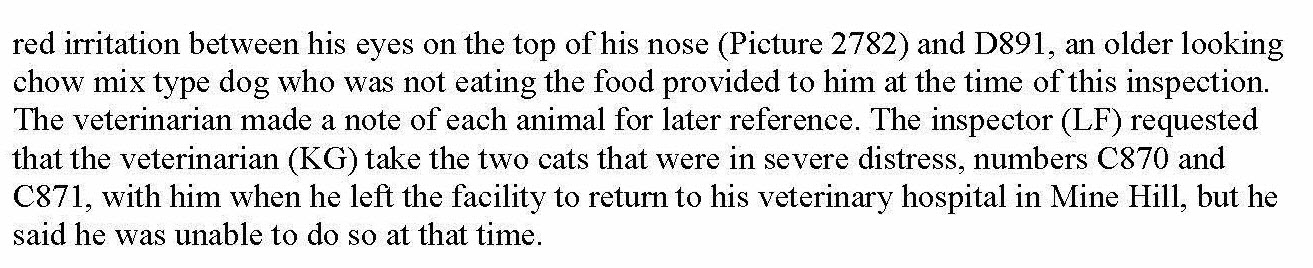
Most disturbingly, the shelter did not provide legally required prompt and basic veterinary care to alleviate pain and suffering. One cat (“C871”) with an injured leg did not move during the entire inspection. Another cat (“C870”) had been at the shelter for 9 days and did not eat or drink during her stay at the facility. The cat’s weight decreased 64% from 11 pounds to 4 pounds during her time at the shelter. The inspector could feel the bones of the cat and noted the cat was dehydrated and making distress calls. Yet, the inspection report stated Dr. Kimani Griffith told a shelter employee on Wednesday July 15 that he would wait 5 more days to examine the animal. Another cat died one day after arriving at the shelter and no documentation existed to show the shelter diagnosed a medical condition or provided any veterinary care.

Apparently, Dr. Kimani Griffith got wind of the New Jersey Department of Health’s arrival and came to the East Orange Animal Shelter during the 5 and half hour inspection. The NJ Department of Health inspector had to show Dr. Kimani Griffith two dogs with medical issues, one with a red irritation on his face and another who was not eating, and three cats needing veterinary attention, C871 and C870 above and a third cat. Shockingly, Dr. Kimani Griffith declined the New Jersey Department of Health inspector’s request to take the two suffering cats, C871 and C870, to his veterinary office for immediate treatment. Finally, Dr. Kimani Griffith examined the two cats at his office the next day and diagnosed C871 with a fractured leg and C870 as severely dehydrated and in chronic renal/kidney failure. Dr. Kimani Griffith put a splint on C871 and euthanized C870.

Prompt Vet Care Not Provided 1

Vet Care Not Provided 2

The shelter did not document the veterinary care it was providing to animals. Based on the lack of documentation, once must assume few animals received proper veterinary care.

Vet Care Not Provided 3

The shelter had expired drugs and even gave some to shelter animals. Additionally, needles and syringes were readily accessible as they were left in an unlocked drawer and cabinet at the shelter.

Vet Care Not Provided 4

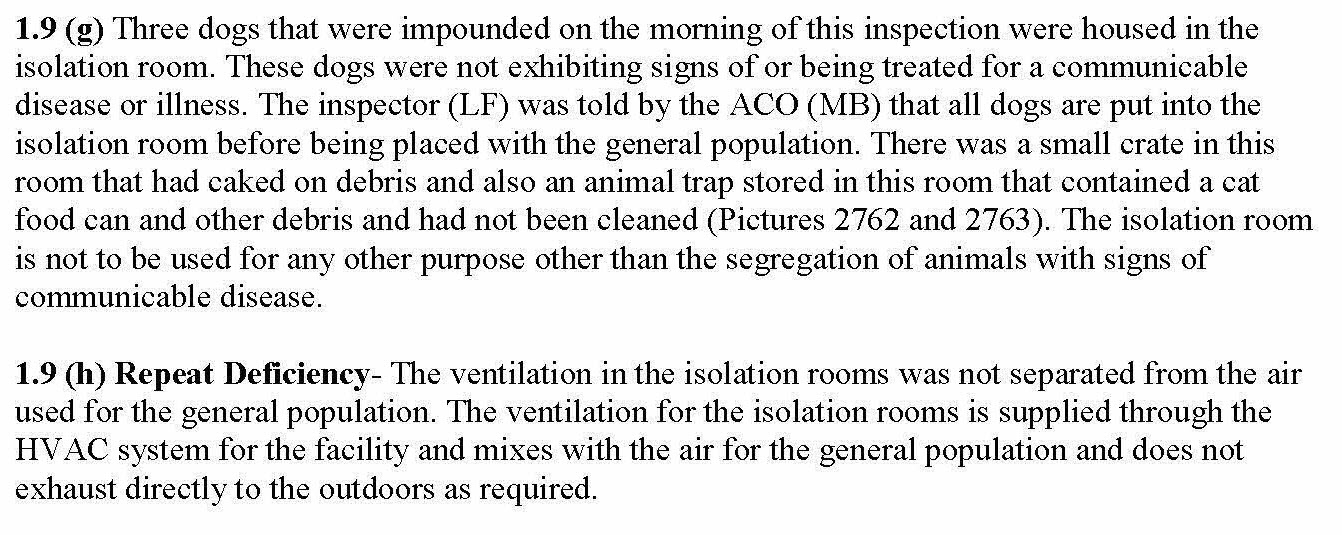
The shelter failed to properly isolate sick animals from healthy animals. Furthermore, the ventilation system allowed air from the isolation area where sick animals are housed to mix with the general shelter area where healthy animals reside. Thus, disease could easily spread.

Isolation 1

Isolation 2

The shelter also did not document whether people surrendering several animals for euthanasia were the actual owners. In other words, someone could steal your pet and have East Orange Animal Shelter kill your dog or cat. Additionally, the shelter illegally killed a cat on the day it arrived at the shelter.

Illegally Killing

When the shelter did kill animals, it did not do so humanely. Dr. Kimani Griffith stated animals are not weighed prior to euthanasia/killing as required by N.J.A.C. 8.23A. As a result, animals may not get enough tranquilizer and euthanasia drugs causing the animals to suffer. Even more shocking, Dr. Kimani Griffith “walked” two ACOs through the euthanasia/killing process over the phone while the veterinarian was on vacation. Apparently, taking a life is no big deal and you can learn how to do so over a casual telephone call while your instructor is at the beach or somewhere else. Additionally, the shelter did not keep legally required records, such as the animal’s weight, and drug dosage used to euthanize/kill animals.

Euthanasis Violations 1

Euthanasis Violations 2

If East Orange Animal Shelter was not bad enough, the ACO vehicle used to haul animals to the facility was disgusting as well. Literally, the animals that were brought to the shelter had to lie in a filthy crate covered with blood and dirt on their way to this horrific shelter.

ACO Vehicle

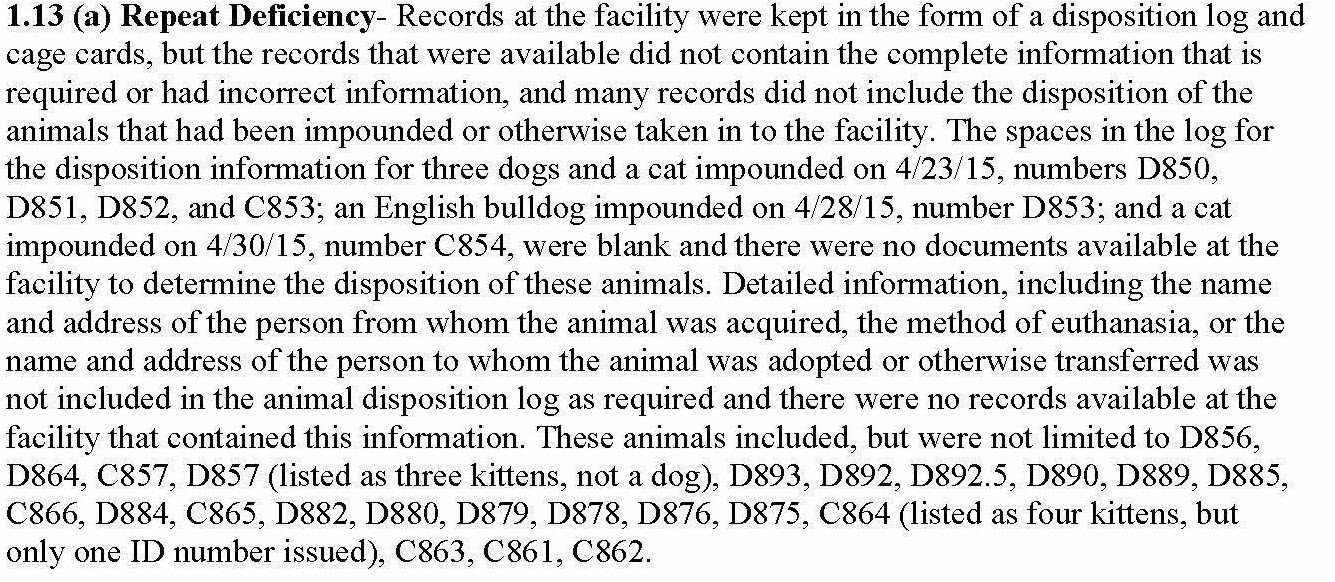
The shelter also failed to maintain legally required intake and disposition records for each of the shelter’s animals:

Intake and Disposition Records

Finally, the New Jersey Department of Health answered some questions I had about the recently adopted Liberty Humane Society dog that East Orange Animal Shelter killed. While East Orange Animal Shelter did not kill the dog during the 7 day hold period, the facility did not document the dog was suffering nor did this pound document that it contacted Liberty Humane Society. Thus, East Orange Animal Shelter made no effort to save this dog.

LHS Dog

Reaction to Kane in Your Corner Investigation Raises More Questions

On Thursday, August 20, News 12’s Kane in Your Corner aired its investigation of the East Orange Animal Shelter. Amazingly, East Orange Health Officer, Rochelle Evans, who is ultimately responsible for the shelter, refused to talk with Walt Kane. However, the City’s public relations person, claimed the New Jersey Department of Health revised its report and removed most of its serious findings related to not providing prompt veterinary care. Yet, the New Jersey Department of Health subsequently responded to Walt Kane and stated they did not drop these New Jersey shelter law violations.

Walt Kane’s subsequent interview of Dr. Kimani Griffith also seemed bizarre. Dr. Kimani Griffith, who appeared quite nervous during the interview, stated East Orange’s erroneous claim that the New Jersey Department of Health removed some of the serious violations was due to a typo. On camera, Dr. Kimani Griffith said he is taking constructive criticism from the New Jersey Department of Health so “they could improve the operation.”

Yet, Dr. Kimani Griffith has been the supervising veterinarian for the East Orange Animal Shelter for all of the terrible New Jersey Department of Health inspections since 2010. Dr. Griffith receives $76,500 a year per his 2012 contract with East Orange to provide “animal care and sheltering services” to East Orange despite East Orange already having its own facility. Amazingly, Dr. Griffith’s fee represents nearly half of the shelter’s 2014 budget. Additionally, Dr. Kimani Griffith can bill the city for other services. Furthermore, Dr. Kimani Griffith also operates a shelter/rescue out of his veterinary office and apparently adopts out dogs for $300 and cats for $125. If Dr. Kimani Griffith, “rescues” animals from East Orange Animal Shelter, he could earn additional profits if he performs any vetting himself (i.e. no veterinary labor costs if he spays/neuters animal and provides vaccinations). Additionally, East Orange residents are unlikely to travel all the way to Mine Hill to adopt an animal that came from East Orange. Thus, Dr. Kimani Griffith seems to profit off East Orange’s homeless animals at the expense of East Orange’s taxpayers.

Sadly, the operation cannot just improve as Dr. Kimani Griffith suggests. East Orange must completely overhaul the shelter and remove Dr. Kimani Griffith and Rochelle Evans from having anything to do with the facility. At this point, a private no kill organization should take over as East Orange proved incapable of operating a humane shelter that saves rather than takes lives.

Walt Kane also mentioned the New Jersey State Board of Veterinary Medical Examiners is conducting an investigation. Given this board found Dr. Kimani Griffith grossly negligent in the care he provided to an animal in private practice, perhaps this is why Dr. Kimani Griffith appeared nervous and tried to convey a conciliatory tone?

South Orange Has A lot of Explaining to Do

The South Orange Health Department quarantined and effectively shut down Jersey Animal Coalition after the shelter failed a joint New Jersey Department of Health and South Orange Health Department inspection last year. Yet, the South Orange Health Department, South Orange Board of Trustees and the South Orange Board of Health allowed the Village to contract with a veterinarian who allowed a shelter he supervises to be run to the ground for at least half a decade and fail an inspection just like Jersey Animal Coalition. Additionally, the South Orange ACO brought at least one stray dog to the East Orange Animal Shelter.

The South Orange Board of Health’s hypocrisy has been exposed by these events. At a recent South Orange Board of Trustees meeting, the Board of Health railed against TNR due to alleged risks relating to diseases, such as toxoplasmosis and rabies, despite these diseases virtually never being transmitted from feral cats to humans. However, the South Orange Board of Health apparently had no problems contracting with the supervising veterinarian of a shelter that fails to segregate sick animals from healthy animals and potentially allowing zoonotic diseases to run rampant. Furthermore, the South Orange Board of Health apparently is fine with sick and injured animals not receiving medical treatment for days or even weeks. Would the physicians on the South Orange Board of Health think this is appropriate for the their human patients?

NJ SPCA Fails to Act Again

The NJ SPCA did not promptly act in a number of recent animal shelter cases. Last year, the NJ SPCA only raided the Helmetta Regional Animal Shelter after Kane in Your Corner aired its investigation. The NJ SPCA also did not take action at Linden Animal Control despite abuse that may have been even worse than Helmetta Regional Animal Shelter. In the case of Helmetta Regional Animal Shelter, charges against the shelter directors were downgraded and it appears these people will not face serious consequences for their actions.

The NJ SPCA’s performance in Essex County animal shelter abuse cases has been dismal. Despite multiple miserable inspection reports, some with horrific photos, the NJ SPCA failed to successfully take action against Associated Humane Societies – Newark in 2009 or 2011. The NJ SPCA took no successful action against Montclair Animal Shelter’s former management despite animals being forced to stay in cold conditions. Despite years of complaints about Jersey Animal Coalition, no serious action was taken against the shelter even after it failed its inspection last year. Even after being contacted about the East Orange Animal Shelter’s problems in 2014, the NJ SPCA failed to take serious action.  One has to wonder what Sergeant Al Peterson has been doing in Essex County all these years?

Clearly, the NJ SPCA could have expedited the resolution of these shelter problems if it got more effectively involved. Sadly, just like the New Jersey Commission of Investigation Report on the state’s SPCAs concluded in 2000 and the Animal Welfare Task Force Report found in 2004, the NJ SPCA and the county SPCAs inadequately protect animals and should step aside and let real professionals prosecute animal cruelty.

Special thanks to Reform the East Orange Animal Shelter for providing me with the inspection reports and photos

Perth Amboy Animal Shelter’s Amazing Turnaround Story

Several years ago the Perth Amboy Animal Shelter was in a crisis. Under the control of future Helmetta Regional Animal Shelter Director and Assistant Director, Michal Cielesz and Richard Cielesz, the shelter lacked community support. In 2010, which was the Cieselzs’ last full year at the shelter, the facility killed 25% of its dogs and 58% of its cats. Furthermore, the Perth Amboy Animal Shelter only adopted out 2 dogs and 10 cats for the entire year in 2010. During 2011, the Cieselzs’ left Perth Amboy Animal Shelter, but the facility still killed 14% of its dogs, 42% of its cats and 49% of its other animals. (i.e. rabbits, guinea pigs, hamsters, etc). As a result, the Perth Amboy Animal Shelter was a high kill shelter with a poor reputation.

City Hires New Animal Control Officers To Transform the Perth Amboy Animal Shelter

The city government oversees and has ultimate authority over the animal shelter. As is typical with municipal animal shelters, a department of city government, the Police Department in the case of Perth Amboy, controls the animal shelter. The city hires animal control officers to run the animal shelter and make day to day decisions. However, the Police Department has to approve new policies. Additionally, the Perth Amboy City Council may also have to approve significant new initiatives at the animal shelter. As a result, a successful animal shelter in Perth Amboy requires a supportive Police Department and City Council.

During the middle of 2012, Perth Amboy hired current Head Animal Control Officer, Christie Minigiello, to work at the animal shelter. The city hired Christie based on a recommendation from her Kean University Animal Control Officer Training program professor. Other than a very short stint at another animal control agency, Christie was new to animal sheltering. Prior to this, Christie worked in the dental field, operated a crafts business and was a passionate animal advocate. For example, several years ago Christie sent a dog, who we considered adopting before choosing another long-stay dog, to a reputable sanctuary after the shelter decided to euthanize the dog for alleged aggression. Thus, Perth Amboy decided to hire a competent person with a passion for saving animals.

Perth Amboy subsequently hired two additional compassionate animal control officers. In 2013, the city hired Joe Lipari to work at the animal shelter. Previously, Joe volunteered at the Woodbridge Animal Shelter. Joe is known as the “Pit Bull Whisperer” among Perth Amboy Animal Shelter’s staff based on his ability to train and understand large dogs. Perth Amboy hired Jackie Rivera in 2014. Jackie volunteered at the Perth Amboy Animal Shelter prior to becoming an ACO at the facility. Thus, the city hired compassionate ACOs to run the animal shelter.

Perth Amboy Animal Shelter is not an easy place to save lives. 24% of Perth Amboy’s population lives below poverty level compared to New Jersey’s average of just 10%. Perth Amboy’s poverty rate exceeds the levels found in Jersey City, Elizabeth and East Orange. In 2013, the city only spent $281 per dog and cat on animal control and sheltering compared to the high kill and dreadful East Orange Animal Shelter’s budget of $345 per dog and cat. While Perth Amboy Animal Shelter’s budget thankfully increased in 2014 and 2015, the budgeted amount per animal is still significantly lower than the amounts of many high kill shelters. Furthermore, few dogs coming into the shelter have microchips or licenses, which is likely due to the relatively low socioeconomic status of many of the city’s residents. Based on the facility’s small capacity and the number of dogs impounded and returned to owners in 2013 and 2014, I estimate the shelter only had 24-32 days in 2013 and 35-45 days in 2014 to get dogs out of the facility before no room was left to house these animals. Thus, Perth Amboy is not an easy city to achieve no kill.

Christie, Joe and Jackie dramatically improved the shelter. In 2012, when Christie was only at the shelter for half the year, the euthanasia rate decreased from 14% to 7% for dogs and from 42% to 25% for cats. Undoubtedly, the euthanasia rate was much lower in the latter half of the year after Christie started working at the shelter. In 2013, the Perth Amboy Animal Shelter saved 97% of its dogs and 93% of its cats. In other words, only 3% of dogs and 7% of cats were euthanized or died at the shelter. Based on the facility exceeding a 90% live release rate, the shelter achieved no kill status in 2013 and was recognized by Saving90.org as being a role model shelter.

Detailed Data Shows Perth Amboy Runs a Highly Successful Shelter

In order to better analyze the shelter, I obtained detailed animal intake and disposition records for 2014 (except for one month for dogs and two months for cats) and the first six months of 2015. These records included the date the animal arrived at the shelter, species, breed, outcome (i.e. adoption, returned to owner, rescued, euthanasia, etc.) and outcome date. I tabulated this data to calculate the live release rate, average length of stay and other metrics to analyze the shelter’s performance. One slight methodological difference in my calculations verses the figures above is I counted outcomes occurring in a subsequent year as happening in the year the animal came to the shelter. For example, an animal arriving at the shelter in December 2014 and adopted out or euthanized in January 2015 will count towards the 2014 live release rate and average length of stay figures.

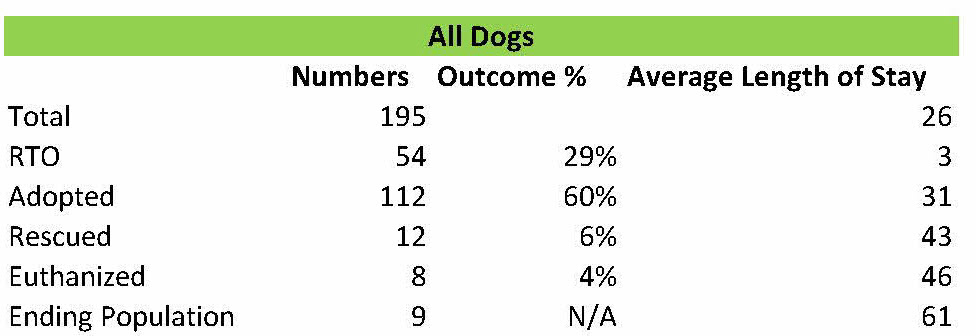
In 2014, the shelter continued to do an incredible job saving its dogs. The outcome statistics and average length of stay figures for dogs arriving at the Perth Amboy Animal Shelter in 2014 are detailed in the table below. 95% of the 135 dogs coming into the shelter were saved. In addition, rescues only pulled 4% of the dogs indicating Perth Amboy Animal Shelter was able to save almost all of these dogs on their own. Furthermore, dogs only stayed 26 days on average at the shelter and only took 31 days to get adopted. Thus, Perth Amboy Animal Shelter saved almost all of its dogs on its own and those dogs did not spend a long time at the shelter.

All Dogs Perth Amboy 2014

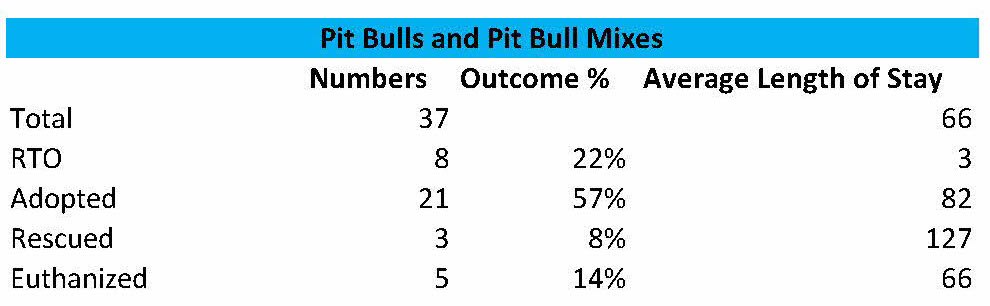
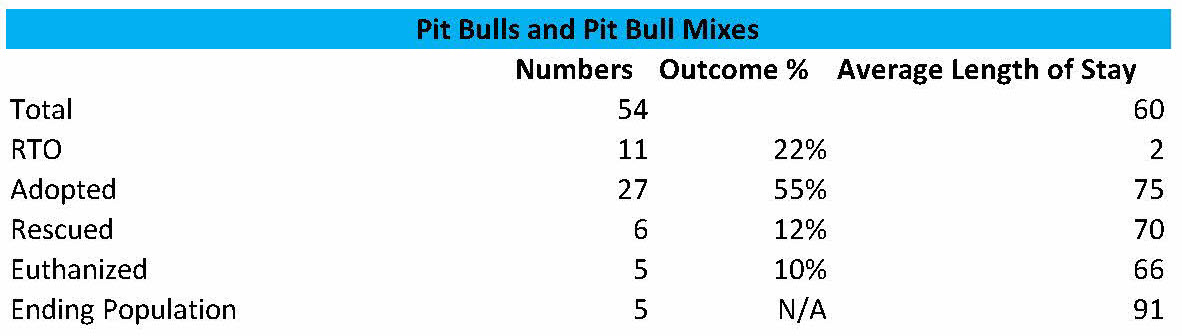
Perth Amboy Animal Shelter also did an excellent job with its pit bull like dogs. While Perth Amboy Animal Shelter does take in a large number of small dogs, which are easier to adopt out, 27% of the shelter’s dog intake were pit bulls and pit bull mixes. The outcome statistics and average length of stay figures for pit bull like dogs arriving at the Perth Amboy Animal Shelter in 2014 are detailed in the table below. The shelter saved 86% of pit bulls in 2014. Perth Amboy Animal Shelter’s 2014 pit bull live release rate was the same as two of the nation’s best no kill animal control shelters, Kansas City’s KC Pet Project (2013) and Austin Animal Center (2014). Additionally, the shelter’s pit bull like dogs only stayed at the facility for 66 days and were adopted out on average in 82 days. Furthermore, rescues only pulled a small percentage of these dogs. Thus, Perth Amboy Animal Shelter saved a very high percentage of its pit bulls in 2014 and got these dogs out of the shelter in a reasonably short time period.

Perth Amboy 2014 Pit Bull Data

The shelter performed even better with dogs in 2015. Through the first 6 months of 2015, Perth Amboy Animal Shelter saved 98% of dogs who had outcomes. In fact, the shelter only euthanized one dog who had a broken back and leg and was hopelessly suffering. Additionally, dogs stayed at the facility one day less in 2015 verses 2014 despite the uptick in the live release rate. Even more impressive, the shelter saved 100% of its pit bulls through the first half of 2015. Additionally, pit bulls stayed at the facility on average 18 days less in 2015 verses 2014 and adopted pit bulls’ average length of stay decreased by 30 days in 2015. In fact, Perth Amboy Animal Shelter adopted out its pit bulls in roughly the same amount of time as the benchmark animal shelter, Tompkins County SPCA, I use to grade New Jersey animal shelters. Thus, Perth Amboy Animal Shelter has done a fantastic job with all of its dogs.

Perth Amboy 2015 Dogs

Pit Bulls 2015 Revised

Perth Amboy Animal Shelter’s dog performance for the combined period (2014 and the first half of 2015) was excellent. 96% of all dogs and 90% of pit bull like dogs made it out of the shelter alive. In other words, Perth Amboy Animal Shelter achieved no kill for all dogs, including pit bulls. Additionally, the average length of stay for all dogs was just 26 days and a respectable 60 days for pit bulls. Thus, Perth Amboy Animal Shelter achieved no kill for its dogs and was able to place those dogs relatively quickly.

All Dogs PA Revised

All Pit Bull PA Revised

While Perth Amboy Animal Shelter’s cat live release rate slipped a little in 2014 and 2015, the shelter still does a pretty good job with cats. Based on the facility’s 2014 Shelter/Pound Annual Report submitted to the New Jersey Department of Heath, the shelter only euthanized 9% of the cats who had outcomes during the year. However, the live release rate drops to 82% if we count cats who died at the shelter during the year. Sadly, cats do die even at very good animal control shelters. For example, KC Pet Project had a cat live release rate of 83.5% in 2013. Similarly, the Lynchburg Humane Society only had cat live release rates of 74% and 83% in 2013 and 2014. Both KC Pet Project and Lynchburg Humane Society were considered among the nation’s best shelters during this time period, but these organizations’ older facilities made it more difficult to eliminate disease despite diligent cleaning. Thus, Perth Amboy Animal Shelter’s cat live release rate in 2014 was still pretty good taking into account these other factors.

Perth Amboy Animal Shelter also did a reasonably good job getting cats out of the shelter quickly. In order to do a proper analysis with enough data, I combined 2014 and 2015 cat intake and disposition statistics in the table below. Over this period, the shelter had an 81% cat live release rate. As with dogs, Perth Amboy Animal Shelter did much of the work based on cat adoptions exceeding the number of cats sent to rescues by an 8 to 1 margin. While I target a lower average length of stay for cats in my recent analysis of the state’s shelters, an average length of stay of 61 days for cats (75 days for cats who are adopted out) proves the shelter does not have to hoard cats to save a large percentage of them.

All Cats

Finally, the Perth Amboy Animal Shelter saved 100% of all the other animals coming into the facility during 2013, 2014 and 2015. These animals include rabbits, guinea pigs, ferrets, etc.

Perth Amboy Creates a Welcoming Looking Shelter

Recently, I visited the Perth Amboy Animal Shelter and toured the facility. Immediately, you can see the ACOs created a very welcoming atmosphere with flowers and friendly decorations on the shelter’s front door:

IMG_456521834 Flowers

IMG_456522023

Additionally, during Easter the shelter added holiday festivities to the area near the entrance to create a positive and welcoming atmosphere:

Easter Decorations 3

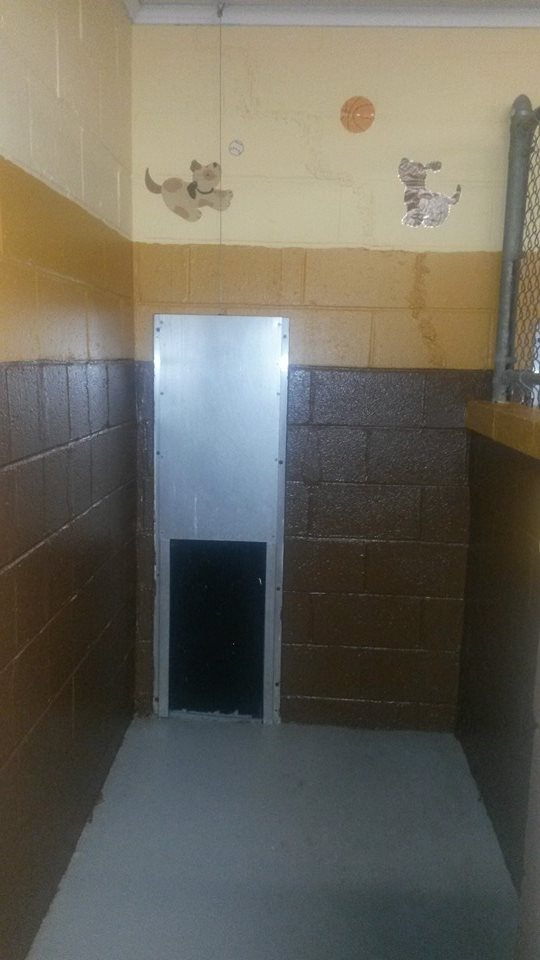
Inside the shelter, the ACOs and volunteers took the depressing looking shelter and made it look happy. They repainted the dog and cat areas with inviting colors and added cute pictures of animals enjoying themselves:

Before runs

Volunteers Giving Shelter Make Over

Runs

Doggie ISOCat ISo 1

At the beginning of the kennel area, visitors are greeted by a pretty hanging basket of treats. This encourages adopters to interact with the dogs and increases the chance of dogs and adopters connecting with each other. Also, I really liked the positive vibe they created in the meet and greet room for adopters:

Meet & Greet Room

Even the bathroom, which is a very scary place in most shelters, got a complete makeover and looked beautiful:

Restroom

Thus, the ACOs created an inviting shelter where adopters can have a positive experience adding a new member to their families.

In addition, the shelter was extremely clean despite being full due to a large number of dogs coming in just before my visit. The ACOs regularly checked the shelter and cleaned up throughout the day. As a result, the shelter did not have that typical animal shelter smell which helps make it a welcoming place for adopters.

Strong Leadership Creates a Successful Animal Shelter

In order to run a highly effective shelter with a relatively small budget, the ACOs use a number of local high school students to clean the shelter and socialize animals during the week when many adult volunteers work. The students help out at the shelter as part of their required volunteer service to graduate from high school. Not only does this program help run the shelter at a lower cost, but it also helps the community connect with the shelter. For example, families of the students or friends of those families may choose to adopt animals or donate to the shelter. In fact, on the day of my visit a group of grade school students helped plant flowers outside the building:

Student FlowersStudent Flowers 2Student Flowers 3

The ACOs also implemented key programs that help dogs, particularly pit bulls, safely get out of the shelter more quickly. While the facility is small, the shelter has a fenced in yard where dogs can go out and run. Additionally, social dogs can play with other dogs. Playgroups are essential to keeping high energy dogs happy and healthy at shelters and are a common denominator among the nation’s best shelters for pit bull like dogs. Additionally, the ACOs started a foster program for all types of animals that allows animals to leave the shelter sooner. If I calculate the average length of stay based on when dogs left the shelter to go to foster homes rather than their final adoption date (i.e. after going to a foster home), the average length of stay for all dogs and pit bulls would decrease by 3 days and 7 days since the foster program began. Thus, Perth Amboy Animal Shelter created some very positive programs for pit bull like dogs.

Christie clearly demonstrated a passion for what she does and an initiative to improve. During my visit, Christie shared innovative ideas on how she could add space to a pretty small facility. In addition, she told me that the shelter wants to help neuter and release feral cats to assist local TNR advocates in the future. Finally, Christie talked to me about a planned program to allow children to read to shelter animals. Reading programs reduce stress in animals and may help kids gain confidence to speak in front of groups of people.

While I do have some different opinions on tactical strategies to saving lives, the ACOs have an unwavering passion to do the same. In addition to being the Head ACO, Christie runs the shelter’s Facebook page. On her day off recently, she helped catch a dog that was lost for 9 months. Also, Christie, Jackie and Joe often come to volunteer at the shelter on their days off. Most striking was how appalled Christie and Jackie were when I told them how other shelters used frequent killing as a method of population control. Thus, the ACOs clearly have a passion for saving animals and will do what it takes to make sure that happens.

Additionally, the City of Perth Amboy deserves a lot of credit. The Police Department, which oversees the shelter, has been very supportive of the ACOs and their efforts. Similarly, the local government also has stood behind the ACOs as well. The city keeps the facility open more hours than other similarly sized shelters, 10 am – 4 pm weekdays (shifting these hours a little later, say from 1 pm – 7 pm, would make the facility more convenient for adopters who work) and 10 am to 3 pm on weekends. Also, the location is near a commercial area with lots of foot traffic. Thus, the combination of supportive government officials, and competent and passionate ACOs helped turn the shelter around and make the city a role model for others.

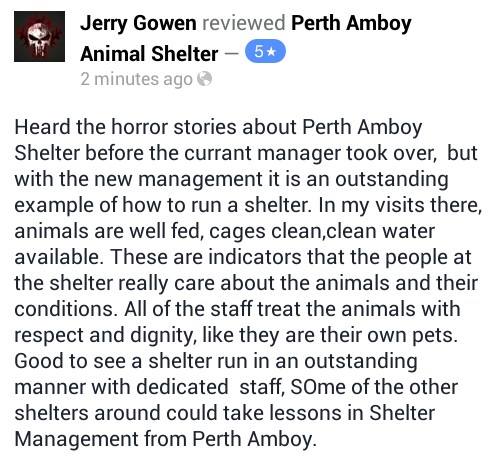
Many other people noticed the positive change at the shelter as well:

Perth Amboy Turn Around 2

Perth Amboy Turn Around

Perth Amboy Turn Around 3

People Should Volunteer to Make the Shelter Even Better

While the Perth Amboy Animal Shelter is doing wonderful things, more volunteers can take the shelter to the next level. For example, additional fosters can help get cats out of the shelter more quickly to reduce the number of cats dying and raise the cat live release rate back over 90%. Similarly, volunteers can create a nonprofit to help fund some higher cost care, such as expensive veterinary procedures requiring specialists or a behaviorist for certain dogs needing extensive rehabilitation. Thus, more volunteers can help the shelter raise its live release rate even further.

Volunteers can also help Perth Amboy Animal Shelter save the lives of animals in other communities. To the extent Perth Amboy Animal Shelter can reduce its average length of stay, the facility can contract with additional communities currently served by high kill shelters. For example, if Perth Amboy Animal Shelter’s average length of stay decreased by 50%, the shelter would have the space to handle twice as many animals. Volunteers can help get animals adopted more quickly by taking excellent photos, with a professional photographer being ideal, or creative videos. Similarly, volunteers can help with off-site adoption events or better yet, a satellite adoption center in a Petsmart, Petco or PetValu store. Additionally, volunteers can foster more animals to create more space for the shelter to take in more animals. Also, volunteers can train dogs that stay longer at the shelter to reduce their length of stay. Thus, more volunteers can help the shelter save more animals in many ways.

Volunteers should donate their valuable time to organizations where their contributions will be valued. Clearly, Perth Amboy Animal Shelter is run by passionate and highly skilled animal advocates. In my opinion, this is the type of shelter where volunteers can do more good. Sadly, volunteers at other shelters often have to fight management to save lives. Luckily, central New Jersey has an excellent shelter and people should volunteer at this facility to make a real difference.

Associated Humane Societies’ History of Conflicts

Recently, Associated Humane Societies made headlines after it banned volunteers from its Tinton Falls shelter. On Saturday, April 11 I saw a number of social media posts about AHS banning all of its volunteers. On the next day, which ironically fell on the eve of National Volunteer Appreciation Week, the Associated Humane Popcorn Park Facebook page announced AHS suspended the Tinton Falls programs due to alleged misdeeds by the Tinton Falls volunteers. The banned volunteers responded and disputed the shelter’s allegations. While I am not close enough to the situation to comment on the validity of both sides claims, I think looking at AHS’s history of disputes is quite revealing.

Corrupt Start to the Modern AHS Era

Lee Bernstein, who served as AHS’s Executive Director from 1969 to 2003, used highly unethical tactics to raise money for AHS and himself. Bernstein, who was a Newark City Councilman and AHS Board of Trustees member, voted to significantly increase the animal control contract fee Newark paid to AHS in 1968. After this fact became known, Mr. Bernstein faced a recall election to remove him from the Newark City Council. On the day before another Newark City Council resolution in 1969 to increase the fees paid to AHS again, Bernstein told the AHS Board that the new Newark contract was contingent on AHS hiring him as Executive Director for 5 years and paying him a specific salary if Bernstein lost his recall election. Newark residents subsequently booted the corrupt Bernstein from office in the recall election and Bernstein became AHS’s Executive Director.

The City of Newark later won a lawsuit against AHS to render the contract null and void. The judge’s ruling included the following statement:

In the light of the foregoing, the Court is satisfied that the contract of March 25, 1969 had its genesis in a corrupt understanding by which Lee Bernstein would receive employment and be supplied with a regular source of income, in the event that his political tenure (and income) were terminated by the recall election of June 1969. A corrupt understanding that undoubtedly was conceived in the mind of Mr. Bernstein, but to which the other members of the Board of Trustees of the defendant Humane Societies, nevertheless, gave their prior approval and assent.

Ultimately, Lee Bernstein was sentenced to jail for four months relating to this matter. Thus, AHS’s modern history had a corrupt beginning.

Horrific Treatment of Animals During Lee Bernstein Era

In 2003, the State of New Jersey Commission of Investigation (“SCI”) issued a scathing report on AHS. Some of the report’s key findings were as follows:

  • AHS raised massive amounts of money and failed to use enough of it to properly care for its animals
  • Shelters were mismanaged and ruled by then Executive Director, Lee Bernstein, with an iron fist
  • Ineffective oversight by AHS’s Board of Trustees

The SCI report summarized the history under Lee Bernstein as follows:

The history of AHS’s shelter operation has been dominated by deplorable kennel conditions, inhumane treatment of animals by workers, mismanagement and nonexistent or inadequate medical care. The problems were neither singular nor occasional.The accounts and descriptions provided by members of the public and former and current staff members, including veterinarians, paint a bleak picture of shelter life. The reality for the animals belied AHS’s propaganda that its “sole purpose” has been “the care and welfare of animals” and that it has “a high adoption rate.”

One example of Lee Bernstein’s cruelty was when he ordered a veterinarian to use only one needle per animal. Apparently, Bernstein thought the 5 cents savings per animal was more important than the pain an animal endured from being stabbed multiple times with a dull needle:

Bernstein reacted by issuing a memorandum to the veterinarian that “effective immediately, use only ONE needle per animal. . . .

In a responding memorandum, the veterinarian countered that the needles “are not especially high quality to begin with, become much more dull [with one or two passages through a vial’s rubber stopper] and, therefore, more painful to the animal upon injection.” She asserted, “According to you, the cost is $0.03-$0.04 per animal for an additional needle (plus probably at most $0.01 for medical waste disposal) – a bargain for an organization concerned about animal welfare.” She noted that “some shelter personnel are not especially adept at administering injections and a dull needle make[s] the job harder on everyone” and cited a recent complaint by a woman “who was appalled by her cat being stabbed four times before the vaccine was successfully administered at the shelter.” During this timeframe, AHS realized profits in excess of $1 million and had cash and investment balances valued at more than $8 million.

The SCI report stated Bernstein was a firm believer of survival of the fittest when it came to spending money on veterinary care:

His philosophy was that the strong ones would survive and the others would not. Assistant Director Terry Clark also expressed disapproval of her treating shelter animals. In an apparent attempt to dissuade her, Clark stated in one conversation that Bernstein’s remedy would be to euthanize any shelter animals that he finds in the clinic.

While some may say this report is old news, AHS’s current Executive Director, Roseann Trezza, worked at AHS and served on the AHS Board of Trustees for three decades prior to the release of the SCI report. In fact, she was the Assistant Executive Director when the report was released. Popcorn Park Director, John Bergmann, also worked at AHS and was a Board of Trustees member during some of the time period covered by this report. Similarly, AHS Board of Trustees member and Treasurer, Barbara Lathrop, also had been with AHS for 27 years prior to the release of the SCI report. Thus, many people in AHS’s current leadership worked at AHS for many years during the horrible Lee Bernstein era.

Additionally, the SCI report alleged Roseann Trezza helped Bernstein implement his don’t treat the shelter animals plan:

In addition, Dr. Binkowski’s practice of returning animals under treatment to the shelter with instructions to the worker to administer certain medications was thwarted when Trezza issued a memorandum, dated March 9, 1994, to the front office and kennel staff that she was assigning one individual in the front office to “be responsible for dispensing the medication [and that n]o medications are to be held or given out by the kennel staff.” According to Dr. Binkowski, this rule effectively deprived many, if not most of the animals of their medications because the front office employee had numerous other responsibilities and administering to the shelter animals was not her primary assignment.

Finally, Roseann Trezza showed her true colors when AHS published a glowing memorial article on Lee Bernstein in a 2008 issue of the Humane News. Remarkably, AHS made no mention of Lee Bernstein’s egregious acts towards the shelter animals detailed in the SCI report.

Two years after the SCI report was published, AHS paid $138,057 to settle alleged violations of the State’s Consumer Fraud Act and Charitable Registration and Investigation Act. Unfortunately, the settlement agreement only mandated a two year monitoring program to ensure AHS’s compliance.

History of Conflicts with Shelter Veterinarians in SCI Report

The SCI report detailed recurring conflicts between AHS and its veterinarians over the care provided to animals at the organization’s Newark, Tinton Falls and Popcorn Park shelters. The striking thing about these conflicts was the consistency in the accounts from various veterinarians. The following statements by one AHS-Newark veterinarian summarized the theme of all these accounts well:

After you received my letter of resignation, you asked me what it would take to get me to sign a contract. One of the main reasons I am resigning is because insufficient resources are allocated for basic needs – housing, food, and medical well-being of the shelter animals and the operation of the Medical Department. As a result, it is my professional judgment that minimal standards of care are not being met and that delivery of medical care to animals is sorely lacking to the point that animals are suffering. Indeed, I am becoming increasingly alarmed at the level of care provided by AHS which I think is often below the minimal standard of humane care provided by state anti-cruelty laws. Also, I am concerned that AHS is acting negligently toward animal owners and the public that it is supposed to serve. I should state that I have many examples in addition to ones described below which I will discuss with you or any interested party.

Frankly, any animal welfare organization that repeatedly fights with its own veterinarians to provide less care to its animals should get out of the animal sheltering business.

AHS also responded in a defiant tone to the SCI report. The organization did state it would try to improve, accepted Lee Bernstein’s resignation and appointed Roseann Trezza as the new Executive Director. However, AHS also wrote the report was “replete with outdated information, pervasive exaggeration, factual embellishments, and intellectually impossible conclusions.” Thus, I did not leave with a warm fuzzy feeling that AHS was going to become a hunky dory organization.

AHS Throws a Concerned Employee Under the Bus

AHS fired an employee shortly after he raised concerns about a dog that eventually killed an adopter according to court documents. The employee expressed reservations about AHS’s and Roseann Trezza’s decision to adopt out a dog with a serious bite history. The dog’s previous owner paid AHS a $205 fee to keep the dog under observation for ten days, then euthanize, and cremate it. The dog killed the adopter nine days after the adoption in an attack that was eerily similar to the one on the previous owner. After hearing this news, the employee told other workers that he knew this would happen. Two weeks later AHS fired the employee under Roseann Trezza’s orders per the court documents.

AHS allowed another employee to continue working at the organization after he was charged with altering records related to the case. Several months after the dog killed the adopter, Burlington County authorities brought charges against AHS-Newark’s shelter manager at the time, Denton Infield, for allegedly deleting portions of the dog’s records indicating prior vicious behavior. Despite this act, AHS not only continued to employ Mr. Infield for years after this incident, but allowed him to represent the shelter in a number of media interviews.

While I don’t think AHS thought this dog could have killed this woman, the organization’s treatment of the two employees speaks volumes about AHS. The employee who correctly pointed out the issue was fired while the staff member who was charged with tampering with evidence stayed on in a prominent role with AHS. Evidently, loyalty is more important than doing the right thing at AHS.

AHS Fights Against Proposed Improvements from the Animal Welfare Task Force

After the SCI report on AHS and an earlier one on the the state’s SPCAs, Governor McGreevey formed the Animal Welfare Task Force to improve animal welfare in New Jersey. The Animal Welfare Task Force Report made the following recommendations:

  • Update animal cruelty laws
  • Replace the NJ SPCA with specially trained police officers to enforce animal cruelty laws
  • Use low cost financing to build more animal shelters
  • Implement progressive animal shelter policies
  • Make TNR legal and encourage its practice
  • Increase quality and quantity of animal shelter inspections
  • Improve training and oversight of animal control officers

While anyone seriously concerned about animals would enthusiastically support this report, Roseann Trezza came out strongly against a preliminary version. Specifically, Roseann Trezza seemed to parrot PETA, which kills almost all of its shelter animals, with this frightening quote:

“What they want is obviously unrealistic,” said Roseann Trezza, executive director of the Associated Humane Societies, the largest private animal shelter operation in the state with three shelters and a zoo. “In a perfect world, we wouldn’t have to euthanize any animal. But in reality, people do not want to adopt many animals we find and the job of animal protectors is not to merely prolong life, but to relieve suffering,” said Trezza.

To make matters worse, Roseann Trezza appeared to fight against the recommendation to make TNR legal and the preferred practice for dealing with feral cats:

Trezza recited a litany of New Jersey cases––familiar to ANIMAL PEOPLE––involving cat colony caretakers who worked without backups, then died, fell ill, or moved, leaving unfed cats behind.

While I don’t know if AHS opposed TNR for financial or philosophical reasons, the end result was the Animal Welfare Task Force recommendation for TNR never was adopted statewide.

AHS Fights With New Jersey Department of Health Inspectors

New Jersey Department of Health inspectors found horrific problems at AHS in 2009. While I could write an entire series of blogs on these inspection reports, the photos below summarize the conditions very well:

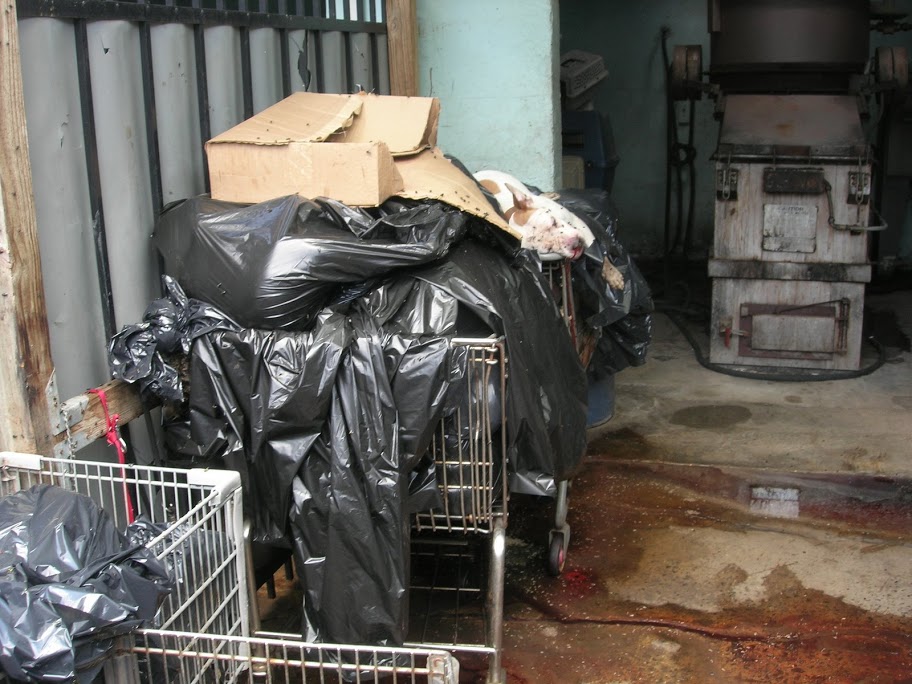
6 Puppy with wounded ears 13 Dogs in feces 14 Dog covered in feces 15 Dogs in dirty kennel 21 Dead animals in shopping cart 24 Closeup of Mange Dog 40 Dead Cat That Was Found in Colony Room 43 Dead Dogs in Shopping Carts. Blood. Maggots 44 Severe Fly And Maggot Infestation

AHS complained the inspectors were just too hard on them. In an interview with NBC New York, Denton Infield, who was charged with tampering with evidence in the dog killing an adopter case six years earlier, basically said dogs are going to poop at night and you can’t prevent them from wallowing in it. Mr. Infield went on to say poor AHS contracts with dozens of municipalities and might close due to potential fines. Ironically, New Jersey animal shelter regulations only allow fines of up to $50 per offense. During that year AHS had a $1.5 million profit and over $10 million in net assets. Clearly, Mr. Infield and AHS were full of it.

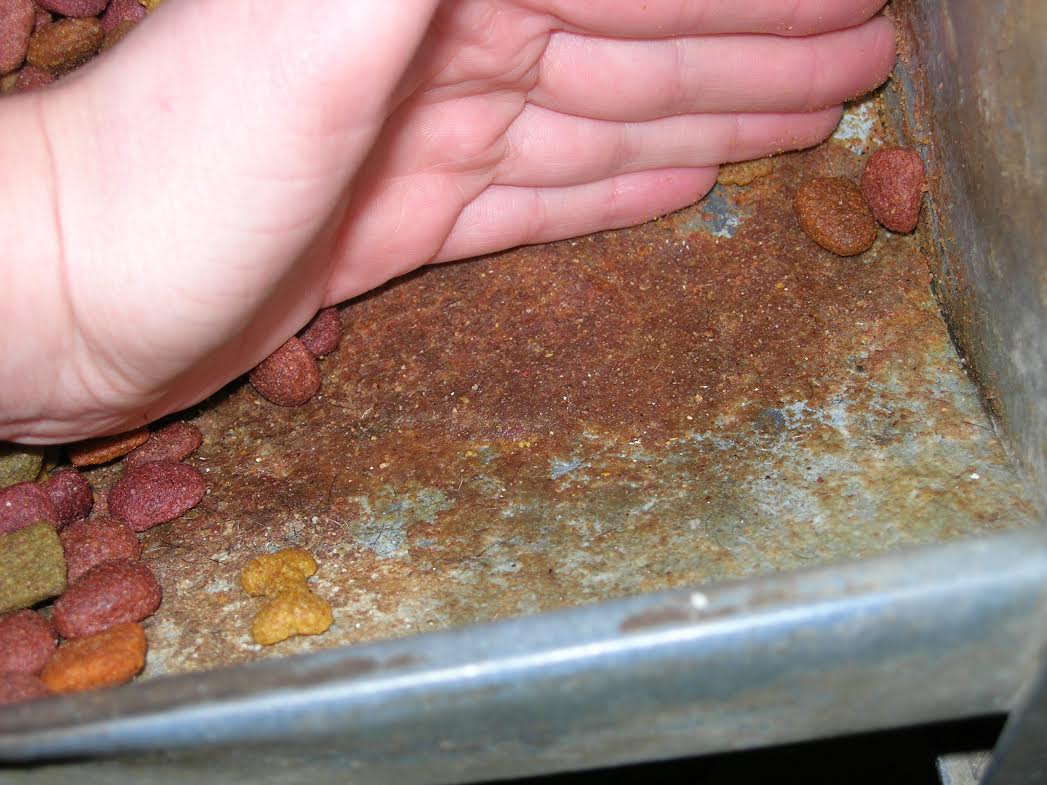
Sadly, the New Jersey Department of Health continued to find significant issues during another inspection in 2011. The inspection report noted dogs housed in kennels with a collapsed roof and workers throwing damaged roof material directly over these dogs. Additionally the report stated outdoor drains were in severe disrepair, no isolation areas for sick large dogs existed, automatic dog feeders were filthy, dogs were exposed to contaminated water and chemicals during the cleaning process, and some animals were not receiving prompt medical care.

The following photos were taken during the 2011 inspection:

AHS 2011 Insepction Sick Rottie AHS 2011 Inspection Cakes on Food 2 AHS 2011 Inspection Dog Near Feces in Drain AHS 2011 Inspection Dog Under Roof Construction AHS 2011 Inspection Smeared Feces

Outrageous Fight with Veterinarians and Animal Welfare Activists for Patrick

In 2011, AHS helped rescue an incredibly emaciated pit bull named Patrick. The dog was found in a garbage chute by workers in an apartment building and was rushed to AHS. To AHS’s credit, the shelter’s veterinarian stabilized Patrick and then sent him to a New Jersey veterinary hospital for intensive treatment. After bonding with Patrick, the veterinarians that ran the animal hospital wanted to adopt Patrick.

Instead of celebrating the fact that the severely abused dog finally had a loving home, AHS filed a lawsuit to take Patrick back. The lawsuit stated Patrick was “trademark registration number 23699” and was a “very valuable brand for commercial exploitation and fundraising.” Unsurprisingly, the animal welfare community was outraged by this action. Luckily, AHS ultimately lost the case after a judge awarded custody to the veterinarians who cared for Patrick.

Vicious Fights with Cory Booker

AHS fought with Cory Booker during the Senator’s tenure as Newark’s mayor. In 2011, the former Mayor announced his intention to build a new no kill shelter in Newark. Instead of rejoicing that AHS may have to kill fewer animals with another shelter in the city, AHS trotted out Denton Infield and spewed out all sorts of nonsense about no kill shelters. This nonsense seemed eerily similar to what PETA, which kills almost all of the shelter animals it takes in, says about no kill shelters. Ironically, AHS stated that Cory Booker should give the money he raised to AHS. Newark’s Deputy Mayor at the time, Adam Zipkin, rightfully called AHS on this BS, and cited no kill animal control shelters in Reno, Nevada, Tompkins County, New York, Charlottesville, Virginia, Marquette, Michigan, Berkeley, California, and Austin, Texas to prove Newark can be a no kill community.

AHS again fought with Cory Booker in 2013. This time AHS sent out Scott Crawford who complained former Mayor Booker was “belittling us and causing us problems.” After all, how dare the Mayor question the record of the high kill shelter with such a sordid history in his own city? Deputy Mayor Zipkin stated the city intended to build a new no kill shelter “due to our extreme dissatisfaction with the level of care at the existing AHS facility – and because far too many of the animals are unnecessarily killed there each year by AHS.” Thus, AHS could not get along with the popular mayor of the city where the organization’s largest shelter is.

Repeated Fights with Volunteers

AHS-Tinton Falls banned its volunteers in 1998 after the volunteers complained about poor shelter conditions. When complaints to AHS and the New Jersey Department of Health resulted in no meaningful actions, one volunteer reached out to her Assemblywoman on the matter. Subsequently, the NJ SPCA was contacted and around a week or so later AHS ended its volunteer program at the shelter for “insurance reasons.” At the time, Lee Bernstein said the volunteers complained about shelter conditions because they were just bitter about being banned. The volunteers were ultimately proven right after the SCI report came out citing the deplorable conditions at AHS’s shelters.

AHS-Newark’s relationship with volunteers running two separate “Friends” pages ended in recent years. In 2013, AHS banned the volunteers running the “Friends of Newark NJ Animal Shelter” Facebook page which currently has over 6,700 fans. At the time, the page primarily focused on saving the shelter’s dogs. In 2012, the last full year this page supported the shelter, AHS-Newark reported 15% of its dogs were killed, died, went missing or were unaccounted for. In 2013, after these volunteers were banned, 38% of AHS-Newark’s dogs were killed, died, went missing or were unaccounted for. Subsequent to the banning of these volunteers, another volunteer formed a Facebook page called the “Friends of Associated Humane Society – Newark.” However, the volunteer parted ways with AHS on less than friendly terms in 2014. Thus, AHS has a history of fighting with and banning the very volunteers giving their all to help the organization’s animals.

History Repeats Itself

To be fair, AHS has improved since the Lee Bernstein era. The SCI report did detail Roseann Trezza fighting with Lee Bernstein at times. For example, Roseann Trezza advocated for sending more animals to rescues.

However, AHS has a very long way to go. The organization’s kill rate is still way too high based on recent data. Furthermore, the three AHS shelters only adopted out 14-39 percent and 6-44 percent of cats and dogs that AHS should adopt out based on my recent analyses of the organization’s performance.

At the end of the day, I firmly believe the banned volunteers side of the story verses AHS’s version. This organization’s history of conflict and highly questionable activities is consistent with them banning volunteers for nefarious reasons. George Santayana stated:

“Those who fail to learn from history are doomed to repeat it”

Unfortunately with AHS’s history, fighting with volunteers and other animal advocates is par for the course. Until AHS’s senior leadership is replaced with competent and compassionate people, AHS’s history of not doing right by the animals will continue.

Potential Impact of Large Scale Shelter-Neuter-Return in New Jersey

In my last blog, I analyzed how New Jersey shelters can save the cats coming into their facilities. How would these results change if all New Jersey animal control shelters implemented large scale shelter-neuter-return (“SNR”) programs? Could these programs save municipalities money? What would be the potential lifesaving impact in New Jersey and beyond?

California Shelter-Neuter-Return Program Significantly Reduces Cat Intake and Killing

San Jose, California has offered a low cost spay-neuter program for owned and feral cats since 1994. Under the program, people use a voucher to get any owned or feral cat spayed/neutered, vaccinated, and microchipped for $25. In other words, the city practiced a traditional subsidized trap-neuter-return (“TNR”) program. The public trapped cats, brought them to clinics for spay/neuter surgery, and subsequently released the cats back to their habitats. Despite this program, the local animal control shelter, San Jose Animal Care and Services, still killed over 70% of its adult cats.

San Jose Animal Care and Services implemented a SNR program several years ago. Based on a 2005 survey, 93% of owned cats were altered while just 5.5% of fed community cats were spayed/neutered. As a result of these findings, the city implemented a SNR program to better target the community cat population that continued to breed. Healthy feral and some fearful cats were impounded by the shelter, altered, vaccinated, microchipped, ear tipped for identification purposes and returned to the location where these cats were found. Shelter personnel impounded the cats, performed the veterinary work, and volunteers returned the cats to their habitats. Friendly, shy and some fearful cats did not enter the SNR program (i.e. shy and and fearful cats were sent to rescue or rehabilitated by the shelter).

San Jose Animal Care and Services’ SNR program drastically reduced the facility’s cat intake and killing after starting this initiative. The scientific journal, PeerJ, published a study that documented a decrease in San Jose Animal Care and Services’ cat intake of 29% over the four year study. Additionally, the shelter’s cat kill rate dropped from over 70% to 23% in four years. Furthermore, dead cats found on the streets decreased by 20% over the period presumably due to a smaller cat population resulting from the SNR program. Additionally, the number of cats euthanized for Upper Respiratory Infections (“URI”) at the shelter decreased by 99% over the four year study. Thus, the SNR program significantly reduced cat intake, cat killing and the outdoor cat population.

SNR Program Would Dramatically Increase Life Saving in New Jersey

In order estimate the impacts from implementing similar SNR programs in New Jersey, I used my cat Life Saving Model. As discussed in more detail in my prior blog on how New Jersey animal shelters are performing with their cats, the Life Saving Model computes each shelter’s targeted number of animal outcomes, such as euthanasia, animals sent to rescue, adoptions, and animals rescued from other shelters, based on each facility’s reported capacity and past cat intake. To estimate the impact of a well-run SNR program, I reduced each animal control shelter’s cat intake and owner reclaims by 29% (i.e. the decrease in San Jose Animal Care and Services cat intake). Cat intake and owner reclaims were not reduced at facilities without animal control contracts. The 29% decrease in cat intake assumption is reasonable given San Jose’s preexisting TNR program was likely as or more effective than most New Jersey programs (i.e. San Jose’s $25 low cost spay/neuter fee is lower than the amount New Jersey TNR caretakers typically pay for spay/neuter).

The table below compares the Life Saving Model’s targeted outcomes for the entire New Jersey shelter system based on the most recent number of cat impounds and projected cat intake after implementing a well-run SNR program. The targeted community or New Jersey cat intake decreased by 13,456 cats or 27%. Notably, the targeted number of New Jersey cats euthanized also decreased by 27% due to fewer cats coming into shelters. Additionally, the reduction in cat intake also significantly reduced the targeted number of cats sent to rescue by 6,594 cats or 54%. The extra capacity freed up from reduced New Jersey cat intake would allow shelters to rescue and adopt out at least another 13,777 more cats from out of state shelters or New Jersey’s streets. As a result, well-run SNR programs could significantly increase lifesaving in New Jersey.

NJ Shelter Cats Model for Blog SNR Summary

SNR Significantly Reduces the Number of Cats Needing Rescue from Animal Control Shelters

SNR would allow many space constrained animal control shelters to rely much less on rescues to save their cats. The table below compares the targeted number of cats needing to go to rescues with and without a large scale SNR program at the state’s animal control shelters. Shelters having the largest decreases in cats needing rescue as a result of implementing a large scale SNR program along with their most recently reported cat kill rates (counting cats who died, went missing and were unaccounted for as killed) are as follows:

  • Camden County Animal Shelter – 1,223 fewer cats needing rescue; current kill rate: 67%
  • Gloucester County Animal Shelter – 998 fewer cats needing rescue; current kill rate: 82%
  • Atlantic County Animal Shelter – 882 fewer cats needing rescue; current kill rate: 83%
  • Cumberland County SPCA – 681 fewer cats needing rescue; current kill rate: 72%

Thus, SNR significantly reduces the need for animal control shelters to rely on rescues and rescue oriented shelters.

NJ Shelter Cats Model for Blog SNR s2r

NJ Shelter Cats Model for Blog SNR s2r (2)

SNR Greatly Expands the Ability of New Jersey Animal Shelters to Rescue Cats

SNR would significantly increase the ability of New Jersey animal shelters to save more cats from other facilities and the streets. The table below compares the targeted number of cats shelters should rescue with and without a large scale SNR program at the state’s animal control shelters. The following shelters would be able to increase their targeted number of rescued cats the most:

  • Associated Humane Societies – Newark – 630 additional cats could be rescued
  • Bergen County Animal Shelter – 442 additional cats could be rescued
  • Cumberland County SPCA – 441 additional cats could be rescued
  • Monmouth SPCA – 437 additional cats could be rescued
  • Liberty Humane Society – 397 additional cats could be rescued
  • Associated Humane Societies – Tinton Falls – 346 additional cats could be rescued

Thus, many animal control shelters could not only save their feral cats, but rescue many additional friendly cats as well.

Re

Re (2)

Large Scale and Targeted SNR or TNR Programs Could Reduce Cat Intake Even More in Some Urban Areas

The Veterinary Journal published a study recently detailing the results of a large scale and targeted TNR program. The Alachua County, Florida animal control shelter increased the scale of its existing TNR program in one urban zip code where many of the shelter’s cats came from. Specifically, sterilizations increased from 4-10 cats/1,000 people to 57-64 cats/1,000 people in the target area while an adjacent area (i.e. the non-target area) maintained its sterilization rate of 8-12 cats/1,000 people. This high sterilization rate is important given altering a large percentage of the overall community cat population is critical to reducing the number of outdoor cats. Significant community outreach efforts were conducted, such as mailing information about the program to residents and businesses 5 times over the two year study, volunteers going door to door explaining the program, and TNR program administrators helping solve community cat nuisance problems. After 2 years, shelter intake decreased by 66% in the target area and only 12% in the adjacent non-target region. As a result, we can attribute the 54% (66%-12%) excess decrease in shelter intake as the net impact of this program.

Urban New Jersey animal shelters may be able to reduce their cat intake even further based on the experience in Alachua County, Florida. While some of the decreased shelter cat intake in this one zip code relative to San Jose may have been due to Alachua County spaying/neutering and releasing friendly cats in addition to feral cats, the significantly higher sterilization rate of community cats (57-64 cats/1,000 people in Alachua County verses ~2.5 cats/1,000 residents in San Jose) no doubt played a significant role. In addition to not breeding, sterilized cats tend to roam and fight each other less resulting in fewer nuisance complaints. Fewer nuisance complaints leads to shelters impounding less cats. Certainly, a TNR program at this large of a scale is expensive, but running such a program in a small area, such as single zip code with a large intact cat population, is realistic. Thus, urban New Jersey animal shelters may be able to reduce their cat intake by even more than the tables above suggest.

Large scale SNR and TNR programs are significantly more effective than traditional TNR programs. In the case of many TNR programs, a few volunteers capture cats for the program. Often, animal control shelters still impound feral cats outside of official colonies or just leave unaltered feral cats in the community. The SNR program in San Jose is more effective as ACOs capture feral cats who subsequently are spayed/neutered, vaccinated and returned to their outdoor homes. Similarly, the Alachua County TNR program used massive community outreach to sterilize and vaccinate more of the community’s cats. As a result, large scale SNR and TNR programs alter a greater percentage of the community cat population which ultimately results in reduced outdoor cat populations that are easier for people to live with.

Large Scale SNR/TNR Makes Complete Sense for Municipalities

Municipalities will save significant amounts of money over the long term from implementing large scale SNR programs. Assuming 20% of the cats impounded at New Jersey shelters are feral, that works out to 1.1 cats per 1,000 New Jersey residents. Multiplying 1.1 feral cats by the estimated cost of $72 to perform SNR on a feral cat gives us a cost of $79.20 per 1,000 resident or 7.9 cents per person. Now, let’s assume the average New Jersey community pays $3 per capita for animal control and sheltering. If we assume 50% of these costs are for animal control services and cats make up 2/3 of of these animal control calls (cats make up 66% of stray animals taken in by New Jersey shelters), then a 29% reduction in cat intake would result in a 28.7 cent per resident reduction in animal control costs. The animal control savings of 28.7 cents per residents is nearly four times greater than the 7.9 cent cost to run a SNR program. Furthermore, Maddie’s Fund’s Financial Management Tool estimates it costs around $40 to provide care to adult feral cats/kittens and kill them after the 7 day hold period. Based on New Jersey animal shelters taking in roughly 5.5 cats per 1,000 residents on average, the 29% reduction in cat intake would result in cat sheltering cost savings of 6.4 cents/resident. In other words, taxpayers would save a net 27.2 cents per resident as a result of implementing San Jose’s SNR program. These cost savings exclude likely lower sheltering costs relating to less disease from lower cat intake and increased donations/volunteer services due to lower kill rates. Thus, implementing SNR is a no-brainer from a taxpayer perspective.

SNR also reduces nuisance complaints in the community. Smaller community cat populations are less likely to cause problems. Additionally, altered cats are far less likely to roam long distances in search of mates, and don’t get into loud fights over mating or territory which bother people. Furthermore, the reduction in shelter intake will allow ACOs to respond more quickly to animal control calls for nuisance complaints. Thus, SNR would result in fewer complaints about community cats to local officials over the long-term.

SNR programs are growing in popularity. Unsurprisingly, several other animal control shelters near San Jose also implemented similar SNR programs and experienced similar reductions in cat intake. Clearly, nearby communities are incentivized or pressured to do better when their neighbors do great things. Furthermore, similar successful programs were implemented in Los Angeles, California, Albuquerque, New Mexico, San Antonio, Texas, and the Atlanta, Georgia area. In Albuquerque, cat intake and killing decreased by 39% and 86% after just two years. Thus, large scale and targeted SNR and TNR programs are a major innovation in animal welfare.

Shelters and municipalities need to get behind SNR. SNR will clearly save the lives of countless feral cats, but will also indirectly save many more cats through increased space opening up at shelters and a reduction in disease outbreaks. It is time shelter leaders, the Animal Welfare Federation of New Jersey, and of course the public come together and demand these programs be put into place. We have the evidence and the argument behind us. Now is the time to fight for what is right.

Rescued Helmetta Dogs Killed

Updated on 2/25/15 for additional information

After facing much public pressure for months, the NJ SPCA raided the Helmetta Regional Animal Shelter on November 13, 2014. Around two weeks later, the NJ SPCA took over the shelter and put Niki Dawson in charge. At the time, I questioned the move due to past complaints about Ms. Dawson. On December 23, 2014, the NJ SPCA proudly announced all the animals were “safely relocated out of the shelter.” However, the NJ SPCA never provided any details on where these animals went and if they are still alive.

We now know four dogs (three of which were pit bull like dogs) were sent to a kill shelter in Pennsylvania. The Humane Society of Harrisburg Area is an animal control shelter that openly admits it has “so many pit bulls.” Furthermore, this shelter refuses to call itself “no kill” and one would expect it to kill many pit bulls. In fact, the shelter placed a 150 pit bull limit into its animal control contract with Harrisburg a few years ago. Less than a year later, the Humane Society of Harrisburg Area stopped accepting dogs from Harrisburg altogether allegedly due to a $6,300 overdue bill from the financially distressed city. As a result of this policy, police would be the judge, jury and executioner based on this excerpt from a Harrisburg police memo:

“If the animal is vicious and a danger to the public and/or officers, or if the animal is obviously sick, injured or suffering the animal may be destroyed in as safe a manner as possible. The animal will then be taken to the Agriculture Bldg. (near the loading dock area) on Cameron St. for disposal.”

Some local animal rescuers argued this policy allowed police to simply shoot certain stray dogs. Subsequently, the Humane Society of Harrisburg Area started taking dogs from the city again.

Helmetta Regional Animal Shelter activists recently uncovered deeply disturbing news about some of these dogs sent to Harrisburg. After getting the runaround from the Humane Society of Harrisburg Area for awhile, the organization admitted the following two dogs, Max and Romeo, were killed for behavioral reasons.

Max Helmetta Killed in Pa

Romeo Helmetta Killed in Pa

One dog was adopted. The fourth dog, Athena, is currently up for adoption with some “restrictions.” Of course, given where Athena is, she too could end up being another casualty of the decision to send these dogs to the Humane Society of Harrisburg Area.

Athena Helmetta Killed in Pa
Niki Dawson’s response to one of the animal activists was quite unsettling. Ms. Dawson said she sent the dogs to this animal control shelter due to it being a HSUS and American Humane Association (“AHA”) partner shelter. HSUS and AHA are well-known for their defense of kill shelters. While Niki Dawson also stated the Humane Society of Harrisburg Area would try and rehabilitate these dogs, one has to question this shelter’s ability to do so given its past history.

The NJ SPCA and Niki Dawson could and should have saved these dogs. Romeo’s and Max’s evaluations conducted by a Certified Dog Behavior Consultant just before leaving Helmetta Regional Animal Shelter stated both dogs showed “no aggression” outside their kennels:

Helmetta Dog Romeo Killed Evaluation

Helmetta Dog Max Killed Evaluation

While no one wants truly aggressive dogs adopted out, many rescues and limited admission shelters surely would have been better equipped than a Pennsylvania animal control shelter with “so many pit bulls” to provide any behavioral rehabilitation these dogs needed. Certainly, with the media attention Helmetta Regional Animal Shelter received, many rescues or limited admission shelters would have likely stepped up and helped. Clearly, the Humane Society of Harrisburg Area assisted in part due to the positive media attention it received. No doubt rescues or limited admission facilities would also get similar media coverage which could help with fundraising. Furthermore, even if these dogs could not be rehabilitated, the public would have easily donated the funds to send these dogs to a reputable sanctuary. Thus, the decision to send these four dogs, three of which were pit bull like dogs, to an animal control shelter with “so many pit bulls” is indefensible.

As I previously stated, the NJ SPCA and Niki Dawson need to provide a full accounting for each animal at the Helmetta Regional Animal Shelter when the NJ SPCA and Niki Dawson took over. Specifically, we need to know where each animal went, and where it is today. The longer we don’t receive this information, the less confidence the public will have in the NJ SPCA.

Significant Implications for New Jersey Shelter Reform

Both Niki Dawson and the NJ SPCA were invited to participate in State Senator Greenstein’s shelter reform roundtable. During that roundtable, Ms. Dawson argued no kill shelters were “polarizing.” Killing rescued animals and never publicly mentioning these animals were subsequently killed is “polarizing.” Frankly, this episode further reduces my confidence in these individuals to reform our shelter system. We need true reformers and not people who need reform themselves to really change New Jersey’s animal shelter system for the better.

Shelter Reform Roundtable Set Up to Fail

North_Fremantle_Railway_Bridge_collapse,_1926

As a response to the Helmetta Regional Animal Shelter debacle, State Senator Linda Greenstein took up the issue of shelter reform. State Senator Greenstein’s district contains several municipalities which contracted with Helmetta Regional Animal Shelter. Ms. Greenstein found out firsthand what the true nature of many New Jersey’s shelters are like when she was denied access to the facility.

State Senator Greenstein convened a roundtable recently on reforming New Jersey’s animal shelter system. Understandably, Ms. Greenstein attempted to bring together a variety of people who could provide valuable input into the eventual drafting of shelter reform legislation. Unfortunately, many of these individuals represent obstacles to meaningful shelter reform legislation.

Humane Society of the United States and Animal Welfare Federation of New Jersey Dominate Roundtable

Despite its name, the Humane Society of the United States (“HSUS”) has been one of the biggest opponents to real shelter reform in the nation. In the 1990’s, HSUS told shelters to kill rather than send animals to rescues due to moving the animals being potentially “stressful.” In 2003, HSUS argued a shelter should not give a euthanasia list to a rescue group dedicated to saving animals from a local kill shelter. HSUS advised the shelter not to work with this rescue group arguing the rescue group was holding the shelter “hostage.” Ironically, regressive shelters often hold animals hostage in exchange for rescues not speaking the truth about these organizations. In 1998, HSUS opposed Hayden’s Act in California which prevented shelters from killing animals that rescues were willing to save. Luckily, California enacted this legislation which resulted in rescues saving large numbers of animals. During the 1990s, feral cat activists in North Carolina requested HSUS help them persuade their local shelter to allow TNR in their area. Not only did HSUS refuse to help the TNR advocates, HSUS wrote a letter to the local prosecutor stating feral cat colony caretakers should be charged with abandonment. Around 2007, HSUS raised funds from the public to “care for the dogs” seized during the Michael Vick dog fighting case, but did not care for the dogs and actually lobbied authorities to kill these dogs. Last year, HSUS stopped a Minnesota bill which would prevent shelters from killing animals rescues were willing to take, ban the gas chamber and heart sticking, and killing owner surrenders immediately. Thus, HSUS has long opposed progressive shelter reform efforts.

HSUS actions are consistent with an industry lobbying group focused on protecting the organizations it represents and not the animals. Most industries have a lobbying group to advocate for its companies’ interests. For example, the American Bankers Association works to undermine financial regulations. The American Petroleum Institute spends large sums of money to open up lands to exploit natural resources at the cost of the the environment. The Grocery Manufacturers Association, which is the major lobbyist for the food industry, has fought to kill legislation requiring food companies to label products with genetically modified (“GMO”) ingredients. Similarly, HSUS tries to block efforts designed to make shelters do more work and face more scrutiny. Thus, HSUS is nothing more than an industry lobbyist group with a kind name when it comes to shelter reform legislation.

The Animal Welfare Federation of New Jersey (“AWFNJ”) also has a poor track record. This group’s mission statement includes “uniting all New Jersey animal protection organizations”, but makes no mention of reducing the death toll at New Jersey animal shelters. Based on the most recently reported data to the Office of Animal Welfare, 27,936 dogs and cats were killed, died or went missing at New Jersey Animal shelters in a single year. This number rises to 30,048 if dogs and cats shelters failed to account for are included in the totals. Despite the severe problems at numerous New Jersey shelters in the last year, the AWFNJ was shockingly silent. In fact, the AWFNJ’s web site currently lists the former manager of one of these problem shelters as a member of its Board of Directors. The Montclair Township Animal Welfare Advisory Committee, whose Vice Chair is a local respected veterinarian, long advocated the Shelter Manager, Melissa Neiss, be replaced due to the shelter’s alleged neglect of its animals. Why should we trust an organization which allows this sort of person to serve on their Board of Directors? Even worse, the AWFNJ wrote a letter to Governor Christie in 2011 opposing new legislation preventing shelters from killing owner surrenders during a 7 day hold period. Luckily, the 7 day hold period for owner surrendered animals became law and killing owner surrendered animals within minutes of arriving at shelters is now illegal. Thus, the AWFNJ has done little to nothing to stop recent shelter abuses and tried to block essential shelter reform.

HSUS and AWFNJ have too much influence over the shelter reform roundtable. New Jersey State Director of HSUS and AWFNJ board member, Kathleen Schatzmann, serves on the roundtable. Niki Dawson, who worked at HSUS in 2012, and recently served as AWFNJ President is also a member of the roundtable. Similarly, St. Huberts Executive Director, Heather Cammissa, held several positions at HSUS, including Kathleen Schatzmann’s current job, and and is on the Advisory Board of AWFNJ. Additionally, the current AWFNJ President and Director of Animal Alliance, Anne Trinkle, also serves on the shelter reform roundtable. Thus, the shelter establishment industry has too much of a voice in actually reforming and regulating New Jersey’s animal shelters.

Helmetta Regional Animal Shelter’s Failed Regulator Serves on Shelter Reform Roundtable

The Director of Middlesex County Department of Health, Lester Jones, is also a roundtable member. Mr. Jones’ agency allowed the Helmetta Regional Animal Shelter to go on its merry way for years despite large numbers of complaints and poor inspection reports. Even worse, Lester Jones actually defended the shelter last August saying the problems were no big deal and again in September. Additionally, the Middlesex County Department of Health opposes TNR and Helmetta Regional Animal Shelter fulfilled Lester’s department’s wish with the facility’s catch and kill policy for feral cats. While Lester Jones did make some meaningful suggestions at the roundtable, the past history of his organization is worrisome.

Shelter Establishment Shows its True Colors at Shelter Reform Roundtable

State Senator Greenstein made some key points about New Jersey’s shelters. Specifically, State Senator Greenstein said existing shelter law and its enforcement allows many shelters to do bad things. Ms. Greenstein cited Helmetta as an example of a shelter which took too many animals in to properly care for them.

State Senator Greenstein correctly pointed out the distinction between kill and no kill shelters as follows:

“My take on this whole thing standing back on it and looking at it is that it comes down to these competing philosophies,” she said. “There’s the old-fashion philosophy which we call a kill shelter. I realize that you are pretty much taking the animals in like you would any other trash and you have to keep them for a week then you probably much expect to get rid of them and that leads to the idea of that it’s ok for them to get sick and it’s ok for the conditions not to be too clean and the state standards don’t require too much.”

She said then there the whole new philosophy that you shelters that are doing a good job are into this “no kill philosophy.”

“Try to get them adopted and do whatever you can to keep them healthy,” she said.

Despite this correct and common sense summary of the situation, the shelter industry hacks jumped in and said don’t use the words “kill” and “no kill” as it apparently hurts the feelings of people killing their animals:

New Jersey State Director of the Humane Society of the United States Kathleen Schatzmann warned that the term “no kill shelter” could be “very polarizing to certain groups.” “If perhaps we cannot use that terminology I think all of the good groups have the same end goal in mind to lessen the euthanasia rates and have as much adoption and volunteer participation as possible,” said Ms. Schatzmann.

No kill is mainstream now as major national groups, such as Maddies Fund and Best Friends use the term. In fact, Best Friends argues we should start being honest and drop the word “euthanasia” altogether and use “kill” when shelters take the lives of healthy and treatable animals. Both these groups directly are working on making large communities no kill while HSUS contributes hardly any of its funds to saving companion animals. Additionally, the more we avoid being honest about what is at stake (i.e. whether we kill animals or not), the less likely we will take action to stop it. Thus, HSUS employee and AWFNJ board member, Kathleen Schatzmann, once again shows these groups are more focused on protecting the shelter industry than the animals who are being slaughtered by the people running these so called shelters.

Former HSUS employee and ex-AWNJ President, Niki Dawson, showed where her allegiances lie with this doozy of a remark:

Helmetta Regional Animal Shelter Interim Director Niki Dawson agreed that the phrase should be “avoided.” “It is polarizing for those animal facilities that are doing the best that they can but may not have the resources to have an on-site behavioral trainer to work with some of the more difficult dogs,” said Ms. Dawson.

So shelters are killing animals because they can’t afford a behaviorist? This is a joke as shelters across the nation with few financial resources manage to save their dogs. Perth Amboy Animal Shelter, which serves a community with a higher poverty rate than Jersey City, saved 97% of its dogs in 2013 and only euthanized 5 dogs in 2014. Additionally, Perth Amboy Animal Shelter only spent $281 per cat and dog in 2013. As a comparison, East Orange Animal Shelter, which had horrific problems last year, spent $345 per dog and cat in 2013. Associated Humane Societies, which has its largest kill shelter in Newark, took in revenue of around $1,000 per dog and cat based on its most recently reported data. Similarly, Old Bridge Animal Shelter, which serves a middle class area, saved 99% of its dogs despite only having a budget of $152 per dog and cat in 2013. If Perth Amboy Animal Shelter and Old Bridge Animal Shelter can achieve this success with their meager funding, then other shelters can do so as well.

Shelters do not require an on-site behavioral trainer to save their dogs. Approximately 80-90% of dogs coming into shelters do not have severe behavior issues. Therefore, shelters can achieve no kill or come close to doing so without needing serious behavior rehabilitation. Shelters can hire a trainer on a part time basis or even get a trainer to volunteer their services to help the few dogs with serious behavior issues. Finally, shelters can run large scale dog play groups, such as Amy Sadler’s Playing for Life program, which significantly reduces behavior problems in shelter dogs. Most importantly, these types of playgroups do not require a trainer or behaviorist.

Niki Dawson’s comments are very disappointing, but not surprising. While I held out hope Ms. Dawson changed her ways, her past experience working at HSUS and at high kill shelters likely still impacts her mindset. While serving as Executive Director at Camden County Animal Shelter, the dog kill rate increased from approximately 20% in 2007 and 19% in 2008, the two years before Ms. Dawson’s tenure as Executive Director began near the end of 2008, to 28% in her last calender year at the shelter in 2010. In 2013, Camden County Animal Shelter’s kill rate was back down to 19%. In 2010 while Niki Dawson was assisting Liberty Humane Society, many people in the community criticized her shelter for killing dogs. In a roughly one month span, Liberty Humane Society killed 25 dogs along with 47 cats and some people questioned how the shelter used temperament testing to make life and death decisions for dogs. No kill leader, Nathan Winograd, told Ms. Dawson she was not doing enough positive outreach and she had alternatives to killing dogs. Thus, Ms. Dawson’s defense of high kill shelters is not surprising based on her fairly recent experience running these types of facilities.

St. Huberts Executive Director, Heather Cammisa, who used to work at HSUS and is on the AWFNJ Advisory Board, said New Jersey’s animal shelters are just dandy:

Executive Director of St. Hubert’s Heather Cammisa said that they have made tremendous progress in New Jersey in not euthanizing animals.”We’ve come a really far way so now that we can share how we got there with our states they look up to us as a leader,” said Ms. Cammisa. She attributes it to responsive, effective animal control in every municipality, low-cost spay and neutering accessibility and the law in 1983.

Call me crazy, but I don’t consider the loss of as many as 30,000 or more dog and cat lives in New Jersey shelters during 2013 a success. Furthermore, would you consider Ron’s Animal Shelter an example of “tremendous progress?” Ron’s Animal Shelter killed 65% and 86% of its dogs and cats in 2013 and reported virtually identical kill rates in 2006. Any state that allows a shelter to keep on operating a slaughterhouse like that is no “leader.” Additionally, New Jersey animal shelters had a combined dog and cat kill rate of 28% in 2013 while only 11% of dogs and cats were euthanized in Colorado’s animal shelters during that same year. New Jersey’s kill rate was nearly 3 times higher than Colorado’s euthanasia rate despite Colorado shelters taking in nearly 3.5 times as many dogs and cats per capita. Thus, New Jersey animal shelters are not “leaders”, they are an embarrassment.

Like Niki Dawson, Heather Cammissa’s past history working for a kill shelter likely influences her views. Ms. Cammissa served as Executive Director of the Jersey Shore Animal Center for 5 years. During her last year as Executive Director in 2006, the shelter killed 45% of its cats. Furthermore, she worked for HSUS during a tumultuous time when HSUS vehemently opposed the no kill movement. Not surprisingly, her current shelter refuses to use the term “no kill” and says its “divisive among animal welfare professionals.”

That being said, Ms. Cammissa did say New Jersey shelters need to “clean up” their data reporting. Unfortunately, many more things need fixing as well.

Animal Alliance Director and AWFNJ President Anne Trinkle claimed our laws are fine and we just need better enforcement:

“The law, as it is written, is pretty comprehensive it is just a matter of enforcement,” said Annie Trinkle, director of Animal Alliance and Welfare Federation of New Jersey.

I do agree that New Jersey animal shelter laws are reasonably good relating to humane care. Certainly, effective enforcement would help. However, the penalties for noncompliance are too weak and municipalities hold too much power when things go wrong. Additionally, more specificity on how humane care is provided, such as requiring animal enclosures be cleaned twice a day, is needed. As a result, a horrific shelter like Helmetta can continue on its merry way for far too long.

Enforcing shelter laws mandating humane care may lead to increased killing if lifesaving requirements are not put into law. Simply put, shelters can comply with existing laws cheaply and easily by killing animals right after their 7 day hold period. That is why I recommend that New Jersey enact the Companion Animal Protection Act.

Shelter Reform Roundtable Members from Outside the Animal Shelter Lobby Must Stand Up and Fight for What is Right

The shelters invited to the roundtable are not role model shelters in my opinion. While these shelters do have relatively low euthanasia rates and I’m sure provide humane care, these organizations’ contribution to making New Jersey a no kill state falls far below their potential. Specifically, these shelters are blessed with excess space relative to the number of local animals they need to adopt out and some serve very affluent areas. Unfortunately, based on my recent analysis of these shelters’ performance on dogs and an upcoming one on cats, these organizations do not save nearly as many animals from New Jersey as they should. Thus, these groups are not rock star shelters and their low euthanasia rates are due more to favorable circumstances than highly successful operations.

State Senator Greenstein said certain members of the roundtable were not interested in fundamental change. Unfortunately, this is not surprising given the number of the establishment shelter industry insiders on the roundtable.

As I’ve previously stated, our state’s shelter system needs monumental changes if we are going to become a no kill state. Specifically, we need to do the following things to end the killing of healthy and treatable animals in New Jersey:

  1. Require the Office of Animal Welfare to do quarterly inspections for every shelter in the state
  2. Institute the Companion Animal Protection Act (“CAPA”)
  3. Enact a no kill resolution instructing all shelters to develop a plan to reach at least a 90% save rate as the Austin, Texas City Council did
  4. Mandatory data reporting in the Companion Animal Protection Act should require an audit or at least a thorough independent review for accuracy

CAPA and a no kill resolution are essential as regressive shelters will simply kill more animals after the 7 day hold period if we raise humane care standards. Furthermore, too many shelters, such as Helmetta Regional Animal Shelter, will bully volunteers and rescues from speaking up about poor treatment of animals without explicit laws making this illegal. CAPA requires shelters to follow many parts of the no kill equation, which is a series of programs proven to reduce or actually end the killing of savable animals. Specifically, CAPA requires animal shelters/municipalities do the following common sense things:

  1. Implement TNR and prohibit anti-feral cat policies
  2. Develop detailed animal care protocols for all animals, which includes nursing mothers, unweaned kittens and puppies, and animals which are old, sick, injured or needing therapeutic exercise
  3. Clean animal enclosures at least two times per day to maintain proper hygiene and be welcoming to prospective adopters
  4. Not kill any animal a rescue is willing to take
  5. Prohibit banning of rescues unless the rescue is currently charged with or convicted of animal cruelty/neglect
  6. Contact all rescues at least two business days before an animal is killed
  7. Match lost pet reports with animals in shelter and post stray animals on the internet immediately to help find lost pets owners
  8. Promote animals for adoption using local media and the internet
  9. Adopt animals out seven days a week for at least six hours each day, which includes evenings and weekends when potential adopters are likely to visit
  10. Not have discriminatory adoption policies based on breed/age/species/appearance (i.e. can’t prohibit pit bull, elderly pet, etc. adoptions)
  11. Offer low cost spay/neuter services, substantive volunteer opportunities to the public, and pet owner surrender prevention services
  12. Not kill any animals when empty cages exist, enclosures can be shared with other animals, or foster homes are available
  13. Shelter Executive Director must certify they have no other alternative when killing/euthanizing an animal
  14. Publicly display animal shelter intake and disposition statistics (i.e. numbers of animals taken in, adopted, returned to owner, killed, etc) for the prior year
  15. Provide the local government and the public access to the intake and disposition statistics each month
  16. Pet licensing revenues must be used to fund low cost spay/neuter and medical care for shelter animals rather than go to other government uses

My advice to the other roundtable members, such as the two former Helmetta Regional Animal Shelter volunteers and State Senator Greenstein, is to stand up for what is right. Do not let people with imposing sounding job titles intimidate you. The public is behind you and wants you to enact the above things. As in Austin, Texas, activists fought the Austin Animal Services shelter director and the ASPCA and made their city the largest no kill community in the country. Like the HSUS and former HSUS members on the roundtable, the ASPCA told activists not to criticize the high kill city shelter. After 1 year of implementing the ASPCA plan, killing actually increased by 11%. No kill activists subsequently convinced the City Council to implement the no kill resolution despite the ASPCA’s opposition and Austin has been a no kill city for the last four years.

To those not on the shelter reform roundtable, please contact State Senator Greenstein at this link and tell her you want fundamental change like the recommendations above.

Our shelter system is in crisis and we need to call out the defenders and enablers of the status quo. If we truly want to save our state’s homeless animals, we need to say enough is enough. Only then will we put the policies into place to make New Jersey the no kill state it should be.

Animal Control Shelter Adopts Out Every Single One of Its Pit Bulls

Majority Project

Recently, I heard the claim pit bulls are dying in New Jersey animal shelters due to “overpopulation” and the “average family” not wanting them. These reactions followed my previous blog setting adoption and euthanasia goals for New Jersey animal shelters. While I personally like some of the people making these assertions and agree with them on other issues, I believe this is a dangerous myth that has deadly consequences for pit bulls everywhere. Many shelters have already achieved no kill for their pit bulls despite taking in large numbers of these dogs. In this blog, I’ll explore the notion that the average family (presumably white and middle class) doesn’t want pit bulls so we shouldn’t even bother trying to save them.

Colorado Animal Control Shelter Proactively Works to Save Its Pit Bull Type Dogs

Ark Valley Humane Society serves Chaffee County, Colorado. Chaffee County’s population is 91% white and its poverty rate is below the national average.  Families make up a similar percentage of households as your typical New Jersey suburb. Thus, Chaffee County, Colorado is similar to many New Jersey communities.

Ark Valley Humane Society radically increased its pit bull live release rate in one year. In 2012, 40% of the shelter’s pit bulls were killed. Instead of complaining about “pit bull overpopulation” and “the average family not wanting pit bulls”, Ark Valley Humane Society set a strategic goal to turn their pit bull performance around. The shelter’s strategy focused on a longer term objective of reducing pit bull intake via offering free spay/neuter for pit bulls and a shorter term goal to quickly adopt out pit bulls into loving homes. Ark Valley Humane Society engaged the public, instituted multi-dog playgroups, and trained pit bulls to obey basic commands and become good canine citizens. As a result of these efforts, Ark Valley Humane Society adopted out all 27 pit bulls they took in during 2013.

Ark Valley Humane Society’s description of their efforts is as follows:

We are especially proud of our 2013 Pit-Bull Initiative. Pit-bulls and bully breeds have suffered a negative public perception. Faced with increasing numbers of pit-bulls, AVHS decided to take action to improve this breed’s ability to find forever homes. AVHS began offering free spay/neuter for owned pit-bulls and the pit-bull mixes living in Chaffee County. We have increased emphasis on public education, instituted multi-dog play groups for behavior modification, and formed shelter dog training classes for basic commands and good citizenship. Our efforts have resulted in the adoption of all 27 pit-bull intakes for 2013. No pit-bulls were lost due to ill health or unmanageable aggression issues.

While 27 pit bulls does not sound like a lot of dogs, this is large number for this community. Chaffee County is a sparsely populated area and only has 17,809 residents. The surrounding counties also have a low population density making it unlikely many people from elsewhere would visit this shelter to adopt dogs. This equates to a pit bull intake and adoption rate of 1.52 pit bulls per 1,000 people. As a comparison, I estimate New Jersey animal shelters collectively only take in approximately 1.15 pit bulls per 1,000 people and would only need to adopt out 0.70 pit bulls per 1,000 people to achieve no kill for our state’s pit bulls. Additionally, Ark Valley Humane Society took in 35% more pit bulls during the year they saved all of these dogs compared to the prior year when the shelter killed 40% of its pit bulls. Thus, Ark Valley Humane Society adopted out all if its pit bulls despite taking in significantly more pit bulls per capita than New Jersey animal shelters do as a whole.

Ark Valley Humane Society likely quickly adopted out its pit bulls. While the shelter did not disclose the time it took pit bulls to get adopted, we can come up with a reasonable estimate. Pit bulls made up 6% of all dogs taken in and the shelter’s average length of stay for dogs was 11.8 days. Typically, pit bulls stay 2-4 times longer than other dogs at high performing no kill animal control shelters. Using these numbers and some simple algebra, we can estimate pit bulls took 22.3 days, 31.6 days, and 40 days to get adopted assuming the pit bull average length of stay was 2 times, 3 times, and 4 times longer than other dogs. Even if pit bulls stayed at the shelter 5 times longer than other breeds, pit bulls would only take 47.6 days to get adopted. Furthermore, the fact that all pit bulls impounded in 2013 were adopted out during the year also supports the notion pit bulls left the shelter quickly. As a result, claims that pit bulls take “forever’ to get adopted are simply untrue.

Local Shelters Need to Stop Making Excuses and Work on Saving Our State’s Pit Bulls

Many other shelters are saving their pit bulls. For example, Longmont Humane Society, which serves a similar demographic in a more suburban area of Colorado, saves 96% of its pit bulls and takes in roughly 3 times as many pit bulls per capita than the average New Jersey animal shelter. Kansas City, Missouri’s animal control shelter, KC Pet Project, takes in nearly 3 times as many pit bulls per capita than the typical New Jersey animal shelter and has a pit bull save rate close to 90%. Thus, many shelters across the nation are saving their pit bulls.

Several New Jersey shelters are doing a good job adopting out their pit bulls. Perth Amboy Animal Shelter, which serves an area with a high poverty rate, is likely saving over 90% of their pit bulls based on their overall dog live release rate of 97% and pit bulls probably comprising a substantial percentage of the dogs taken in. For example, if this shelter saved 99% of non-pit bulls, pit bulls would only need to make up 22% or more of the dog intake for the pit bull live release rate to equal or exceed 90%. Not surprisingly, I estimate Perth Amboy Animal Shelter adopted out roughly 40% more pit bulls per capita in 2013 based on the assumptions from my prior blog than the average New Jersey animal shelter needs to do to achieve no kill for pit bulls. Similarly, I estimate Trenton Animal Shelter is adopting approximately 30% more pit bulls per capita than the average New Jersey animal shelter should despite severe space constraints (i.e. which limits adoption potential). Thus, there is no reason other New Jersey animal shelters cannot adopt out more pit bulls.

People truly want pit bull type dogs. Based on recent data, pit bulls are among the three most popular breeds in New Jersey. Given people keep obtaining these dogs, which is often not from shelters, demand clearly exists for pit bulls. Additionally, all sorts of families and people adopt pit bull type dogs. Furthermore, even if the myth that suburban families won’t adopt pit bull type dogs were true, shelters can still adopt out these dogs off-site in nearby urban areas. Thus, New Jersey residents want pit bull like dogs and local shelters need to meet that demand.

Adopting out many sterilized pit bulls to the public will decrease pit bull breeding. Many pit bulls are surrendered to shelters due to owners lacking resources to fix solvable problems. If we can help these people, fewer pit bulls will come into shelters, and people will be more likely to get sterilized pit bulls from shelters in the future. Significantly increasing the number of sterilized pit bulls in the state will decrease the number of pit bulls coming into shelters. Thus, we can save the pit bulls currently in shelters and reduce the number of pit bulls arriving at shelters in the future.

Local animal shelters need to abandon the excuses and help save our pit bulls. Animal Farm Foundation has tons of resources for shelters to use and offers internships to shelter personnel to improve their pit bull adoption rates. Shelters can also contact Executive Directors from successful shelters and seek their advice. Additionally, shelters can bring in Amy Sadler to properly implement multi-dog playgroups. Similarly, organizations can engage no kill consultants, such as Humane Network and No Kill Learning, to provide detailed advice as well. Thus, shelters need to take proactive steps to improve their pit bull adoption rates.

It is time we stopped making excuses and do what is possible. Like Ark Valley Humane Society showed, where these is a will there is way. It is time all shelters do the same.

New Jersey Animal Shelters’ Report Cards for Dogs

report-card

In my last blog, I disclosed New Jersey’s depressing animal shelter statistics. This blog explains why so many dogs are losing their lives in the state’s animal shelters and whether these facilities can end the killing.

Successful organizations set measurable goals and regularly monitor their performance. Examples include financial budgets, customer and employee satisfaction surveys, and product reliability metrics. Unfortunately, many animal shelters for far too long have failed to set lifesaving goals and standards. Municipalities, donors and volunteers need to know where their resources will be best utilized. Time and money are scarce resources and people should allocate these assets to organizations who will best utilize them. As a result, animal shelters need to set goals and hold their leadership and staff accountable for achieving these objectives.

Model Assesses New Jersey Animal Shelters’ Life Saving Performance

In order to assess how good of a job New Jersey animal shelters are doing, I’ve developed an analysis I call the “Life Saving Model.” While shelter performance is dependent on many variables, such as finances, facility design, local laws, etc., the most critical factor impacting potential life saving is physical space. Without having enough physical space, a shelter might not have enough time to find loving homes for its animals. Shelters can overcome financial limitations through creative fundraising or recruiting more volunteers. Similarly, organizations can save their dogs despite having run down facilities if these groups enthusiastically implement policies to get animals into loving homes quickly. As a result, my analysis focuses on making the best use of space to save the maximum number of New Jersey dogs.

The Life Saving Model measures the number of local animals a shelter should adopt out, rescue from other facilities, send to rescues or other shelters, and euthanize. The targeted outcomes take into account each facility’s physical capacity and the number and types of dogs the organization receives from its community (i.e. strays, owner surrenders, cruelty/bite cases). I assume a target euthanasia rate, take the number of dogs actually returned to owners and then estimate how many community dogs a shelter should adopt out. To the extent space runs out, I then calculate how many dogs must be sent to rescue. If the shelter has excess space after properly serving its local community, the facility uses that room to rescue and adopt out dogs from nearby areas. The targeted results calculated from this model are compared to the actual or estimated actual results from each shelter below.

To read specific details and assumptions used in the model, please see the Appendix at the end of this blog.

New Jersey Animal Shelters Contain Enough Space to Save All of New Jersey’s Dogs and Many More from Other States

New Jersey’s animals shelter system has enough space to save all of the state’s healthy and treatable dogs. The table below details the targeted numbers of dog outcomes the New Jersey animal shelter system should achieve. Out of the 27,929 New Jersey dogs coming into the state’s animal shelters in 2013, 13,714 and 3,317 dogs should have been adopted out and sent to other shelters/rescues by the facilities originally taking the dogs in. However, other New Jersey animal shelters had more than enough capacity to rescue the 3,317 dogs from space constrained facilities. Thus, New Jersey animal shelters should be able to able to adopt out every single healthy and treatable dog taken in from the state and not require any support from rescue organizations without physical facilities.

New Jersey animal shelters have enough excess space to save many dogs from out of state as well. Specifically, New Jersey animal shelters had enough physical capacity to rescue and adopt out 12,352 dogs from out of state after achieving a 95% live release rate for New Jersey dogs. To put this number into perspective, New Jersey animal shelters could make both New York City and Philadelphia no kill cities for dogs and increase those cities’ dog live release rates to 95% as follows:

  • New York City – 1,771 additional dogs need saving
  • Philadelphia – 2,937 additional dogs need saving

Additionally, New Jersey animal shelters could save another 7,644 dogs from other locations outside of the state. Of course, some New Jersey animal shelters do pull some dogs from New York City and Philadelphia animal control shelters. However, most of these dogs are likely easy to adopt and therefore have short lengths of stay. As a result, the additional number of dogs New Jersey animal shelters could save from New York City, Philadelphia and elsewhere is probably not much lower than the figure above. Thus, New Jersey animal shelters could make New Jersey a no kill state for dogs as well as many other places.

These adoption goals are quite achievable when comparing the performance of well-run animal control shelters across the country. New Jersey animal shelters would only need to adopt out 3.30 dogs per 1,000 people in the state (1.91 dogs if no dogs rescued from out of state). As a comparison, recent per capita dog adoption numbers from several high performing no kill open admission shelters are as follows:

  • Nevada Humane Society (Reno, Nevada area) – 8.5 dogs per 1,000 people
  • Charlottesville-Albemarle SPCA (Charlottesville, Virginia area) – 9.0 dogs per 1,000 people
  • Longmont Humane Society (Longmont, Colorado area) – 9.1 dogs per 1,000 people

Thus, many communities are already adopting out nearly three times as many dogs as the goal set for New Jersey animal shelters.

Some naysayers may claim New Jersey would have a more difficult time due to the state’s shelters taking in many pit bulls. However, this is a myth. My model estimates New Jersey animal shelters would need to adopt out roughly 0.70 pit bulls per 1,000 people to save 95% of New Jersey’s dogs. Our shelters would only need to adopt out 1.81 pit bulls per 1,000 people if New Jersey shelters also rescued and adopted out the targeted number of pit bulls from other states. As a comparison, I estimate Longmont Humane Society adopts out 2.14 pit bulls per 1,000 people based on its per capita pit bull intake and the percentage dog adoptions are of total outcomes at the shelter. Furthermore, the pit bull adoption targets are even more reasonable given the model assumes there are roughly 2/3 less dogs to compete with in the adoption market in New Jersey than these other locations.

NJ Shelter Model 2013 (Local Targets 2)

Animal Deaths Vary Widely at New Jersey Animal Shelters

The goal of any properly managed animal shelter is to save all of its healthy and treatable animals. In some cases, such as selective admission rescue oriented shelters, it is pretty easy to not kill animals. In addition, other animal shelters with easy to service animal control contracts (i.e. few animals impounded, most strays quickly returned to owners) can avoid unnecessary killing due to having lots of extra space. As a result, some shelters may have an easier time than others in preventing killing at their shelters.

The table below compares the targeted number of community dogs (strays, owner surrenders, cruelty/bite cases) euthanized and the estimated actual local dogs euthanized/killed, and who died or went missing. Consistent with the Life Saving Model’s assumptions, the estimated actual dogs euthanized/killed/died/missing figure assumes these dogs came from the local community. All dogs missing are assumed “dead” based on the assumption they died or went to a very bad place. Shelters having less and more than the targeted amount of dog deaths are highlighted in green and red in the table below.

Surprisingly, several rescue oriented shelters’ death totals exceeded the targeted numbers. While this number may be higher if some rescued dogs are euthanized/killed (i.e. targeted number assumes no rescued dogs are), this may possibly point to overly strict temperament testing at these facilities. In the case of St. Huberts – Madison, which has a total dog death rate of 4% (i.e. percentage of all dogs taken in and not just community dogs), the total death rate may be artificially depressed by easy to adopt transported dogs. For Humane Society of Atlantic County, which has no animal control contracts, the total dog death rate of 24% is shockingly high for a rescue oriented shelter and raises serious questions about how life and death decisions are made by this organization. Other rescue oriented shelters, such as Ramapo-Bergen Animal Refuge and Common Sense for Animals, have significantly fewer deaths than targeted. The aforementioned shelters take a similar percentage of their dog intake from other shelters:

  • Ramapo-Bergen Animal Refuge – 67%
  • Common Sense for Animals – 63%
  • Humane Society of Atlantic County – 67%
  • St. Huberts – Madison – 69%

Thus, I find it difficult to believe St. Huberts – Madison’s and Humane Society of Atlantic County’s larger than expected number of dogs dying or gone missing is due to them rescuing a large percentage of their dogs from other shelters.

The largest number of dogs unnecessarily dying occurred at a relatively small number of shelters. Specifically, 12 out of 98 or 12% of the shelters accounted for 83% of the 3,603 unnecessary dog deaths. Shelters with the greatest number unnecessary dog deaths are as follows:

  • Associated Humane Societies – Newark (553)
  • Camden County Animal Shelter (386)
  • Cumberland County SPCA (346)
  • Gloucester County Animal Shelter (310)
  • Paterson Animal Control (276)
  • Trenton Animal Shelter (220)

Furthermore, if additional unaccounted for dogs discussed in my previous blog are counted in the death totals, the number of unnecessary dogs deaths rises from 3,603 to 4,731 statewide. Associated Humane Societies – Newark’s number of unnecessary deaths jumps from 553 to 805 dogs assuming these additional unaccounted for dogs died.
NJ Shelter Model 2013 for Blog (kill)

NJ Shelter Model 2013 for Blog (kill) (2)

NJ Shelter Model 2013 for Blog (kill) (3)

Space Constrained Facilities Not Receiving Enough Support from Rescues and Other Animal Shelters

Some animal shelters will require more support from rescues and animal shelters with excess space than others. If a shelter has relatively high intake, very limited space, and few stray dogs returned to owners, it will need more help than other shelters. The table below compares the number of dogs a shelter should transfer to other organizations per the model and the number of dogs actually sent to other animal welfare groups. Shelters marked in green are receiving less than the expected rescue support while facilities marked in red are receiving too much rescue help.

Overall, New Jersey shelters are not receiving enough help from other animal welfare organizations. While the overall number of dogs rescued was only about 11%-12% lower than needed, the actual number was higher since many dogs were rescued from facilities who did not need any rescue assistance. Only 16 out of the 102 facilities require any rescue support. In other words, 86 of the 102 animal shelters in the state should not need rescues or other shelters to pull any dogs. As a result, 1,756 dogs were not rescued from shelters who truly need that support and instead were pulled from shelters not requiring this help.

Shelters hogging up the most rescue resources were as follows:

  • Associated Humane Societies – Newark – 276 more dogs transferred than necessary
  • Burlington County Animal Shelter – 112 more dogs transferred than necessary
  • Humane Society of Atlantic County – 112 more dogs transferred than necessary
  • Cumberland County SPCA – 111 more dogs transferred than necessary

On the other hand, many space constrained shelters received far less rescue help than needed. Facilities who received the lowest amount of rescue support in relation to their needs were as follows:

  • Liberty Humane Society – 377 fewer dogs transferred than necessary
  • Trenton Animal Shelter – 252 fewer dogs transferred than necessary
  • Camden County Animal Shelter – 220 fewer dogs transferred than necessary
  • Elizabeth Animal Shelter – 209 fewer dogs transferred than necessary
  • Paterson Animal Control – 194 fewer dogs transferred than necessary

Unsurprisingly, these shelters had some of the highest dog death rates during the year.

Rescue groups and shelters with extra space should pull dogs from kill shelters with the highest rescue “target” numbers and deficits in the table below. If shelters not needing rescue support get that extra help, these shelters will not take the steps necessary to properly run their facilities. As a result of enabling poorly performing shelters and not pulling dogs from truly space constrained facilities, rescuing dogs from shelters with enough space leads to less lifesaving.

Shelters receiving less than needed rescue support should also examine their own policies and performance. Are the shelter’s operating processes allowing too many animals to get sick and therefore discouraging organizations to rescue their animals due to subsequent medical costs? Does the shelter actively reach out to rescues/other shelters and treat them with respect? Does the shelter make it convenient for other organizations to pull their animals?

Given killing animals for space is intolerable, the space-constrained shelters need to expand their effective dog capacity. These facilities could use extra space in their buildings to house dogs on a short-term basis. These shelters can enter into arrangements with local veterinarians to house and adopt out some dogs. Furthermore, shelters can create or expand foster programs to increase the number of dogs cared for. Additionally, creating a pet owner surrender prevention program and making serious efforts to return lost dogs to owners could free up space in these shelters. Finally, space-constrained shelters with multiple animal control contracts should terminate some of these arrangements to bring their capacity for care in line with the number of dogs they take in. As a result, space constrained shelters still need to take active steps to reduce killing rather than simply solely relying on rescue support.

NJ Shelter Model 2013 for Blog (killed)

NJ Shelter Model 2013 for Blog (killed) (2)

NJ Shelter Model 2013 for Blog (killed) (3)

Most New Jersey Animal Shelters Fail to Come Close to Reaching Their Local Dog Adoption Potential

We can assess each shelter’s contribution to making New Jersey and nearby areas no kill. While a shelter may be able to avoid killing healthy and treatable animals, it still may not live up to its potential for adopting out local dogs. On the other hand, a space constrained shelter may kill healthy and treatable dogs, but still do a good job adopting animals out.

The table below compares the number of dogs from New Jersey and nearby states each animal shelter should adopt out with the estimated number of local dogs actually adopted out.

Shelters with very limited space and high kill rates as well as rescue oriented organizations may look better than they actually are. For example, the model assumes the mix of dogs facilities are adopting out are the same as the types of dogs these groups take in. However, if these shelters only adopt out a very small number of dogs due to limited physical capacity, the dogs adopted out may be highly adoptable ones with much shorter lengths of stay compared to the majority of dogs these facilities impound. Similarly, many rescue oriented shelters likely pull much easier to adopt dogs than the bulk of dogs needing to get rescued from local facilities. Thus, the results from shelters with very limited capacity and rescue oriented organizations may look better than they actually are.

Few organizations reached or exceeded their adoption targets. Specifically, only 7 out of 102 shelters met the adoptions goals computed by the Life Saving Model. 2 of the 7 facilities reaching the adoption targets (Denville Township Animal Shelter and Warren Animal Hospital) had very few animals to place. Thus, the overwhelming number of New Jersey animal shelters need to step up their adoption efforts.

Several shelters exceeded their adoption targets. Old Bridge Animal Shelter had the most impressive results by far. This facility adopted out nearly 4 times the number of dogs targeted by the Life Saving Model and only euthanized 1% of all their dogs who had outcomes. Surprisingly, Livingston Animal Shelter adopted out the targeted number of dogs despite having a run down facility with limited adoption hours. The facility may have accomplished this by having a caring animal control officer who could place a relatively small number of dogs. Beacon Animal Rescue also exceeded its adoption target. While this organization is a rescue oriented group, the shelter appears to help more than easy to adopt dogs as pit bull type dogs currently make up about half of their dogs up for adoption. Perth Amboy Animal Shelter also deserves credit for nearly reaching its adoption target while only 3% of its dogs were euthanized. Only a few years before, 25% of Perth Amboy Animal Shelter’s dogs were killed by the prior shelter management.

Liberty Humane Society and Trenton Animal Shelter also exceeded their targeted number of local dog adoptions. These two facilities are space constrained shelters with high kill rates and the dogs they adopted out potentially may have been more adoptable than the bulk of their dogs. In the case of Liberty Humane Society, I’ve anecdotally observed them adopting out a large percentage of pit bulls and believe they are doing a good job on dog adoptions. Either way, both Liberty Humane Society and Trenton Animal Shelter are performing better than many other similar facilities and rescues/other shelters should support these organizations by pulling more dogs from Liberty Humane Society and Trenton Animal Shelter.

Many shelters with the ability to help other local shelters fail to do so. New Jersey animal shelters have the potential to rescue and adopt out nearly 5 times as many dogs as the number of dogs unnecessarily dying in the state’s animal shelters. Approximately 40% of the adoption shortfall is due to shelters not using their existing capacity to adopt out their own dogs or rescue dogs from space constrained nearby facilities. The other 60% of the adoption shortfall is due to shelters not adopting out animals as quickly as these organizations should. Thus, New Jersey animal shelters fail to even come close to their adoption potential.

Associated Humane Societies performance is particularly disappointing. Specifically, Associated Humane Societies has the physical capacity to end the killing of all healthy and treatable dogs in New Jersey. Associated Humane Societies adoption shortfall of 5,453 dogs significantly exceeds the 3,603 dogs unnecessarily losing their lives in New Jersey animal shelters. Even if all three Associated Humane Societies’ shelters used just 50% of their reported dog capacity, the organization could reduce the number of dogs unnecessarily dying in New Jersey animal shelters by nearly half per my model. Furthermore, Associated Humane Societies may put an additional strain on New Jersey’s animal welfare system by sending dogs to other facilities and rescues in the state when Associated Humane Societies has more than enough capacity to handle its dogs. Associated Humane Societies has the funding to reach these adoption targets as the organization took in nearly $9 million of revenue last year. This works out to over $450 of revenue per dog and cat I project the shelter should take in per my Life Saving Model. As a comparison, Nevada Humane Society, KC Pet Project, and Upper Peninsula Animal Welfare Society, which are no kill open admission shelters, took in only $225-$415 of revenue per dog and cat. Activists wanting to increase life saving in New Jersey should focus on changing Associated Humane Societies’ policies given the lifesaving potential of this organization.
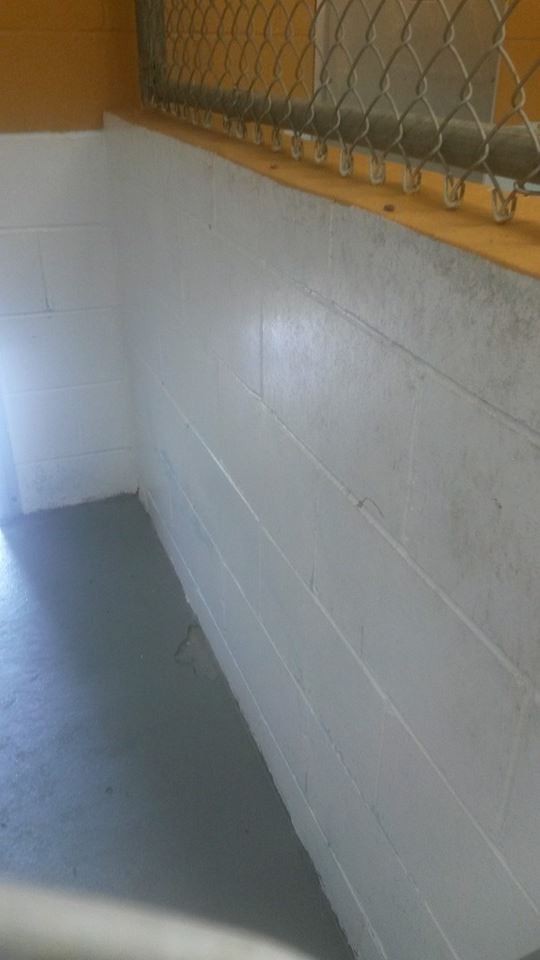
Shelters transporting dogs from out of state also significantly failed to achieve their adoption targets for New Jersey dogs. In fact, shelters rescuing dogs from out of state facilities have a New Jersey dog adoption shortfall exceeding the number of New Jersey dogs unnecessarily dying in our state’s shelters. Not surprisingly many of these facilities’ total adoptions including transported dogs exceeded the local dog adoption targets as most transported dogs are easier to adopt. These transporting shelters’ local adoption performance is even worse considering most of these organizations likely take in much more adoptable local dogs than my model targets. In addition, the revenues these transporting shelters bring in from adoption fees and dramatic fundraising stories likely divert funding from New Jersey animal control shelters. Thus, it is quite clear most transporting shelters are not doing their part in helping New Jersey’s homeless dogs.

NJ Shelter Model 2013 for Blog (Loc adop)
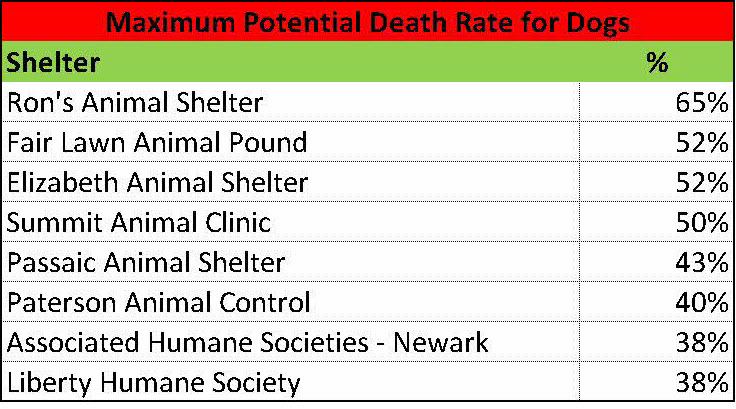
NJ Shelter Model 2013 for Blog (Loc adop) (2)

NJ Shelter Model 2013 for Blog (Loc adop) (3)

Shelters Fail to Use Excess Space to Save Local Dogs

To further examine New Jersey animal shelters’ performance in saving the state’s homeless dogs, I compared the targeted number of dogs each shelter should pull from nearby shelters and compared it to the number actually rescued from local facilities. I assume all reported out of state rescued dogs came from southern or other far away states. While some of the out of state rescued dogs may have comes from nearby areas, I believe this is a small number and does not significantly impact the results.

Virtually all New Jersey animal shelters are failing to rescue the number of local dogs they should. 89 of the 102 shelters should rescue some dogs from other local shelters. In fact, 55 of the 89 shelters with targeted excess capacity failed to rescue even a single dog from a New Jersey animal shelter. Of the 89 shelters with the space to rescue dogs from nearby shelters, only Beacon Animal Rescue met or exceeded its local dog rescue target. While Animal Alliance and Ramapo-Bergen Animal Refuge appear to come close to their targeted local rescues, this is most likely due to these organizations pulling relatively few pit bulls. 80% of the targeted rescues are pit bulls while Animal Alliance and Ramapo-Bergen Animal Refuge only appear to have pit bulls representing around 20% of their dogs currently up for adoption. Thus, nearly all New Jersey animal shelters with targeted excess capacity are failing to do their share in ending the killing of local healthy and treatable dogs.

Shelters can overcome challenges in rescuing dogs from outside their service area. In some cases, municipalities may frown on government run shelters using taxpayer funds to rescue dogs from elsewhere. However, shelter directors at these facilities can encourage individuals to form a non-profit or raise money on their own to pay for these rescued dogs. Additionally, shelters with limited capacity or even some of the well-off private shelters could contribute funding for each dog rescued. For example, Maddie’s Fund paid an approximate $160 subsidy to rescues pulling dogs from New York Animal Care & Control. Similarly, private shelters with excess space, but limited financial resources, could expand their fundraising efforts to save more local dogs. Thus, perceived obstacles to rescuing local dogs can and should be overcome.

NJ Shelter Model 2013 for Blog (Rescued)

NJ Shelter Model 2013 for Blog (Rescued) (2)

NJ Shelter Model 2013 for Blog (Rescued) (3)

New Jersey Animal Shelters Need to Form Life-Saving Coalitions

The improper allocation of space within the state’s animal shelter system requires organizations to form coalitions. While putting a competent and compassionate director in every shelter would likely be even more effective, that will likely take time to do. No kill coalitions between animal control facilities and selective admission shelters have been used in places, such as Portland, Oregon, Reno, Nevada, Jacksonville, Florida and Austin, Texas to radically increase life saving. Maddie’s Fund, which has supported using coalitions for over a decade, has many resources for organizations seeking to collaborate with each other. Thus, New Jersey animal shelters need to formally work together, develop quantifiable and measurable goals (such as the targeted outcomes in this blog), and hold each organization accountable for meeting these goals.

Sobering Results Require Shelter Leaders to Critically Examine Themselves

New Jersey animal shelters’ dismal performance is even worse considering I used conservative assumptions. Organizations were not expected to return additional lost dogs to owners despite room for significant improvement. The targeted adoption lengths of stay ranged from 34-40 days for dogs taken in from the local community and 44 days for dogs rescued from other local shelters. However, some no kill open admission shelters adopt dogs out much more quickly. For example, I estimate dogs only take about 15 days to get adopted at Williamson County Animal Shelter in Texas based on their operating data and total average length of stay. Similarly, some no kill open admission shelters, such as Greenhill Humane Society and KC Pet Project, adopt out their pit bulls in much less time than the benchmark shelters used in this analysis. 50 days was used in my model, but Greenhill Humane Society’s and KC Pet Project’s (estimated) corresponding figures are around 40 days and 19 days. Additionally, creating successful pet retention and targeted spay/neuter programs could reduce local intake and allow shelters to rescue more dogs from elsewhere. Thus, New Jersey animal shelters could save significantly more animals than the targeted numbers I computed.

Shelters should examine the reasons why their adoption numbers fall far short of these benchmarks. In some cases, shelters, such as Woodbridge Animal Shelter, need to expand the hours they are open for adoptions. Many shelters should switch from an overly judgmental adoption process based on black and white rules to a conversational one focused on educating the adopter. Organizations will need to radically increase their off-site events and do same day adoptions. Similarly, many shelters must reduce adoption fees and run frequent promotions. Executive Directors should monitor the latest life-saving programs on Maddie’s Fund’s, ASPCA Pro’s, and the Best Friends National Conference’s web sites and put some of these policies into place. Shelter management teams will need to ensure their facilities are clean and customers are treated with respect (this can be measured by encouraging the public to complete surveys). Thus, poorly performing shelters need to stop making excuses and do what it takes to reach their adoption potential.

Shelters truly wishing to save lives should be ecstatic with the results from this analysis. The organizations have the potential to save far more lives than they ever thought were possible. Will the leaders of these facilities take the initiative to improve their performance as anyone with a job outside of animal sheltering would do? Thousands of lives depend on the answer to this question.

We should support shelters financially and with our precious free time who answer this question correctly. Ralph Marston said:

Don’t lower your expectations to meet your performance. Raise your performance to meet your expectations. Expect the best of yourself, and then do what is necessary to make it a reality.

We can turn New Jersey, New York City and Philadelphia into no kill communities. It is time we give our money and volunteer efforts to organizations who raise their performance to help us reach that goal. To do otherwise, would betray all the animals whose lives are on the line.

Appendix – Life Saving Model Assumptions

The Life Saving Model utilizes the following basic animal shelter population equations to calculate the targeted dog outcomes for each facility:

Daily capacity or population = Daily animal intake x average length of stay

Average length of stay = Daily capacity or population/daily intake

Each shelter’s community dog intake (i.e. owner surrenders, strays, cruelty bite cases), number of dogs returned to owners, and maximum dog capacity were taken from its 2013 “Shelter/Pound Annual Report” submitted to the Office of Animal Welfare. Unfortunately, 2014 data will not be available until Fall 2015.

This data was then used as follows:

  • Community dog intake and dogs returned to owners were initially estimated for each month by dividing the annual figures by 12. In order to take into account the extra space in low intake months and reduced space in high intake months, we multiply that number by each month’s percentage of the average month. For example, assume 240 dogs were taken in during the year and the average month equals 20 dogs (240/12). In July, the dog intake is 120% higher than the average month and we therefore multiply 20 dogs by 1.2 to equal 24 dogs. If 120 dogs were returned to owners during the year, the estimated number of dogs returned to owners in July would equal 12 dogs (120/12 = 10; 10*1.2). The monthly intake percentages were based off 2013 dog intake data on the New York Animal Care & Control web site.
  • The estimated number of community dogs returned to owners each month are then assumed to stay 5 days on average at shelters based on data from other shelters across the country. If anything, this estimate is conservative (i.e. average length of stay for dogs returned to owners may be less than 5 days and therefore frees up more shelter space for adoptions) based on some shelters returning the bulk of their dogs to owners within 3 days.
  • The number of community dogs euthanized (including animals who died or are missing) is set to equal 5% of intake. 5% is a reasonable standard euthanasia rate for shelters in New Jersey to meet given few vulnerable stray puppies (i.e. who could die or require euthanasia) arrive in the state’s animal shelters. The average length of stay for euthanized dogs is assumed to equal 14.5 days. Half of dogs are assumed euthanized for untreatable aggression towards people and 21 days is the time estimated to make that determination. The other half of dogs are assumed euthanized for severe and untreatable health issues and I estimate these dogs are euthanized after 8 days (subsequent to the end of the stray and owner surrender hold periods).
  • Adopted dogs are assumed to stay at shelters for varying lengths of time. Adoption length of stay was based on data from a study in the Journal of Applied Animal Welfare and the figures used are located in a prior blog on pit bull adoption. The data primarily comes from Tompkins County SPCA during a time it saved over 90% of its dogs. This was a fairly conservative data set to use as other no kill open admission shelters’ average length of stay are substantially shorter. Specifically, the following assumptions were made:
    1. 80% and 20% of each communities dogs (including pit bulls) were adults 1 year and older and under 1 year.
    2. Pit bulls were assumed to comprise 50%, 35% and 25% of community dog intake at poor, middle/upper middle class, and wealthy area animal control shelters. While some shelters may have pit bulls comprising more than 50% of their shelter dog population at a given time, this is due to pit bulls longer average length of stay. For example, a shelter with pit bulls making up 50% of their dog intake and pit bulls having an average length of stay three times longer than other dogs will have pit bulls constituting 75% of the dog population. Shelters without animal control contracts were assumed to only have pit bulls make up 10% of their community dogs (i.e. strays and owner surrenders) based on most of these shelters’ highly selective admission practices.
    3. Pit bull length of stay was taken directly from the Journal of Applied Animal Welfare study. The average lengths of stay for other breeds from this study were averaged and used for dogs other than pit bulls in the analysis
  • Dogs transferred to rescue or other facilities are assumed to stay at shelters 8 days on average based on the assumption strays can’t be released until the 7 day hold period elapses.
  • Community dogs not returned to owners or euthanized are initially assumed as adopted for each month. However, if the calculated length of stay exceeds the shelter’s required length of stay, dogs are moved from adoption (i.e. with a longer length of stay) to rescue (i.e. shorter length of stay) until the calculated length of stay each month approximately equals the required length of stay.
  • Required length of stay = Shelter’s reported capacity/adjusted daily intake for the month. Adjusted daily intake for month = Adjusted monthly intake per first bullet above/the number of days in the month.
  • Shelters with excess capacity are assumed to use the extra space to rescue and adopt out dogs from other New Jersey animal shelters. To the extent all healthy and treatable New Jersey animal shelter dogs are saved, I assume additional dogs are pulled from nearby states with similar types of dogs. I assume all rescued dogs will not be killed since the transferring and receiving shelters should evaluate these dogs’ behavior. Based on pit bull type dogs having longer lengths of stay at shelters, I assume 80% of dogs rescued from local animal shelters are pit bulls and 20% are non-pit bulls. 80% and 20% of pit bull and non-pit bull type dogs are considered 1 year and older and under 1 year. The average length of stay for rescued pit bulls and other dogs are the same as above.
  • Each month’s targeted outcomes are added to determine how many local dogs New Jersey animal shelters should adopt out, send to rescue, rescue from other nearby animal shelters and euthanize.

New Jersey Animal Shelter Statistics Are Far Worse Than Previously Thought

Photo of discarded dead animals from a 2009 Office of Animal Welfare inspection report of Associated Humane Societies – Newark. The Executive Director at the time is still in charge of this shelter today.


Most New Jersey animal shelters voluntarily report detailed data to state authorities. Last August, I shared New Jersey’s animal shelters summary statistics on my Facebook page. Each year, the New Jersey Department of Health’s Office of Animal Welfare requests each licensed animal shelter in the state to submit animal shelter data for the previous year. Animal shelters voluntarily submit this data in the “Shelter/Pound Annual Report.” The Office of Animal Welfare takes these Shelter/Pound Annual Reports and compiles the number of dogs, cats and other animals impounded, redeemed, adopted and euthanized to prepare its Animal Intake and Disposition report. However, the Shelter/Pound Annual Reports include additional information on how animals were impounded (i.e. strays, owner surrenders, rescued from in-state facilities, rescued from out of state shelters, and cruelty/bite cases) and disposed of (i.e. returned to owner, adopted, sent to rescue/another shelter, and died/missing). Additionally, the Shelter/Pound Annual Reports include the number of animals in shelters at the beginning and end of the year as well as the maximum number of animals facilities can hold. Thus, the Shelter/Pound Annual Reports include very important data not found in the Office of Animal Welfare’s summary report.

I compiled the data from these reports and analyze the results in this blog. 2013 statistics for each New Jersey animal shelter are listed at this link.

Garbage Data Raises Serious Questions About New Jersey Animal Shelters’ Statistics

Several animal shelters, which reported statistics in prior years, failed to submit data in 2013. Specifically, Summit Animal Clinic in Union City, Associated Humane Societies – Tinton Falls, Mercerville Animal Hospital and Angel Pets Animal Welfare in Woodbridge disclosed this data in 2012, but did not do so in 2013. Additionally, East Orange Animal Shelter has never submitted Shelter/Pound Annual Reports to the state, but did share limited data with The Record newspaper. These shelters failure to disclose data raises serious questions. For example, are they trying to hide embarrassing statistics from the public? I’ve included these shelters’ 2012 data, and in the case of East Orange, its limited 2013 data in my analysis. Also, I performed my analysis without these shelters as well. Unless indicated below, I’ve included these shelters’ data in the analysis under the assumption the statistics would be similar if submitted to the Office of Animal Welfare in 2013.

Most New Jersey animal shelters do not properly account for their animals. Simple math dictates the number of animals at a facility at the beginning of the year, plus all animals coming in during the year, less all animals leaving for the period, should equal the number of animals a shelter has at the end of the year. Stunningly, 69 out of 100 shelters reporting these dog statistics and 71 out of 98 facilities submitting this cat data failed to get this right. This raises serious questions about the accuracy of these shelters’ reported statistics. Even worse, 54 of the 69 shelters with flawed dog statistics and 46 of the 71 facilities with incorrect cat statistics should have had more animals at the end of the year then reported. While these errors could have been due to incorrect counts of the number of animals at facilities, the more likely answer is many outcomes, such as animals killed, dying, or gone missing, were not recorded. Given 71% of the errors were due to shelters having less rather than more animals on hand at the end of the year than they should have had lends credence to the theory that errors were mostly due to shelters failing to account for various outcomes. To put it another way, 3,231 cats and dogs should have had outcomes reported and did not. Thus, there is the potential that as many as 3,231 additional dogs and cats were killed, died or went missing from New Jersey animal shelters than were reported in the last year.

Shelters may have failed to classify animals adopted out and sent to rescue properly. Both Paterson Animal Control and Elizabeth Animal Shelter reported no animals were sent to rescues and all dogs and cats leaving their facilities alive were owner reclaims or adoptions. However, rescues I know who work closely with these two facilities told me both shelters rarely adopt animals directly to the public. This makes sense as neither shelter advertized animals for adoption (i.e. no adoption web site or social medial pages) in 2013. One has to wonder how many other facilities failed to properly classify adoptions and rescues properly. This data is very important as it provides details on the burden rescues and other shelters are taking from these facilities.

We need better oversight of New Jersey animal shelters’ data reporting. Currently, these statistics are voluntarily reported and most shelters are not taking this seriously. For example, I noticed a large number of reports were submitted many months after the end of the year. This data should be easy to compile since facilities can utilize animal shelter software programs, some of which are free, to do this task. Furthermore, New Jersey animal shelter laws mandate facilities maintain much of the raw data found in the Shelter/Pound Annual Report. Unfortunately, Office of Animal Welfare inspections routinely find shelters do not properly keep records on animals. We need to make the Shelter/Pound Annual Report mandatory for animal shelters along with serious penalties for significant errors (especially if deliberate). In order for animal shelters to take data reporting seriously, we may also need to require audits of these reports. Thus, these results show we need stronger laws and the Office of Animal Welfare to play a greater role in ensuring reported animal shelter statistics are in fact accurate.

Despite the errors in these reports, the data provided still reveals important information.

More Animals Losing Their Lives in New Jersey Animal Shelters Than Previously Believed

The more detailed data in the Shelter/Pound Annual Reports allows one to more critically examine the percentage of locally impounded animals dying in New Jersey’s animal shelters. The following table summarizes my analysis of the kill/death rate calculated from the Office of Animal Welfare’s summary report and the data reported in the Shelter/Pound Annual Reports.

Totals

The Animal Intake and Disposition report prepared by the Office of Animal Welfare only allows one to calculate the number of animals killed as a percentage of total animals impounded or intake. I prefer calculating the kill rate as a percentage of outcomes rather than intake as this metric directly compares positive and negative outcomes. Using intake depresses the kill rate since shelters can simply hold animals for a long time to the point of overcrowding. Calculating kill rate based on outcomes rather than intake increases the dog kill rate from 13.4% to 13.9% and the cat kill rate from 38.5% to 39.2%.

To calculate the statewide kill rate, we must also back out transfers from one New Jersey animal shelter to another state facility to avoid counting animals still in the state’s shelter system or registering two outcomes for the same animal (i.e. one New Jersey animal shelter transfers a dog or cat to another state facility who then adopts out the animal). This adjustment increases the dog kill rate from 13.9% to 14.5% and the cat kill rate from 39.2% to 40.8%.

In addition, we should increase the kill rate for animals dying or gone missing in shelters. I label this metric the death rate as these animals are likely dead or in a very bad situation. After making this adjustment, the dog death rate increases from 14.5% to 15.5% and the cat death rate rises from 40.8% to 46.8%.

Also, many shelters transport easy to adopt animals from out of state which artificially increases save rates. To properly calculate the percentage of New Jersey animals losing their lives, we need to adjust for transports. Unfortunately, shelters don’t break out their save rates by local and out of state animals. However, most likely nearly all of the out of state animals (primarily puppies and easy to adopt dogs) make it out of shelters alive. Therefore, I back out the number of out of state transports to estimate the local death rate. This adjustment increases the New Jersey dog death rate from 15.5% to 18.9% and the state cat death rate from 46.8% to 47.4%.

Also, I estimate a maximum local death rate by including the number of unaccounted for animals described in the section above. Making this adjustment increases the maximum potential New Jersey dog death rate from 18.9% to 22.1% and the maximum potential state cat death rate from 47.4% to 49.5%.

Finally, the maximum potential New Jersey cat death rate decreases slightly from 49.5% to 49.4% if I include the 2012 data from shelters who failed to report statistics in 2013 to the Office of Animal Welfare. Thus, the percentage of New Jersey animals losing their lives in our state’s animal shelters may be much higher than previously thought.

Death Rates Extremely High at a Number of New Jersey Animal Shelters

Dogs and cats are likely to lose their lives or go missing at a number of New Jersey animal shelters. Shelters with the highest death rates for dogs and cats are listed in the following tables:

NJ Shelter Rates Tables (6)

NJ Shelter Rates Tables (7)

Thus, both dogs and cats have a very good chance of leaving many New Jersey animal shelters dead rather than alive.

Many shelters fail to account for large numbers of their animals. As discussed above, a shelter’s number of animals at the end of the year should be calculated as follows:

Beginning number of animals + animals impounded – animals leaving the shelter

Unfortunately, a large number of shelters take in far more animals than they can explain where they went. Shelters having the highest numbers of unaccounted for dogs and cats are listed in the following tables:

NJ Shelter Rates Tables (8)

Unacct cats

Dog and cat death rates at many shelters may be even higher if these unaccounted for animals are counted as dead or missing. If we only consider animal shelters which don’t or rarely transport, facilities with the highest dog and cat death rates considering the unaccounted for animals described above are as follows:

NJ Shelter Rates Tables (2)

Max pot cats po

Thus, the plight of dogs and cats may be far worse in New Jersey animal shelters when we consider the unaccounted for animals.

Shelters Turn Their Backs on New Jersey’s Animals

New Jersey animal shelters rescue far more animals from out of state than other New Jersey animal shelters. Specifically, 5,676 dogs were transferred from out of state animal shelters compared to only 1,410 dogs taken in from other New Jersey animal shelters. While perhaps some shelters, such as Animal Alliance in Lambertville, take animals from nearby New York or Pennsylvania animal control shelters, the overwhelming majority of these dogs most certainly came from down south. In fact, New Jersey animal shelters transported more dogs from out of state than dogs who were killed in, died in or went missing from New Jersey animal shelters. This number does not include additional dogs transported in from out of state by rescues operating without a physical facility. Shelters transporting the most dogs from out of state were as follows:

NJ Shelter Rates Tables (5)

New Jersey animal shelters transported 642 cats from out of state while nearly 50% of cats in the state’s animal shelters were killed, died or went missing. Animal Welfare Association (280 cats received from out of state) and Mount Pleasant Animal Shelter (211 cats received from out of state) rescued more cats from out of state facilities than New Jersey animal shelters. In the case of Mount Pleasant Animal Shelter, the organization’s Executive Director told me these cats were rescued from New York Animal Care and Control. One can only hope the out of state cats rescued by other New Jersey animal shelters came from nearby New York and Pennsylvania facilities rather than from shelters far away down south.

Return to Owner Rates Better Than Average at Most Shelters

Return to owners (“RTO”) rates are one of the positive results from this analysis. Overall, the dog and cat RTO rates of 52% and 4% are approximately twice the national average. As I noted in my blog on reuniting lost pets with owners, return to owner rates are highly correlated with socioeconomic status. Wealthier people likely have more resources/knowledge to license and microchip their dogs. Similarly, people with greater incomes are more likely to afford reclaim fees or ransom payments to animal shelters. New Jersey’s RTO rates for dogs clearly fit this pattern with shelters serving wealthy towns returning most stray dogs to owners while urban shelters are only returning about one fifth of lost dogs to owners. Clearly, we need to help people in urban areas get microchips and ID tags on their dogs. Additionally, we need to create pet help desks at shelters in these cities to help people pay the reclaim fees, which are often mandated by the cities themselves, when necessary. The statewide cat reclaim rate, like figures from across the nation, is still very low and suggests shelters need to figure out better ways to get lost cats back to their families. New Jersey should allow shelters to transfer stray cats to rescues during the mandatory 7 day hold period since few are returned to owners at shelters. This would open up space to save more cats and reduce the chance of disease (i.e. cats spending less time in shelters are not as likely to get sick).

Shelters Leave Animal Enclosures Empty While Dogs and Cats Die

New Jersey animal shelters fail to use their space to save animals. Based on the average number of animals at all of New Jersey’s animal shelters at the beginning and the end of 2013, only 61% of dog and 66% of cat capacity was used. Given December is a low intake month, I also increased these populations to an average intake month. This adjustment only raised the dog and cat capacity utilization to 62% and 87%. These estimates likely overestimate the average capacity utilized as many facilities kill animals once they reach a certain population level. Many animal shelters with low kill rates failed to rescue animals with their excess space. Additionally, other shelters used little of their available space and still killed a large percentage of their animals. Some examples after increasing the population (and therefore capacity utilization) based on the adjustment discussed above are as follows:

NJ Shelter Rates Tables (11)

NJ Shelter Rates Tables (13)

Thus, many New Jersey animal shelters are killing dogs and cats despite having ample space to house these animals.

New Jersey’s animal shelters continue to fail the state’s animals. The state’s animal control facilities only impound 8.7 animals per 1,000 New Jersey residents. As a comparison, the average community in the country impounds anywhere from 14-30 animals per 1,000 residents based on estimates from Animal People Newspaper and the Humane Society of the United States. Despite New Jersey shelters impounding a fraction of the animals other no kill communities take in on a per capita basis, the state’s animal control facilities continue to kill and allow animals to die under their care. Even worse, many of these shelters can’t even properly keep track of how many animals leave their facilities dead or alive. Our state’s animals deserve far better treatment than this. Contact your local city council members and mayor and demand better from the animal shelter serving your community. We can do this so let’s get to work!